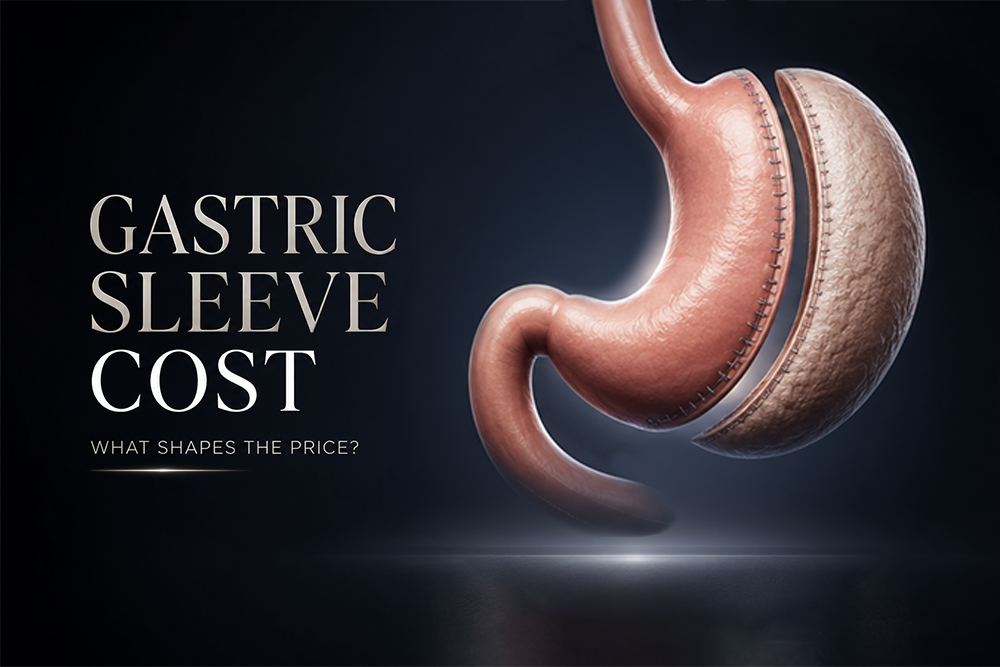
What is a gastric sleeve is the first question most people ask before any bariatric consultation and the honest answer starts with anatomy rather than with outcomes. A sleeve gastrectomy is a laparoscopic operation that removes a large portion of the stomach along the greater curvature, leaving a narrow tubular remnant. The removed tissue does not return. That permanence shapes everything that follows: the assessment beforehand; the recovery afterwards; the lifelong monitoring that never ends. This guide explains the procedure itself, the candidacy process plus what published long term follow-up reports at 10 years.
Key Takeaways
- A sleeve gastrectomy removes roughly 70 to 80 percent of the stomach. The operation is permanent, not reversible.
- Candidacy is decided by a multidisciplinary team rather than by any threshold a patient can self-apply.
- Lifelong micronutrient supplementation plus annual biochemical monitoring are mandatory after the procedure.
- Long term series document weight regain, reflux plus conversion to gastric bypass in a proportion of patients. Individual results vary.
- International Plus has coordinated care for more than 200,000 patients from 140+ countries since 2014 under Turkish Ministry of Health authorisation.
What Is a Gastric Sleeve Operation in Clinical Terms?
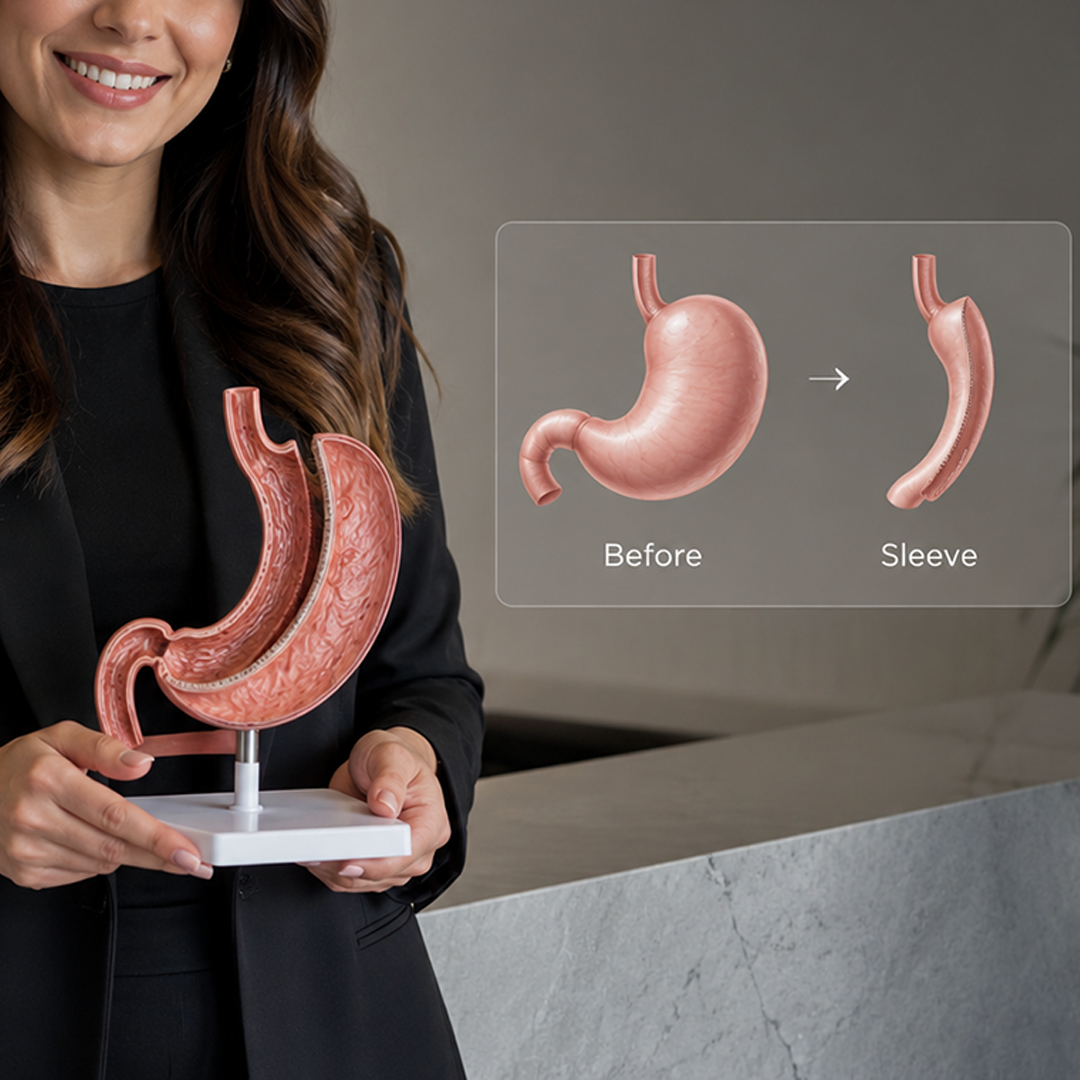
A sleeve gastrectomy is a restrictive bariatric procedure performed laparoscopically through several small incisions. The surgeon divides the stomach vertically with staple lines, removing the greater curvature and leaving a narrow tube roughly the shape of a banana. The resected portion leaves the body permanently.
Two mechanisms follow. Reduced gastric volume limits how much food the stomach holds at one sitting. Hormonal change follows the resection because the removed fundus produces much of the body’s ghrelin, a hormone that stimulates appetite. According to published surgical references, sleeve gastrectomy is now among the most frequently performed metabolic operations worldwide. In practice, our coordination team finds that patients grasp the follow-up obligations far better once the permanence of the resection is stated plainly at the first consultation rather than at discharge.

What Happens Step by Step During the Procedure?
The operation follows a consistent sequence. Stage 1 is general anaesthesia plus laparoscopic access through small abdominal ports. Stage 2 frees the greater curvature from its attachments. Stage 3 places a calibrating tube to define the width of the remaining sleeve.
Stage 4 applies sequential staple firings from the antrum upward toward the angle of His, creating the tubular remnant. Stage 5 checks the staple line for bleeding or leak, often with an intraoperative test. Stage 6 removes the resected stomach through a port site. Operating time is typically measured in a small number of hours for an uncomplicated case though anaesthesia planning takes longer when sleep apnoea or cardiac comorbidity is present. The technical steps are standardised. The patient around them is not.
Who Assesses Whether Someone Is a Candidate?
Candidacy is determined by a clinical team, never by a website or a calculator. A bariatric assessment normally involves a surgeon; an endocrinologist or internal medicine physician; a dietitian; a mental health professional. Each reviews a different dimension of readiness before any operating date is discussed.
The evaluation covers body mass index thresholds; obesity related comorbidities such as type 2 diabetes or sleep apnoea; previous structured weight management attempts; psychological readiness for permanent dietary change. Pre-operative endoscopy is standard because an unrecognised hiatal hernia or significant reflux changes the surgical conversation. Medical options that a physician may evaluate alongside surgery are part of that discussion too. No article can tell any reader whether surgery is appropriate. That conclusion belongs to a consultation room.
What Does Recovery Look Like After a Gastric Sleeve?
Recovery unfolds in defined phases rather than in a single event. Hospital stay is measured in days for uncomplicated cases. The diet progresses through clear fluids; then full fluids; then pureed textures; then soft foods; then a stable long term pattern with each stage supervised by a dietitian.
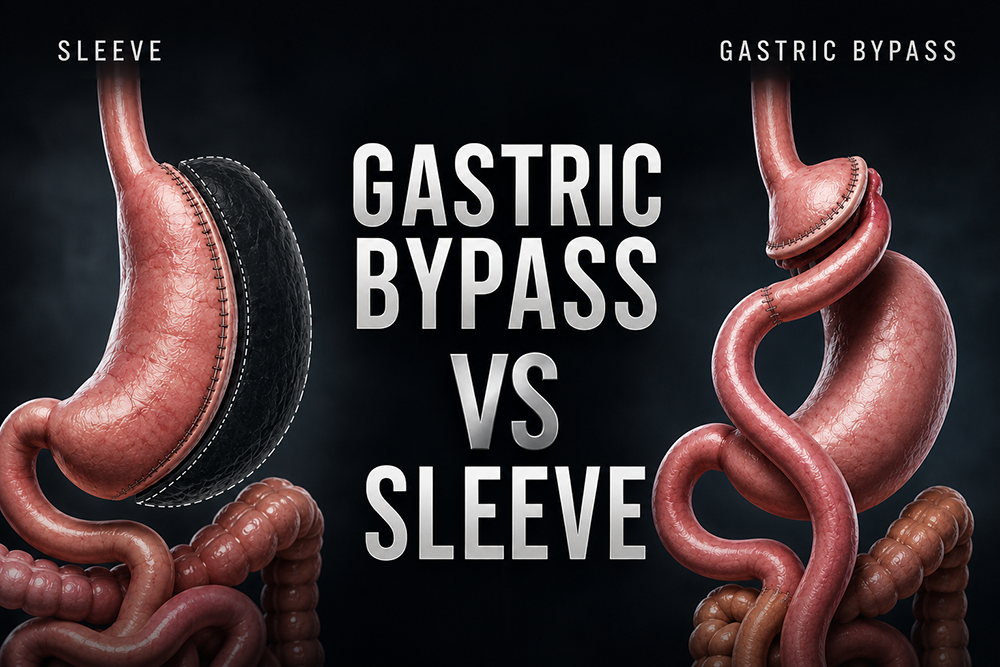
Return to routine activity typically takes several weeks while the eating pattern takes considerably longer to settle. Supplementation begins immediately after surgery rather than later. Structured dietetic review matters most during the first 24 months when portion tolerance plus food choices are rebuilt from scratch. Patients comparing the sleeve against the other main operation will find the anatomical differences set out in our guide to gastric bypass vs sleeve.
| Stage | Typical focus | Supervised by |
|—|—|—|
| Hospital stay | Pain control; mobilisation; fluid tolerance | Surgical team |
| Weeks 1 to 4 | Staged diet progression; hydration targets | Dietitian plus surgeon |
| Months 2 to 6 | Protein intake; activity rebuild; supplement routine | Dietitian |
| Months 6 to 24 | Eating pattern stability; behavioural support | Multidisciplinary team |
| Year 2 onward | Annual bloods; supplement review; weight review | Bariatric clinic for life |
What Are the Risks and Complications?
Sleeve gastrectomy is major abdominal surgery carrying real risks that deserve plain description. Early complications include staple line leak; bleeding; venous thromboembolism; infection. Leak is uncommon yet serious, which is why intraoperative testing plus close postoperative monitoring are standard practice.
Later complications include gastro-oesophageal reflux, which may start or worsen after a sleeve, plus stricture at the sleeve. Nutritional deficiency is a recognised long term risk rather than an unusual event. Mulita F, et al., 2021 published a six year single centre retrospective study of long term nutritional deficiencies following sleeve gastrectomy. Deficiencies of iron, vitamin B12 plus vitamin D appear across that literature, which is precisely why annual bloods are scheduled for life rather than for a single post-operative year. A sleeve suits many patients who want a technically simpler restrictive operation but the procedure is not the right choice for someone with severe established reflux because symptoms may deteriorate and long term surveillance may become necessary.

Gastric Sleeve 10 Years Later: What Does Follow-Up Data Show?
Long term data now extends beyond a decade, which changes the honesty of the conversation. Felsenreich DM, et al., 2016 reported 10 year results of laparoscopic sleeve gastrectomy covering weight loss, weight regain plus conversions to Roux-en-Y gastric bypass. Clapp B, et al., 2018 published a meta-analysis of outcomes at seven or more years.
Research shows three consistent findings across long horizons. Weight regain occurs in a proportion of patients rather than in none. Reflux emerges or worsens in a meaningful subset. Conversion to another configuration is a documented pathway rather than an anomaly. Flølo TN, et al., 2017 reported five year outcomes from a prospective cohort. Chang DM, et al., 2018 described a thirteen year single centre experience covering surgical risk plus revision procedures. Averages describe cohorts. No published figure predicts an individual course.
When Is a Gastric Sleeve Revision Considered?
Revision is considered when the clinical picture rather than the scale demands a change. The two dominant indications are insufficient or lost clinical response over time plus reflux that resists medical management. A revision decision follows fresh imaging, fresh endoscopy plus a fresh multidisciplinary review.
D’Urso A, et al., 2021 published indications plus long term outcomes for conversion of sleeve gastrectomy to Roux-en-Y gastric bypass. Sakran N, et al., 2023 reported a long term matched comparison of primary versus revisional laparoscopic sleeve gastrectomy. Revision is a second major operation carrying its own risk profile plus its own recovery period. Patients budgeting for the full pathway will find the separate cost lines explained in our breakdown of gastric sleeve cost.
What Lifelong Habits Does the Procedure Require?
Three obligations continue for life after a sleeve gastrectomy. Micronutrient supplementation is permanent since the reduced reservoir changes intake plus absorption of several vitamins and minerals. Annual biochemical monitoring is the second obligation. Ongoing behavioural plus dietetic engagement is the third.
O’Kane M, et al., 2020 published British Obesity and Metabolic Surgery Society guidelines on perioperative and postoperative biochemical monitoring plus micronutrient replacement, describing a lifelong schedule. International Plus coordinates that long term relationship in 21 languages across a clinic rated 4.8/5 from 5,504 verified reviews. Patients evaluating an international pathway will recognise the verification framework in our medical travel decision guide plus our review of all inclusive package structures.
Understanding What a Gastric Sleeve Really Asks of a Patient
Anyone still asking what is a gastric sleeve should hold two facts together. The operation is a permanent anatomical change with a substantial published evidence base behind it. Surgery also begins a lifelong monitoring relationship rather than ending a weight problem. Individual results vary and no responsible programme promises otherwise.
Candidacy, including body mass index thresholds plus comorbidity criteria, belongs to a multidisciplinary evaluation rather than to a self-assessment. International Plus combines Turkish Ministry of Health authorisation with 5,504+ verified reviews at 4.8/5 plus 200,000+ international patients across 140+ countries, delivering its sleeve gastrectomy programme inside that multidisciplinary structure. Patients exploring a reversible non surgical step first can review the gastric balloon option while those comparing international destinations can start with our guide to comparing treatment destinations plus our overview of transfer and accommodation planning.
Frequently Asked Questions
Is a gastric sleeve reversible?
No. The procedure permanently removes a large portion of the stomach so the original anatomy cannot be restored. What remains possible is conversion to a different configuration, most commonly Roux-en-Y gastric bypass, which is a separate major operation requiring its own assessment, consent plus recovery period.
How much of the stomach is removed?
Surgical literature describes removal of roughly 70 to 80 percent of the stomach along the greater curvature, leaving a narrow tubular remnant calibrated during the operation. The exact proportion depends on the individual anatomy plus the calibration technique the surgical team uses. The removed portion is discarded permanently.
Does a gastric sleeve cause reflux?
Reflux can start or worsen after a sleeve gastrectomy and the association is well documented in long term follow-up series. Pre-operative endoscopy is standard practice partly to identify existing reflux or hiatal hernia. Patients with significant established reflux discuss alternative configurations with their surgical team.
Are vitamins needed forever after a gastric sleeve?
Yes. Lifelong micronutrient supplementation plus annual biochemical monitoring are standard after sleeve gastrectomy, described in published bariatric society guidelines. The reduced gastric reservoir changes both intake and absorption of several nutrients. Skipping supplementation risks deficiencies that may develop silently over several years.
What does long term follow-up data show at 10 years?
Published 10 year series report weight regain in a proportion of patients, reflux emerging or worsening in a meaningful subset plus conversion to gastric bypass as a documented pathway. Those findings describe cohorts rather than individuals. Long term structured follow-up is the main factor associated with sustained outcomes.
Who decides whether a gastric sleeve is appropriate?
A multidisciplinary team decides, typically including a bariatric surgeon, an endocrinologist, a dietitian plus a mental health professional. The evaluation reviews body mass index, comorbidities, previous weight management history plus psychological readiness. No online guide, calculator or price list can substitute for that clinical assessment.
Reviewed by Dr. Eren Gülbahar
References
- Felsenreich DM, et al. Surg Obes Relat Dis. 2016. PMID: 27317599
- Clapp B, et al. Surg Obes Relat Dis. 2018. PMID: 29625744
- Chang DM, et al. Obes Surg. 2018. PMID: 29931481
- Flølo TN, et al. Obes Surg. 2017. PMID: 28224471
- Mulita F, et al. Prz Menopauzalny. 2021. PMC8764960
- O’Kane M, et al. Obes Rev. 2020. PMC7583474
- D’Urso A, et al. Obes Surg. 2021. PMID: 33932190
- Sakran N, et al. Obes Surg. 2023. PMC9809525
internationalplusofficial
internationalplus
internationalplusdental
This content is written, reviewed, and approved by the International Plus Medical Review Board to ensure clinical accuracy and adherence to strict editorial standards. All medical information is regularly monitored, audited and updated in light of the latest scientific advancements.
However the information provided here is for general informational purposes only and cannot be used for self diagnosis or making individual health interpretations. Results of medical treatments depend on individual anatomy and the unique healing process of each patient. This information should not replace a personal consultation with a qualified healthcare professional. To understand the best options for your specific needs and to receive a personalized treatment plan, we invite you to book a free consultation with the expert medical team at International Plus.

I am a healthcare professional with over 4 years of experience in dentistry, specializing in prosthetic dental treatment and implant-based applications. Since 2024, I have been serving as chief physician, leading clinical management, team coordination, and international patient processes. With my B2-level English proficiency, I am able to communicate effectively with international patients. I am a patient-centered, innovative, and solution-oriented dentist who prioritizes patient satisfaction.