
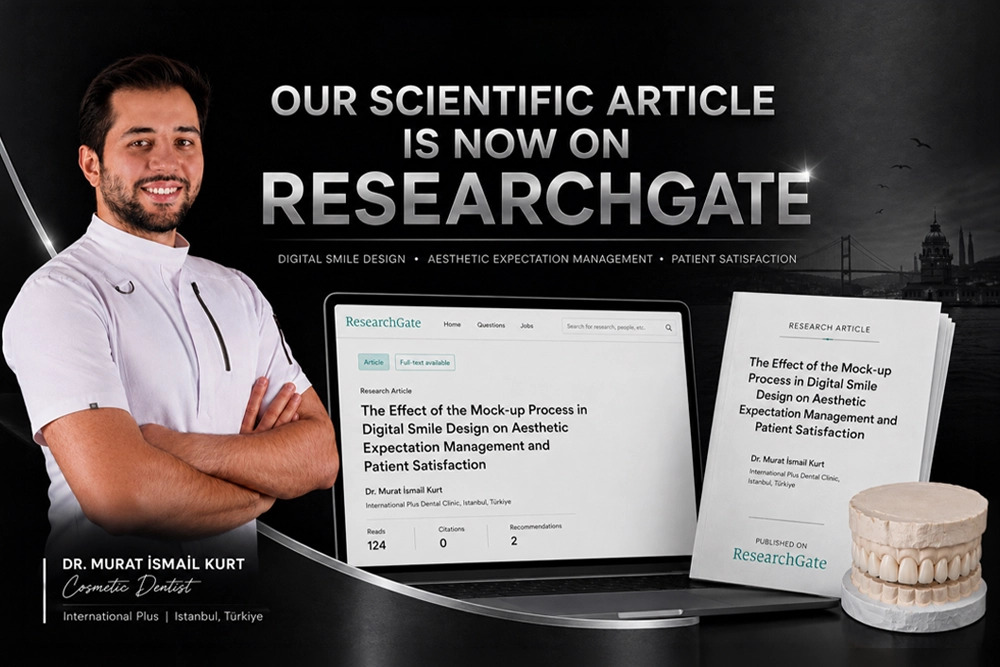
The Effect of the Mock-up Process in Digital Smile Design on Aesthetic Expectation Management and Patient Satisfaction
A mock-up is a temporary trial smile placed over unprepared teeth so a patient can see the proposed result before treatment begins. This paper examines what that step adds when it is combined with a structured revision round inside a digital smile design protocol, and how the two together shape a patient's aesthetic expectations and final satisfaction. The findings draw on survey data collected from treated patients.
Read the full paper · open access on Academia.edu and ResearchGate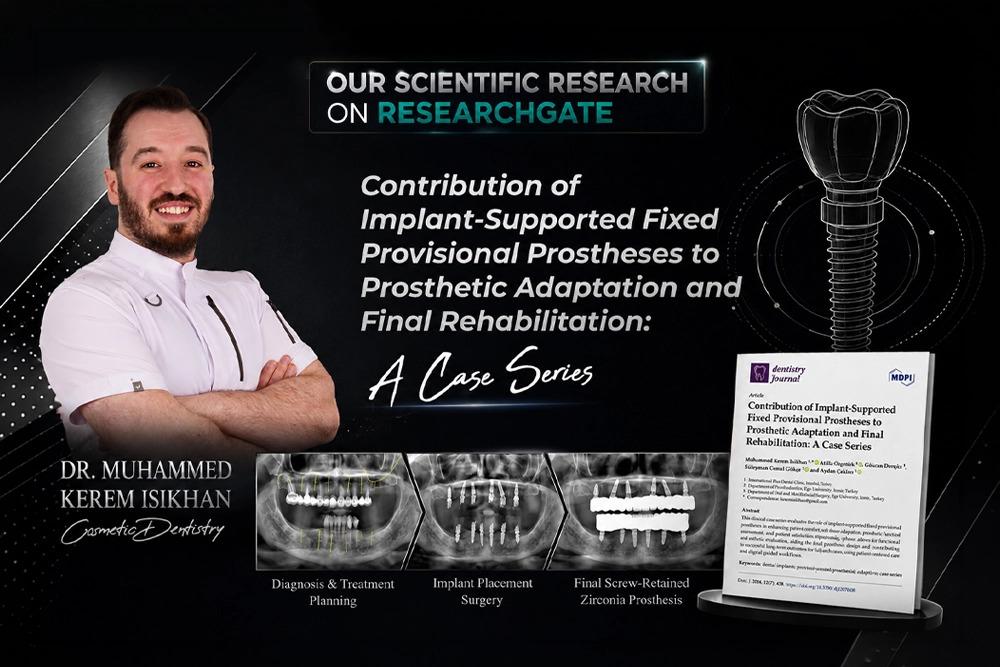
Contribution of Implant-Supported Fixed Provisional Prostheses to Prosthetic Adaptation and Final Rehabilitation: A Case Series
A fixed provisional prosthesis is a temporary bridge screwed onto the implants soon after surgery, so the patient is not left without teeth while the bone heals. This case series follows 20 full-arch patients and 234 implants, and asks what is gained when the vertical dimension and occlusion the patient has already adapted to are carried forward into the definitive zirconia. It also reports the case where that approach reached its limit.
Read the full paper · open access on Academia.edu and ResearchGate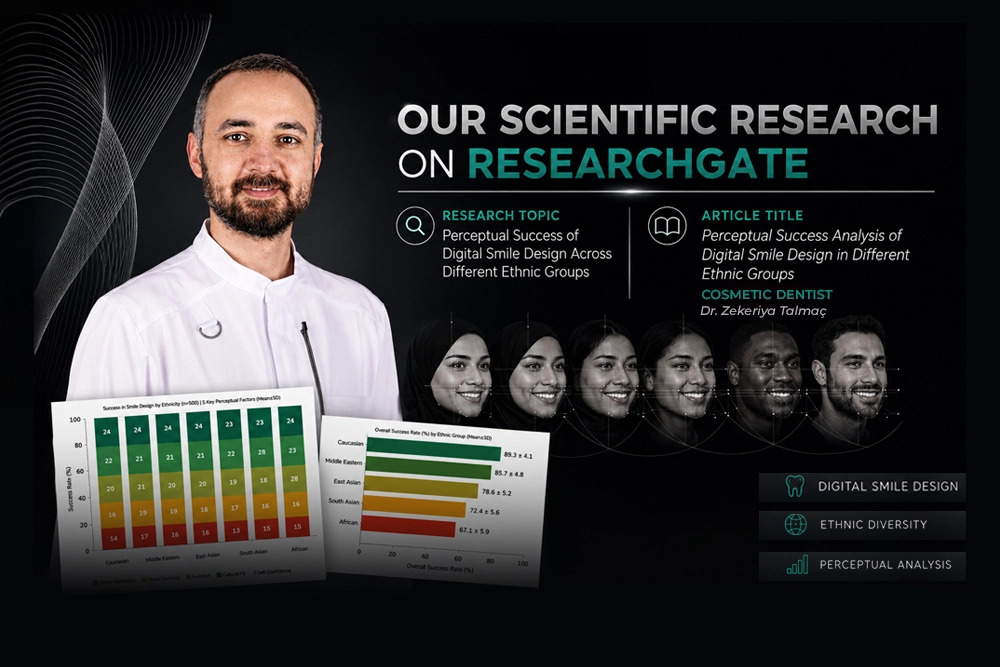
Perceptual Success Analysis of Digital Smile Design in Different Ethnic Groups
Digital smile design builds a proposed smile from proportion references, and most of those references were derived from a narrow range of facial types. This study scores five perceptual factors across 500 assessments and reports how the perceived success of the same protocol shifts between ethnic groups, from 89.3 percent down to 67.1 percent. The finding is not a ranking of faces but a gap in the reference data, and it argues for calibrating the design to the patient rather than to a stored average.
Read the full paper · open access on ResearchGate