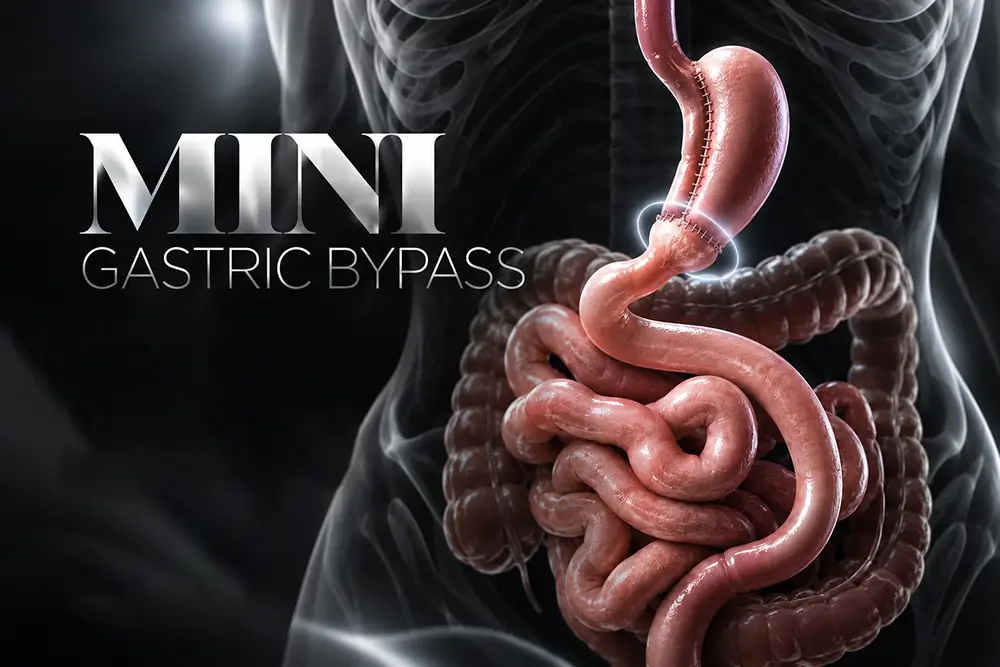

The mini gastric bypass is a metabolic operation that creates a long narrow gastric pouch and joins it to a single loop of small intestine. One surgical connection replaces the two used in classical Roux-en-Y anatomy, which is why the procedure is also called one anastomosis or omega loop gastric bypass. Robert Rutledge described the technique in 1997 and the International Federation for the Surgery of Obesity issued a formal position statement on it in 2018. This guide explains the anatomy, the published comparison against Roux-en-Y, the bile reflux question that still divides surgeons plus what long term follow-up demands.
Key Takeaways
- A mini gastric bypass uses one anastomosis rather than two, which shortens operating time and reduces the number of sites where a leak can occur.
- Randomised trials report weight loss and metabolic improvement broadly comparable to Roux-en-Y gastric bypass with different side effect profiles.
- Bile reflux remains the central technical debate because the loop configuration can expose the gastric pouch to biliopancreatic content.
- Lifelong micronutrient supplementation plus annual biochemical monitoring are mandatory and deficiency risk runs higher than after a sleeve.
- International Plus has coordinated care for more than 200,000 patients from 140+ countries since 2014 under Turkish Ministry of Health authorisation. Individual results may vary.
What Is a Mini Gastric Bypass in Anatomical Terms?
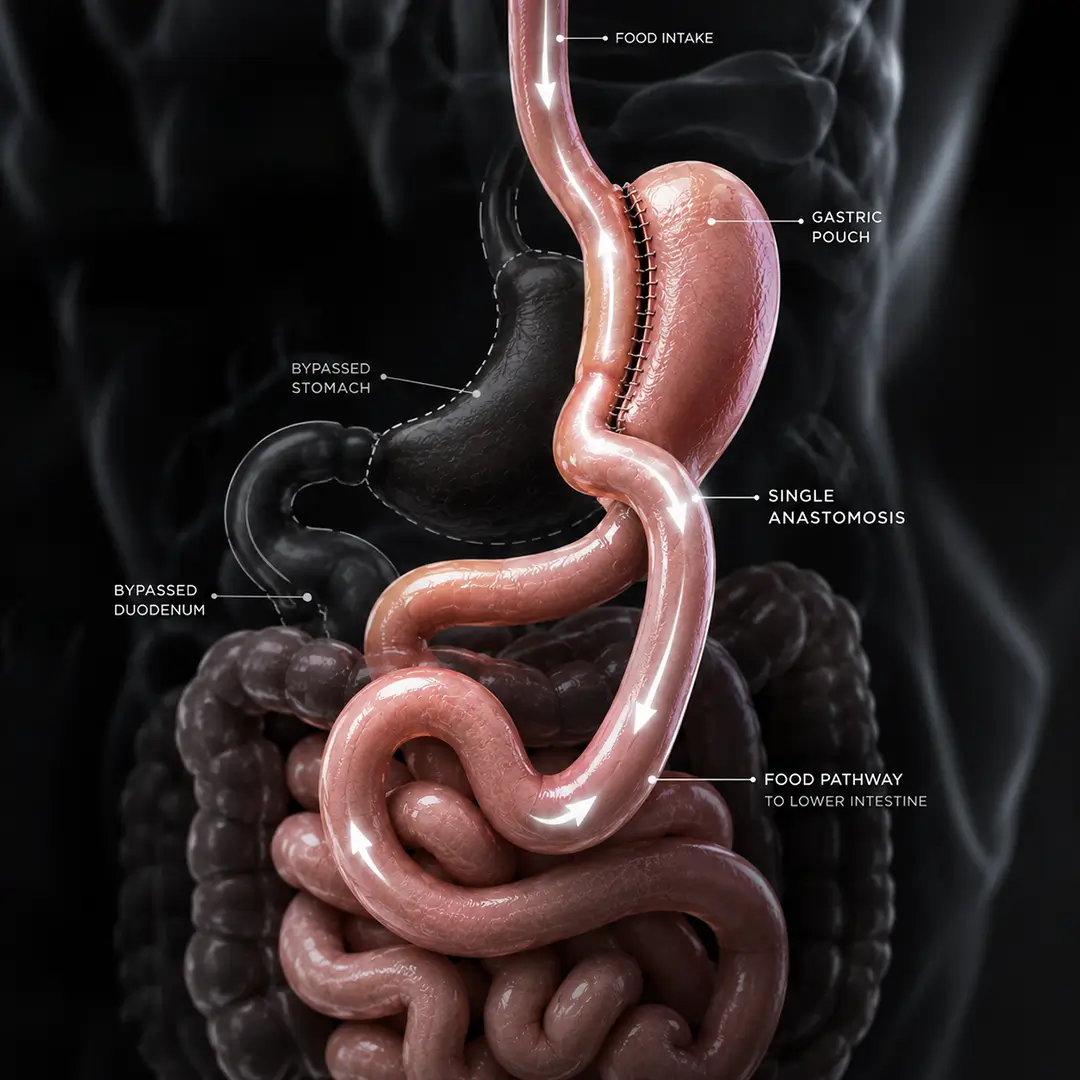
A mini gastric bypass creates a long, narrow gastric pouch along the lesser curvature of the stomach and connects that pouch directly to a loop of jejunum. Only one join is constructed. Nothing is removed from the body, which distinguishes the procedure from a sleeve gastrectomy where a large portion of stomach is resected permanently.
The pouch is calibrated over a bougie and deliberately shaped as a tube rather than a small reservoir. Surgical descriptions place the biliopancreatic limb at roughly 150 to 200 cm measured from the ligament of Treitz with the shorter length favoured when preoperative body mass index sits below 50. At least 300 cm of small bowel is kept in the food stream to limit malabsorption. The fundus is deliberately excluded from the pouch. These measurements are not cosmetic details; they are the variable that separates an effective operation from a nutritionally punishing one.

How Does a Mini Gastric Bypass Produce Weight Change?
Three mechanisms operate together rather than in sequence. Restriction limits the volume the narrow pouch holds at one sitting. Bypassing the first portion of small intestine reduces the calories absorbed from what is eaten. Hormonal change alters appetite signalling, lowering ghrelin while raising glucagon-like peptide 1.
That third mechanism explains why metabolic improvement often appears before substantial weight change. Jia D, et al., 2020 pooled randomised trials comparing the two bypass configurations and found comparable metabolic outcomes across the evidence base. Glycaemic control improves through altered gut signalling rather than through calorie restriction alone. Published cohorts describe outcomes, never individual predictions. Patients wanting the restrictive-only alternative explained will find it in our guide to what is a gastric sleeve, which covers a procedure with no intestinal component at all.
Mini Gastric Bypass vs Gastric Bypass: What Actually Differs?
Both operations create a small gastric pouch and bypass a segment of intestine so the difference sits in the plumbing rather than in the principle. Roux-en-Y builds two anastomoses and a separate biliopancreatic limb. The one anastomosis version builds a single loop connection, which shortens the procedure and removes one potential leak site.
| Feature | Mini gastric bypass (OAGB) | Roux-en-Y gastric bypass |
| Anastomoses | One loop connection | Two separate connections |
| Reported operating time | Shorter in comparative series | Longer in comparative series |
| Internal hernia risk | Lower, fewer mesenteric defects | Recognised long term risk |
| Bile reflux | Central debate, low single digit rates | Diverted away from the pouch |
| Reversibility | Anatomy can be restored | Technically more involved |
Robert M, et al., 2024 published five year results from the YOMEGA randomised trial comparing the two operations directly. Karagul S, et al., 2024 reported a separate prospective randomised comparison. Readers comparing the sleeve against classical bypass instead will find that pairing in our overview of gastric sleeve versus gastric bypass.
What Advantages Do Published Series Report?
Comparative studies consistently describe a shorter, technically simpler operation. Fewer anastomoses mean fewer sites where a leak can develop. Internal hernia and small bowel obstruction appear less frequently because the configuration creates fewer mesenteric defects. The American Society for Metabolic and Bariatric Surgery formally endorsed the procedure in 2022.
Heinonen S, et al., 2023 reported one year results from the RYSA multicentre randomised trial covering weight loss, metabolic improvement plus nutritional status across both configurations. Elsaigh M, et al., 2024 published a systematic review of comparative safety and efficacy drawn from randomised evidence. Reversibility is a genuine structural advantage because nothing is resected so the anatomy can be restored or converted if a problem emerges. Kermansaravi M, et al., 2024 examined the procedure across further comparative outcomes. Patients researching what happens when a first operation underperforms will find the routes described in our article on gastric sleeve revision.
What Is the Bile Reflux Debate Actually About?
Bile reflux is the one criticism that has followed this operation since its introduction. The loop configuration keeps biliopancreatic content in continuity with the gastric pouch so bile can theoretically travel upward. Reported rates of clinically relevant bile reflux sit in the low single digit percentage range across published series.
Two responses exist. Surgeons can add sutures between the afferent limb and the pouch to reduce reflux mechanically or convert the anatomy to Roux-en-Y if symptoms persist. Kapellas N, et al., 2024 published a meta-analysis of randomised trials examining reflux outcomes across the two bypass types. Long term cancer risk remains unresolved rather than proven either way and surgical bodies acknowledge that follow-up data does not yet extend far enough to close the question. A mini gastric bypass suits patients seeking a single anastomosis operation but it is not the right choice for someone with significant established reflux because the loop can expose the pouch to bile.
Who Is Assessed for a Mini Gastric Bypass and Who Is Not?
Candidacy is decided by a multidisciplinary team rather than by any threshold a reader can apply independently. Assessment involves a bariatric surgeon, an endocrinologist or physician, a dietitian plus a mental health professional. Preoperative endoscopy is standard because existing reflux or a hiatal hernia changes the surgical conversation entirely.
Several factors push the discussion away from this configuration. Established reflux disease is the clearest. Active smoking is another since nicotine raises the risk of ulceration at the gastrojejunal join. Previous gastric surgery complicates the anatomy. No website, calculator or price list can determine whether this operation is appropriate. Medical options that a physician may evaluate alongside surgery form part of the same consultation. Those exploring a reversible non surgical step first can review our non surgical gastric balloon programme.

What Does Life After a Mini Gastric Bypass Require?
Three obligations continue for life. Micronutrient supplementation is permanent because the bypassed segment normally absorbs iron, calcium plus several fat soluble vitamins. Annual biochemical monitoring is the second. Ongoing dietetic engagement is the third and it matters most during the first two years while eating patterns are rebuilt.
Deficiency risk runs higher after this operation than after a purely restrictive procedure, which is why published guidance recommends closer nutritional surveillance rather than the same schedule used for a sleeve. Iron plus fat soluble vitamin levels deserve particular attention. Some patients experience dumping symptoms after high sugar meals or steatorrhoea after high fat meals. Regular endoscopic surveillance is recommended in several programmes to detect oesophageal changes early. Patients rebuilding their eating pattern will find staged guidance in our gastric sleeve dietary guide.
Schedule a Bariatric Assessment
Understanding Where the Mini Gastric Bypass Fits Today
Anyone weighing a mini gastric bypass should hold two findings together. Randomised evidence places its weight and metabolic outcomes broadly alongside Roux-en-Y gastric bypass, delivered through a shorter and technically simpler operation. The same evidence base leaves bile reflux and very long term oesophageal risk as open questions requiring lifelong surveillance.
Candidacy belongs to a multidisciplinary evaluation and individual results may vary regardless of which configuration is selected. International Plus combines Turkish Ministry of Health authorisation with 5,504 verified reviews at 4.8/5 plus more than 200,000 international patients treated since 2014, coordinating its gastric sleeve surgery in Istanbul and its wider bariatric pathway inside that structure across 21 languages. Readers researching what can go wrong after a restrictive operation will find the honest detail in our article on gastric sleeve complications while those comparing the two main procedures can start with gastric bypass vs sleeve.
Frequently Asked Questions
Is a mini gastric bypass safer than a standard gastric bypass?
Comparative series report shorter operating times and fewer anastomotic sites, which reduces certain technical risks. Safety is not a single number though. Bile reflux and higher nutritional deficiency rates offset some of that advantage so surgical teams weigh both profiles against an individual medical history.
Is a mini gastric bypass reversible?
The anatomy can be restored because nothing is removed from the body, unlike a sleeve gastrectomy where stomach tissue is resected permanently. Reversal or conversion is still major abdominal surgery requiring its own assessment and consent. Reversibility is a technical property rather than a routine plan.
How long does the operation take?
Published comparative studies report shorter operating times than Roux-en-Y gastric bypass, typically around two hours for an uncomplicated case. Hospital stay is usually one to two nights. Anaesthetic planning takes longer when sleep apnoea or cardiac comorbidity is present in the medical history.
Does a mini gastric bypass cause bile reflux?
Clinically relevant bile reflux is reported in the low single digit percentage range across published series. Surgeons may add anti-reflux sutures during the operation to reduce the risk. Where symptoms persist despite medical management, conversion to Roux-en-Y anatomy is the established surgical solution.
What vitamins are needed after the operation?
Lifelong supplementation is mandatory because the bypassed intestinal segment normally absorbs iron, calcium plus fat soluble vitamins. Annual blood tests monitor those levels alongside vitamin B12 and folate. Deficiency risk is higher than after purely restrictive surgery so supplementation cannot be treated as optional.
What determines the cost of a mini gastric bypass?
Cost reflects operating time, hospital stay, preoperative investigation plus the depth of the follow-up programme attached to the surgery. Insurance coverage varies widely because some providers still classify the procedure differently from Roux-en-Y. A personalised estimate follows clinical assessment rather than preceding it.
Reviewed by Dr. Eren Gülbahar
References
- Jia D, et al. Obes Surg. 2020. PMID: 31749109
- Robert M, et al. Lancet Diabetes Endocrinol. 2024. PMID: 38452784
- Heinonen S, et al. Obesity (Silver Spring). 2023. PMID: 37987183
- Kapellas N, et al. Obes Surg. 2024. PMID: 39499394
- Elsaigh M, et al. Cureus. 2024. PMC11549682
- Karagul S, et al. Medicina (Kaunas). 2024. PMC10890302
- Kermansaravi M, et al. Obes Surg. 2024. PMID: 39496986
Follow us on Social Media
internationalplusofficial
internationalplus
internationalplusdental
This content is written, reviewed, and approved by the International Plus Medical Review Board to ensure clinical accuracy and adherence to strict editorial standards. All medical information is regularly monitored, audited and updated in light of the latest scientific advancements.
However the information provided here is for general informational purposes only and cannot be used for self diagnosis or making individual health interpretations. Results of medical treatments depend on individual anatomy and the unique healing process of each patient. This information should not replace a personal consultation with a qualified healthcare professional. To understand the best options for your specific needs and to receive a personalized treatment plan, we invite you to book a free consultation with the expert medical team at International Plus.

I am a healthcare professional with over 4 years of experience in dentistry, specializing in prosthetic dental treatment and implant-based applications. Since 2024, I have been serving as chief physician, leading clinical management, team coordination, and international patient processes. With my B2-level English proficiency, I am able to communicate effectively with international patients. I am a patient-centered, innovative, and solution-oriented dentist who prioritizes patient satisfaction.