
A PRP hair treatment concentrates platelets from a patient’s own blood, then delivers that concentrate into thinning scalp zones. Marketing tends to present the injection as a substitute for surgery. Published trials tell a narrower story: measurable benefit in selected patients with active follicles, wide variation between protocols, no capacity to regenerate follicles that are already gone. This International Plus guide covers preparation, candidacy, evidence quality, plus the role platelet-rich plasma plays alongside transplantation in our practice.
Key Takeaways
- A PRP hair treatment uses autologous plasma so the preparation contains no drug, no donor tissue, no synthetic filler.
- Preparation protocols are not standardised, which explains why published results range from clear density gains to no measurable difference against saline.
- PRP supports follicles that still exist; the injection cannot rebuild a bald zone where follicular units have been lost.
- Evidence for PRP as a companion to hair transplantation is more consistent than evidence for PRP as a standalone cure.
- Most protocols run 3 to 4 sessions spaced roughly a month apart, followed by maintenance intervals decided at examination.
What Is PRP Hair Treatment?
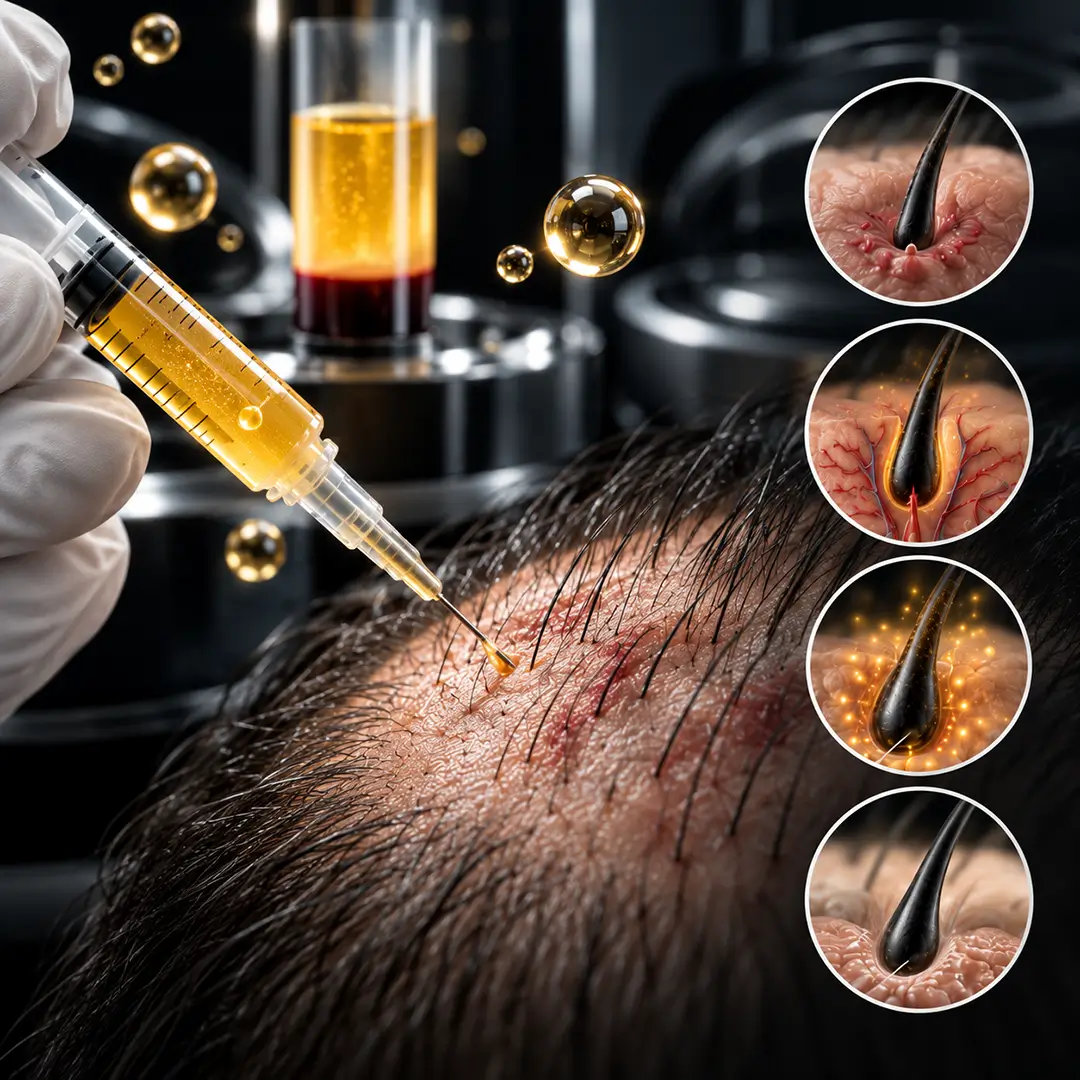
PRP hair treatment is an autologous procedure in which a small venous blood sample is spun in a centrifuge, separating a platelet concentrate that is then injected into thinning areas of the scalp. Platelets release growth factors involved in tissue repair. No medication and no donor material enter the preparation.
Terminology matters here. Platelet-rich plasma describes plasma with a platelet count above whole-blood baseline, usually expressed as a multiple of that baseline. Concentration alone does not define quality since leukocyte content, activation method plus spin cycles all shift the final product. A 2024 systematic review across medical and surgical specialties by Rahman and colleagues in the Journal of Clinical Medicine found that quality reporting and regulatory enforcement lag well behind clinical adoption. Our dermatology and surgical teams therefore document the exact kit, spin protocol plus platelet multiple for every scalp case rather than describing the session simply as PRP.
How Is Platelet-Rich Plasma Prepared for the Scalp?
Preparation follows four controlled steps: venous draw, centrifugation, separation of the platelet layer, then injection across the affected zone. Volume drawn typically sits between 10 and 60 millilitres depending on the treated surface. Injection depth targets the dermal layer where the follicular bulge sits, delivered through fine needles across a grid pattern.
Protocol variables are the reason two clinics can offer the same named service and produce different outcomes. Stevens and Khetarpal reviewed the androgenetic alopecia literature in the International Journal of Women’s Dermatology (2019) and proposed a treatment protocol precisely because published regimens diverged so sharply on spin speed, activation plus session spacing. In our clinic the same operator prepares and injects each case and the platelet multiple is recorded in the patient file so later sessions can be compared against the first.
| Preparation variable | Common options | Why the choice matters |
| Spin cycles | Single spin, double spin | Double spin raises platelet concentration but increases handling time |
| Platelet multiple | Roughly 2x to 6x baseline | Very high multiples have not shown proportionally better scalp outcomes |
| Leukocyte content | Leukocyte-rich, leukocyte-poor | Leukocyte-poor preparations are generally preferred for dermatologic use |
| Activation | Calcium chloride, thrombin, none | Activation timing changes how quickly growth factors are released |
| Delivery | Injection, microneedling combination | Combined delivery is studied but adds an inflammatory variable |
Every row above represents a decision made before the needle touches the scalp, not a marketing label.
Does PRP Hair Loss Treatment Actually Work?
Trial evidence for PRP hair loss treatment points toward modest density improvement in androgenetic alopecia though the size of that improvement varies considerably and several controlled studies found no significant difference against placebo. Honest counselling presents both sides. Response rates cannot be predicted before a course begins.
Positive and negative findings sit side by side in the literature. A placebo-controlled pilot randomised trial by Gressenberger and colleagues in Acta Dermato-Venereologica (2020) reported limited separation from control. A randomised controlled trial in Asian patients led by Chuah and colleagues in the Indian Journal of Dermatology, Venereology and Leprology (2023) documented efficacy in that population. Combination work has been more encouraging: Janaani and colleagues in Archives of Dermatological Research (2025) compared PRP added to topical medical support against medical support alone. Reviewing this spread, Kourosh and colleagues in Dermatologic Surgery (2024) described hair restoration PRP as advancing but still contested. Our coordinators quote that uncertainty openly during consultation and individual results may vary.
Who Responds to a PRP Hair Treatment and Who Does Not?
Candidates who respond best show early to moderate thinning with miniaturising follicles still present under trichoscopy. Patients with long-standing bald zones, extensive scarring or destroyed follicular openings fall outside the realistic indication. Only a physician who examines the scalp can place a patient into either group.
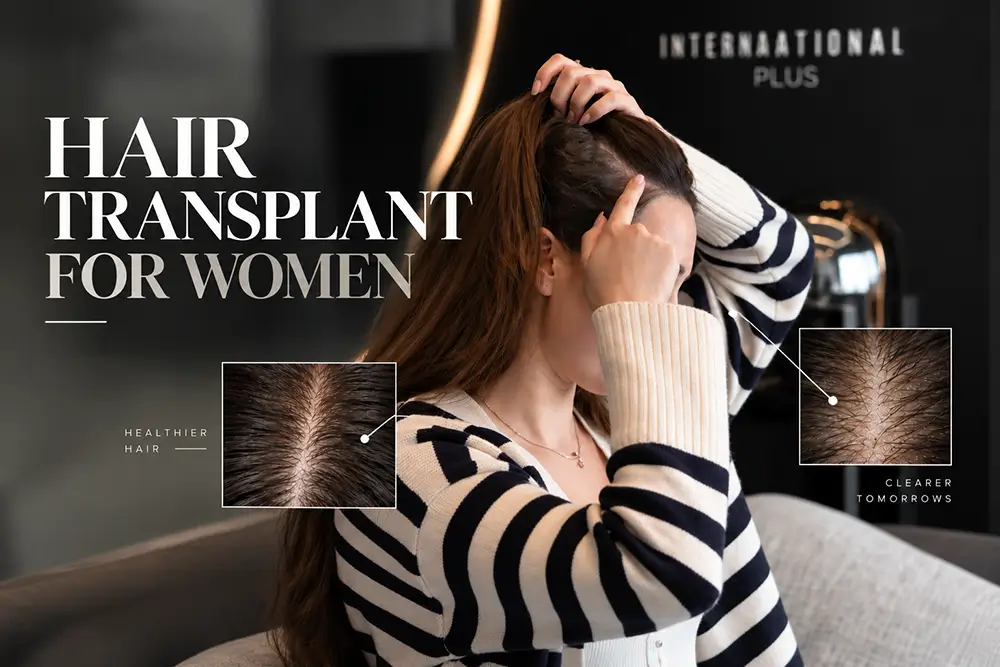
Selection discipline protects patients from spending on a treatment that cannot help them. PRP therapy suits early androgenetic thinning but the same protocol disappoints across a fully bald crown because platelet growth factors cannot recreate follicular units that no longer exist. Diffuse thinning in women often falls inside the responsive group, which is why a candidacy conversation for a woman’s hair restoration plan frequently begins with medical and regenerative options rather than surgery. Scarring alopecias behave differently again. Our medical team screens ferritin, thyroid function plus family pattern before any injection course is scheduled since correctable systemic causes deserve treatment first. Detailed candidacy criteria appear in our guide to hair transplant planning for women.
How Does PRP Support a Hair Transplant?
Adjunctive use is where platelet-rich plasma evidence looks strongest. Grafts placed during surgery pass through an ischaemic window before revascularisation and PRP is applied to shorten that vulnerable period. Protocols vary: graft holding solution, recipient site infiltration, post-operative scalp sessions or some combination of these routes.
A 2025 systematic review by Sindhusen and colleagues in Cureus examined PRP as an adjunct to hair transplantation and reported signals favouring graft survival and earlier regrowth. Surgical logic supports the finding since transplanted follicles depend entirely on recipient bed vascularity during the first days. At International Plus, more than 200,000 patients from 140 countries have been treated since 2014 and our hair unit offers PRP as a companion protocol around hair transplant surgery in Istanbul rather than as a competing product. Patients comparing techniques often read our DHI implanter pen analysis alongside this page. Facial work such as a beard transplant procedure follows the same adjunct reasoning.
What Drives the Cost of a PRP Hair Treatment?
Cost of PRP hair treatment is driven by session count, the kit used for separation, the seniority of the clinician injecting, plus whether treatment runs as a standalone course or as a surgical add-on. Published price lists rarely disclose which kit or protocol they cover so comparison across clinics is unreliable.
Four factors deserve attention before any figure is discussed. Session count comes first because a single injection rarely represents a full course. Kit quality follows since closed sterile systems cost more than basic tubes. Operator time matters where a physician rather than an assistant performs the injections. Maintenance planning completes the picture because density gains fade without repeat sessions. Our coordinators issue a written plan naming the protocol and the number of sessions before payment is discussed, the same transparency principle applied in our breakdown of what drives hair transplant pricing. No responsible clinic quotes a scalp figure before examining the scalp.
What Happens During and After a PRP Session?
A PRP session runs roughly 45 to 60 minutes from blood draw to final injection. Topical anaesthetic or a cooling device reduces discomfort during the injection phase. Most patients return to normal activity the same day. Mild tenderness, pinpoint bleeding plus short-lived swelling are the usual immediate findings.
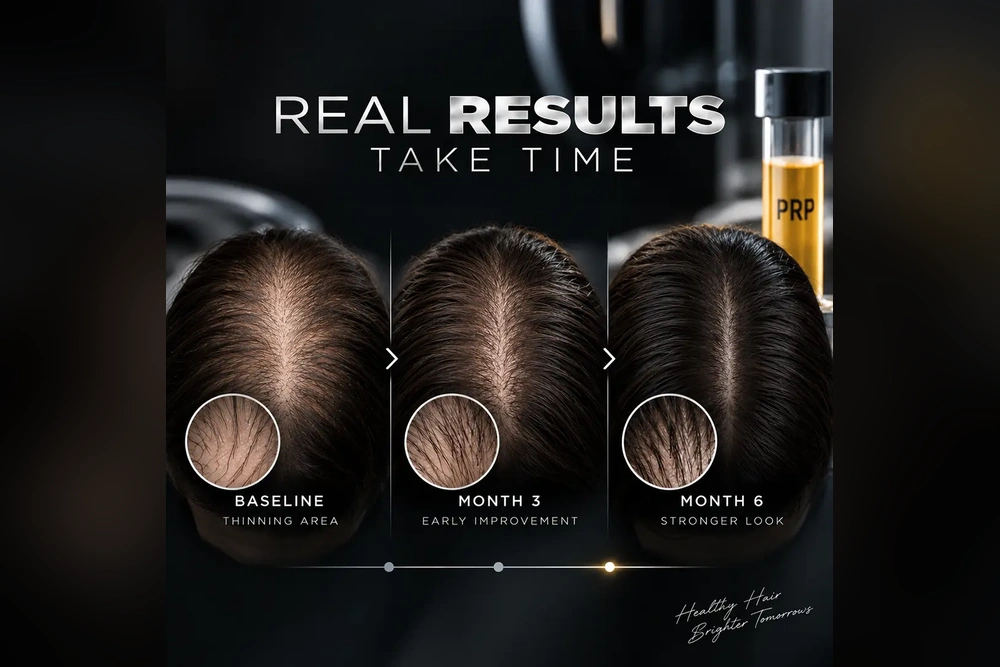
Aftercare is simple yet worth following. Washing is usually delayed until the following morning. Vigorous exercise, sun exposure plus alcohol are avoided for a short period on our aftercare sheet. Photographic review at month 3 and month 6 replaces subjective impressions because shedding cycles make week-to-week judgement unreliable. Patients tracking surgical recovery instead can consult our regrowth timeline documentation and the donor area healing guide. International Plus holds a 4.8/5 rating across 5,504 verified patient reviews, operates under Turkish Ministry of Health authorisation and supports patients in 21 languages.
Book a scalp assessment with our coordination team and receive a written opinion on whether regenerative support, surgery or medical management fits your scalp.
Frequently Asked Questions
How many PRP sessions are needed for hair?
Most published protocols use three or four sessions spaced about four weeks apart, followed by maintenance every six to twelve months. Session count depends on thinning severity and individual response. A physician reassesses density with trichoscopy before extending a course since continuing without measurable change wastes both time and money.
Is PRP hair treatment painful?
Discomfort is usually described as brief pinching during the injection phase. Topical anaesthetic cream, cooling air or a vibration device reduces the sensation considerably. The blood draw itself feels like a routine laboratory test. Tenderness across the scalp may persist for a day, then settles without medication in most patients.
Can PRP regrow hair on a completely bald area?
No. Platelet-rich plasma acts on follicles that still exist in a miniaturised or weakened state. Areas that have been smooth and bald for years generally lack viable follicular units so injection produces no meaningful change there. Surgical transfer of follicles from the donor area remains the option in that situation.
Does PRP work for female pattern hair loss?
Women with diffuse thinning and preserved follicular openings often sit inside the responsive group and several controlled trials have included female participants. Results vary between individuals. Screening for iron deficiency, thyroid disorder plus hormonal contributors comes first because correcting a systemic cause frequently improves density without any injection at all.
Is PRP safe since it uses my own blood?
Autologous preparation removes allergy and rejection concerns associated with foreign material though the injection itself still carries the ordinary risks of any needle procedure: bruising, tenderness, infection at very low frequency. Sterile technique and a closed preparation system matter. Patients on anticoagulants require a physician review before any scalp injection course begins.
How soon do PRP results become visible?
Reduced shedding is often the first change patients report, sometimes within the first two months. Visible density change generally reads between month three and month six and photographic comparison under identical lighting is the only reliable way to judge it. Gains from a PRP hair treatment tend to fade over the following year without maintenance sessions.
Reviewed by Dr. Eren Gülbahar
References
- Rahman E, et al. J Clin Med. 2024. PMC11313071
- Stevens J, et al. Int J Womens Dermatol. 2019. PMC6374694
- Gressenberger P, et al. Acta Derm Venereol. 2020. PMC9207632
- Chuah SY, et al. Indian J Dermatol Venereol Leprol. 2023. PMID: 36331864
- Janaani P, et al. Arch Dermatol Res. 2025. PMID: 39954138
- Kourosh AS, et al. Dermatol Surg. 2024. PMID: 38376068
- Sindhusen S, et al. Cureus. 2025. PMC12506585
Follow us on Social Media
internationalplusofficial
internationalplus
internationalplusdental
This content is written, reviewed, and approved by the International Plus Medical Review Board to ensure clinical accuracy and adherence to strict editorial standards. All medical information is regularly monitored, audited and updated in light of the latest scientific advancements.
However the information provided here is for general informational purposes only and cannot be used for self diagnosis or making individual health interpretations. Results of medical treatments depend on individual anatomy and the unique healing process of each patient. This information should not replace a personal consultation with a qualified healthcare professional. To understand the best options for your specific needs and to receive a personalized treatment plan, we invite you to book a free consultation with the expert medical team at International Plus.

I am a healthcare professional with over 4 years of experience in dentistry, specializing in prosthetic dental treatment and implant-based applications. Since 2024, I have been serving as chief physician, leading clinical management, team coordination, and international patient processes. With my B2-level English proficiency, I am able to communicate effectively with international patients. I am a patient-centered, innovative, and solution-oriented dentist who prioritizes patient satisfaction.