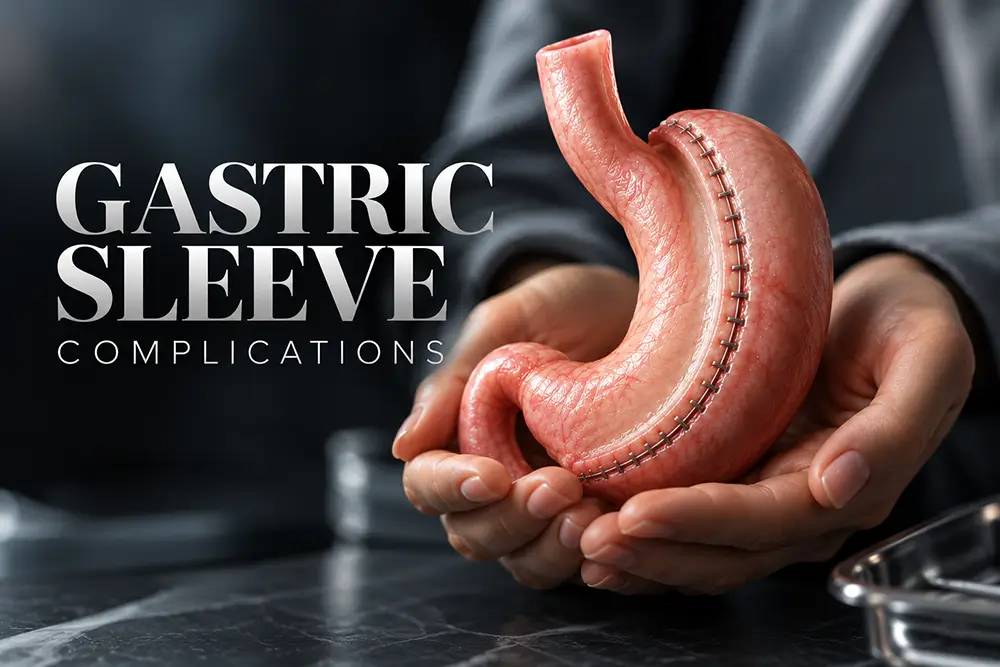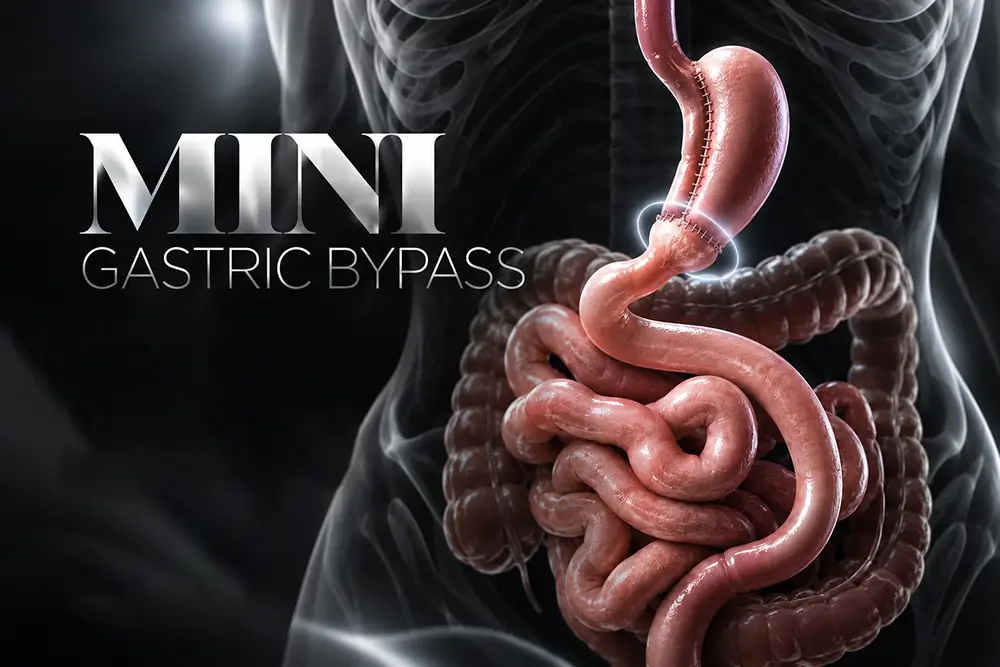

A gastric sleeve revision is a second metabolic operation performed after a sleeve gastrectomy and the conversation usually begins years rather than months after the first surgery. Two clinical pictures dominate. One is weight recurrence or an insufficient response over time. The other is reflux that no longer settles with medical management. Neither picture is a verdict on the patient or on the original operation. Revisional bariatric surgery is a recognised branch of metabolic practice with published outcome data behind it, a distinct risk profile plus a defined assessment pathway. This guide explains what revision changes anatomically, which routes exist and how a responsible evaluation is structured.
Key Takeaways
- A gastric sleeve revision describes a second operation on anatomy that already carries a sleeve, most often for weight recurrence or for reflux resistant to medication.
- Three surgical routes dominate practice: re-sleeve, conversion to Roux-en-Y gastric bypass plus conversion to a single anastomosis duodeno-ileal bypass or duodenal switch.
- Revisional procedures carry higher complication risk than first operations because scar tissue and altered anatomy make dissection technically harder.
- The original operative note, a fresh endoscopy plus current imaging are standard requirements before any revision date is discussed. Individual results may vary.
- International Plus has coordinated care for more than 200,000 patients from 140+ countries since 2014 under Turkish Ministry of Health authorisation.
What Does a Gastric Sleeve Revision Actually Involve?
A gastric sleeve revision is any second metabolic operation performed on anatomy that already carries a sleeve gastrectomy. Surgeons either narrow the existing sleeve again or convert that anatomy into a different configuration by adding an intestinal bypass. The original stomach cannot be restored because the resected portion left the body permanently.
Two mechanical goals separate the available routes. Restoring restriction addresses a sleeve that has widened over the years. Adding malabsorption or diverting acid addresses problems that restriction alone cannot solve. Switzer NJ, et al., 2016 reviewed revisional bariatric surgery as an established field rather than a rescue improvisation, describing indication-led selection between these routes. Anatomy decides the option, not preference. In practice, our coordination team finds that patients arrive expecting a single standard answer and leave the first assessment understanding that four different operations sit behind the phrase revision surgery.
Why Do Surgeons Consider Revision After a Sleeve Gastrectomy?
Revision enters the discussion when a documented clinical problem persists despite structured non surgical management. The two dominant indications are weight recurrence or an insufficient metabolic response, plus gastro-oesophageal reflux that resists medication. A third group presents with a mechanical problem such as a stricture at the sleeve.
Axer S, et al., 2023 published a systematic review of weight related outcomes after revisional surgery in patients with non-response following sleeve gastrectomy, confirming that this population is large enough to have its own evidence base. Long term series also document sleeve dilatation over time, which reduces the restriction that produced the early response. Reflux behaves differently. Yeung KTD, et al., 2020 reviewed reflux disease complicating laparoscopic sleeve gastrectomy alongside the surgical therapies used to treat it. Weight recurrence and reflux are separate indications even when they appear in the same patient and they point toward different operations. Anyone comparing the two primary procedures will find the anatomical logic set out in our guide to gastric bypass vs sleeve.
What Are the Main Gastric Sleeve Revision Options?
Four routes appear consistently in the surgical literature and in accredited bariatric programmes. Re-sleeve restores restriction by narrowing a widened sleeve. Conversion to Roux-en-Y gastric bypass diverts acid away from the oesophagus. A duodenal switch, or its single anastomosis version, adds intestinal bypass to the existing sleeve. Endoscopic suturing offers a non surgical alternative in selected cases.
| Route | Primary purpose | Main consideration |
| Re-sleeve | Restore restriction in a dilated sleeve | Staple line crosses scarred tissue |
| Conversion to Roux-en-Y bypass | Divert acid, address reflux plus weight | Two anastomoses, lifelong supplementation |
| Duodenal switch or SADI-S | Add intestinal bypass for metabolic effect | Closer nutritional monitoring required |
| Endoscopic sleeve-in-sleeve | Reduce capacity without incisions | Suitable only for selected anatomy |
Carbonaro J, et al., 2024 reported five year outcomes across revisional pathways while Dreifuss NH, et al., 2021 described robotic revisional experience from a high volume centre. Selection depends on the sleeve anatomy seen on imaging rather than on any general ranking of the four options.
When Is Revision Chosen for Reflux Rather Than for Weight?
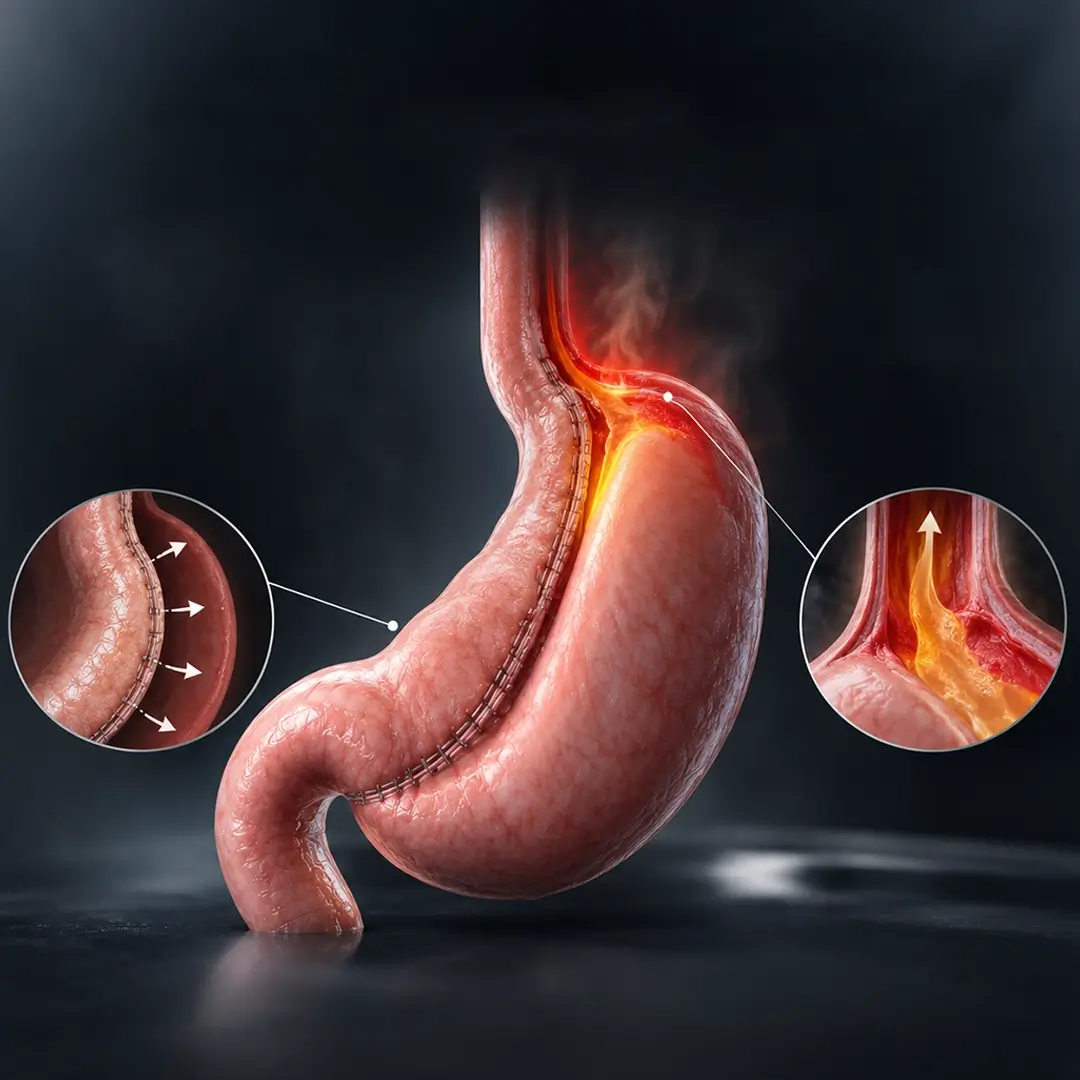
Reflux driven revision follows a different logic from weight driven revision. A sleeve is a high pressure tube without an intestinal outlet so acid can travel upward toward the oesophagus. Roux-en-Y gastric bypass creates a lower pressure pouch and routes bile away, which is why it dominates the reflux indication.
Endoscopy comes first because symptoms alone cannot distinguish reflux from a stricture and because Barrett’s oesophagus changes the surveillance plan permanently. Bypass conversion suits patients whose dominant problem is acid exposure but it is not the automatic answer for isolated weight recurrence because the two indications respond to different anatomical changes. Peng BQ, et al., 2020 examined outcomes after conversion procedures following sleeve gastrectomy. Patients weighing the reflux question against the restriction question will find the underlying operations compared in our overview of gastric sleeve versus gastric bypass.

How Does a Second Operation Differ From the First?
Revisional surgery differs from primary surgery in three practical ways. Scar tissue from the first operation binds the stomach to the spleen, liver plus surrounding structures. Operating time lengthens considerably. Complication rates rise compared with an equivalent first procedure, which is why accredited programmes treat revision as a separate consent conversation.
Published revision series describe higher leak plus bleeding rates than primary sleeve series and Jawhar N, et al., 2025 reviewed the safety profile of revisional bariatric surgery specifically in older patients where comorbidity adds further weight to that calculation. Recovery also runs longer. Hospital stay is typically measured in a small number of days for uncomplicated cases rather than in a single overnight. Technical difficulty is the reason surgical experience matters more here than in primary surgery. Patients planning the wider journey often review body contouring questions later, which our guide to loose skin after weight loss addresses separately.
What Assessment Comes Before a Revision Decision?
No revision date is discussed before the anatomy is documented. Programmes request the operative note from the first surgery, then arrange a fresh upper endoscopy plus contrast imaging or a volumetric study of the sleeve. Dietetic review, psychological review and medical optimisation run alongside that imaging rather than after it.
Brunaldi VO, et al., 2024 described how objective assessment separates true anatomical failure from behavioural drift, a distinction that changes the recommendation entirely. Medical options that a physician may evaluate before or alongside revision belong in the same discussion. No article, calculator or price list can establish candidacy for a second operation. That conclusion belongs to a multidisciplinary team reviewing one patient’s imaging, history plus nutritional status. Readers who want the baseline procedure explained first can start with our guide to what is a gastric sleeve before reading further here.

What Shapes the Cost of a Gastric Sleeve Revision?
Cost varies by clinical complexity rather than by a fixed tariff and no responsible programme quotes a revision figure before seeing the anatomy. Several components drive the difference between one revision and another. Operative time, the route selected, hospital stay plus the depth of preoperative investigation all move the total in different directions.
Insurance behaviour adds a second variable. Many policies cover revision for a documented complication while excluding revision performed for weight recurrence so the indication written in the notes carries financial weight. Endoscopic routes and open conversions sit at opposite ends of the resource scale. Anyone mapping the full pathway will find the individual line items explained in our breakdown of gastric sleeve cost and those still considering a first, reversible step can read about the gastric balloon option.
Understanding What Gastric Sleeve Revision Offers and What It Asks
Anyone considering a gastric sleeve revision should hold two facts together. The procedure is a legitimate, evidence-supported second step with documented outcomes across several configurations. Revision is also major abdominal surgery on scarred anatomy, carrying more risk than the first operation and asking for the same lifelong monitoring afterwards.
Candidacy belongs to a multidisciplinary evaluation rather than to self-assessment and individual results may vary regardless of which route is selected. International Plus combines Turkish Ministry of Health authorisation with 5,504 verified reviews at 4.8/5 plus more than 200,000 international patients, delivering its sleeve gastrectomy programme inside that multidisciplinary structure across 21 languages. Readers comparing a different primary configuration can review our guide to mini gastric bypass while those researching what can go wrong after the first operation will find the detail in our article on gastric sleeve complications.
Frequently Asked Questions
How long after a sleeve can a revision be performed?
Revision is normally considered years rather than months after the original operation once weight has stabilised and non surgical management has been tried. Early reoperation happens only for a surgical complication such as a leak or a stricture. Timing is decided by the surgical team after imaging and endoscopy.
Is a re-sleeve or a bypass conversion the better option?
Neither option is universally better because the two address different problems. Re-sleeve restores restriction in a widened sleeve. Conversion to Roux-en-Y gastric bypass diverts acid and suits reflux driven cases. The choice follows the anatomy documented on endoscopy plus imaging rather than a general ranking.
Is gastric sleeve revision riskier than the first operation?
Yes. Published series report higher complication rates for revisional procedures than for equivalent primary operations, mainly because scar tissue from the first surgery makes dissection harder and lengthens operating time. Accredited programmes therefore treat revision as a separate consent conversation with its own documented risk profile.
What paperwork does a revision assessment require?
Programmes ask for the operative note and discharge summary from the first bariatric surgery, a full weight and treatment history plus current medications. Fresh upper endoscopy and contrast imaging are then arranged. Without the original operative note the surgical team cannot confirm which configuration is actually present.
What weight outcomes are reported after revision surgery?
No responsible programme promises a specific figure. Published revision series report a range of outcomes across different configurations and populations and long term results depend heavily on structured follow-up. Individual results may vary, which is why cohort averages should never be read as personal predictions.
Can reflux after a sleeve be treated without another operation?
Often yes. Medical management, dietary change plus treatment of any hiatal hernia are attempted first and many patients settle without further surgery. Revision is reserved for reflux that persists despite that treatment or where endoscopy shows changes requiring a different anatomical solution.
Reviewed by Dr. Eren Gülbahar
References
- Switzer NJ, et al. Surg Clin North Am. 2016. PMID: 27473804
- Axer S, et al. Obes Surg. 2023. PMC10289909
- Carbonaro J, et al. Surg Endosc. 2024. PMID: 38532050
- Dreifuss NH, et al. Obes Surg. 2021. PMID: 33392998
- Peng BQ, et al. Surg Obes Relat Dis. 2020. PMID: 32576511
- Brunaldi VO, et al. Obes Surg. 2024. PMID: 38123782
- Jawhar N, et al. Surg Obes Relat Dis. 2025. PMID: 40940273
- Yeung KTD, et al. Ann Surg. 2020. PMID: 31082907
Follow us on Social Media
internationalplusofficial
internationalplus
internationalplusdental
This content is written, reviewed, and approved by the International Plus Medical Review Board to ensure clinical accuracy and adherence to strict editorial standards. All medical information is regularly monitored, audited and updated in light of the latest scientific advancements.
However the information provided here is for general informational purposes only and cannot be used for self diagnosis or making individual health interpretations. Results of medical treatments depend on individual anatomy and the unique healing process of each patient. This information should not replace a personal consultation with a qualified healthcare professional. To understand the best options for your specific needs and to receive a personalized treatment plan, we invite you to book a free consultation with the expert medical team at International Plus.

I am a healthcare professional with over 4 years of experience in dentistry, specializing in prosthetic dental treatment and implant-based applications. Since 2024, I have been serving as chief physician, leading clinical management, team coordination, and international patient processes. With my B2-level English proficiency, I am able to communicate effectively with international patients. I am a patient-centered, innovative, and solution-oriented dentist who prioritizes patient satisfaction.