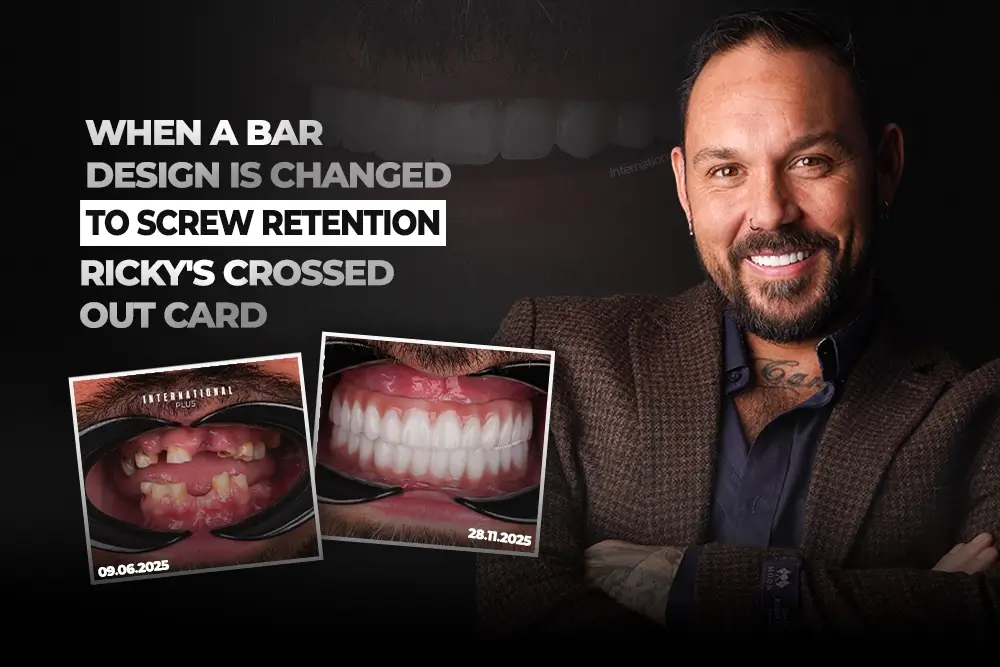

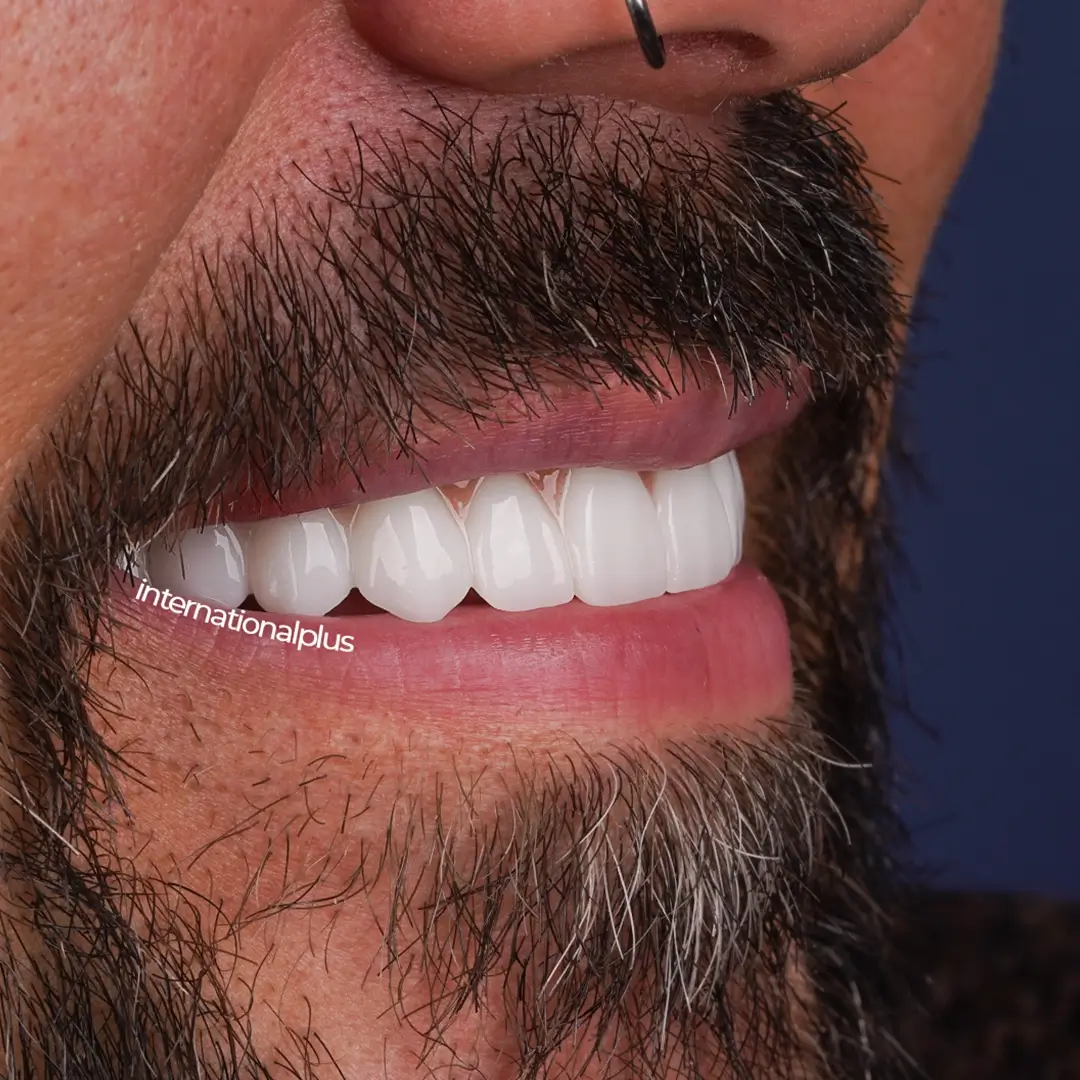
Understanding when a bar design is changed to screw retention is easier with a record that shows the change happening. Ricky was treated at International Plus as an English speaking patient and his card carries the Toronto and bar lines struck through with direct screw retention marked instead. Twenty four zirconia units were delivered across both jaws in shade OM1. The crossing out is the document.
Key Takeaways
- The challenge: A plan where the framework options recorded first were not the ones finally marked on the card.
- The solution: Toronto and bar struck through on the card with direct screw retention marked and 24 units built on it.
- The technique: Shade OM1 with the clinic’s Plus 5 smile design style over Megagen and Implance implants.
- The outcome: 24 units delivered on the retention design that was finally recorded.
Three Ways to Carry a Full Arch Restoration
Full arch restorations are carried in one of a few ways and a treatment card lists them as options before one is marked. All three recorded here are screw retained; what separates them is whether a metal framework sits between the implants and the ceramic.
A bar joins the implants in metal first. A Toronto design spans the arch with a rigid framework. Direct screw retention fixes the restoration to the implants through access channels with no intermediate framework at all.
Research comparing fixation methods in implant reconstructions has reported differences in complication and maintenance patterns (Wittneben JG, et al., 2014) with marginal bone loss examined separately (Lemos CA, et al., 2016). Our Toronto bridge case records the framework route and our two design case records a bar used in one jaw.
What Ricky’s Card Actually Shows
Two lines on this card are struck through. The Toronto entry and the bar entry both carry a line through them and the screw retention box is marked instead with 24 circled beside it.
A struck through entry is an option that was recorded and then set aside rather than erased. That makes this card a record of a decision rather than only of a result.
Most treatment documents show the final plan alone. Megagen and Implance are both named as implant systems here, the shade reads OM1 and the smile design style reads Plus 5. Prosthetic design has been examined against peri-implant outcomes in a systematic review and meta-analysis (Lin GH, et al., 2025). For example, our clinic keeps the superseded lines visible in the file so a clinician reading it later sees both what was built and what was considered.
| Record | Detail |
|—|—|
| Toronto option | Struck through |
| Bar option | Struck through |
| Retention used | Direct screw retention |
| Zirconia units | 24 across both jaws |
| Implant systems | Megagen and Implance |
| Shade | OM1 |
| Smile design style | Plus 5 |
Why a Framework Is Sometimes Not Used
A bar or a Toronto framework adds a metal stage between the implants and the ceramic. That stage brings rigidity across a long span and it also brings an extra manufacturing step and extra height inside the restoration.
Direct screw retention removes the intermediate layer, which can suit an arch where the implants are well distributed and the available height is limited. Prosthetic design has been examined against peri-implant outcomes in a systematic review and meta-analysis (Lin GH, et al., 2025).
Dropping the framework removes a reinforcing layer but it also removes a manufacturing stage because a design with no intermediate metal has fewer components to produce. For example, our clinic records the option that was set aside rather than erasing it so the change itself stays visible in the file.
The 24 Units Built on the Final Design
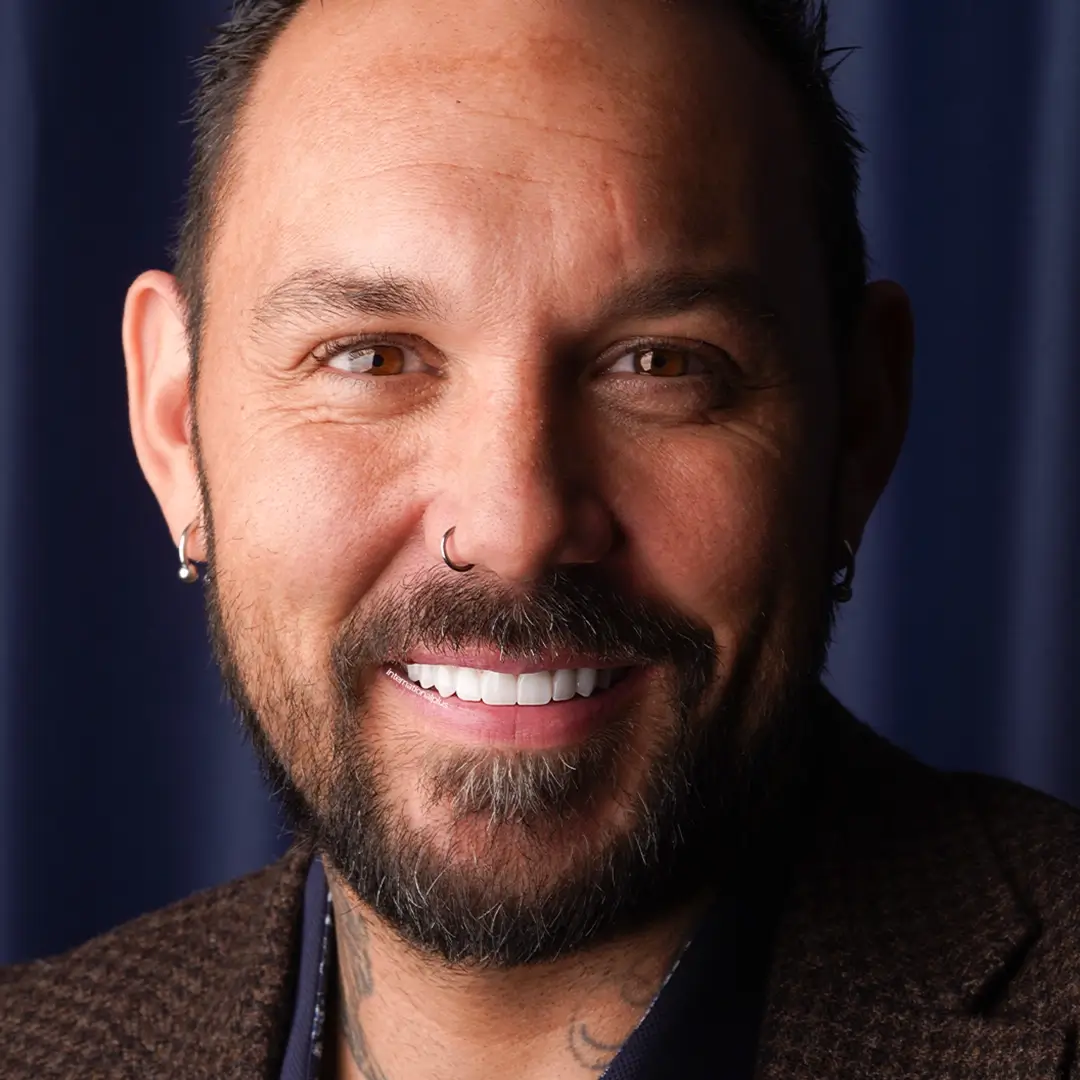
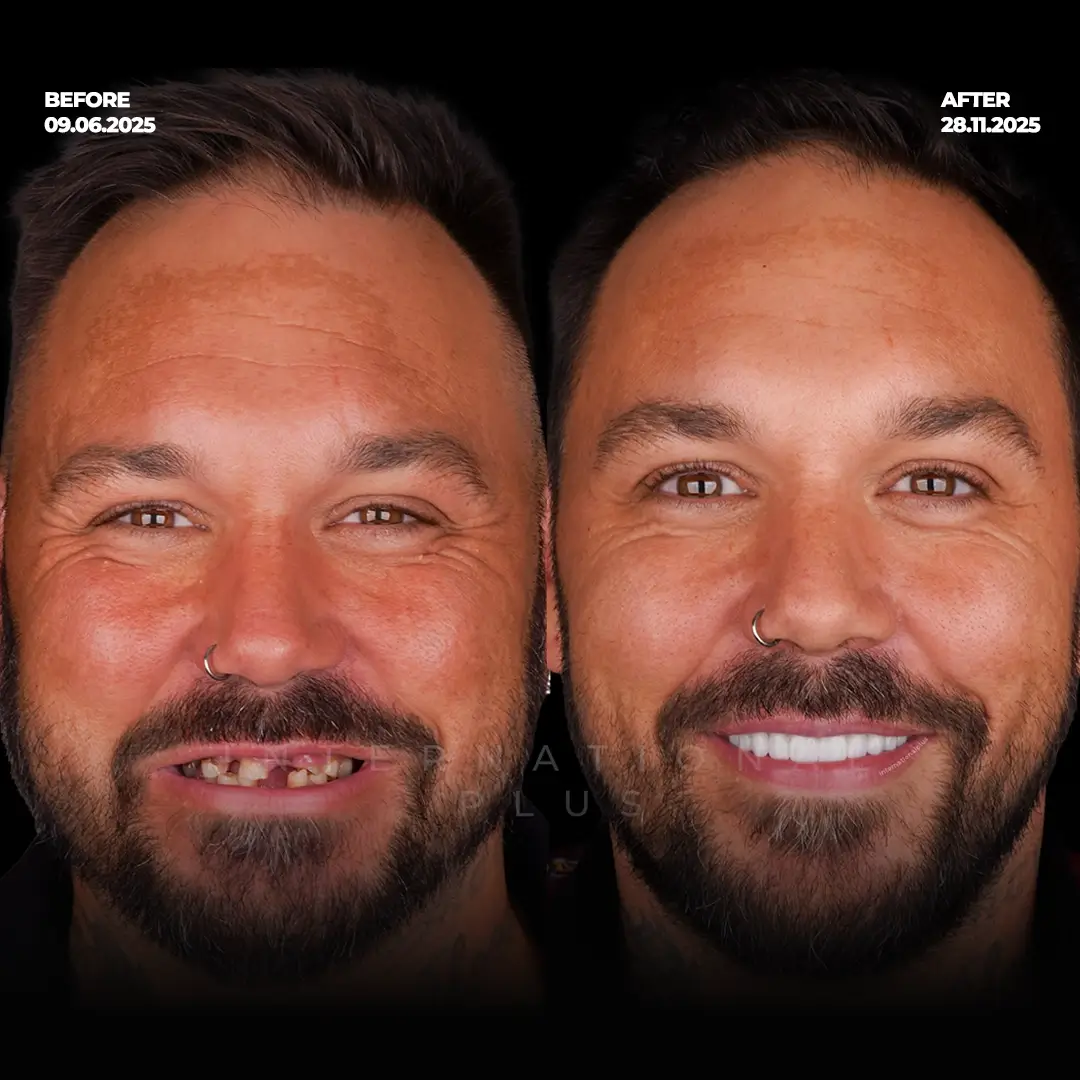
Twenty four zirconia units were produced across both jaws once the design was settled. The ceramic specification did not change with the framework decision since shade and shape are recorded separately from how the restoration is held.
Framework materials have been compared for marginal fit and fracture resistance after thermomechanical ageing (Atsu S, et al., 2024), which is the layer the decision on this card concerned. Survival of implant supported ceramic restorations has been reviewed separately (Pjetursson BE, et al., 2021).
Shade OM1 and the Plus 5 style were both recorded, a planning stage offered as digital smile design. Milling took place in the clinic’s own digital laboratory and implant treatment sits under dental implant.
What the Record Shows
Ricky’s card documents two struck through options, one marked retention design, 24 units, two implant systems and shade OM1. The struck through lines are part of the record rather than a correction to be tidied away.
A clinician reading it later learns two things at once: what the restoration is and what it is not. That second piece of information is missing from most treatment documents. Our clinic keeps the card as written.
This is one patient’s recorded outcome and individual results may vary. International Plus has treated more than 200,000 patients from 140+ countries since 2014 and holds a rating of 4.8 out of 5 across 5,504 reviews. A retention design that suits one arch is not transferable to another on paper alone.
Book a consultation with International Plus if you want to know which design your own jaws would take.
Frequently Asked Questions
What does it mean when options are struck through on a treatment card?
It records that a plan was considered and then changed. Most treatment documents show only the final design so a card with struck through entries carries more information than one without. The crossed out line is kept rather than erased so the sequence stays readable.
What is the difference between a bar and direct screw retention?
A bar joins the implants in metal first and carries the restoration on that framework. Direct screw retention fixes the restoration to the implants through access channels with no intermediate layer. Both are screw retained and they differ in whether a metal stage sits between implant and ceramic.
Why would a framework design be dropped?
A framework adds rigidity across a long span but it also adds a manufacturing stage and takes up height inside the restoration. Where implants are well distributed and vertical space is limited, a design without that intermediate layer can be recorded instead.
Does changing the design change the teeth themselves?
No. Shade and shape are recorded separately from how the restoration is held so a change at the framework level does not alter the ceramic specification. In this record the shade reads OM1 and the smile design style reads Plus 5 regardless of the retention decision.
Why are two implant systems listed on one card?
Components differ between manufacturers so each system is named rather than described generically. A clinician servicing the restoration years later has to identify which system was placed before ordering any replacement part that fits it.
Reviewed by Dr. Eren Gülbahar
References
- Wittneben JG, et al. Int J Oral Maxillofac Implants. 2014. PMID: 24660192
- Lemos CA, et al. J Prosthet Dent. 2016. PMID: 26589441
- Lin GH, et al. J Periodontol. 2025. PMC12273757
- Atsu S, et al. J Prosthet Dent. 2024. PMID: 37620182
- Pjetursson BE, et al. Clin Oral Implants Res. 2021. PMC9293296
Follow us on Social Media
internationalplusofficial
internationalplus
internationalplusdental
This content is written, reviewed, and approved by the International Plus Medical Review Board to ensure clinical accuracy and adherence to strict editorial standards. All medical information is regularly monitored, audited and updated in light of the latest scientific advancements.
However the information provided here is for general informational purposes only and cannot be used for self diagnosis or making individual health interpretations. Results of medical treatments depend on individual anatomy and the unique healing process of each patient. This information should not replace a personal consultation with a qualified healthcare professional. To understand the best options for your specific needs and to receive a personalized treatment plan, we invite you to book a free consultation with the expert medical team at International Plus.

I am a healthcare professional with over 4 years of experience in dentistry, specializing in prosthetic dental treatment and implant-based applications. Since 2024, I have been serving as chief physician, leading clinical management, team coordination, and international patient processes. With my B2-level English proficiency, I am able to communicate effectively with international patients. I am a patient-centered, innovative, and solution-oriented dentist who prioritizes patient satisfaction.