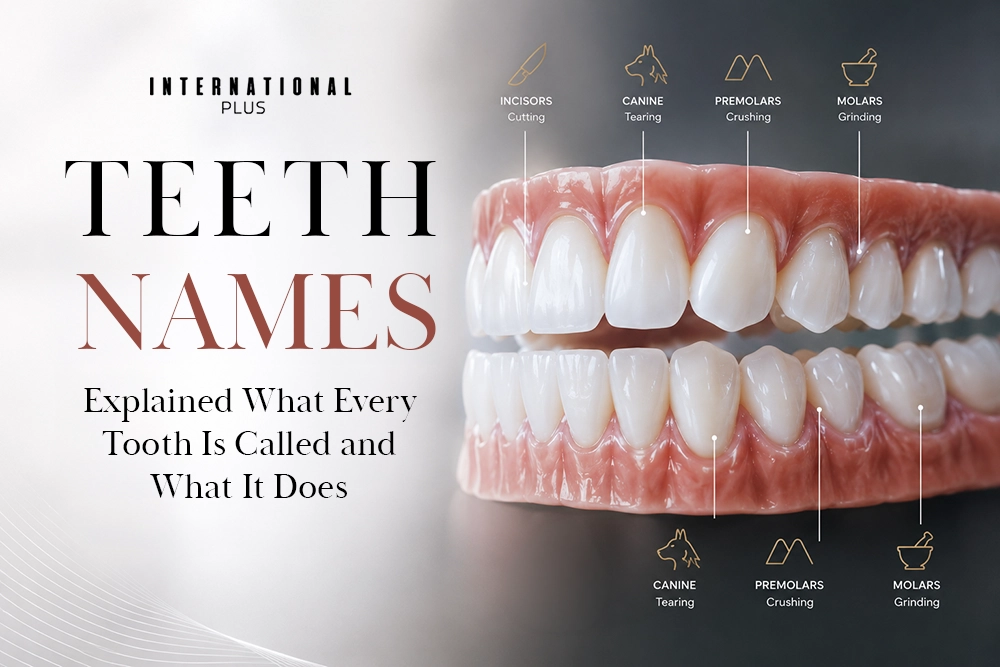
Wisdom teeth removal is the surgical or simple extraction of one or more third molars, the last teeth at the back of each jaw. Most adults have four wisdom teeth and oral surgeons recommend taking a tooth out when it becomes impacted, decayed or repeatedly infected. This guide from International Plus explains the procedure, the recovery timeline, dry socket prevention and the clear signs that mean a third molar needs professional attention. Extraction is not automatic and careful imaging decides who genuinely benefits.
Key Takeaways
- Not every wisdom tooth needs removal: a 2020 Cochrane review supports monitoring asymptomatic, disease-free impacted third molars rather than operating.
- Impaction, infection and decay are the main reasons to extract a wisdom tooth.
- Simple extractions take 10 to 20 minutes while surgical extractions take 20 to 45 minutes.
- Swelling peaks at 48 to 72 hours with comfort usually returning within 7 to 10 days.
- Dry socket affects roughly 1 to 5 percent of lower extractions and is largely preventable.
When Is Wisdom Teeth Removal Necessary and When Is It Not?
Wisdom teeth removal becomes necessary when a third molar is impacted, causes repeated infection, harms the neighbouring second molar or shows decay too deep to restore. Removal is not a default step. A 2020 Cochrane review by Ghaeminia and colleagues found asymptomatic, disease-free impacted wisdom teeth can often be watched instead of extracted. In our practice, roughly one in five fully impacted, symptom-free lower third molars are kept under active review because operating close to the inferior alveolar nerve carries avoidable risk when no disease is present. Our Diagnostic Council reviews a 3D CBCT scan to map every root against the nerve canal before planning any lower extraction. A partly erupted molar with recurring gum inflammation is different and ongoing periodontal care for pericoronitis or timely surgery is the safer route. A broader examination sometimes uncovers hidden dental disease that reshapes the plan. Cysts and progressive decay remain firm reasons to operate.
How Does the Wisdom Teeth Removal Procedure Work?
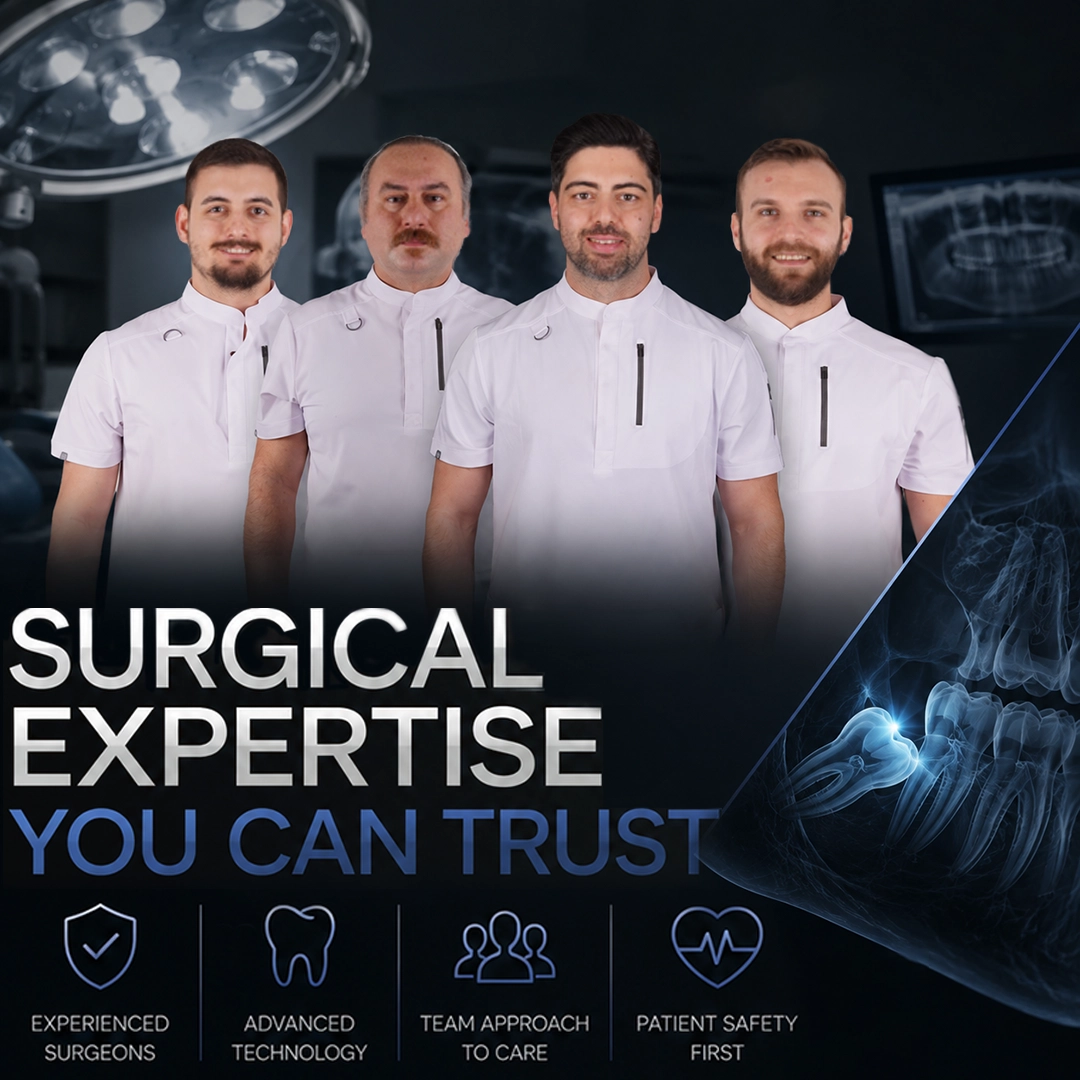
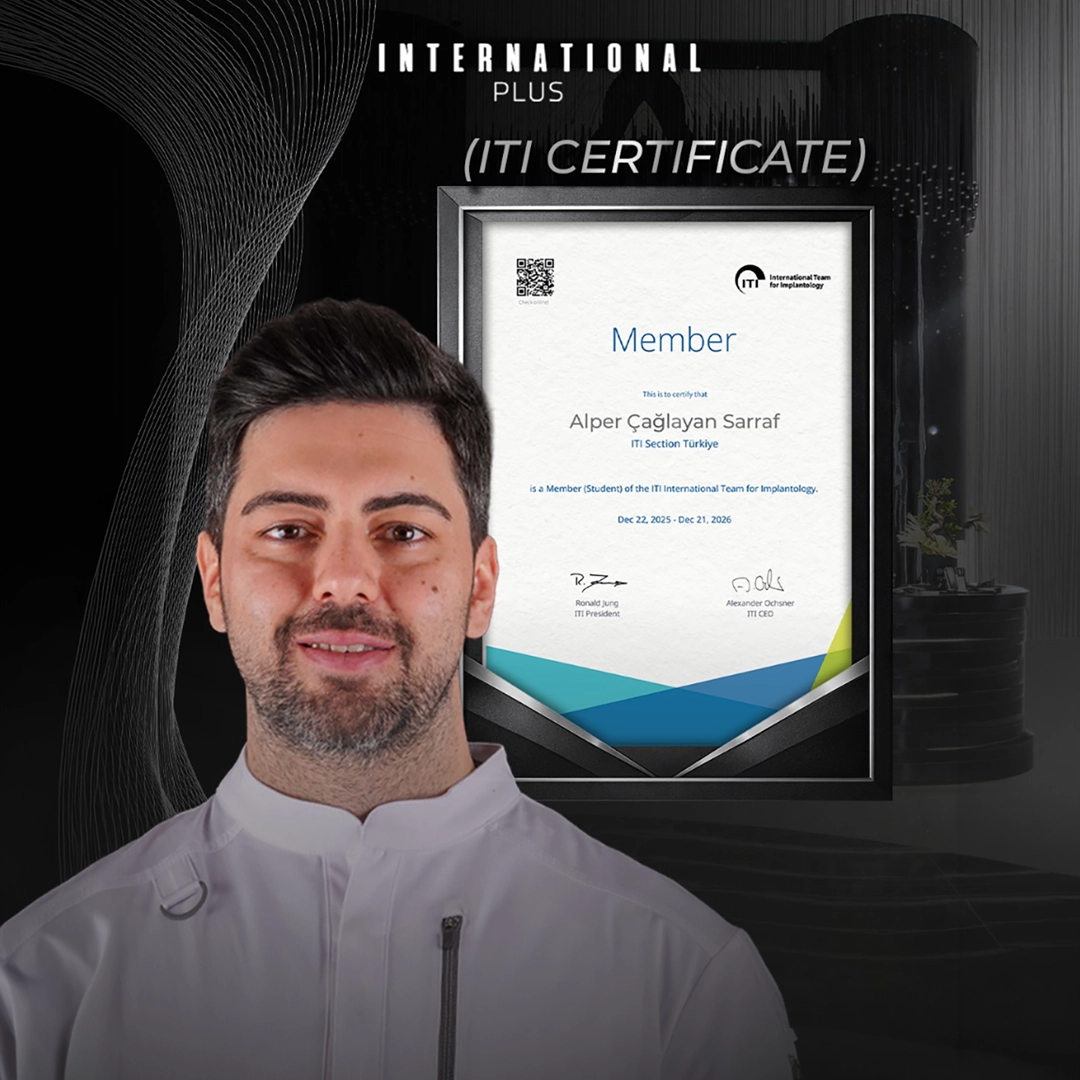
The wisdom teeth removal procedure works in clear stages, carried out under local anaesthesia or sedation for comfort. First, the oral surgeon numbs the area and for an impacted tooth, lifts a small gum flap to reach the crown. Second, dense bone over the molar is eased away with a piezoelectric handpiece. Third, the tooth is often sectioned into pieces so each part slides out through a smaller opening, which protects surrounding bone. Fourth, the socket is cleaned and at International Plus, packed with PRF, a platelet concentrate drawn from the patient’s own blood to support early healing. Finally, dissolvable sutures close the gum. Oral surgery here is led by Dr. Alper Çağlayan Sarraf, Head of Oral Surgery, whose cadaver-based surgical training covers complex impacted third molars. A 2026 expert consensus by Sun and colleagues stresses staged handling of deep molars. A single lower extraction usually takes 20 to 40 minutes.
Book Your Free Consultation → and share your panoramic or CBCT scan with our coordination team on WhatsApp.
Simple vs Surgical Extraction: What Is the Difference?
Simple and surgical extraction differ mainly in access. A simple extraction removes a fully erupted wisdom tooth with forceps and no incision while a surgical extraction handles impacted or partly erupted molars and needs a gum flap, bone removal or tooth sectioning. A 2020 Cochrane review by Bailey and colleagues compared surgical techniques for lower wisdom teeth and found method choice affects swelling and recovery more than final success. In our practice, we prefer controlled sectioning over aggressive luxation for deep mesioangular molars because dividing the crown lowers force on the nerve and the socket wall. Upper wisdom teeth usually sit in softer bone so removal runs quicker with milder swelling while lower molars near the nerve canal demand the surgical route far more often. The table below sets out how the two approaches compare on the points patients ask about most.
| Feature | Simple extraction | Surgical extraction |
|—|—|—|
| Typical indication | Fully erupted, straight molar | Impacted or partly erupted molar |
| Chair time | 10 to 20 minutes | 20 to 45 minutes |
| Recovery to comfort | 3 to 5 days | 7 to 10 days |
| Sutures | Rarely needed | Usually dissolvable stitches |
Bottom line: erupted teeth come out quickly with little downtime while impacted molars need surgical access and a slightly longer settling period.

What Does Wisdom Tooth Recovery Look Like Day by Day?
Wisdom tooth recovery follows a predictable curve with swelling peaking around 48 to 72 hours and easing over the following week. On day one, light bleeding and a firm gauze bite are normal and a cold compress limits swelling. From day two to day three, jaw stiffness and puffiness reach a peak so soft foods and prescribed pain relief matter most. By day four to day seven, comfort returns and dissolvable sutures begin to break down. A 2019 meta-analysis by Xiang and colleagues in BMC Oral Health reported that platelet-rich fibrin placed in the socket improved soft-tissue healing and reduced pain after lower third molar surgery, which is why International Plus packs PRF at the time of extraction. Decay found in the neighbouring second molar during healing may separately call for root canal treatment from an endodontic specialist. Most international patients stay 3 to 4 days in Istanbul for a first review before flying home.
How Should You Care for the Socket in the First Week?
Careful aftercare in the first seven days protects the clot and lowers complication risk after wisdom teeth removal. For the first 24 hours, bite gently on gauze and keep the head slightly raised, applying a cold compress in 20 minute cycles to ease swelling. From day two, rinse gently with warm salt water after meals, brush the remaining teeth as normal and keep the surgical area food-free without poking it. A 2026 expert consensus by Sun and colleagues links structured aftercare with fewer infections and smoother healing. International Plus gives every patient written instructions in 27 languages and a 24 hour coordination line so a returning traveller with a concern reaches a clinician the same day. Avoid smoking and alcohol and skip strenuous exercise until day four because raised blood pressure can dislodge the forming clot.
How Can You Lower the Risk of Dry Socket?
Dry socket or alveolar osteitis, happens when the protective blood clot in the socket breaks down early, exposing bone and nerve endings. Reported incidence after lower wisdom teeth surgery ranges from about 1 to 5 percent and a 2019 retrospective series by Sayed and colleagues placed third molar complications among the most common. Prevention rests on protecting the clot: no smoking, no straws, no vigorous rinsing for the first 24 hours and gentle salt-water rinses afterwards, alongside careful plaque control around the healing site. A 2024 network meta-analysis by Camps-Font and colleagues in the International Journal of Oral and Maxillofacial Surgery found routine antibiotics give limited benefit for most healthy patients so International Plus reserves antibiotics for defined surgical risk rather than every case. In our practice, PRF and atraumatic technique reduce clot loss and a patient noticing throbbing pain three to four days after surgery is reviewed the same day.
When Should You Seek Professional Care After Wisdom Teeth Removal?
Seek professional care after an extraction if pain worsens after day three, bleeding does not settle with steady pressure, swelling spreads with fever or numbness in the lip or tongue lasts beyond a day. Temporary altered sensation can follow lower extractions because the roots sit close to the inferior alveolar nerve and a 2019 review by Leung and Cheung documented prevention strategies built on careful imaging. International Plus combines official Ministry of Health authorization, 5,504 verified reviews at 4.8 out of 5, more than 200,000 international patients from 140 countries and PRF-supported surgical protocols, making a planned extraction safer to organise from abroad. Individual results vary and a personalised consultation with an oral surgeon remains the right way to confirm whether a wisdom tooth truly needs removal and to plan a safe, well-studied dental implant if a molar is later replaced.
Discover complex oral surgery at International Plus → start with a no-obligation review of your scan through our 24 hour patient coordination line.
Frequently Asked Questions
How long does wisdom teeth removal take?
A single fully erupted wisdom tooth usually takes 10 to 20 minutes while an impacted lower molar needing surgical access takes 20 to 45 minutes. Removing all four in one visit typically runs 60 to 90 minutes. Sedation, root shape and bone density all influence the exact chair time for each case.
Is wisdom teeth removal painful?
The extraction itself is carried out under local anaesthesia or sedation so the procedure is designed for comfort rather than pain. Soreness, swelling and jaw stiffness are normal for a few days afterwards and respond well to prescribed pain relief and cold compresses. Pain that worsens after day three deserves a prompt review.
How long is recovery after wisdom teeth removal?
Most people feel noticeably better within 3 to 7 days with swelling peaking around 48 to 72 hours. A simple extraction settles in 3 to 5 days while a surgical extraction may take 7 to 10 days. Full bone healing inside the socket continues quietly for several weeks after the visible gum closes.
Can I keep my wisdom teeth instead of removing them?
Yes in many cases. A 2020 Cochrane review supports monitoring asymptomatic, disease-free impacted wisdom teeth rather than routine removal. Retained teeth are checked with periodic examination and imaging. Extraction is advised when infection, decay, cysts or damage to the neighbouring molar appears so the decision is reviewed over time rather than fixed.
What foods can I eat after wisdom teeth removal?
Stick to soft, cool foods for the first two to three days: yoghurt, smooth soup, mashed potato, scrambled egg and blended fruit. Avoid straws, hot liquids, crunchy snacks and alcohol while the clot forms. Chew on the opposite side and reintroduce firmer foods gradually as comfort allows over the following week.
Reviewed by Dr. Alper Çağlayan Sarraf
References
- Ghaeminia H, et al. Cochrane Database Syst Rev. 2020. PMC7199383
- Bailey E, et al. Cochrane Database Syst Rev. 2020. PMC7389870
- Xiang X, et al. BMC Oral Health. 2019. PMC6659259
- Camps-Font O, et al. Int J Oral Maxillofac Surg. 2024. PMID: 37612199
- Sayed N, et al. Sultan Qaboos Univ Med J. 2019. PMC6839670
- Leung YY, et al. J Korean Assoc Oral Maxillofac Surg. 2019. PMC6838349
Follow us on Social Media
internationalplusofficial
internationalplus
internationalplusdental
This content is written, reviewed, and approved by the International Plus Medical Review Board to ensure clinical accuracy and adherence to strict editorial standards. All medical information is regularly monitored, audited and updated in light of the latest scientific advancements.
However the information provided here is for general informational purposes only and cannot be used for self diagnosis or making individual health interpretations. Results of medical treatments depend on individual anatomy and the unique healing process of each patient. This information should not replace a personal consultation with a qualified healthcare professional. To understand the best options for your specific needs and to receive a personalized treatment plan, we invite you to book a free consultation with the expert medical team at International Plus.

Dr. Alper Çağlayan Sarraf directs the oral surgery unit at InternationalPlus Istanbul, focusing on demanding cases that draw patients from every corner of the world.