Few medical questions matter more to a prospective patient than whether a proposed intervention is genuinely safe over the long term. Dental implants have been placed in human patients for more than five decades, generating a body of clinical evidence that is among the most extensive in modern restorative dentistry. The question of whether dental implants are safe is therefore not one that needs to be answered with reassurance or marketing language. It is one that can be answered with data, peer-reviewed science and a transparent account of how complications are prevented and managed by expert clinicians. At International Plus Dental Clinic in Istanbul, every implant procedure is built on that scientific foundation, combined with state-of-the-art digital infrastructure and a multidisciplinary Diagnostic Council that evaluates each patient individually before any surgical plan is confirmed.
Are Dental Implants Safe? Evaluating Global Success Rates
The success rate of dental implants in the published clinical literature is consistently high across different patient populations, implant systems and geographic contexts. A comprehensive meta-analysis of 20-year follow-up data published in PubMed found that prospective studies report a mean implant survival rate of 92% and retrospective studies report 88%, across diverse clinical settings and implant designs (PMC11416373). Individual long-term studies report even higher figures: a 25-year retrospective cohort study of rough-surface titanium implants demonstrated a cumulative survival rate of 89.8% (PMC5585117). In controlled clinical environments using contemporary digital planning and premium implant systems, single-tooth and full-arch implant survival rates regularly exceed 95 to 98%.
These numbers place dental implants among the most reliably successful interventions in modern medicine. By comparison, the annual failure rate of conventional removable dentures in terms of patient satisfaction and bone preservation is substantially worse, particularly over periods exceeding five years. When evaluating long-term dental solutions, the clinical evidence consistently positions osseointegrated dental implants as the gold standard for permanent tooth replacement.
Discover International Plus Dental Implant Solutions →

Biocompatibility of Titanium and Zirconium Implants
The safety of a dental implant begins at the material level. Both titanium implants and zirconium dental implants used at International Plus are classified as biocompatible dental materials, meaning they are designed to coexist with living bone and soft tissue without triggering an immune rejection response or corrosion-related toxicity.
Titanium implants, specifically those manufactured from Grade 4 commercially pure titanium or Grade 5 titanium alloy, have the longest and most extensively documented clinical track record of any implant biomaterial. The TiPurePlus surface treatment applied to BEGO implants used at International Plus creates a micro-textured oxide layer that maximises bone-cell attachment during the critical early weeks of osseointegration. This surface modification significantly accelerates the rate at which osteoblasts colonise the implant surface and begin depositing mineralised bone tissue around the implant body.
A foundational review published in PubMed on the effect of titanium surface modifications on osseointegration confirmed that surface-treated titanium implants demonstrate superior bone contact percentages and shorter healing times compared to machined-surface predecessors, with no increase in adverse tissue reactions (PubMed: 26201277). Titanium’s oxide layer also provides inherent corrosion resistance, meaning the material remains chemically stable within the oral environment indefinitely.
Zirconium dental implants represent a metal-free alternative that is particularly well-suited to patients with confirmed or suspected titanium sensitivity. Zirconia is a ceramic material with a crystalline structure that is fully biologically inert, meaning it does not release ions into surrounding tissue. Its white colour also makes it aesthetically advantageous in areas of thin gingival tissue. At International Plus, the selection between titanium and zirconia systems is made by the Diagnostic Council based on individual bone anatomy, gingival thickness, aesthetic priorities and documented allergy history.
The Role of Digital Planning in Surgical Safety
Digital implant planning has transformed the risk profile of oral implant surgery over the past decade. At International Plus, no implant is placed without a fully rendered 3D dental imaging assessment using cone beam computed tomography (CBCT), which produces a volumetric reconstruction of the patient’s jaw anatomy with sub-millimetre precision. This imaging data allows our surgical team to measure available bone dimensions, identify the exact trajectory of the inferior alveolar nerve and the floor of the maxillary sinus and pre-plan the implant position digitally before a single incision is made.
The digital plan is then used to fabricate a patient-specific surgical guide, a precision-milled appliance that fits over the existing teeth or gums and restricts the drill to the exact angulation and depth that the plan specifies. This guided surgery approach is one of the most significant advances in surgical safety protocols for implantology because it eliminates the positional variability inherent in freehand placement. The risk of nerve canal perforation, a rare but serious complication associated with mandibular implant placement, is reduced to near zero when guided placement is executed with accurately fabricated CBCT-derived templates.
Our SHINING 3D MetiSmile facial scanner and TRIOS 5 intraoral scanner further enrich the planning phase by capturing the patient’s soft tissue profile, occlusal relationship and existing tooth morphology at 50-micron resolution. This data integrates with our METISMILE design software to allow the final prosthetic outcome to be visualised and approved by the patient before surgery begins. Digital planning is therefore not simply a technological feature at International Plus. It is a core component of our patient safety framework.

Benefits of Dental Implants Over Traditional Dentures
Understanding why dental implants are not merely a cosmetic preference but a clinically necessary intervention for many patients requires an appreciation of what happens to the jawbone following tooth loss. When a natural tooth root is removed, the alveolar bone that previously surrounded and supported it begins to resorb. This process begins within weeks of extraction and continues progressively over months and years, causing the jaw to narrow and shrink in both height and width.
Permanent tooth replacement with an osseointegrated implant prevents this resorption by transmitting functional loading forces through the implant body into the surrounding bone, stimulating the bone maintenance response that normally occurs through natural tooth function. A long-term study published in PubMed comparing dental implants vs dentures demonstrated that implant-supported fixed prostheses produce measurably less maxillary anterior and posterior alveolar bone loss than conventional dentures, confirming that the functional loading provided by osseointegrated implants has a bone-preserving effect that removable prosthetics cannot replicate (PubMed: 26574862).
The dental implant benefits extend beyond bone preservation. Fixed implants restore full chewing force, unlike conventional dentures which typically transmit only 20 to 30 percent of natural bite force to the underlying tissue. They eliminate the social and functional limitations associated with removable appliances, including denture adhesives, dietary restrictions, difficulty with certain speech sounds and the psychological impact of removable prosthetics. For patients with adequate bone and general health, dental implants are both the safest and the most functionally superior long-term solution available.
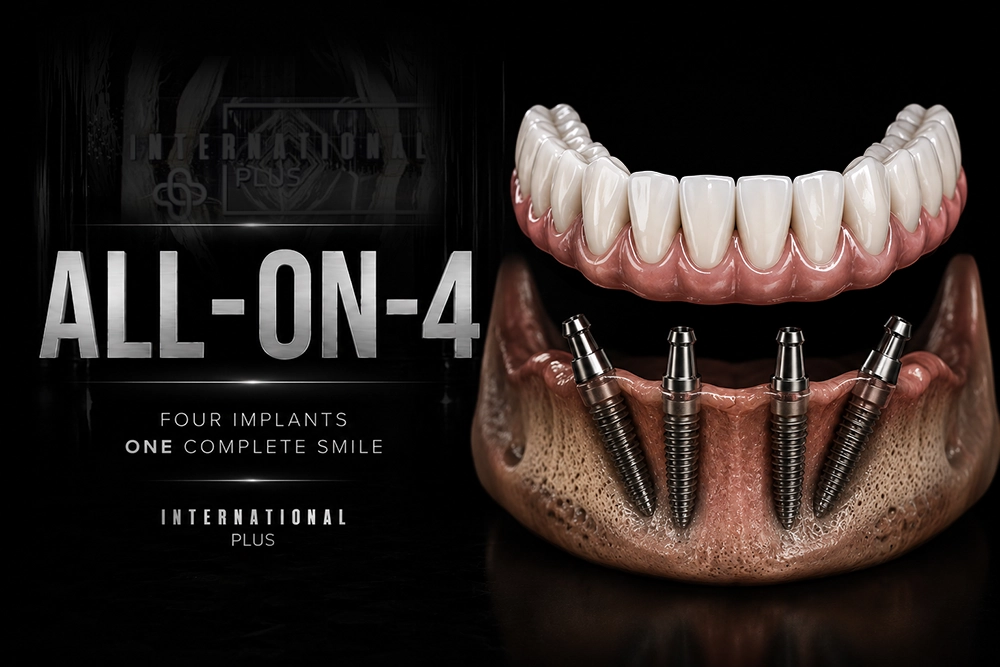
Explore All on Four Full-Arch Implant Solutions →
Managing Potential Risks and Minimizing Complications
Transparency is a clinical and ethical requirement in any discussion of dental implant risks. While the safety and efficacy of dental implants are well established in the literature, all surgical procedures carry some degree of risk and patients deserve an honest account of what those risks are and how they are managed.
The most common complication associated with dental implant surgery is peri-implantitis, a bacterial infection of the tissues surrounding the implant that resembles periodontitis affecting natural teeth. Peri-implantitis typically develops not from the surgery itself but from inadequate oral hygiene maintenance during the healing phase or from pre-existing periodontal disease that was not fully resolved before implant placement. At International Plus, all patients undergo comprehensive periodontal assessment before surgical planning begins. Active gum disease is treated to resolution before any implant is placed and patients receive detailed hygiene education and monitored recall protocols to support tissue health throughout osseointegration and beyond.
Avoiding implant failure at International Plus also involves strict sterilisation protocols that meet the standards of both the Turkish Ministry of Health and ISO 9001:2015 quality management certification. Every instrument that contacts the surgical site is sterile-wrapped and single-use where clinically appropriate. Surgical environments are maintained to operating theatre standards. Post-surgical care guidance provided to every patient includes a structured antibiotic and analgesic protocol, wound care instructions, dietary modifications for the healing period and scheduled follow-up assessments at defined intervals. The Diagnostic Council reviews any case where unexpected findings arise during surgery and ensures that the post-operative management plan is adapted accordingly. Individual results may vary and a personalised consultation is always the appropriate first step for any patient evaluating implant candidacy.
Who is a Good Candidate for Safe Implant Surgery?
Dental implant candidacy is determined through a comprehensive pre-operative evaluation that considers the patient’s general health, jaw anatomy and specific clinical circumstances. Most healthy adults who have lost one or more teeth are suitable candidates for dental implant surgery. However, certain systemic conditions and anatomical factors require specialist evaluation and, in some cases, a modified treatment approach.
Bone density for surgery is the most fundamental anatomical requirement. Implants achieve their stability through a direct mechanical and biological interface with the jawbone, so a minimum volume of healthy bone must be present at the intended implant site. Where natural bone loss has occurred following tooth extraction or as a result of periodontal disease, bone augmentation procedures including guided bone regeneration, ridge splitting or sinus floor elevation can restore the bone volume required for safe implant placement.
Patients with controlled diabetes and dental implants are a well-studied population in the clinical literature. Controlled type 2 diabetes, meaning patients whose glycated haemoglobin (HbA1c) is within clinically acceptable limits, is not a contraindication for implant surgery. The Diagnostic Council at International Plus evaluates each diabetic patient individually, confirms metabolic control status through blood parameters and, where indicated, coordinates with the patient’s physician before proceeding. Patients with uncontrolled diabetes are recommended to optimise their metabolic control before surgical planning is initiated.
Other factors that influence candidacy include smoking status (smokers have higher peri-implantitis rates and slower osseointegration), bisphosphonate medication history, a history of head and neck radiation and autoimmune conditions affecting bone metabolism. In each of these scenarios, our specialists design a modified protocol rather than declining treatment reflexively. The goal is always to find the safest and most reliable path to a functional, stable result for each individual patient.
The Importance of Professional Expertise and Certification
The safety of a dental implant procedure is inseparable from the qualifications of the surgeon performing it. At International Plus, implant surgery is performed by Dr. Alper Çağlayan Sarraf and Dr. Emre Çolak, both of whom hold doctoral-level postgraduate qualifications in oral and maxillofacial surgery and active membership within internationally recognised professional bodies.
ITI and EAO standards define the evidence base that our surgical team applies in every clinical decision. The International Team for Implantology (ITI) is the world’s leading academic organisation dedicated to implant research, and certified oral surgeons within its membership are required to engage with its ongoing scientific education programme. The European Association for Osseointegration (EAO) similarly maintains active surgical standards that are applied by its member clinicians. Dr. Alper Çağlayan Sarraf holds certifications from ITI, Megagen and EACMFS, and his academic record includes specialised cadaver training in zygomatic and soft tissue surgery. Dr. Emre Çolak holds ITI membership (Member ID: 41925), EAO active membership and TAOMS membership (Member No: 506), with over 20 years of clinical experience rooted in his doctoral training at Gazi University.
The best implant dentists Istanbul are those who can be evaluated not only by their clinic’s marketing claims but by independently verifiable credential records. Patients are encouraged to request documentation of their surgeon’s professional memberships and certification history before proceeding with any implant treatment.
Immediate Implants: Speed Meets Surgical Precision
Same day dental implants, formally termed immediate loading implants, represent one of the most significant advances in modern implant dentistry for international patients with limited time available in Istanbul. Under conventional protocols, an implant is placed and then allowed to osseointegrate over a period of three to six months before the final prosthesis is attached. Immediate loading changes this timeline by attaching a provisional restoration to the implant on the same day as surgery, allowing patients to leave the clinic with functional, aesthetically acceptable teeth within a single appointment.
Immediate loading implants are not appropriate for every patient or every anatomical situation. The critical clinical requirement is primary implant stability, quantified through insertion torque measurement at the time of placement. At International Plus, a minimum torque value of 45 Newton-centimetres is required before immediate loading is considered, as this threshold indicates sufficient mechanical engagement with the surrounding bone to withstand early functional loads without micromotion that could disrupt osseointegration. Bone density, implant diameter and the specific jaw position of the implant also factor into the decision.
When the criteria for fast tooth replacement through immediate loading are met, the Diagnostic Council confirms the protocol before surgery begins and the in-house laboratory fabricates the provisional restoration using our Asiga 3D printer with Arma dental resin. A study published in the Journal of Clinical Periodontology confirmed that immediately loaded implants placed with appropriate primary stability criteria achieve osseointegration outcomes comparable to those of conventionally loaded implants, supporting the safety of this approach in carefully selected cases (Darriba IL, et al. J Clin Periodontol. 2023. PMC6530943).
Post-Operative Care: Ensuring Lifetime Safety
Aftercare for dental implants is not a secondary consideration but an integral phase of the overall treatment. The biological process of osseointegration continues for up to six months after surgery, during which the implant surface is progressively integrated into the surrounding bone matrix. Patient behaviours during this period have a measurable impact on the long-term outcome.
In the first 24 hours following surgery, patients are advised to avoid rinsing forcefully, eating on the surgical side, smoking or consuming alcohol. Cold compresses applied to the outer jaw reduce post-operative oedema. The prescribed antibiotic and analgesic regimen should be followed precisely and any unexpected symptoms including increased swelling, persistent bleeding or fever should be reported to the International Plus team immediately via our dedicated patient liaison.
Oral hygiene for implants during and after osseointegration requires a modified approach. While the gum tissue around the healing implant is fragile, allowing plaque to accumulate unchallenged in this zone significantly increases peri-implantitis risk. A soft-bristle brush angled gently at the gumline, combined with chlorhexidine rinse during the early healing weeks, provides the baseline protection required. Once osseointegration is complete and the final prosthesis is fitted, an electric brush with round-headed bristles and interdental brushes sized to pass through the embrasure spaces beneath a bridge or full-arch prosthesis become the essential maintenance tools.
Long-term implant maintenance at International Plus includes recall appointments every six months during the first two years, transitioning to annual appointments thereafter for stable patients. At each recall, our team performs a clinical assessment of the peri-implant tissue, a radiographic evaluation of crestal bone levels and a professional clean of all implant components. This structured recall programme is the most reliable mechanism for detecting early peri-implant changes before they progress to the point of requiring surgical intervention.
High-Quality Dental Implants in Turkey: Why it’s Safe?
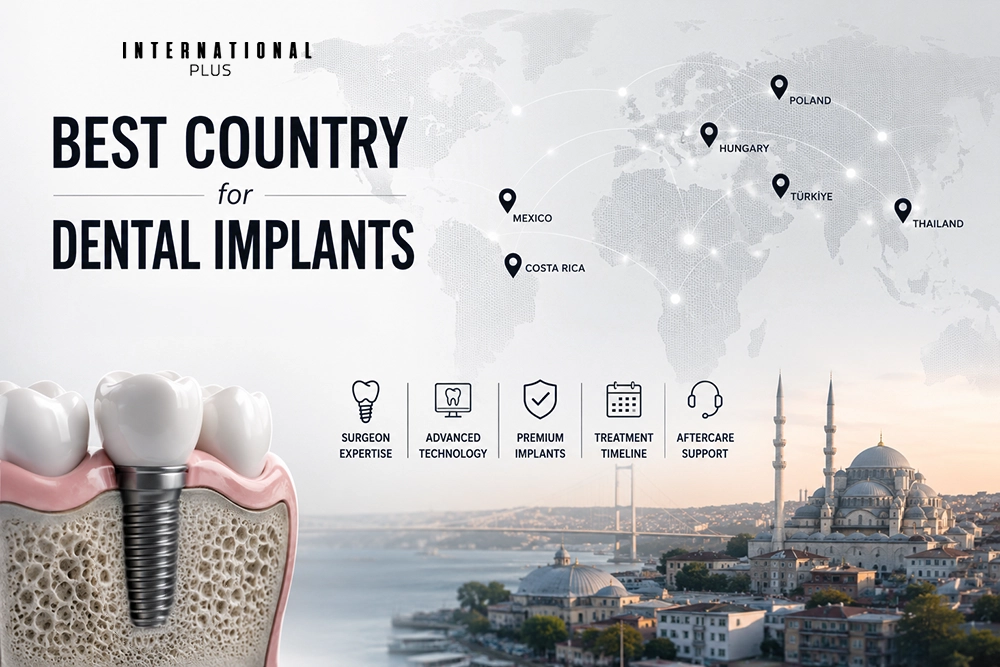
For international patients evaluating dental implants Turkey, safety is inseparable from the quality of the regulatory environment, the clinical infrastructure and the accountability systems that govern care delivery. Turkey’s healthcare system is regulated by the Ministry of Health, which enforces mandatory facility certification standards for all clinics treating international patients. International Plus is certified by the Turkish Ministry of Health as an approved international health tourism provider and holds additional certification from Health Turkey, USHAS and ISO 9001:2015.
The affordable dental implants available in Turkey reflect not a reduction in clinical standards but a structural difference in healthcare economics. The same BEGO, Megagen, Straumann and Nobel Biocare implant systems used by leading clinics in the United Kingdom and Germany are also used at International Plus in Istanbul. The same 3D CBCT imaging technology, guided surgery systems and digital design software are deployed in our clinic. The difference in price is a product of Turkey’s operating cost environment, not a compromise in materials or expertise.
Premium dental care Istanbul at International Plus includes the full VIP experience that international patients need to undergo complex surgical treatment abroad with confidence: private airport transfer, accommodation coordination, a dedicated English-speaking patient liaison, remote pre-treatment consultation based on digital records and direct post-operative access to our surgical team for any questions or concerns that arise after returning home. Our international warranty certificates provide further assurance that our commitment to your outcome does not end at the airport gate.
Book Your Free Dental Implant Consultation →
Frequently Asked Questions
Is dental implant surgery painful?
With modern local anaesthesia and, where appropriate, sedation options available at International Plus, patients experience minimal discomfort during the procedure. The majority of patients report that post-operative sensitivity is well managed by the prescribed analgesic protocol and significantly less than they anticipated. Individual pain tolerance varies and our team tailors anaesthesia and sedation options to each patient’s needs and preferences during the pre-operative consultation.
Can dental implants cause infections?
Infections are rare when implant surgery is performed using sterile technique and premium implant systems, and when post-operative care instructions are followed. At International Plus, our sterilisation protocols meet Ministry of Health and ISO standards and our team provides structured aftercare guidance to minimise peri-implant infection risk to the lowest clinically achievable level. Following your personalised post-operative care plan is the single most effective action you can take to protect your result.
Are dental implants safe for elderly patients?
Yes, provided that the patient’s general health and bone density are appropriately evaluated beforehand. Age itself is not a contraindication for dental implant surgery. The key variables are systemic health status, medication history, bone volume and density and the patient’s ability to comply with post-operative care requirements. Our Diagnostic Council evaluates elderly patients with particular attention to these factors and designs protocols that account for any relevant medical complexity.
Do dental implants contain harmful chemicals?
No. International Plus uses medically certified, biocompatible dental materials including Grade 4 commercially pure titanium and titanium alloy (BEGO TiPurePlus), Megagen AnyRidge with Knife Thread technology and zirconia ceramic systems. All implant materials used at our clinic have European CE marking and meet international medical device safety standards. They are designed to integrate safely with living bone and have decades of post-market surveillance data confirming their biological inertness.
How long is the recovery period for a safe implant procedure?
Initial soft tissue healing takes approximately 7 to 10 days. Full osseointegration, the process by which living bone bonds to the implant surface, typically takes 3 to 6 months depending on the patient’s bone quality, the jaw position of the implant and whether bone augmentation was required. During this period, patients can function normally with their provisional restoration and most report no significant impact on daily life beyond the first week of recovery.
Scientific References
Chrcanovic BR, et al. A 20-year meta-analysis of dental implant survival rates. Clin Oral Implants Res. 2024. PMC11416373.
Wennerberg A, Albrektsson T. Retrospective cohort study of rough-surface titanium implants with at least 25 years’ function. Clin Implant Dent Relat Res. 2017. PMC5585117.
Smeets R, et al. The effect of titanium surface modifications on dental implant osseointegration. Head Face Med. 2016. PubMed: 26201277.
Heydecke G, et al. Implant-supported mandibular overdentures can minimize mandibular bone resorption in edentulous patients: results of a long-term radiologic evaluation. Clin Oral Implants Res. 2016. PubMed: 26574862.
Darriba IL, et al. Immediate loading of four implants with a fixed prosthesis in the edentulous maxilla and mandible. J Clin Periodontol. 2023. PMC6530943.
Reviewed by Dr. Alper Çağlayan Sarraf, Head of Oral Surgery, International Plus Dental Clinic, Istanbul. PhD Candidate in Oral and Maxillofacial Surgery, Istanbul Aydın University. Certified: ITI, Megagen, Zygoma Cadaver Training, EACMFS, Soft Tissue Surgery (14+ Certifications). 2,500+ international patients treated.
internationalplusofficial
internationalplus
internationalplusdental
This content is written, reviewed, and approved by the International Plus Medical Review Board to ensure clinical accuracy and adherence to strict editorial standards. All medical information is regularly monitored, audited and updated in light of the latest scientific advancements.
However the information provided here is for general informational purposes only and cannot be used for self diagnosis or making individual health interpretations. Results of medical treatments depend on individual anatomy and the unique healing process of each patient. This information should not replace a personal consultation with a qualified healthcare professional. To understand the best options for your specific needs and to receive a personalized treatment plan, we invite you to book a free consultation with the expert medical team at International Plus.

Dr. Alper Çağlayan Sarraf directs the oral surgery unit at InternationalPlus Istanbul, focusing on demanding cases that draw patients from every corner of the world.