Hair transplant cost is the first question most patients ask and the one clinics answer least honestly. Two quotes for the same scalp can sit thousands apart because the proposals describe different operations. This International Plus guide breaks down the variables behind any quote: graft count; extraction technique; session planning; surgical team structure; the country cost base under the clinic. No figures appear here since a responsible quote follows a scalp examination, not a web page.
Key Takeaways
- Graft count is the largest single variable behind hair transplant cost and the count itself depends on donor density measured under trichoscopy rather than on a patient estimate.
- Technique shifts the labour behind each graft so FUE, DHI or sapphire-blade approaches carry different time loads even at an identical graft number.
- A quote is comparable only when anaesthesia, the surgical team, medication, post-operative reviews plus any second session appear as separate lines.
- Country cost structure explains most international price gaps and a lower operating cost base is not the same thing as a lower surgical standard.
- Cheapest is rarely cheapest overall because a poorly planned first surgery consumes donor hair no corrective procedure can replace.
What Determines Hair Transplant Cost?
Hair transplant cost is the total price of five measurable inputs: harvested graft count; extraction technique; session length; operating team seniority; the local cost base of the clinic. Every credible quote traces back to those five inputs. A surgeon extracting 3,500 follicular units books roughly 8 hours of theatre time.
Each input behaves differently. Graft volume drives the number first. Technique changes staffing rather than volume. Session planning matters most in patients with Norwood stage 5 loss, where one safe donor harvest cannot supply full coverage. According to Chouhan and colleagues in the Journal of Cutaneous and Aesthetic Surgery (2019), a review of 820 advanced-grade cases found staged sessions routine in advanced baldness. In practice, our surgical team maps donor density before any figure reaches the patient because a quote built on an assumed graft number is a guess wearing a price tag. Planning differs again for women’s hair restoration.

Why Does Graft Count Drive the Price Most?
Graft count is the largest driver of hair transplant cost because the number dictates surgical hours; team size; consumable volume. A follicular unit graft carries one to four hairs. Three thousand grafts may yield 5,000 hairs on a coarse-haired scalp but only 6,000 on a fine-haired one.
Counting matters more than most patients realise. Facial Plastic Surgery published a 2024 review by Carman and colleagues framing donor area management as the constraint governing every later decision. Over-harvesting to reach a headline number thins the occipital scalp permanently. For example, a 2,000-graft plan often sits in the same tier as a 2,400-graft plan since quotes climb in bands rather than smoothly. Our surgical team measures donor density per square centimetre using Trichoscopy, then sets a graft ceiling before any coverage plan is drawn. Donor supply behaves differently in female pattern hair loss, where diffuse thinning shrinks the safe harvest.
| Graft band | Typical coverage goal | Session planning |
|—|—|—|
| 1,000 to 1,500 | Hairline refinement or temple points | Single session, shorter theatre day |
| 1,500 to 2,500 | Frontal third restoration | Single session, full day |
| 2,500 to 3,500 | Front plus mid-scalp | Single long session |
| 3,500 to 4,500 | Mid-scalp plus partial crown | Single session or split |
| 4,500 to 5,000+ | Advanced pattern coverage | Staged across two operations |
Coverage goals in the table above are planning targets rather than promises since donor supply sets the real ceiling in every case.
How Does Technique Change FUE Hair Transplant Cost?
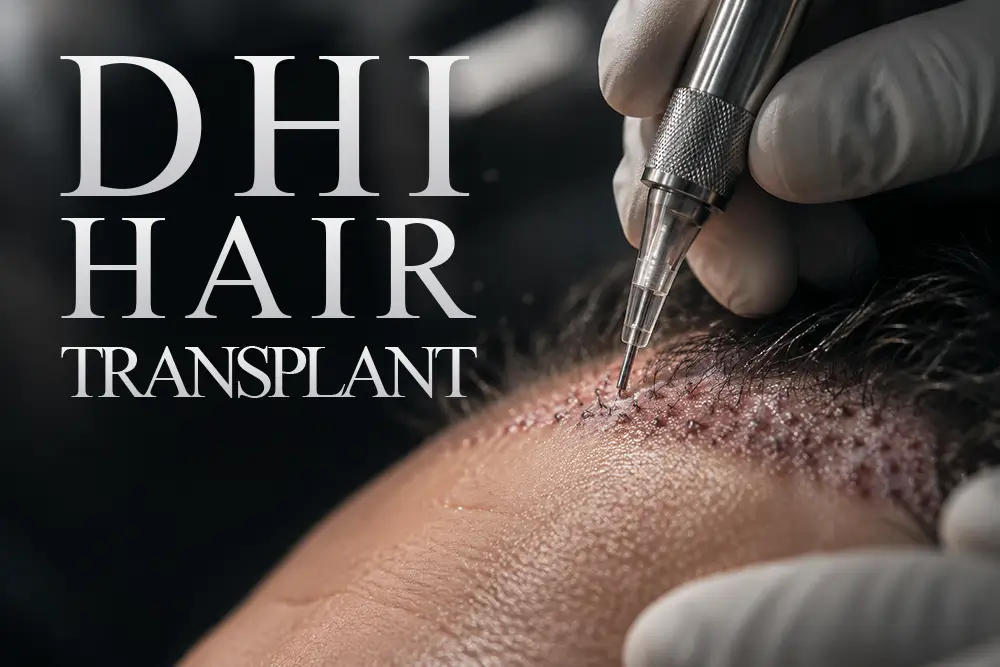
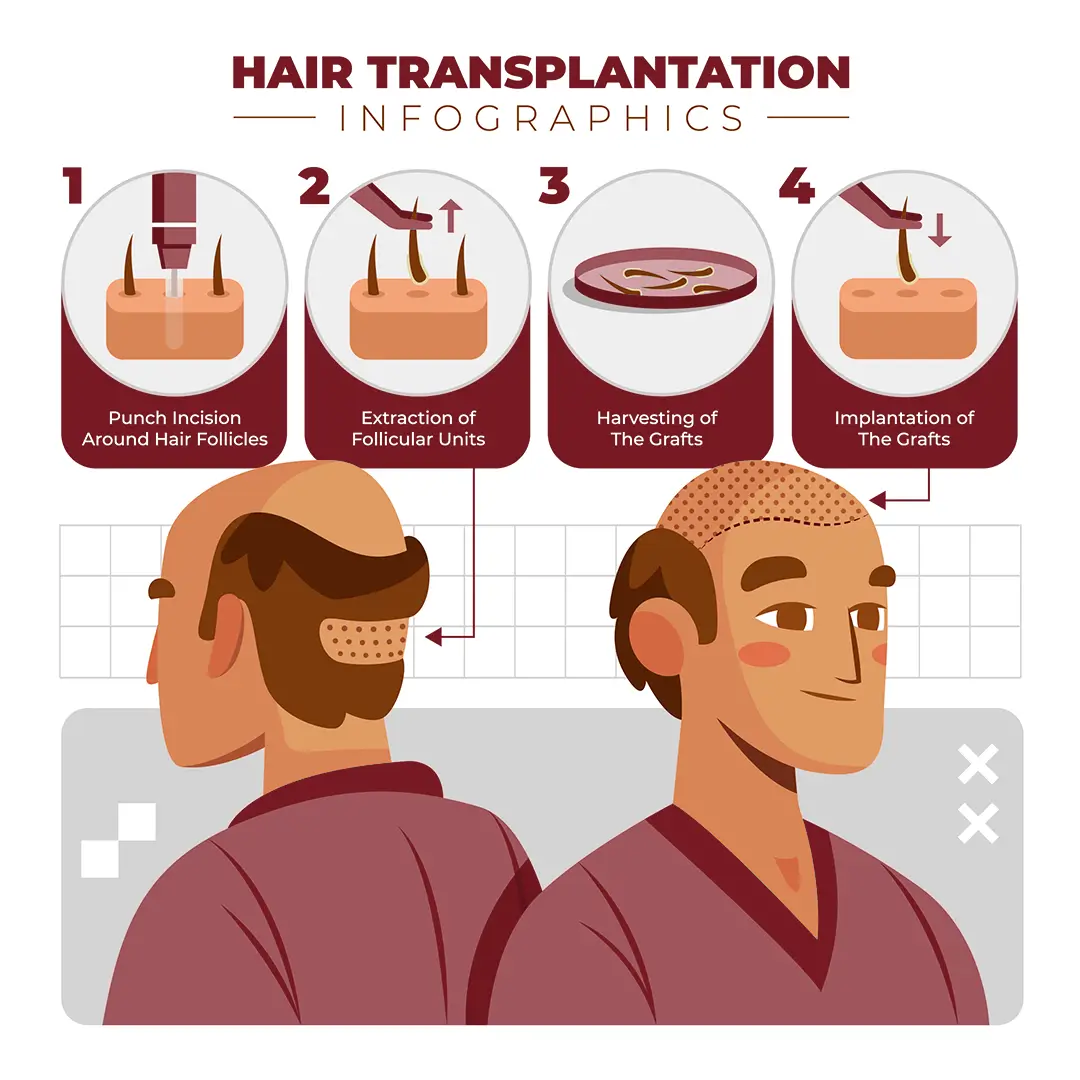
Technique is the second lever behind FUE hair transplant cost after graft count. FUE extraction with a micropunch; DHI implantation using Choi implanter pens; sapphire-blade channel opening all move the same follicles. Each route demands a different mix of surgeon time plus technician labour across 8 hours of theatre.
Comparison helps here. FUE remains the volume workhorse for large sessions. DHI places grafts without pre-cut channels and suits dense packing in small zones but the pen loading step slows throughput because each graft passes through a cartridge individually. Clinical evidence compiled by Gupta and colleagues in Facial Plastic Surgery (2024) documented how fast follicular unit excision instrumentation has multiplied, which is exactly why quotes resist comparison. For example, a 1,200-graft hairline case suits the Choi implanter pen while a 4,000-graft rebuild suits standard FUE. In our clinic, technique follows the recipient zone rather than the price list. A fuller breakdown sits in the guide to DHI hair transplantation and the Choi pen.
Why Is Turkey Hair Transplant Cost Lower?
Turkey hair transplant cost is the visible result of a lower operating cost base rather than a lower surgical standard. Staff salaries; facility rent; medical consumables; currency effects all sit below United States levels. International Plus has treated more than 200,000 patients from 140+ countries with Ministry of Health licensing.
Two very different things get conflated in the comparison. The first is legitimate cost structure. The second is corner cutting, which exists in every market at every price point. According to Ministry of Health licensing rules, a named physician carries clinical responsibility for each operation. For instance, our coordination team sends licence details before any quote leaves the office. The decision framework for medical travel abroad lists the documents worth requesting while the overview of the most trusted clinics in Turkey explains how accreditation is verified. Checking what an all inclusive treatment package covers prevents most billing surprises.
What Should a Complete Quote Include?
A complete quote is an itemised list covering the surgical day plus the 12 months after. Anaesthesia; the operating team; medication; dressings; the first wash appointment; every post-operative review belong on the page. Anything missing from the page will surface later as a separate invoice.
Line items reveal intent. A quote naming the surgeon who performs extraction differs fundamentally from a quote naming only a clinic. Questions worth asking before a hair transplant procedure is booked include who opens the recipient sites, how many patients the team treats in one day, what happens if graft yield disappoints at month 12. Revision policy is the line most patients skip yet the one carrying the largest financial consequence because a second procedure needs its own grafts. In practice, International Plus holds a 4.8/5 rating across 5,504 reviews from verified patients, where quote transparency recurs as a theme.
Does Insurance Cover a Hair Transplant?
Insurance is a realistic funding route only in narrow reconstructive cases because pattern hair loss counts as a cosmetic condition worldwide. Exceptions cover hair loss following burns, trauma or surgical scarring. Those claims need dermatology records spanning 6 to 12 months rather than a clinic letter.
Documentation decides the outcome. Reconstructive cases built on scar tissue behave differently from androgenetic cases in clinical terms as well as administrative ones. According to Queen and colleagues in Dermatologic Surgery (2025), scarring alopecia demands planning distinct from pattern loss so payers apply the same distinction. Patients pursuing reimbursement should first request an itemised operative report recording graft counts by anatomical zone. Real-world approval rates stay low outside burn and trauma files. Our patient records team issues the operative report on request. Self-funding remains the realistic assumption for pattern hair loss in every market.
Is the Cheapest Hair Transplant Worth It?
The cheapest option is a sound choice only when the low figure reflects a lower cost base rather than compressed surgical time. Volume clinics running 4 or 5 patients through one theatre per day reduce cost by reducing attention. Graft handling is where the shortcut appears first.
Biology explains the risk. Grafts left outside the body too long or crushed during placement fail. Sensitivity of follicular unit survival to handling was emphasised by Trivellini and colleagues in the Journal of Cosmetic Dermatology (2021). Aggressive pricing works well for a straightforward hairline case but misleads a patient with diffuse crown thinning because the same graft number covers far less visible surface. Corrective surgery then costs more than the original operation since scarred recipient beds accept fewer grafts. For instance, a beard transplant needs finer angling than a scalp case, which changes labour behind an identical count. Our surgeons decline requests exceeding measured donor supply. Reading hair transplant cost properly means reading the surgical plan, not the number. Expectations belong against the documented growth timeline and individual results vary.
Book a donor assessment with our coordination team for an itemised plan built on measured donor density.
Frequently Asked Questions
Why do hair transplant quotes vary so much between clinics?
Quotes vary because the proposals describe different operations. Graft count, technique, session length, surgeon involvement, the clinic cost base: every element differs. Two proposals carrying the same headline figure may allocate very different surgical time. Comparing quotes only works once each element is itemised on both sides.
Does a higher graft count always cost more?
Higher graft counts usually cost more because longer theatre time plus larger teams are needed. Pricing tends to move in bands rather than per unit so small increases often sit within the same tier. Above roughly 4,500 grafts, staged surgery becomes likely with each stage carrying its own cost.
Is a hair transplant a one time expense?
Rarely. Pattern hair loss continues in untreated areas so many patients need a second procedure years later or ongoing medical support assessed by a physician. Budgeting for follow-up reviews, supportive treatment plus the possibility of a touch-up session gives a more accurate picture than the surgical figure alone.
What should I ask before accepting a quote?
Ask who performs extraction, who opens recipient sites, how many patients the team treats in one day, what the quote excludes, what the revision policy states, how donor density was measured. Request every answer in writing. A clinic confident in its planning will provide them without hesitation.
Does technique affect the price more than graft count?
Graft count affects the total more than technique in most cases. Technique changes labour intensity plus instrument cost, which matters at the margins. A 3,500-graft DHI case and a 3,500-graft FUE case differ far less from each other than a 1,500-graft case differs from a 3,500-graft one.
Are cheaper transplants abroad lower quality?
Not automatically. Lower operating costs, staff salaries, currency effects: each explains part of the gap. Quality depends on the individual surgical team on licensing status on how many patients share the theatre. Verifying the responsible physician plus the daily patient load matters more than the country on the invoice.
Reviewed by Dr. Eren Gülbahar
References
- Chouhan K, et al. J Cutan Aesthet Surg. 2019. PMC6967160
- Carman TP, et al. Facial Plast Surg. 2024. PMID: 38049108
- Gupta AK, et al. Facial Plast Surg. 2024. PMID: 37879351
- Queen D, et al. Dermatol Surg. 2025. PMID: 40354670
- Trivellini R, et al. J Cosmet Dermatol. 2021. PMID: 33629463
- Liu F, et al. J Cosmet Dermatol. 2019. PMID: 30582267
Follow us on Social Media
internationalplusofficial
internationalplus
internationalplusdental
This content is written, reviewed, and approved by the International Plus Medical Review Board to ensure clinical accuracy and adherence to strict editorial standards. All medical information is regularly monitored, audited and updated in light of the latest scientific advancements.
However the information provided here is for general informational purposes only and cannot be used for self diagnosis or making individual health interpretations. Results of medical treatments depend on individual anatomy and the unique healing process of each patient. This information should not replace a personal consultation with a qualified healthcare professional. To understand the best options for your specific needs and to receive a personalized treatment plan, we invite you to book a free consultation with the expert medical team at International Plus.

I am a healthcare professional with over 4 years of experience in dentistry, specializing in prosthetic dental treatment and implant-based applications. Since 2024, I have been serving as chief physician, leading clinical management, team coordination, and international patient processes. With my B2-level English proficiency, I am able to communicate effectively with international patients. I am a patient-centered, innovative, and solution-oriented dentist who prioritizes patient satisfaction.