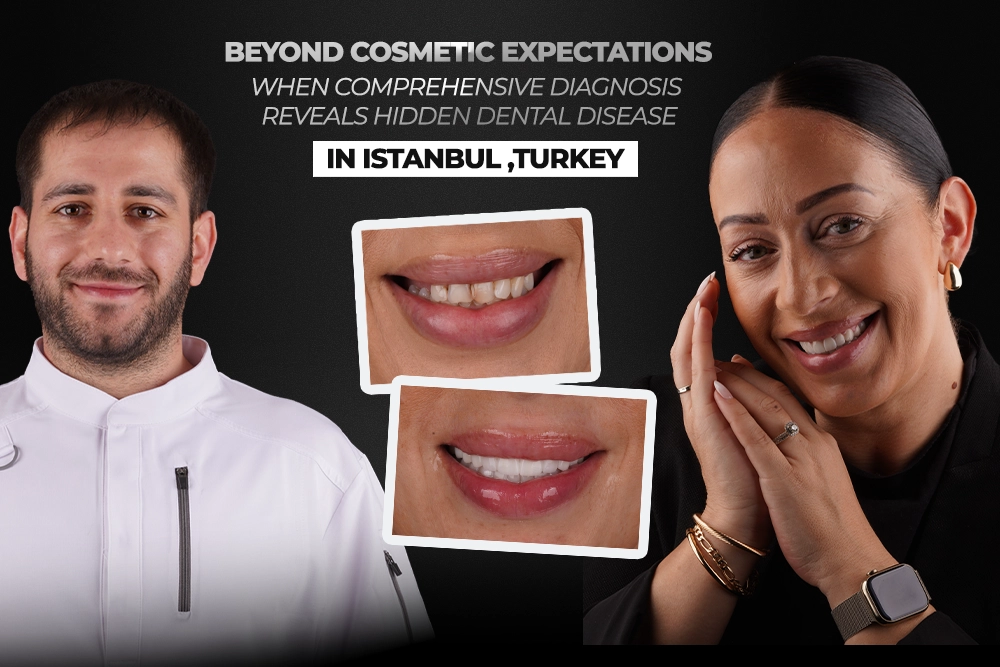
When Monika arrived at International Plus Istanbul requesting cosmetic veneers to enhance her smile’s brightness, she anticipated a straightforward aesthetic consultation, a simple procedure to achieve the brilliant white teeth she envisioned. Her request seemed typical of patients seeking cosmetic enhancement: evaluate her existing dentition, select the brightest available shade, and apply zirconia veneers to create the radiant smile she desired. Yet comprehensive clinical examination revealed a reality far more complex than surface aesthetics could suggest. Behind what appeared to be reasonably maintained dentition lurked extensive hidden pathology: broken roots penetrating deep into bone, chronic infections silently destroying supporting structures, and teeth so severely compromised they could no longer be reliably retained. What began as a cosmetic consultation transformed into a comprehensive rehabilitation journey, one that would require surgical intervention, endodontic treatment, periodontal correction, and advanced prosthodontic reconstruction. Most significantly, it demonstrated why thorough diagnostic evaluation proves essential even when patients present requesting seemingly simple cosmetic procedures.
The Hidden Disease Phenomenon: Why Cosmetic Consultations Require Comprehensive Evaluation
Dental pathology frequently progresses silently, particularly in posterior regions where visual inspection proves limited and patients may attribute discomfort to minor issues rather than serious disease. Broken roots remaining after tooth fracture, chronic infections developing slowly around compromised restorations, and progressive bone loss occurring without acute symptoms can advance significantly before patients recognize the severity of their condition. Research on asymptomatic dental pathology demonstrates that substantial percentages of patients presenting for routine care harbor undiagnosed infections, structural failures, or progressive disease that comprehensive evaluation reveals.
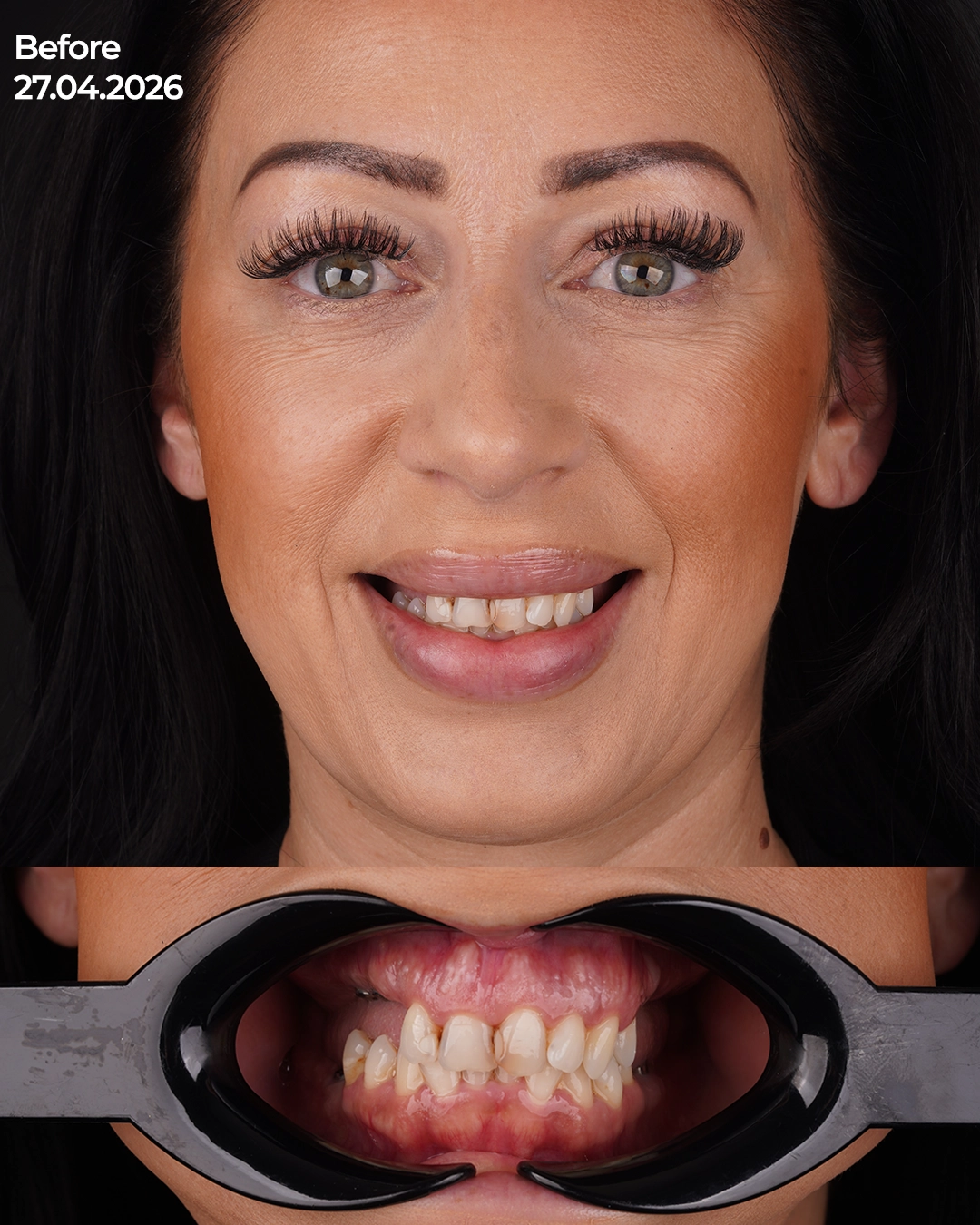
Monika’s case exemplified this pattern perfectly. Her anterior teeth, visible during smiling and conversation, appeared reasonably maintained, leading her to believe that cosmetic enhancement represented her primary dental need. Detailed clinical examination combined with radiographic assessment, however, painted a dramatically different picture. Throughout both upper and lower posterior regions, examination revealed broken roots from previously fractured teeth that had never been properly extracted, chronic infections surrounding these retained root fragments, and teeth so extensively decayed that they could no longer maintain stable position or function.
The diagnostic findings presented several crucial realities. First, approximately ten teeth, while severely compromised by decay, remained structurally sound enough for preservation through endodontic treatment (root canal therapy) and restoration. These teeth, specifically those numbered 42, 41, 31, 32, 21, 24, 34, 35, 44, and 45 in dental notation, represented salvageable natural dentition that comprehensive treatment could maintain long term. Second, numerous additional teeth in both upper and lower posterior regions had deteriorated beyond any reasonable preservation threshold, requiring extraction and replacement. Third, the chronic infections associated with these compromised teeth had created active pathology requiring thorough surgical debridement and bone management before prosthetic rehabilitation could proceed.
This revelation transformed Monika’s treatment from simple cosmetic veneers to comprehensive rehabilitation integrating multiple dental specialties: oral surgery for extractions and implant placement, endodontics for root canal treatment of salvageable teeth, periodontics for gingival correction, and prosthodontics for both implant supported and natural tooth supported zirconia restorations. International Plus Istanbul’s multidisciplinary approach proved essential, as no single specialty could address the full scope of pathology that comprehensive diagnosis revealed.
Strategic Treatment Planning: Maximizing Natural Tooth Preservation While Addressing Pathology
When extensive dental disease affects multiple teeth throughout both arches, treatment planning requires careful analysis to determine which teeth merit preservation attempts and which require extraction and replacement. The decision carries significant long term implications: extracting salvageable teeth eliminates structures that might serve successfully for decades, yet attempting to preserve teeth with poor prognosis commits patients to repeated interventions, progressive bone loss, and eventual failure that could compromise adjacent structures.
Monika’s treatment plan reflected International Plus Istanbul’s philosophy of evidence based tooth triage: preserve every tooth that comprehensive treatment can maintain with predictable long term success, while decisively extracting teeth whose prognosis remains poor despite maximal intervention. The ten teeth identified as salvageable would receive thorough endodontic treatment addressing internal pathology, followed by coronal restoration reestablishing proper form and function. Research on long term outcomes of endodontically treated teeth demonstrates that teeth receiving proper root canal therapy and adequate coronal restoration achieve survival rates exceeding 90% at ten years, validating the preservation of structurally adequate teeth even when substantial internal pathology exists.
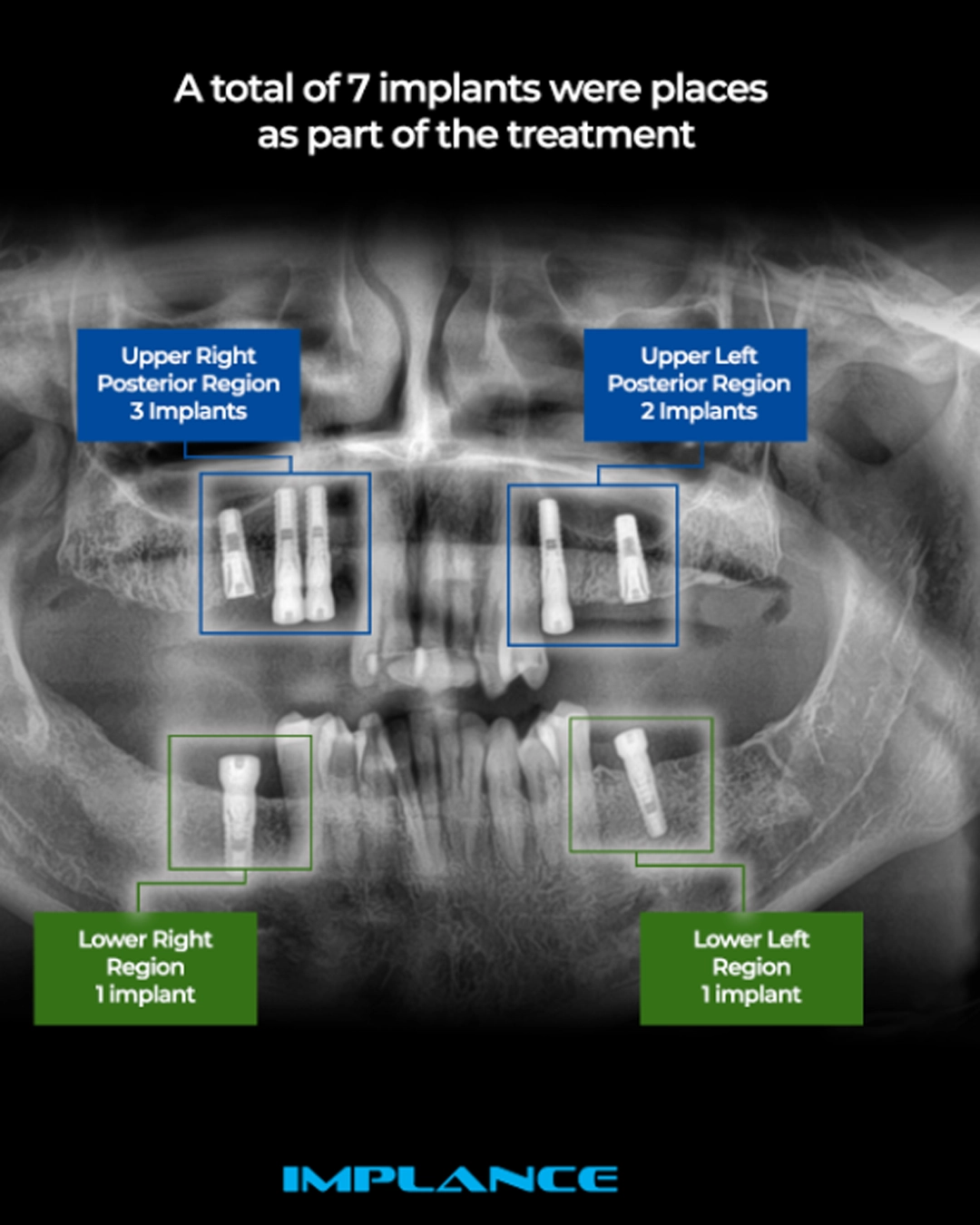
The numerous teeth requiring extraction presented throughout both upper and lower posterior regions. Broken roots, teeth with vertical fractures extending below the bone level, and teeth with combined endodontic periodontal lesions beyond treatment threshold all required removal. Following extraction, the resulting edentulous spaces would be restored through strategic implant placement. Rather than replacing each extracted tooth with individual implants, the treatment plan employed biomechanically efficient bridge configurations: seven Implance brand implants (five in the upper jaw distributed as two on the left and three on the right, plus two in the lower jaw positioned on left and right sides) would support multiple prosthetic units through fixed bridges.
This strategic implant positioning offered several advantages. Biomechanically, implants positioned in available bone with optimal angulation and distribution can support multiple prosthetic units without the surgical complexity and cost of individual implant placement for every missing tooth. Hygienically, bridge configurations with appropriate pontic design permit easier cleaning than attempting to maintain individual implants in tight posterior spaces. Economically, fewer implants reduce both surgical intervention and prosthetic complexity while achieving functionally equivalent outcomes.
The upper left posterior region required additional surgical consideration due to insufficient bone height for standard implant placement. Sinus lift surgery addressed this limitation through lateral window approach with bone graft augmentation, creating adequate vertical dimension for implant positioning while the patient already underwent surgical intervention for extractions.
Comprehensive Surgical Phase: Integrating Extraction, Augmentation, and Implant Placement
The surgical phase of Monika’s treatment encompassed multiple procedures executed across carefully planned sessions. All teeth designated for extraction were removed using techniques that preserved maximum alveolar bone while ensuring complete removal of infected tissues. Broken roots required particular attention, as incomplete removal leaves pathology that can compromise healing and future implant success. Each extraction site received thorough debridement removing granulation tissue and infected bone.
The upper left sinus lift procedure followed extraction completion in that region. Using the lateral window approach, the maxillary sinus membrane was carefully elevated and the created space filled with bone graft material. This augmentation provided the vertical bone dimension necessary for implant placement in the posterior maxilla, where natural sinus pneumatization had created insufficient height. Clinical evidence for sinus augmentation outcomes confirms that lateral window technique with simultaneous or delayed implant placement achieves predictable long term success when proper surgical protocols are followed.
Seven Implance brand implants were then strategically positioned: five distributed throughout the upper arch (two left posterior, three right posterior) and two in the lower arch (one each on left and right sides). Implance systems offer reliable osseointegration characteristics with surface treatments promoting bone apposition. All implants achieved adequate primary stability, the immediate mechanical engagement with surrounding bone that predicts successful integration. Multi-unit abutments were connected to the implants, establishing the prosthetic platform for both provisional and definitive restorations.
Simultaneous with surgical intervention, attention addressed gingival aesthetics in the anterior regions. Both upper and lower anterior teeth (four teeth in each arch) displayed uneven gingival margins that would compromise aesthetic outcomes even with excellent restorative work. Gingivectomy and gingivoplasty procedures corrected these discrepancies, establishing harmonious gingival levels that would frame the final restorations appropriately. Studies on gingival correction for aesthetic enhancement demonstrate that establishing proper gingival architecture before final restorations significantly improves aesthetic outcomes and patient satisfaction.
Endodontic Intervention: Preserving Natural Tooth Structure Through Root Canal Therapy
While surgical intervention addressed extraction sites and implant placement, the ten teeth identified as salvageable required comprehensive endodontic treatment to address internal pathology while preserving tooth structure. Root canal therapy removes infected or necrotic pulp tissue, thoroughly disinfects the internal canal system, and seals the space with biocompatible materials that prevent reinfection while maintaining tooth structure and function.
Each of the ten teeth (42, 41, 31, 32, 21, 24, 34, 35, 44, 45) underwent complete endodontic treatment addressing their specific pathology. The procedures employed contemporary techniques including rotary instrumentation for efficient canal shaping, copious irrigation with antimicrobial solutions ensuring thorough disinfection, and warm vertical compaction of gutta percha creating dense three dimensional obturation. Research on contemporary endodontic outcomes demonstrates that modern techniques achieve success rates exceeding 90%, supporting the decision to preserve these teeth rather than extracting and replacing them with implants.
Following endodontic treatment completion, each tooth received appropriate coronal restoration reestablishing proper form, function, and seal. The combination of thorough internal treatment and adequate coronal restoration provides the foundation for long term tooth survival, enabling these natural structures to function alongside the implant supported prosthetics in a integrated functional unit.
Advanced Prosthodontic Phase: Achieving the Brightest White Aesthetic
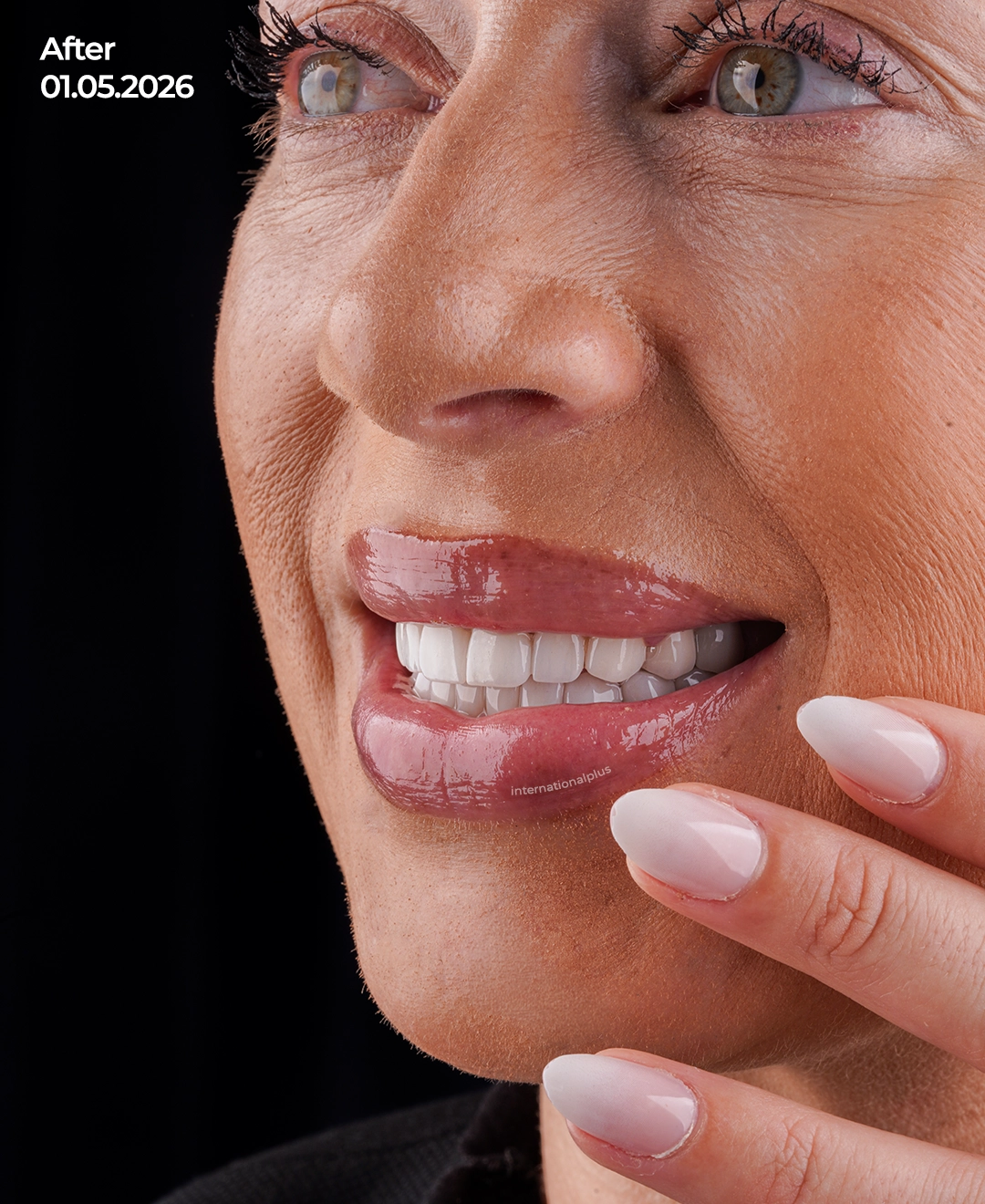
With surgical sites healed, implants successfully integrated, and endodontic treatment completed, Monika’s case advanced to the definitive prosthodontic phase where her original aesthetic goals would finally be addressed. Her explicit request remained consistent throughout treatment: she desired the brightest white shade available in zirconia materials, prioritizing brilliant cosmetic appearance over the more subtle natural shades many patients prefer.
Contemporary zirconia blocks are manufactured in extensive shade ranges from highly natural tones mimicking aged dentition through progressively brighter shades approaching pure white. While dental professionals often guide patients toward more naturalistic shades that harmonize with skin tone and age, respecting patient preferences proves essential when those preferences are clearly articulated and consistently maintained. Monika’s unwavering desire for maximum brightness guided material selection toward the brightest available zirconia formulation.
The prosthetic design incorporated International Plus Istanbul’s Plus 5 anatomic form philosophy, an approach that creates tooth morphology reflecting natural anatomic variations rather than idealized geometric perfection. While the color would be exceptionally bright per Monika’s preference, the form would incorporate subtle asymmetries, varied tooth proportions, and surface characterization that distinguishes natural appearing dentistry from artificial looking restorations. Research on aesthetic preferences in prosthodontics confirms that even patients requesting very bright shades appreciate natural appearing morphology rather than unnaturally uniform tooth shapes.
The restorations were fabricated through International Plus Istanbul’s in house Dental Art laboratory, enabling direct collaboration between clinical team and laboratory technicians. The brightest zirconia blocks were selected and milled to precise specifications matching the digital design. Despite the brilliant white shade, careful attention to surface texture, emergence profiles, and occlusal anatomy ensured the restorations would function properly and maintain comfortable occlusion.
Provisional restorations fabricated from PMMA material had been delivered during the initial surgical phase, ensuring Monika maintained aesthetics and function throughout the healing and osseointegration period. These provisionals served both functional and diagnostic purposes, allowing verification that the planned tooth positions, contours, and occlusal relationships would prove comfortable before committing to definitive zirconia fabrication.
Treatment Timeline and Multidisciplinary Integration: Efficiency Through Coordination
Monika’s comprehensive treatment unfolded across a timeline that balanced biological healing requirements with efficient scheduling for an international patient. The initial phase encompassed surgical intervention (extractions, sinus lift, implant placement, gingivectomy), endodontic treatment of all ten salvageable teeth, and delivery of provisional PMMA restorations. This intensive first visit addressed the full scope of surgical and endodontic needs while ensuring the patient never experienced aesthetic or functional compromise.
The healing period that followed permitted osseointegration of the seven implants while the endodontically treated teeth stabilized following their procedures. The provisional restorations provided both function and aesthetics during this interval, allowing Monika to return to normal life while biological processes proceeded.
The final prosthodontic phase, completed during Monika’s second visit, required approximately one week in Istanbul. Digital impressions captured the healed surgical sites and prepared natural teeth, prosthetic design was finalized with Monika’s input confirming her brightness preferences, the in house laboratory fabricated all zirconia restorations, and final delivery included meticulous verification of fit, occlusion, and aesthetic satisfaction. This concentrated timeline proved possible only through International Plus Istanbul’s integrated infrastructure: in house laboratory eliminating shipping delays, digital workflow enabling rapid design iteration, and experienced multidisciplinary team coordinating seamlessly across specialties.
Upon treatment completion, Monika possessed the brilliant white smile she originally sought, achieved through comprehensive rehabilitation that addressed not just aesthetic desires but the extensive hidden pathology that diagnostic evaluation revealed. The integration of preserved natural teeth with strategically positioned implant supported prosthetics created a functional system designed to serve for decades.
Frequently Asked Questions
Why do cosmetic consultations sometimes reveal serious dental disease?
Dental pathology frequently progresses without obvious symptoms, particularly in posterior regions where visual inspection is limited. Chronic infections, broken roots, and progressive decay can advance significantly before patients recognize problems, especially when anterior teeth appear reasonably maintained. Comprehensive diagnostic evaluation including clinical examination and radiographic assessment reveals conditions that surface inspection alone cannot detect. This underscores the importance of thorough evaluation even when patients present requesting apparently simple cosmetic procedures.
When should compromised teeth be preserved rather than extracted?
Teeth with adequate remaining structure and restorable crowns merit preservation through endodontic treatment when the procedure can achieve predictable long term success. Research demonstrates that properly treated teeth achieve survival rates exceeding 90% at ten years, often outlasting implant alternatives while providing superior proprioceptive feedback. However, teeth with vertical fractures extending below bone level, combined endodontic periodontal lesions beyond treatment threshold, or insufficient remaining structure require extraction. Evidence based tooth triage balances preservation of salvageable structures against decisive removal of teeth with poor prognosis.
How does multidisciplinary treatment planning improve outcomes in complex cases?
Complex cases affecting multiple dental specialties benefit from integrated planning where oral surgeons, endodontists, periodontists, and prosthodontists collaborate from initial diagnosis through final restoration. This coordination ensures surgical intervention considers prosthetic goals, endodontic treatment integrates with restorative planning, and periodontal procedures establish proper foundation for final aesthetics. International Plus Istanbul’s multidisciplinary infrastructure enables this integration, with specialists working within a single facility rather than coordinating across multiple practices.
Why use sinus lift procedures rather than shorter implants in the posterior maxilla?
Sinus lift surgery with bone augmentation creates adequate bone height for standard length implants, which demonstrate superior long term success compared to short implant alternatives in compromised bone. Clinical evidence confirms that lateral window sinus augmentation achieves predictable outcomes when proper surgical technique is employed. While short implants offer less invasive alternatives, standard length implants positioned in augmented bone provide biomechanical advantages particularly valuable in posterior regions experiencing high occlusal forces.
Can patients choose very bright white shades even when dentists recommend more natural colors?
Patient autonomy in aesthetic decisions proves essential, particularly when preferences are clearly articulated and consistently maintained. While dental professionals may guide patients toward shades that harmonize with skin tone and appear naturally aged, respecting explicit patient preferences for brighter shades demonstrates patient centered care. The key lies in thorough discussion ensuring patients understand their options while ultimately honoring their aesthetic goals. Combining very bright shades with natural anatomic morphology through approaches like Plus 5 design creates results that satisfy brightness preferences while avoiding artificial appearing uniformity.
International Plus Istanbul: Where Comprehensive Diagnosis Meets Multidisciplinary Excellence
Monika’s case demonstrates International Plus Istanbul’s commitment to thorough diagnosis even when patients present with apparently straightforward requests. What began as a cosmetic consultation revealed extensive pathology requiring surgical intervention (seven Implance implants, sinus lift, extractions), endodontic treatment (ten root canal procedures), periodontal correction (gingivectomy of eight anterior teeth), and comprehensive prosthodontic rehabilitation. This scope of treatment demanded multidisciplinary coordination that few facilities can provide.
Our integrated infrastructure enabled seamless collaboration across specialties. In house Dental Art laboratory facilitated rapid fabrication of both provisional and definitive zirconia restorations without external shipping delays. Digital workflow supported efficient treatment planning and execution. Multiple implant brands (Straumann, Nobel Biocare, Megagen, BEGO, Implant Swiss, Implance, Nucleoss) ensured optimal system selection for each clinical scenario. Advanced diagnostic tools including 3D FaceScan technology, Turkey’s only installation, informed both surgical planning and aesthetic design.
Comprehensive patient services extended beyond clinical excellence. VIP airport transfers, luxury accommodation, and 24/7 multilingual coordination supported Monika throughout her treatment journey. Having successfully treated over 200,000 patients from more than 140 countries, International Plus Istanbul combines clinical expertise, technological capability, and hospitality infrastructure that delivers world class care regardless of case complexity.
If you seek dental care grounded in comprehensive diagnosis, executed through multidisciplinary collaboration, and delivered with attention to both functional integrity and aesthetic goals, contact International Plus Istanbul today.
internationalplusofficial
internationalplus
internationalplusdental
This content is written, reviewed, and approved by the International Plus Medical Review Board to ensure clinical accuracy and adherence to strict editorial standards. All medical information is regularly monitored, audited and updated in light of the latest scientific advancements.
However the information provided here is for general informational purposes only and cannot be used for self diagnosis or making individual health interpretations. Results of medical treatments depend on individual anatomy and the unique healing process of each patient. This information should not replace a personal consultation with a qualified healthcare professional. To understand the best options for your specific needs and to receive a personalized treatment plan, we invite you to book a free consultation with the expert medical team at International Plus.

International Plus was established from scratch in 2014 with the sole purpose of providing a world class center for plastic and cosmetic surgery by SAMİLSAN SAĞLIK HİZMETLERİ TURİZM DANIŞMANLIK TİCARET LİMİTED ŞİRKETİ International Plus has developed a worldwide reputation for its unique treatments and techniques. With over 10 years of experience, our talented medical experts are among the best in their respective fields. You are our priority. We are convinced that good communication between you and your surgeon is essential when planning your treatments. We offer realistic advice and the most suitable treatments for you.