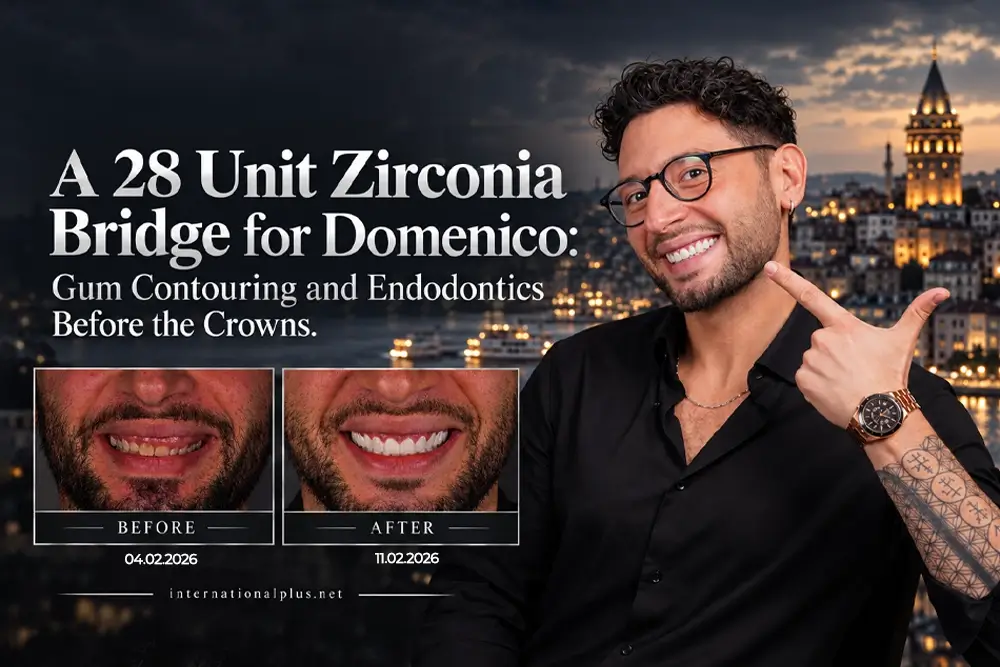
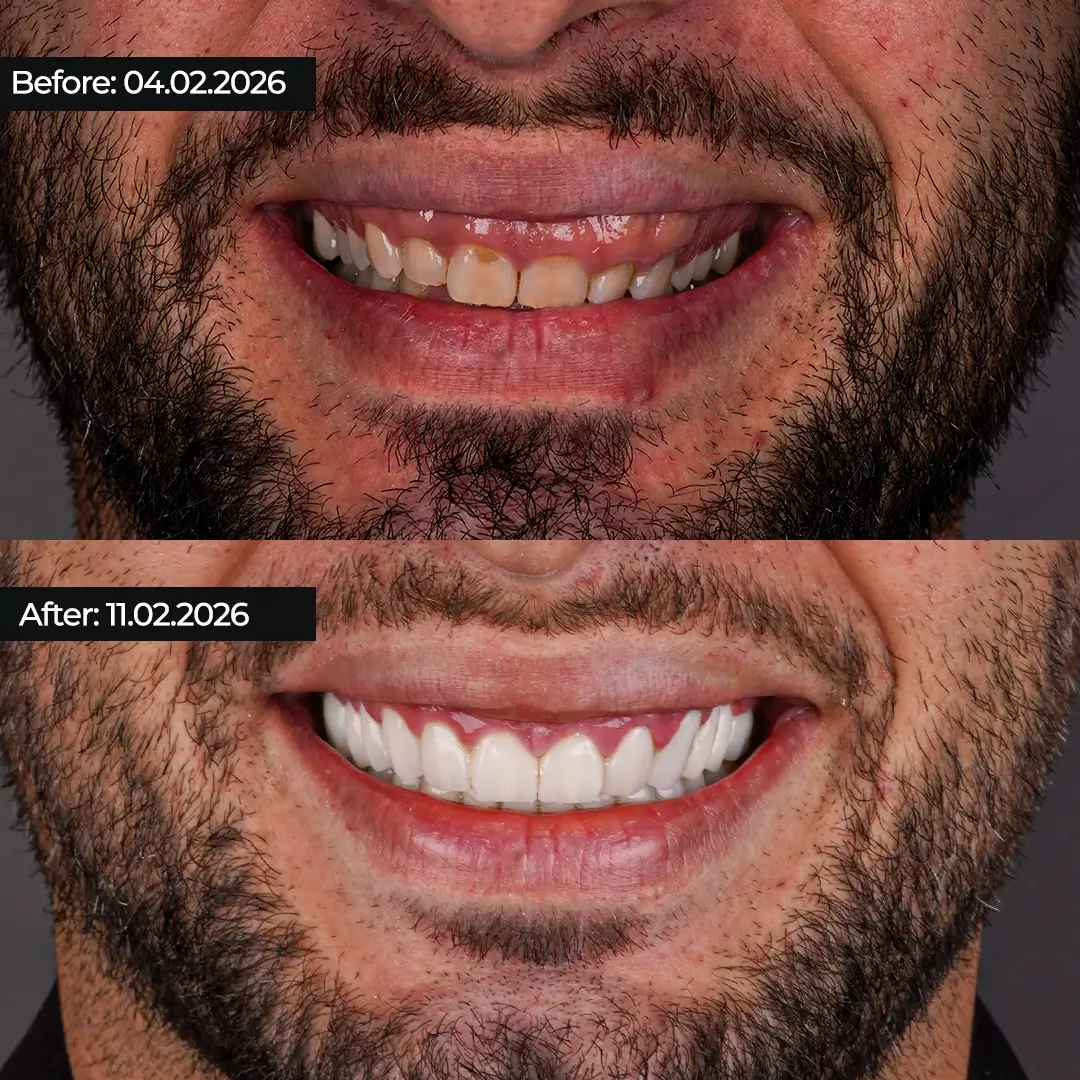
A 28 unit zirconia bridge spans both arches rather than a single site. Domenico was treated at International Plus as an English speaking patient whose record lists 28 zirconia units, gingivectomy on 10 teeth, 4 root canal treatments and 4 fillings. The crowns were the last stage rather than the first. This case study follows the order in which that work was recorded.
Key Takeaways
- The challenge: A record listing soft tissue work, endodontic work and restorative work alongside a two arch rebuild.
- The solution: Gingivectomy across 10 teeth, then endodontic and restorative preparation, then 28 units planned as one set.
- The technique: Screw retained zirconia units designed together so that both arches meet correctly at delivery.
- The outcome: 28 units delivered with a night guard fitted at the same appointment.
What a 28 Unit Zirconia Bridge Covers
A 28 unit rehabilitation is a restoration that covers every tooth position in both arches once third molars are excluded. Twenty eight is the full adult count without wisdom teeth. Domenico’s record lists that number across the upper and lower jaw.
Clinical evidence on monolithic CAD/CAM zirconia restorations has been reviewed systematically (Leitão CIMB, et al., 2022). Scale changes the planning rather than the material. A single crown answers to one neighbour and to the tooth above it. 28 units answer to each other and to the opposing arch at the same time.
For example, a contact point altered on one unit shifts the units beside it so our clinic designs the full set together rather than tooth by tooth. Readers comparing restoration types will find the general picture in our guide to what a dental crown is.

Domenico’s Record and the Order of Work
The treatment record for this case lists 5 separate categories of work. An order of work is the sequence that fixes which stage has to finish before the next one begins and here the record lists each category separately rather than as one appointment.
Gum contouring came first. Endodontic treatment and fillings follow on the teeth the record lists for them. Only after that were the 28 units designed. A night guard closed the plan.
Studies show that staged treatment in the aesthetic zone depends on the tissue reaching a stable position before restorative measurements are taken (Qali M, et al., 2024). Our clinic records each stage in the patient file before the following stage starts. For example, complex plans are reviewed by a multidisciplinary Diagnostic Council rather than by one clinician alone so the sequence is agreed before the first appointment rather than decided along the way.
| Record | Detail |
| Zirconia units | 28 in total across both arches |
| Retention | Screw retained |
| Gingivectomy | 10 teeth |
| Endodontic work | 4 root canal treatments |
| Restorative work | 4 fillings recorded |
| Appliance | Night guard fitted at delivery |
| Language | Patient treated in English |
Why Gum Contouring Came Before the Crowns
Gingivectomy is the removal of excess gum tissue to reset where the gum meets the tooth. Ten teeth are listed for it, carried out before any preparation began.
Sequencing of this kind is dimensional. A crown margin is placed in relation to the gum line so moving the gum line afterwards would leave the margin in the wrong position. According to a six month follow up study, crown lengthening procedures are planned around the biologic width, the band of tissue that attaches to the tooth beneath the gum (Katariya C, et al., 2024). Guidelines for staged work in the aesthetic zone set out the same sequence (Lee EA, et al., 2024).
In practice our clinic treats the tissue as part of the restorative plan rather than as a separate procedure as reviews of crown lengthening in the aesthetic zone describe (Marzadori M, et al., 2018). Surgical guides for this stage have been set out in the periodontal and prosthetic literature (Alhumaidan A, et al., 2022). Soft tissue work at the clinic sits under periodontology and patients concerned about gum level alone may find our article on receding gums more relevant.
Preparing the Abutments Before Any Crown Was Made
An abutment is the prepared tooth that carries a crown. The record lists 4 root canal treatments and 4 fillings, all completed on abutment teeth before the 28 units were designed.
A tooth that has had root canal treatment is structurally different from an untreated one because the pulp chamber is emptied and sealed. That stage sits before the restorative work in the file. Our root canal before crown case sets out the same principle on a smaller plan.
Four fillings are recorded alongside the endodontic work, each on an abutment tooth. According to published guidance on staged treatment, the restorative surface is established before the definitive restoration is designed (Lee EA, et al., 2024). Endodontic treatment at the clinic is covered under endodontics.
Building and Delivering the 28 Units
The restorative phase produced 28 monolithic zirconia units across both arches, recorded as screw retained. Screw retention is a fixing method where a unit is held by a screw that can be released rather than cemented permanently in place. The record for this case lists the units as screw retained.
That choice has a clear consequence. A screw retained unit can be removed for servicing without cutting it off, which matters more on a 28 unit plan than on a single crown. Retrievability costs a small access channel in the biting surface but that channel is accepted on larger rebuilds because the alternative is destructive removal.
Then the 28 units were milled in the clinic’s on-site digital laboratory, the same route our clinic uses for every dental crowns case. Comparable two arch work is recorded in our zirconium crown rehabilitation case.
What the Record Shows at Delivery
Domenico left with 28 zirconia units delivered and a night guard fitted at the same appointment. That appliance is a removable guard worn during sleep to absorb the forces generated by clenching.
The clinic issues a written record of the materials used so a dentist in the patient’s own country can service the work without guesswork. Soft tissue management, endodontic preparation and the restorations themselves all sit in one file. Our gingival recontouring case records a smaller version of the same combination.
This is one patient’s recorded outcome and individual results may vary. International Plus has treated more than 200,000 patients from 140+ countries since 2014 and holds a rating of 4.8 out of 5 across 5,504 reviews. No clinic can promise an identical result because every mouth starts from a different place.
Book a consultation with International Plus if you want to know whether your own case needs gum work before any crown is planned.
Frequently Asked Questions
How many teeth does a 28 unit bridge cover?
Twenty eight units covers every tooth position in both arches once wisdom teeth are excluded. An adult set without third molars is 28 teeth. The units are designed together as one set rather than individually because each unit has to meet its neighbours and the opposing arch at the same time.
Why is gingivectomy done before crowns rather than after?
A crown margin is positioned in relation to the gum line. Moving the gum line afterwards would leave that margin sitting too high or too low. Treating the soft tissue first means the gum has settled into its final position before any measurement is taken for the restoration above it.
What does screw retained mean on a zirconia bridge?
Screw retention means each unit is held by a screw rather than cemented permanently. The screw can be released so a unit can be removed for servicing without cutting it off. On a 28 unit plan this matters because a problem at one site would otherwise risk damaging the restorations beside it.
Why were root canal treatments done before the crowns?
A tooth carrying a crown has to be structurally sound first. The record lists 4 root canal treatments and 4 fillings completed before any unit was designed. Treating the tooth afterwards would mean working through a finished restoration, which is both harder and avoidable.
Is a night guard necessary after this treatment?
A night guard protects new restorations from the forces generated during sleep. With 28 units delivered at once, the appliance guards a large volume of restorative work. It is fitted at delivery rather than later so protection starts on the first night after the treatment is completed.
Reviewed by Dr. İzzet Bekaroğulları
References
- Leitão CIMB, et al. J Prosthodont Res. 2022. PMID: 34615842
- Katariya C, et al. Cureus. 2024. PMC11137346
- Lee EA, et al. J Esthet Restor Dent. 2024. PMID: 38247169
- Marzadori M, et al. Periodontol 2000. 2018. PMID: 29493814
- Qali M, et al. Cureus. 2024. PMC11614317
- Alhumaidan A, et al. J Am Dent Assoc. 2022. PMID: 34602279
Follow us on Social Media
internationalplusofficial
internationalplus
internationalplusdental
This content is written, reviewed, and approved by the International Plus Medical Review Board to ensure clinical accuracy and adherence to strict editorial standards. All medical information is regularly monitored, audited and updated in light of the latest scientific advancements.
However the information provided here is for general informational purposes only and cannot be used for self diagnosis or making individual health interpretations. Results of medical treatments depend on individual anatomy and the unique healing process of each patient. This information should not replace a personal consultation with a qualified healthcare professional. To understand the best options for your specific needs and to receive a personalized treatment plan, we invite you to book a free consultation with the expert medical team at International Plus.
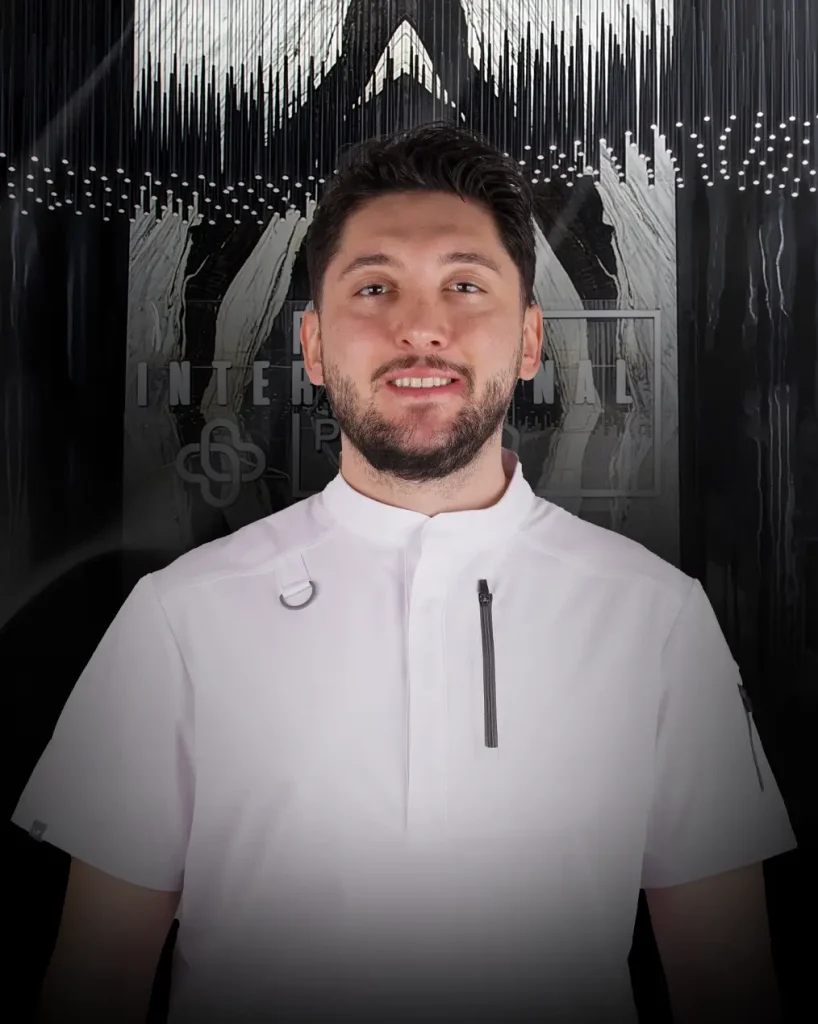
Dr. İzzet Bekaroğulları is devoted to providing outstanding dental care with a focus on patient comfort and durable, long lasting results for travelers visiting InternationalPlus Istanbul. His guiding philosophy rests on conservative treatments that protect natural tooth structure wherever possible while achieving attractive, functional outcomes that boost both health and confidence. Patients appreciate his thorough explanations and patient centered approach, which prioritizes understanding what matters most to each person seeking care abroad. Aware of the special needs of travelers journeying from far off countries, he supplies realistic treatment timelines and clear aftercare instructions that patients can follow with assurance once back home. His gentle technique and modern pain control protocols deliver comfortable visits, directly easing the worry many feel when seeking care in an unfamiliar healthcare setting. Known for honest advice and transparent pricing, he has won the trust of patients from many countries who prize integrity alongside clinical excellence and affordable quality.