
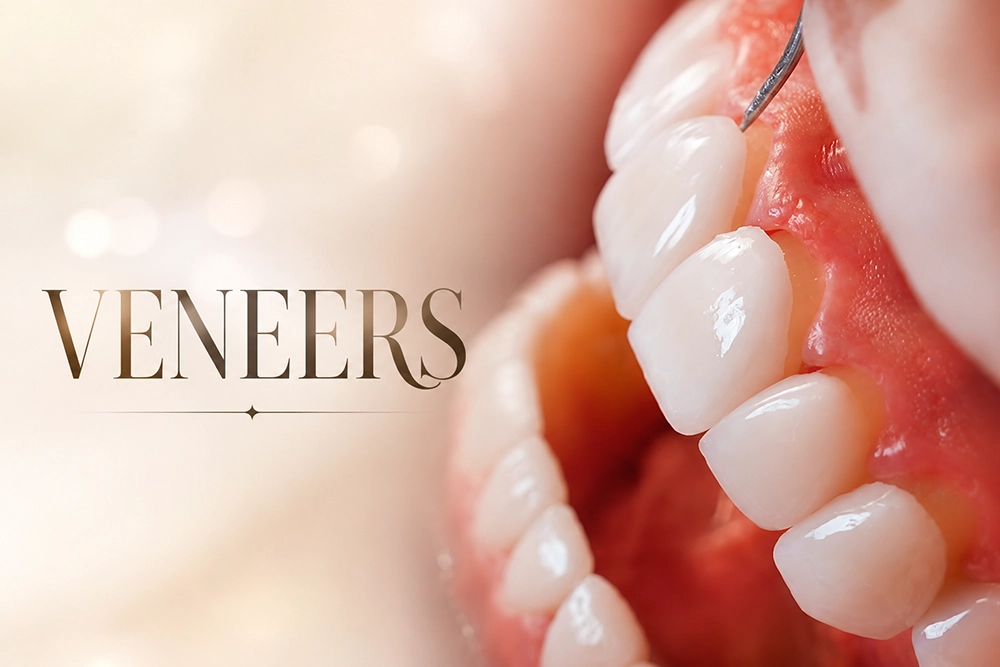
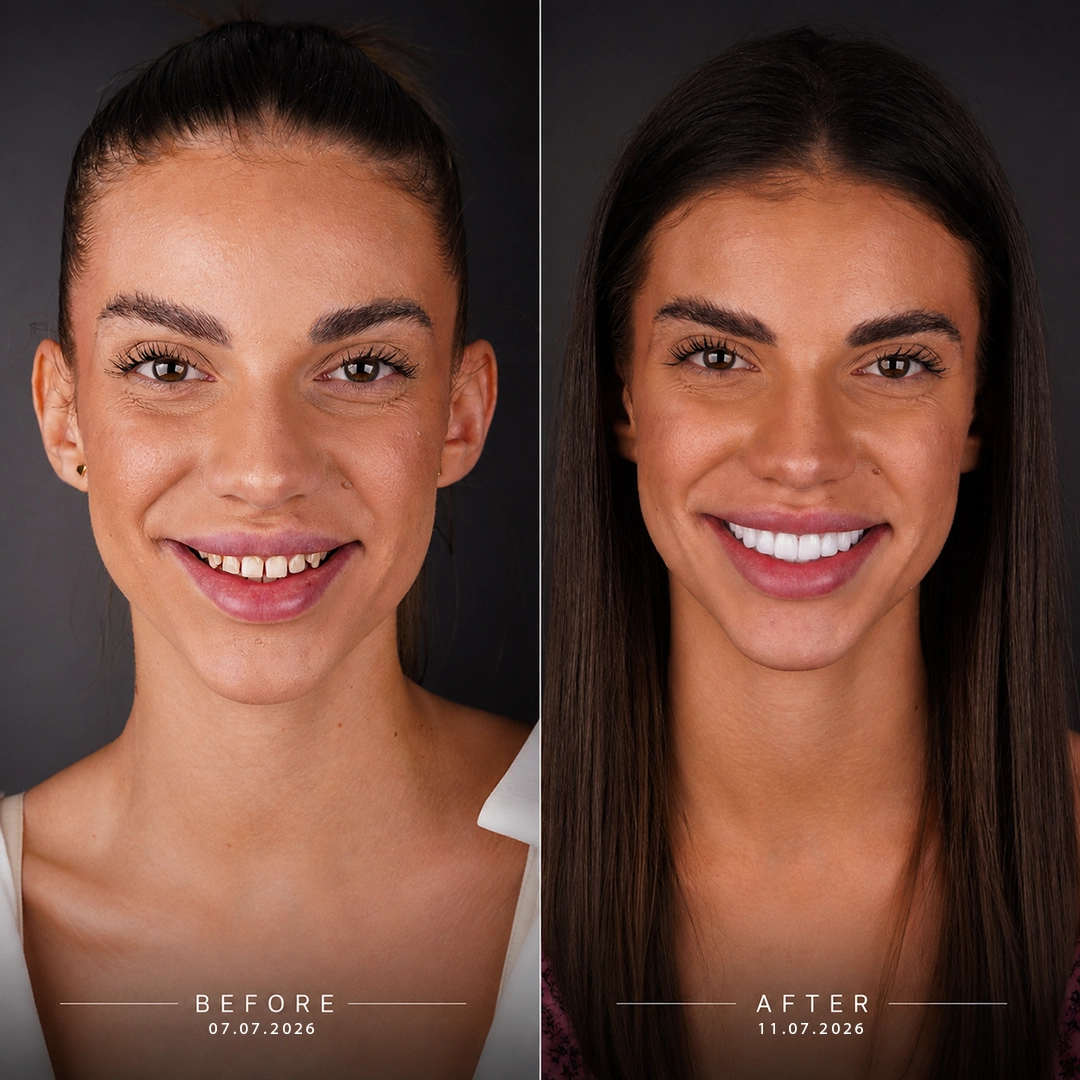
Veneers before and after photos show the visible jump from a discoloured, worn or uneven smile to a brighter, more even one. The real change depends on the starting teeth, the chosen shade, plus the shape design. For UK patients weighing porcelain or composite shells, this guide explains what genuinely changes, which cases transform the most, how colour and symmetry are planned before treatment and how to read a before and after image without being misled, drawing on current research and cases treated at International Plus in Istanbul.
Key Takeaways
- Veneers change colour, shape, length and alignment illusion on the visible front teeth, not the roots, the bite or gum health.
- The biggest visible transformations come from discoloured, worn, gapped or mildly crooked teeth while severe crowding is better treated with orthodontics first.
- A 2023 smile perception study found laypeople notice midline and symmetry changes almost as readily as dentists (Cheng et al., 2023).
- Colour is planned with a shade scan and a wearable mock-up because a 2021 review showed lighting and translucency shift the final tone (Alayed et al., 2021).
- At International Plus, a Diagnostic Council plans each case and only consented, unretouched patient photos are published, never AI generated images.
What Do Veneers Actually Change in a Before and After?
In a veneers before and after, the visible change is entirely cosmetic: shade, shape, length, the alignment illusion, plus the way light reflects across the front teeth. Veneers cover discoloration, close small gaps, rebuild worn or chipped edges, then mask mild crowding without moving the teeth. The natural tooth stays in place and each veneer reshapes only the visible face rather than the root or the bite. A 2018 review linked lasting veneer results to sound preparation design and enamel bonding rather than dramatic change (Alothman et al., 2018). What veneers do not fix is gum disease, jaw position or a heavily broken down tooth, which often needs full ceramic crown restorations instead. At International Plus, the Diagnostic Council separates cosmetic cases suited to veneers from structural cases at the first assessment so the before and after reflects a realistic plan rather than a filter.
Learn more about veneer smile design at International Plus →

Which Cases Show the Most Visible Veneer Transformation?
The most visible veneer transformations come from four starting points: deep discoloration, worn or chipped edges, spaced or gapped teeth, plus mild crowding. A dull grey or tetracycline stained smile changes the most on camera because colour is the first thing the eye reads. Gaps and short worn teeth also show a clear difference since a veneer restores length and closes space. Mild crowding improves through an alignment illusion though a badly rotated tooth needs orthodontics first. A 2023 study of smile perception found laypeople notice midline and symmetry shifts almost as readily as dental professionals (Cheng et al., 2023). The table below sets realistic expectations for each starting condition.
| Starting condition | What veneers change | Realistic limit |
|—|—|—|
| Discoloured or stained teeth | Mask deep colour, brighten evenly | Whitening alone may suffice for mild stains |
| Worn or chipped edges | Rebuild length and edge shape | Heavy grinding needs a night guard |
| Spaced or gapped teeth | Close small gaps, widen narrow teeth | Large gaps may need orthodontics |
| Mildly crowded teeth | Even out the smile line by illusion | Severe crowding needs braces or aligners first |
Bottom line: veneers transform colour and shape reliably but they mask rather than move teeth so alignment problems have a limit. For deep staining, sometimes professional in-office teeth whitening reaches the goal without covering the enamel at all.
How Are Colour, Shape and Symmetry Planned Before Veneers?
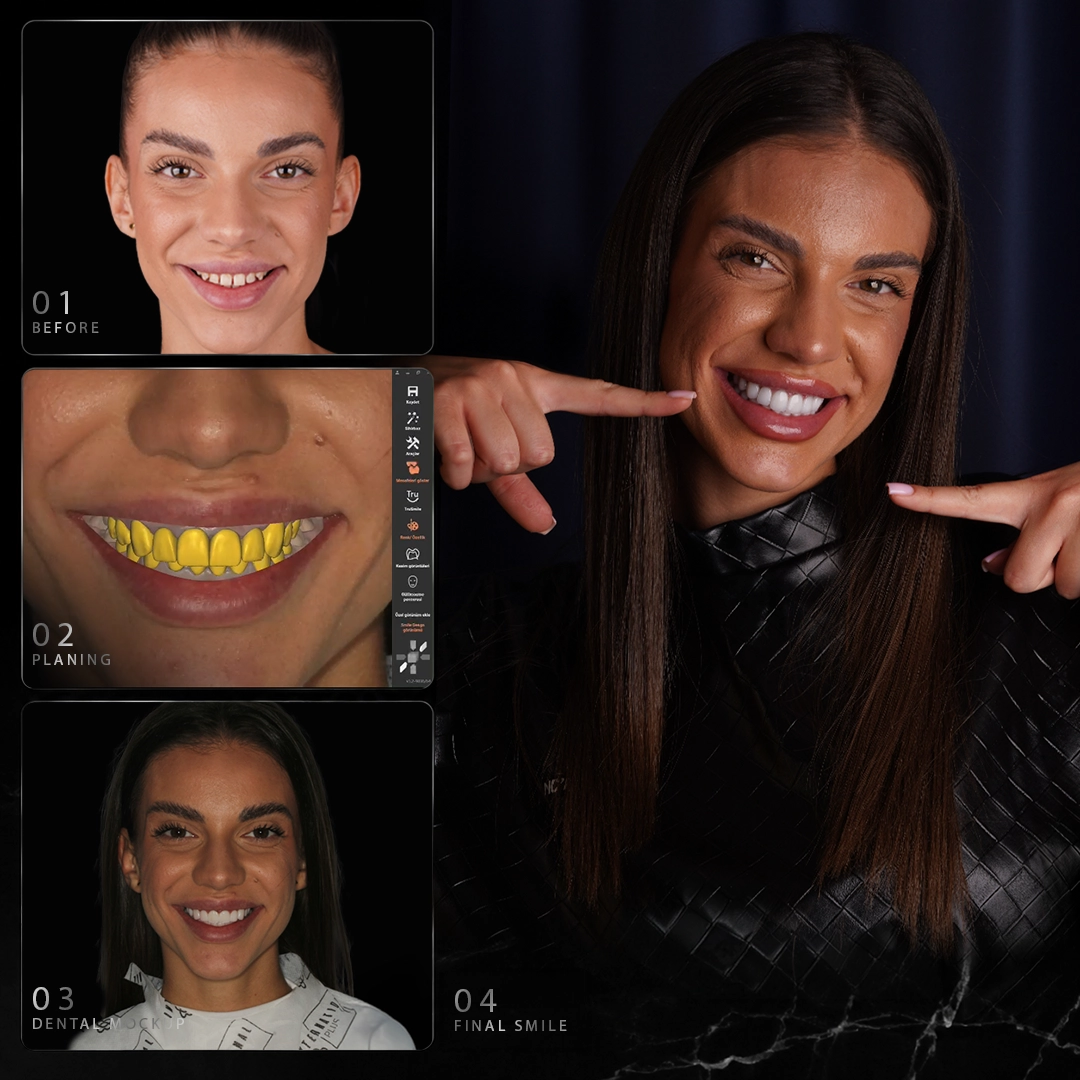
Colour and shape and symmetry are planned digitally before any veneer is made, using a shade scan, a smile design preview, then a physical mock-up the patient wears. Shade selection is more than picking white because a 2021 review showed lighting, translucency, plus neighbouring teeth all shift the final colour (Alayed et al., 2021). In our Istanbul clinic, Dr. Eren Gülbahar applies a test drive your smile method, where a bonded mock-up previews the planned shape over the natural teeth before enamel is touched. A 2018 case technique paper described this digital smile design and mock-up route as a way to align patient expectations with the final outcome (Garcia et al., 2018). In our practice we keep the first mock-up one shade warmer than most patients ask for because a slightly natural tone photographs better over years than pure white. A digital smile design preview technology session and a MetiSmile face scan let the patient approve the design and this planning discipline is set out in the International Plus digital smile.
Book Your Free Consultation →
How Do You Read a Veneers Before and After Photo Correctly?
Reading a veneers before and after photo correctly means checking the lighting, the angle, plus the honesty of the image before trusting the result. The same smile looks whiter under a bright ring light and warmer in daylight so a dramatic colour jump can be partly the camera. A 2019 study on colour thresholds confirmed that lighting alone shifts perceived tooth shade beyond what the eye accepts as a match (Paravina et al., 2019). Reliable comparisons use matched lighting, the same angle, plus no retouching or whitening filter. Ask whether a photo shows a real, consented patient rather than an AI generated or stock composite because synthetic before and after images misrepresent what veneers can do. Our published gallery uses only consented, unretouched patient cases, never AI generated composites. When you compare results, study the gum line, the tooth proportion, then how the smile sits with the lips, not brightness alone. Realistic reference cases also appear in our guides to Turkey teeth before and after and tooth crown before and after.
What Affects Your Veneers Before and After Result?
Your veneers before and after result depends on the starting teeth, enamel quality, bite forces, the material choice, plus long term care. Healthy gums and sound enamel give the most reliable bond and the cleanest change and a 2023 systematic review linked minimally invasive, enamel preserving veneers to better long term outcomes (Meer Rownaq Ali et al., 2023). Material shapes how the result ages: porcelain resists staining while resin is easier to repair, a choice covered in our guides to emax veneers and composite veneers. A dramatic, ultra white, perfectly uniform before and after looks striking but often reads as artificial so for most patients we plan a natural shade with a little character rather than a uniform block because the smile should still look convincing in ten years. Grinding shortens veneer life so a night guard protects the change and our guide to how long veneers last sets realistic timelines. Individual results vary and a personalised consultation confirms what your teeth can achieve.
A believable veneers before and after starts with an honest plan, not a filter. Patients weighing a broader change sometimes compare a complete Hollywood Smile makeover or read dental crowns vs veneers before deciding. For those comparing providers, International Plus combines official Ministry of Health authorization, a 4.8/5 rating from 5,504+ verified reviews and more than 200,000 patients from over 140 countries, giving cosmetic dentistry in Istanbul a credible, well documented home.
Discover your veneer options at International Plus →
Frequently Asked Questions
Are veneers before and after photos accurate?
Accurate before and after photos use matched lighting, the same angle, plus no retouching so the change reflects the veneers rather than the camera. A ring light can exaggerate whiteness so ask for consented real patient cases and avoid any AI generated or stock composite image when judging a clinic’s work.
Do veneers really change your smile that much?
Veneers change the colour, shape, length, plus the alignment illusion of the front teeth, which produces a clear visible difference, especially on discoloured or worn smiles. They do not move teeth or alter the bite so the transformation is cosmetic and surface level rather than structural and the natural tooth stays underneath.
Which teeth show the biggest veneer transformation?
Deeply stained, worn, chipped or gapped front teeth show the biggest transformation because colour and length are what the eye reads first. Mildly crowded teeth improve through an alignment illusion. Severely rotated or crowded teeth usually need orthodontics before veneers to reach a natural, lasting result.
Can you see before and after results before treatment?
A digital smile design preview and a wearable mock-up let you see a proposed before and after before any enamel is prepared. A 2018 case technique study described this mock-up route as a way to align expectations and at International Plus the test drive your smile method previews the shape first.
Do veneers before and after results last?
Well maintained veneers hold their result for years though longevity depends on the material, the bite, plus daily care. Porcelain resists staining longer than resin and a night guard protects against grinding. Regular hygiene visits keep the surrounding teeth matched so the before and after stays consistent over time.
Reviewed by Dr. Eren Gülbahar
References
- Alothman Y, et al. Open Access Maced J Med Sci. 2018. PMC6311473
- Cheng JH, et al. J Dent Sci. 2023. PMC10068377
- Alayed MA, et al. J Pharm Bioallied Sci. 2021. PMC8687016
- Garcia PP, et al. J Conserv Dent. 2018. PMC6080190
- Paravina RD, et al. J Esthet Restor Dent. 2019. PMID: 30891913
- Meer Rownaq Ali AB, et al. Cureus. 2023. PMC10548404
Follow us on Social Media
internationalplusofficial
internationalplus
internationalplusdental
This content is written, reviewed, and approved by the International Plus Medical Review Board to ensure clinical accuracy and adherence to strict editorial standards. All medical information is regularly monitored, audited and updated in light of the latest scientific advancements.
However the information provided here is for general informational purposes only and cannot be used for self diagnosis or making individual health interpretations. Results of medical treatments depend on individual anatomy and the unique healing process of each patient. This information should not replace a personal consultation with a qualified healthcare professional. To understand the best options for your specific needs and to receive a personalized treatment plan, we invite you to book a free consultation with the expert medical team at International Plus.

I am a healthcare professional with over 4 years of experience in dentistry, specializing in prosthetic dental treatment and implant-based applications. Since 2024, I have been serving as chief physician, leading clinical management, team coordination, and international patient processes. With my B2-level English proficiency, I am able to communicate effectively with international patients. I am a patient-centered, innovative, and solution-oriented dentist who prioritizes patient satisfaction.




