
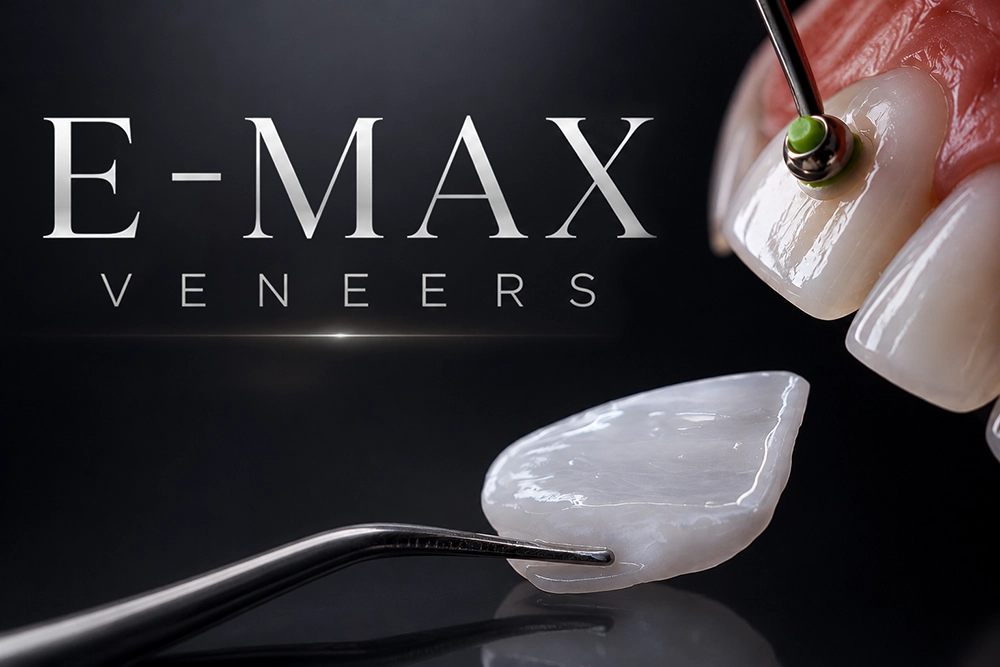
Emax veneers are wafer thin shells of lithium disilicate glass-ceramic bonded to the front of a tooth to reshape and brighten a smile while keeping most of the natural enamel intact. For patients in the UK weighing a lasting cosmetic upgrade, Emax veneers combine the strength of pressed ceramic with the light-catching translucency of a real tooth. This guide explains what lithium disilicate is, why it suits porcelain laminates, how each veneer is digitally designed and bonded, how long the result holds and who the treatment fits, drawing on current research and cases treated at International Plus in Istanbul.
Key Takeaways
- Emax veneers are made from lithium disilicate, a glass-ceramic with a flexural strength of roughly 360 to 400 MPa, much higher than older feldspathic porcelain.
- A 2025 meta-analysis ranked lithium disilicate among the highest surviving veneer ceramics with well planned laminates lasting 10 years or more (Klein et al., 2025).
- Preparation is conservative: each shell is often only 0.3 to 0.5 mm thick so most enamel stays untouched (Araujo et al., 2021).
- Porcelain resists staining far better than resin, making Emax a durable alternative to composite for coffee and wine drinkers.
- At International Plus, a Diagnostic Council plans every case on a TRIOS 5 scan and mills each veneer from Ivoclar lithium disilicate in an in-house laboratory.
What Are Emax Veneers?
Emax veneers are thin porcelain shells made from lithium disilicate, a glass-ceramic marketed by Ivoclar as IPS e.max, that a dentist bonds onto the visible surface of a front tooth to correct its shape and shade. Unlike freehand resin, each shell is fabricated outside the mouth, either pressed or milled, then adhesively cemented for a precise, custom fit. The material carries a flexural strength of roughly 360 to 400 MPa, far above older feldspathic porcelain, which lets the veneer stay thin yet resist normal chewing load. A 2025 systematic review and meta-analysis of ceramic laminate veneers grouped lithium disilicate among the most durable veneer ceramics studied (Klein et al., 2025). At International Plus, every lithium disilicate veneer is milled in our in-house laboratory and matched against the patient’s own tooth shade, most often the natural 0M2 tone before it ever reaches the mouth.
Why Is Lithium Disilicate Used for Emax Veneers?
Lithium disilicate is used for Emax veneers because it pairs high strength with a translucency that mimics natural enamel, a balance earlier ceramics could not reach. The glass-ceramic holds needle-shaped lithium disilicate crystals in a glassy matrix and those crystals scatter light like a real tooth while reinforcing the structure against fracture. This is why a lithium disilicate laminate can stay around 0.3 to 0.5 mm thick yet still tolerate functional load. A 2024 clinical review of laminate veneers reported consistently high success for lithium disilicate restorations across the studies it examined (Komine et al., 2024). The ceramic also etches predictably with hydrofluoric acid, which gives a strong resin bond; a 2023 laboratory study measured reliable bond strength for etched lithium disilicate surfaces (Tang et al., 2023). In our practice we prefer lithium disilicate over feldspathic porcelain for single tooth cases because its edge strength lowers the chipping risk that thinner ceramics carry.
How Are Emax Veneers Made and Fitted?
The Emax veneer process runs across two main stages: a digital design and try-in appointment, then minimal tooth preparation and adhesive bonding. First the smile is scanned and planned. A trial mockup then previews the new shape before each ceramic shell is bonded in place. The workflow at International Plus runs on a TRIOS 5 intraoral scanner and a MetiSmile face scan and a digital smile design preview technology mockup lets the patient approve the planned shape before any enamel is touched. This is the practical side of the “test drive your smile” method that Dr. Eren Gülbahar applies across cosmetic cases so the finished result matches an agreed design rather than a surprise. Preparation stays deliberately conservative: a 2021 evidence-based review of anterior veneers framed enamel conservation as central to long term veneer success (Araujo et al., 2021). Each shell is then milled from Ivoclar lithium disilicate in our in-house laboratory and cemented after the ceramic is etched and the tooth surface is bonded. The planning discipline behind this precision is described in the International Plus digital smile.
Learn more about Emax veneer treatment at International Plus →

Emax Veneers vs Composite Veneers: What Is the Difference?
The core difference is that Emax veneers are milled lithium disilicate porcelain bonded after light preparation while composite veneers are resin sculpted directly onto the tooth in a single visit. Porcelain is more translucent and far more stain resistant while resin is faster to place and simpler to repair. A 2025 meta-analysis of ceramic laminate veneers reported high multi-year survival for lithium disilicate, a durability that direct resin rarely matches (Klein et al., 2025).
| Feature | Emax veneers | Composite veneers |
|—|—|—|
| Material | Milled lithium disilicate porcelain | Hand layered resin |
| Tooth preparation | Minimal, some enamel shaped | Additive, little to none |
| Translucency | High, enamel like depth | Good but less lifelike |
| Stain resistance | High, glazed surface | Lower, absorbs pigment |
| Typical lifespan | 10 years or more | 5 to 8 years |
| Chairside repair | Usually needs a remake | Easy to patch and polish |
Bottom line: porcelain suits patients who want a durable, stain resistant finish while resin is the reversible, lower cost entry point covered in our guide to composite veneers. Porcelain is not automatically the right answer for everyone. For a younger patient testing a single tooth change, we often start with reversible resin because enamel removed for ceramic cannot be put back and that decision deserves caution. Patients comparing restorations sometimes weigh veneers against crowns in our guide to dental crowns versus veneers.
How Long Do Emax Veneers Last and How Durable Are They?
Emax veneers typically last 10 years or more with high strength ceramics showing strong survival in long term follow up. A 2025 systematic review and meta-analysis of ceramic laminate veneers found lithium disilicate among the highest surviving veneer materials over multi-year periods (Klein et al., 2025) and a 2025 case follow up documented minimally invasive ceramic laminate veneers still serving well beyond 12 years (Reis et al., 2025). Durability comes from two sources: the flexural strength of the ceramic and the adhesive bond to enamel. The most common reasons a lithium disilicate veneer eventually needs attention are marginal staining, debonding or a chip under heavy bite load rather than sudden collapse. For a full breakdown of timelines across materials, our guide to how long veneers last sets realistic expectations. In the veneer cases we review at International Plus, a recall check every six to twelve months catches early margin wear, a maintenance habit that supports longevity rather than a promise of permanence.
Book Your Free Consultation →
Who Is a Good Candidate for Emax Veneers?
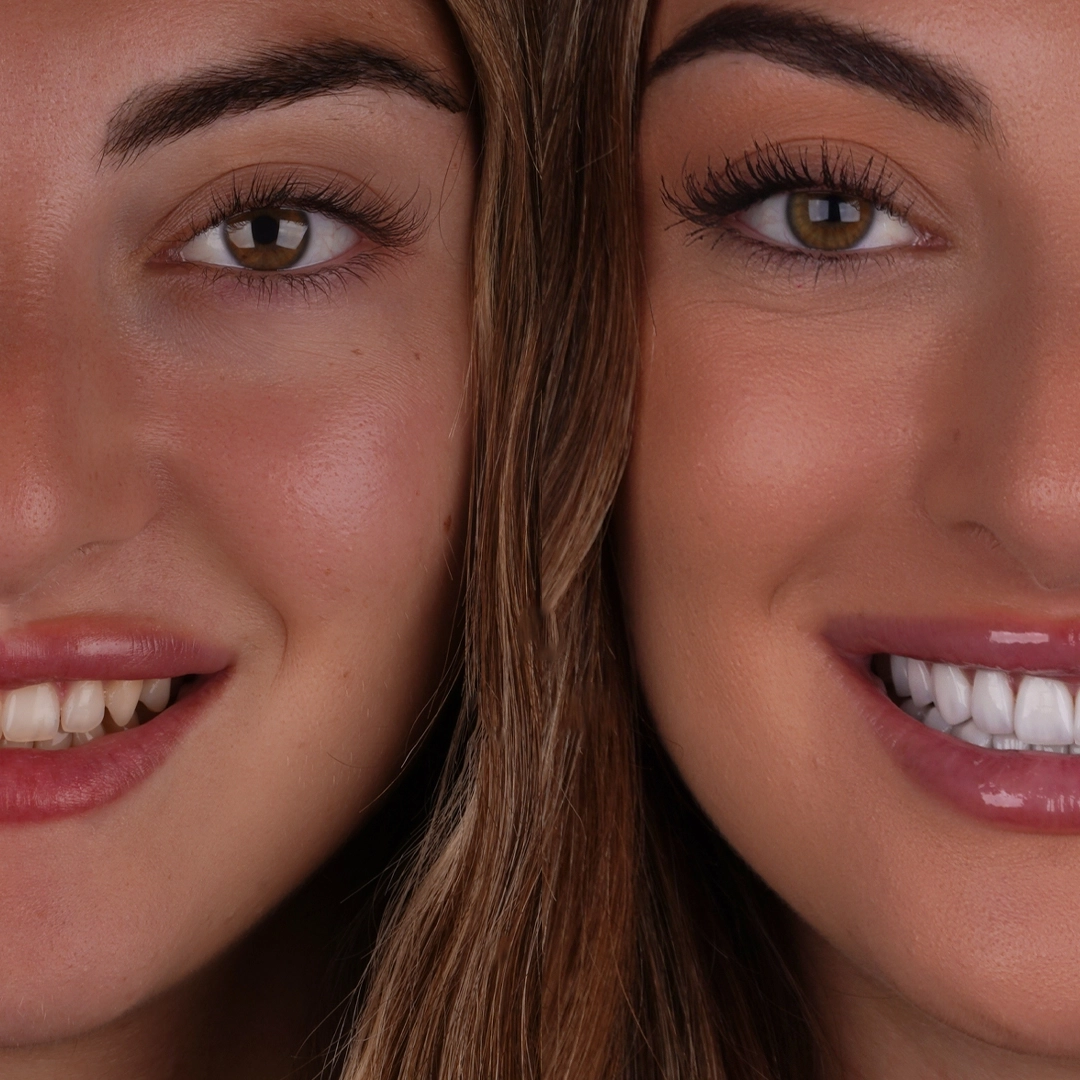
Good candidates for Emax veneers have healthy gums, sound enamel and mainly cosmetic concerns such as discoloration, minor chips, worn edges or small gaps across the visible teeth. Because porcelain bonds best to enamel, patients who still have most of their natural tooth surface get the most reliable result; a 2025 consensus statement on minimally invasive restorations reinforced enamel bonding as a key predictor of laminate success (Beuer et al., 2025). Lithium disilicate veneers work well for a durable, stain resistant smile upgrade but they are not the stronger choice for severe grinders because repeated clenching can chip even high strength ceramic so a night guard becomes essential in bruxism cases. Teeth that are heavily broken down or root treated often need full ceramic crown restorations instead since a crown covers the whole tooth rather than only its front. Patients seeking a complete change across the smile line may consider a complete Hollywood Smile makeover that blends several treatments and those weighing the change often review Turkey teeth before and after results to set realistic expectations. Our Diagnostic Council confirms suitability only after a full clinical and radiographic review and individual results vary.
Choosing an experienced provider matters as much as the ceramic itself. For Emax veneers, International Plus combines official Ministry of Health authorization, a 4.8/5 rating from 5,504+ verified reviews and more than 200,000 patients from over 140 countries, giving lithium disilicate porcelain a credible, well documented home in Istanbul.
Discover your smile options at International Plus →
Frequently Asked Questions
Are Emax veneers better than composite veneers?
Neither option wins outright. Emax veneers are stronger and more stain resistant, lasting a decade or more while composite stays reversible and easy to repair at the chair. The right choice depends on your enamel and bite so a personalized consultation confirms which material suits your teeth.
How much tooth is removed for Emax veneers?
Preparation for Emax veneers is conservative with many laminates just 0.3 to 0.5 mm thick so most of the natural enamel stays intact. A 2021 evidence-based review linked this enamel conservation to long term success. The exact amount depends on tooth position and is confirmed after a clinical assessment.
Do Emax veneers stain?
Staining is well controlled because lithium disilicate porcelain carries a smooth, glazed surface that pigment struggles to penetrate, unlike more porous resin. Coffee and red wine mark the natural teeth around a veneer more readily than the ceramic itself so regular hygiene visits keep the whole smile matched over time.
How long do Emax veneers last?
Well maintained Emax veneers typically last 10 years or more and a 2025 case follow up recorded minimally invasive lithium disilicate laminates serving beyond 12 years. Lifespan depends on bite forces and whether a night guard protects against grinding. Regular recall checks help results reach the upper end of that range.
Are Emax veneers worth traveling to Turkey for?
Many UK patients travel to Istanbul for Emax veneers to combine experienced cosmetic dentistry with all-inclusive coordination. International Plus holds Ministry of Health authorization and a 4.8/5 rating from 5,504+ verified reviews. Value depends on individual clinical needs so a personalized consultation gives an accurate plan rather than a fixed quote.
Reviewed by Dr. Eren Gülbahar
References
- Klein P, et al. J Esthet Restor Dent. 2025. PMC12076113
- Komine F, et al. J Prosthodont Res. 2024. PMID: 38220160
- Araujo E, et al. J Adhes Dent. 2021. PMID: 33825424
- Reis JMDSN, et al. J Esthet Restor Dent. 2025. PMC12457873
- Tang C, et al. J Adhes Dent. 2023. PMC11734254
- Beuer F, et al. J Esthet Restor Dent. 2025. PMC12076099
Follow us on Social Media
internationalplusofficial
internationalplus
internationalplusdental
This content is written, reviewed, and approved by the International Plus Medical Review Board to ensure clinical accuracy and adherence to strict editorial standards. All medical information is regularly monitored, audited and updated in light of the latest scientific advancements.
However the information provided here is for general informational purposes only and cannot be used for self diagnosis or making individual health interpretations. Results of medical treatments depend on individual anatomy and the unique healing process of each patient. This information should not replace a personal consultation with a qualified healthcare professional. To understand the best options for your specific needs and to receive a personalized treatment plan, we invite you to book a free consultation with the expert medical team at International Plus.

I am a healthcare professional with over 4 years of experience in dentistry, specializing in prosthetic dental treatment and implant-based applications. Since 2024, I have been serving as chief physician, leading clinical management, team coordination, and international patient processes. With my B2-level English proficiency, I am able to communicate effectively with international patients. I am a patient-centered, innovative, and solution-oriented dentist who prioritizes patient satisfaction.




