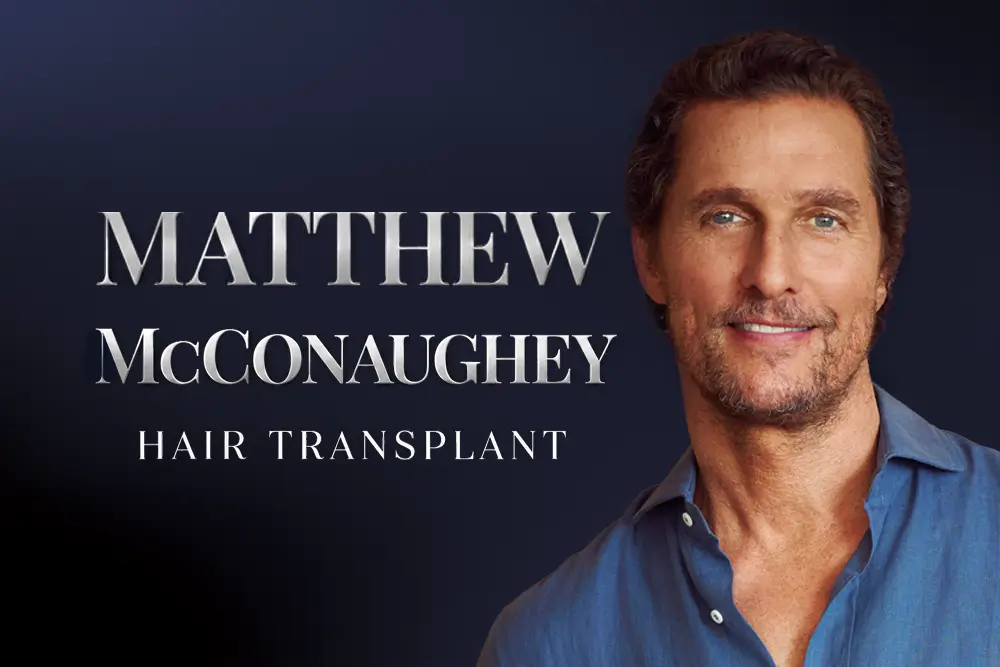

The matthew mcconaughey hair transplant question is unusual among celebrity hair stories because the actor has answered it himself on camera, more than once. Matthew McConaughey has described losing hair in the late 1990s. He shaved his head and rebuilt density with a daily topical routine rather than with surgery. He has also denied having hair plugs. This article is an independent educational commentary from the surgical team at International Plus. Our clinic has not treated Matthew McConaughey and holds no affiliation with him. The aim here is to set out what has been published and to flag what remains unverified while explaining how hair restoration actually works.
Key Takeaways
- He has denied surgery. Matthew McConaughey told LADbible in 2022 that his regrowth came from a daily topical routine and no medication.
- A surgeon claimed credit anyway. Newsweek reported his account of a physician taking credit at a hair transplant convention for work he says never happened.
- The product has no published trial data. Healthline reported in 2022 that Regenix is not FDA regulated and that specialists disagree sharply about it.
- Approved therapy is a separate category. Minoxidil and finasteride carry regulatory approval that cosmetic topical systems do not.
Why Did the Matthew McConaughey Hair Loss Story Begin in the 1990s?
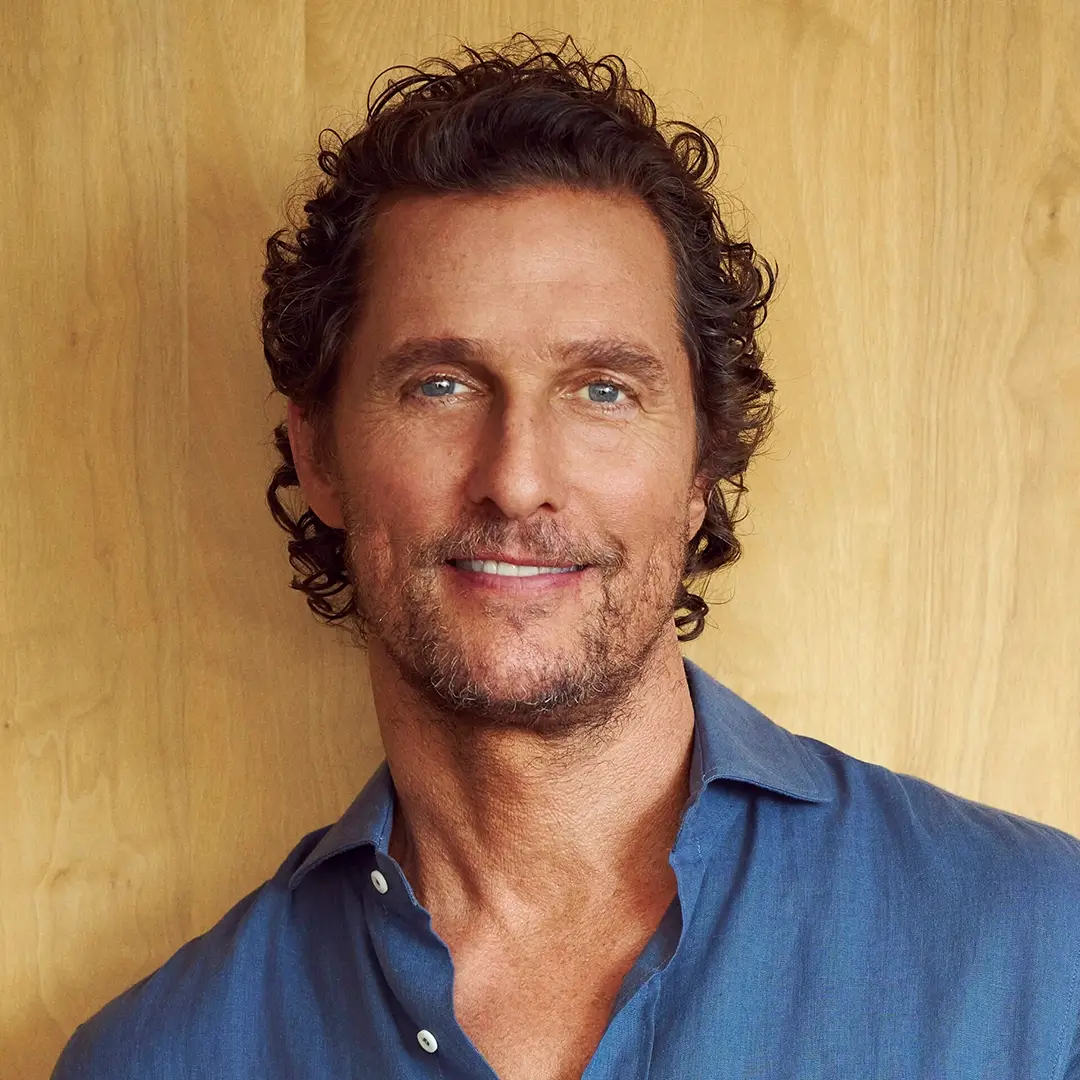
Matthew McConaughey hair loss is a documented part of the actor’s own account rather than a rumour. Newsweek reported in March 2022 that he recalled a photograph from a millennium party in 2000 showing a bald patch at the crown after which he chose to shave everything off.
Two documented details anchor that account. First, his 2020 memoir covers the episode directly. Second, the actor has pointed audiences toward his own films from around 2001 as visible evidence of thinning on screen. Shaving followed on the advice that starting from bare scalp gave regrowth its best chance. Pattern loss of this kind progresses across decades rather than across months according to published dermatology reviews, so one year of footage captures a single frame of a very long process. Our clinic meets the same instinct in consultation rooms every week and the shave itself alters nothing biological.

Has Matthew McConaughey Confirmed a Hair Transplant?
No confirmation exists and the actor has actively denied it. Matthew McConaughey told LADbible in an interview published in early 2022 that his regrowth came from a topical routine rather than from surgery or medication, describing the effort in his own words as “no Propecia, no nothing, it was just manual labor.”
A denial from the person concerned is the strongest evidence available on a question of this kind. Stranger still is a claim made about him by someone else. Newsweek reported in March 2022 that McConaughey recounted meeting a Beverly Hills physician who told him another surgeon raised a hand annually at an international hair transplant convention to take credit for the actor’s hair. That physician examined his scalp and told him no transplants were present. Our team publishes no graft estimates or technique guesses about any named person who has not described their own care.
What Is the Matthew McConaughey Hair Treatment He Describes?
The matthew mcconaughey hair treatment he names publicly is Regenix, a mail order topical system he has endorsed since 1999. Healthline reported in March 2022 that the company builds custom shampoos and scalp solutions from a mailed hair sample and that the regimen carries no drug approval of any kind.
Specialists quoted in that coverage split sharply. Dr Ken L. Williams Jr, a hair restoration surgeon in California, told Healthline the system lacks physician oversight and proven medicinal application while Dr Jae Pak allowed that some botanical ingredients have follicular research behind them. A 2025 trichology review of non conventional topicals found the category interesting in laboratory work yet thin in controlled clinical data (Bikash et al, 2025). Cosmetic topicals work well for scalp condition and daily habit but the category is not a substitute for approved therapy because regulatory approval demands trial evidence these formulations have never published.
What Does the Public Record Establish and What Does It Not?
Separating documented statement from inference is the only honest way to handle this topic. Four claims circulate about the actor’s hair and each one sits at a different level of evidence. A statement made on camera is a primary source while a photo comparison published by a company selling surgery is marketing.
| Claim in circulation | Evidence level | What it actually rests on |
| Hair loss in the late 1990s | Confirmed by the person | His 2020 memoir and filmed interviews |
| A daily topical routine since 1999 | Confirmed by the person | LADbible and US talk show interviews |
| A surgeon claimed credit for plugs | Reported, then denied | Newsweek account of the convention story |
| A transplant produced the result | Unverified | Photo comparisons on commercial clinic pages |
Row four is where most of the internet lives. Confident public verdicts about this actor’s hair tend to originate, according to the Healthline coverage of March 2022, from businesses that sell hair restoration rather than from newsrooms. Commercial pages carry no obligation to verify anything before publishing a before and after grid. Our surgical team therefore applies one internal rule without exception: when a person has not described their own care, no procedural claim about that person goes on the page. Anyone weighing the same decision should begin with an examination rather than with a comparison gallery. Book Your Free Consultation
Does Shaving a Head Change What Grows Back?
Shaving alters nothing about follicle biology. A razor cuts the shaft above the skin and leaves the follicle untouched below so density after a shave matches density before it. What changes is perception since a blunt cut end reads thicker at the surface than a tapered growing tip does.
Timing explains the rest of the impression. Pattern loss runs in cycles and a scalp shaved during a heavy shedding phase regrows through the following growth window whatever product happens to be applied. A 2026 systematic review and meta analysis of risk factors for androgenetic alopecia describes a condition shaped by genetics and age alongside lifestyle exposure rather than by grooming choices (Li H et al, 2026). Crediting recovery to whatever was rubbed in during that window is a sequencing error rather than a finding, which is also the trap behind most hair transplant before and after galleries.
How Does Long Hair Change What a Hairline Looks Like?
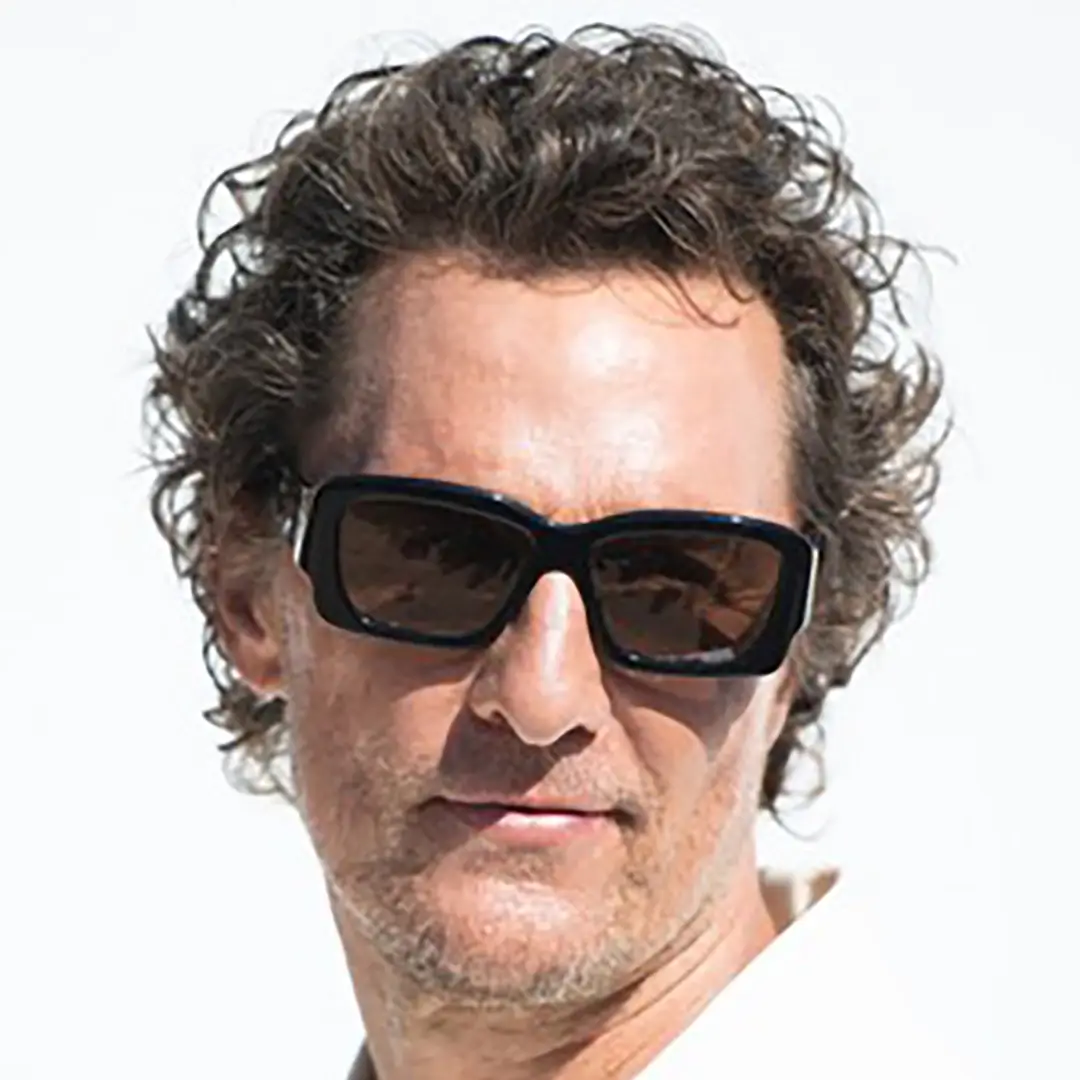
Matthew McConaughey long hair is a recurring search spike that follows every role where the actor grows out his fringe, and length genuinely changes what a camera records. Longer front sections cast shadow across the scalp and conceal partings, which lifts apparent density without a single follicle being added.
Lighting compounds the effect. A key light placed high and in front passes between hairs to illuminate bare scalp, the least forgiving setup that exists for a thinning frontal zone while a softer side fill hides that same scalp entirely. Red carpet stills and daylight street frames are therefore not comparable images. Native scalp density is counted per square centimetre under magnification according to standard trichology practice, typically in the region of 40 to 80 follicular units in an unaffected zone, rather than judged from a photograph. Our surgeons measure under trichoscopy for precisely this reason, applying the evidence first standard that also shaped our review of the Steve Carell hair transplant theory and the Justin Bieber hair transplant discussion.
What Separates Medical Support From Surgery?
Medical therapy is a maintenance tool and surgery is a redistribution tool. Drug treatment protects follicles that still function whereas a transplant relocates permanent follicles into zones where nothing viable remains. Neither one replaces the other and most durable plans combine both because untreated native hair keeps thinning around freshly placed grafts.
Only two drug options hold broad regulatory approval for pattern loss. A 2023 guidance review places topical minoxidil and oral finasteride at the centre of treatment alongside a widening set of adjuncts (Kaiser et al, 2023) and a 2025 update tracks newer agents entering that space (Shin et al, 2025). Adherence decides most outcomes. An ethics and compliance review found that cost and long term persistence rather than efficacy sit behind the majority of treatment failures (Nestor et al, 2021). Individual results may vary and hair transplant cost planning belongs in that same conversation.

How Does Hairline Design Decide Whether a Result Looks Natural?
Hairline design decides realism far more than graft count does. A natural frontal edge is irregular rather than straight, built from single hair units at the leading border with heavier units set behind them. Anatomical mapping supports designing to measured facial landmarks instead of to a fashionable line.
Measurement drives the plan. Research charting frontal hairline patterns across a study population produced reference points for natural design and restoration (Sirinturk et al, 2017) and handling technique then decides yield. A randomised trial of 64 patients found that de epithelialising grafts left survival unchanged while immediate postoperative appearance improved with satisfaction of 100% against 71.25% in the control arm (Fan et al, 2021). Larger sessions follow identical discipline as a comparative series of extraction megasessions in severe pattern loss documented (Li KT et al, 2020). That logic guides hair transplant surgery in Istanbul and the implanter pen variant covered in our DHI hair transplant guide while hair restoration planning for women uses separate density targets and beard transplant procedures follow their own donor rules.
The Bottom Line on the Matthew McConaughey Hair Transplant Question
The honest answer is that Matthew McConaughey has already answered it and nothing published contradicts him. He describes hair loss and a shaved head plus a topical routine he still keeps and he denies plugs. What stays unverified is whether that routine caused the regrowth since no controlled evidence for the product exists.
One general lesson outlasts the celebrity question. Hair loss is ordinary and restoration is a genuine discipline with real constraints so one person’s routine is a story rather than a protocol. International Plus is authorized by the Turkish Ministry of Health and holds a rating of 4.8 out of 5 from more than 5,504 verified reviews and our multidisciplinary team has treated over 200,000 patients from 140+ countries since 2014. The same standard shapes our look at the Elon Musk hair transplant debate. This article is educational commentary and not medical advice. Get a personal hair loss assessment
Frequently Asked Questions
Did Matthew McConaughey get a hair transplant?
He says no. Matthew McConaughey has denied having hair plugs or surgery in filmed interviews, attributing his regrowth to a daily topical routine begun in 1999. A Beverly Hills physician who examined his scalp told him no transplants were present according to Newsweek’s March 2022 account of that conversation.
What did Matthew McConaughey use for hair loss?
He names a mail order topical system called Regenix and says he rubs it into his scalp for ten minutes daily. Healthline reported in 2022 that the product is not regulated by the Food and Drug Administration and that the company has published no trial data supporting its claims.
When did Matthew McConaughey start losing his hair?
Thinning became visible in the late 1990s by his own account. He has pointed to films released around 2001 as showing the change on screen and described a photograph from a party in 2000 that revealed a bald patch at the crown. Shaving followed shortly afterwards.
Can a topical product regrow a receding hairline?
Approved topical minoxidil can thicken existing hair and slow loss though no topical creates follicles where none survive. Products outside that approval pathway carry no obligation to publish evidence at all. A dermatologist or restoration surgeon should examine the scalp under magnification before any regimen is purchased.
How long does a hair transplant take to show results?
Transplanted hairs shed within the first two months while the follicles remain in place beneath the surface. Visible regrowth usually starts around month four and keeps thickening until roughly month fifteen. Judging density before the ninth month gives a misleading impression of the final outcome.
Reviewed by Dr. Eren Gülbahar
References
- Li H et al, Risk factors for androgenetic alopecia: a systematic review and meta-analysis. BMC Public Health. 2026. PMC13020014
- Kaiser M et al, Treatment of Androgenetic Alopecia: Current Guidance and Unmet Needs. Clin Cosmet Investig Dermatol. 2023. PMC10239632
- Shin JW et al, Updates in Treatment for Androgenetic Alopecia. Ann Dermatol. 2025. PMC12715879
- Nestor MS et al, Treatment options for androgenetic alopecia: efficacy, side effects, compliance, financial considerations and ethics. J Cosmet Dermatol. 2021. PMC9298335
- Bikash C et al, Topical Alternatives for Hair Loss: Beyond the Conventional. Int J Trichology. 2025. PMC12251978
- Sirinturk S et al, Study of frontal hairline patterns for natural design and restoration. Surg Radiol Anat. 2017. PMID 27830323
- Fan ZX et al, Effect of De-epithelialization on Graft Survival Rate After Follicular Unit Extraction. Dermatol Surg. 2021. PMID 34397543
- Li KT et al, Clinical experience on follicular unit extraction megasession for severe androgenetic alopecia. J Cosmet Dermatol. 2020. PMID 31529675
Follow us on Social Media
internationalplusofficial
internationalplus
internationalplusdental
This content is written, reviewed, and approved by the International Plus Medical Review Board to ensure clinical accuracy and adherence to strict editorial standards. All medical information is regularly monitored, audited and updated in light of the latest scientific advancements.
However the information provided here is for general informational purposes only and cannot be used for self diagnosis or making individual health interpretations. Results of medical treatments depend on individual anatomy and the unique healing process of each patient. This information should not replace a personal consultation with a qualified healthcare professional. To understand the best options for your specific needs and to receive a personalized treatment plan, we invite you to book a free consultation with the expert medical team at International Plus.

International Plus was established from scratch in 2014 with the sole purpose of providing a world class center for plastic and cosmetic surgery by SAMİLSAN SAĞLIK HİZMETLERİ TURİZM DANIŞMANLIK TİCARET LİMİTED ŞİRKETİ International Plus has developed a worldwide reputation for its unique treatments and techniques. With over 10 years of experience, our talented medical experts are among the best in their respective fields. You are our priority. We are convinced that good communication between you and your surgeon is essential when planning your treatments. We offer realistic advice and the most suitable treatments for you.