Good dental implant aftercare means keeping the site clean without disturbing it, icing the area for the first 48 hours and avoiding smoking, alcohol, straws and hard foods while attending every follow up visit. What happens in the first 30 days largely determines whether the implant fuses successfully with your jawbone and lasts for decades. This guide walks through the exact protocols our surgical team at International Plus gives every patient before they leave Istanbul from the moment the anesthesia wears off to the moment your dentist confirms the site has fully closed.
Key Takeaways
- The first month is decisive: Early bone forms between roughly 4 and 12 weeks so hygiene and habits now carry more weight than they will later.
- Clean without disturbing: Leave the site alone for 24 hours, then brush gently with a soft brush and add an interdental brush or water flosser around week two.
- Avoid the biggest risks: Smoking, alcohol, straws, strenuous exercise and hard foods all threaten a healing implant.
- Watch for warning signs: Swelling that peaks by day three and fades is normal; worsening pain, a loose implant or pus is not.
Why the First 30 Days Are Decisive
The first 30 days are decisive because an implant is not fully attached the moment it is placed. It is held by mechanical friction in the bone until a biological process called osseointegration locks it permanently in place. Soft tissue usually closes within one to two weeks but the deeper bone response is slower with new bone forming over the following weeks and months (Pandey et al., 2022). This is the same integration we detail in our guide to osseointegration in All on 4 and All on 6 systems.
Because the first month sits inside this early bone forming window, plaque, smoking, trauma or missed hygiene during this period carry more weight than the same habits would six months later. The long term payoff is real: systematic reviews report that dental implants achieve roughly 95% or higher survival at ten years when patients maintain proper aftercare (Howe et al., 2019). When hygiene and follow up lapse, peri-implantitis, an inflammatory condition that destroys the bone supporting the implant, affects roughly one in five patients over time (Diaz et al., 2022). That risk is largely shaped by habits formed in the first month.

How to Clean Around a Healing Implant
For the first 24 hours, leave the surgical site completely alone. Do not rinse, spit forcefully or brush directly over it since disturbing the area risks dislodging the blood clot that protects the healing wound. From day two onward, resume gentle brushing everywhere else in the mouth and switch to a soft bristled brush around the implant itself, paired with a low abrasive, non whitening toothpaste.
Interproximal cleaning matters more than most patients expect. Systematic reviews of implant maintenance show that interdental brushes and water flossers are effective tools for reducing bleeding and controlling plaque around implants (Araújo et al., 2024). That is a strong argument for adding one to your routine from around week two once your dentist confirms the tissue has closed enough to tolerate it. The table below matches the right tool to each stage of the first 30 days.
| Tool | When to use it | Why it helps |
| Damp gauze | Day 1 only with light bite pressure | Controls initial oozing and protects the clot |
| Soft bristled toothbrush | Everywhere from day 2, gently over the site from day 3 to 4 | Removes plaque without disturbing the wound |
| Saline or prescribed rinse | Day 2 onward, 2 to 3 times daily | Lowers bacterial load without mechanical trauma |
| Interdental brush or water flosser | From week 2 once cleared by your dentist | Reduces bleeding around implants |
| Unwaxed dental tape | From week 3 to 4 | Slides around the abutment without shredding |
A chlorhexidine or alcohol free antimicrobial rinse if prescribed, should be used exactly as directed since overuse can stain teeth and irritate healing tissue. Skip whitening toothpaste and hard bristled brushes entirely until your dentist gives the go ahead.
Planning implant treatment in Istanbul? You can ask our team about your personal aftercare plan directly on WhatsApp before you travel.
Managing Swelling and Discomfort
Swelling and mild bleeding are normal, expected parts of healing rather than warning signs on their own. Swelling usually becomes noticeable around 24 hours after surgery, peaks between 48 and 72 hours and then resolves over 7 to 10 days. Applying an ice pack to the outside of the face for 20 minutes on and 20 minutes off during the first 24 to 48 hours limits how much swelling develops in the first place.
Bleeding follows a similar pattern. A little oozing or pink tinged saliva during the first day or two is normal and usually responds to firm gauze pressure held for 30 to 45 minutes. Discomfort typically peaks in the first two to three days and then eases steadily and over the counter pain relief as directed by your dentist is usually enough. The table below shows what a typical first week feels like.
| Timeframe | What to expect |
| Day 1 | Numbness fading, light oozing or pink saliva, gauze pressure needed |
| Day 2 to 3 | Swelling reaches its peak, discomfort is highest, ice packs most useful |
| Day 4 to 5 | Swelling begins to subside, discomfort noticeably eases |
| Day 5 to 7 | Sutures checked or dissolving, soft food diet expanding |
| Day 7 to 14 | Soft tissue mostly closed, first follow up visit typically scheduled |
Bottom line: healing that improves a little more each day is exactly what you want to see in the first week.

Habits and Activities to Avoid
Certain habits do measurable, documented damage to a healing implant and smoking is the clearest example. A systematic review and meta-analysis found that smoking significantly increases the odds of early implant failure (Naseri et al., 2020) because nicotine constricts blood vessels and starves the healing site of oxygen at exactly the moment new bone needs it most.
Alcohol interferes with clotting and can react with prescribed pain medication so most oral surgeons recommend avoiding it for at least 72 hours and limiting it for one to two weeks afterward. Drinking through a straw creates suction that can dislodge the protective blood clot and trigger a painful dry socket so it is best avoided for about a week. Strenuous exercise raises blood pressure and heart rate, which increases bleeding risk so resting for at least 48 hours is wise. Hard, crunchy or sticky foods, chewing on the implant site and sleeping on the surgical side all place unnecessary pressure on tissue that has not yet stabilized, which is why our guide to what to eat after dental implant surgery is worth reading alongside this one.
For international patients, flying deserves a specific note. A single implant placed without grafting is usually fine to fly with after a few days but cases involving multiple implants, bone grafting or a sinus lift typically call for 10 to 14 days of healing before a long haul flight. Cabin pressure will not damage the implant itself but it can intensify swelling and sinus sensitivity during the most active phase of healing. Always confirm your personal timeline at your final check up before you travel home.
Signs Your Implant Is Healing Correctly
Most healing follows a predictable, reassuring pattern. Mild soreness that decreases day by day, swelling that peaks by day three and steadily fades, pink tinged saliva for the first day or two and dissolving or removable sutures at the two week mark are all signs that recovery is on track. This kind of steady progress is what our team looks for at every follow up whether after a single implant or a full arch case such as this fixed full arch rehabilitation.
Watch for the opposite pattern too. Pain that gets worse instead of better after day four or five, swelling that increases rather than decreases, persistent numbness beyond a few days, a loose or mobile implant or pus, a foul taste or fever are all reasons to contact your dental team promptly rather than waiting for your next scheduled visit. Catching a problem in week two is far easier to manage than catching it in month six.

Long Term Care After the First Month
Long term implant maintenance is simpler than people expect once the first month is behind you. Osseointegration continues quietly for another two to five months before the implant reaches full maturity but daily habits matter for the life of the implant, not just the healing window. Brush and clean interdentally every day exactly as you did during recovery and book professional maintenance visits roughly every six months since regular supportive care has been shown to lower the risk of peri-implant disease (Herrera et al., 2023).
If you grind or clench your teeth, ask about a night guard since occlusal overload is one of the more common mechanical causes of late implant complications as seen in cases involving severe bruxism and tooth loss. Careful planning supports decades long results, something our partial rehabilitation with a digital workflow case study illustrates well. Consistent dental implant aftercare is what turns a well placed implant into one of the last dental decisions you ever need to make about that tooth.
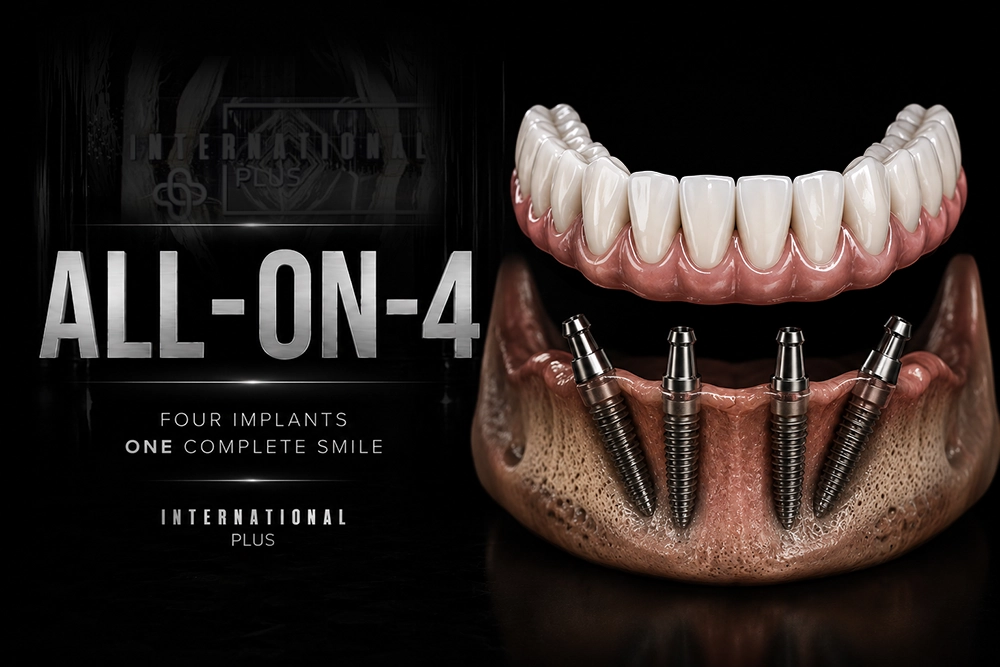
Every plan at International Plus is built around your specific case from the number of implants to the dental implant treatment in Istanbul or All on 4 full arch restoration you receive. Backed by a Ministry of Health authorized facility and 5,504+ verified reviews at 4.8/5, our team supports patients from more than 140 countries through every stage of treatment and dental implant aftercare.
Discover dental implant treatment at International Plus → Book your free consultation
Frequently Asked Questions
How do I clean my dental implant?
Brush twice daily with a soft bristled brush and a low abrasive toothpaste, add an interdental brush or water flosser once your dentist clears you (usually around week two) and rinse with any prescribed antimicrobial solution exactly as directed. Avoid the surgical site entirely for the first 24 hours.
When can I brush around my implant?
You can resume gentle brushing everywhere else in your mouth the day after surgery. Direct brushing over the implant site itself should wait a few days until your dentist confirms the tissue has closed enough to tolerate it without disturbing the healing wound.
Is some bleeding normal after surgery?
Yes. Light oozing or pink tinged saliva during the first 24 to 48 hours is expected and usually stops with firm gauze pressure held for 30 to 45 minutes. Bleeding that continues heavily beyond a day or soaks through gauze repeatedly should be reported to your dental team right away.
Can smoking cause implant failure?
Yes, smoking is one of the strongest documented risk factors for implant failure. Systematic reviews show smokers face significantly higher odds of early failure than non smokers, largely because nicotine restricts blood flow to the healing bone. Stopping before and during recovery is one of the most protective steps in dental implant aftercare and meaningfully improves the odds of success.
Reviewed by Dr. Ayşe Naz Gündüz
References
- Pandey C, et al. Contemporary Concepts in Osseointegration of Dental Implants: A Review. Biomed Res Int. 2022. PMC9213185
- Howe MS, et al. Long term (10-year) dental implant survival: A systematic review and sensitivity meta-analysis. J Dent. 2019. PMID 30904559
- Diaz P, et al. What is the prevalence of peri-implantitis? A systematic review and meta-analysis. BMC Oral Health. 2022. PMC9583568
- Araújo TG, et al. Long term Implant Maintenance: A Systematic Review of Home and Professional Care Strategies. Braz Dent J. 2024. PMC11506129
- Naseri R, et al. Levels of smoking and dental implants failure: A systematic review and meta-analysis. J Clin Periodontol. 2020. PMID 31955453
- Herrera D, et al. Prevention and treatment of peri-implant diseases: The EFP S3 level clinical practice guideline. J Clin Periodontol. 2023. PMID 37271498
Follow us on Social Media
internationalplusofficial
internationalplus
internationalplusdental
This content is written, reviewed, and approved by the International Plus Medical Review Board to ensure clinical accuracy and adherence to strict editorial standards. All medical information is regularly monitored, audited and updated in light of the latest scientific advancements.
However the information provided here is for general informational purposes only and cannot be used for self diagnosis or making individual health interpretations. Results of medical treatments depend on individual anatomy and the unique healing process of each patient. This information should not replace a personal consultation with a qualified healthcare professional. To understand the best options for your specific needs and to receive a personalized treatment plan, we invite you to book a free consultation with the expert medical team at International Plus.

Dr. Emre Çolak concentrates on advanced implant surgery and modern regenerative treatments, delivering refined solutions to patients abroad in need of complex dental restoration.