
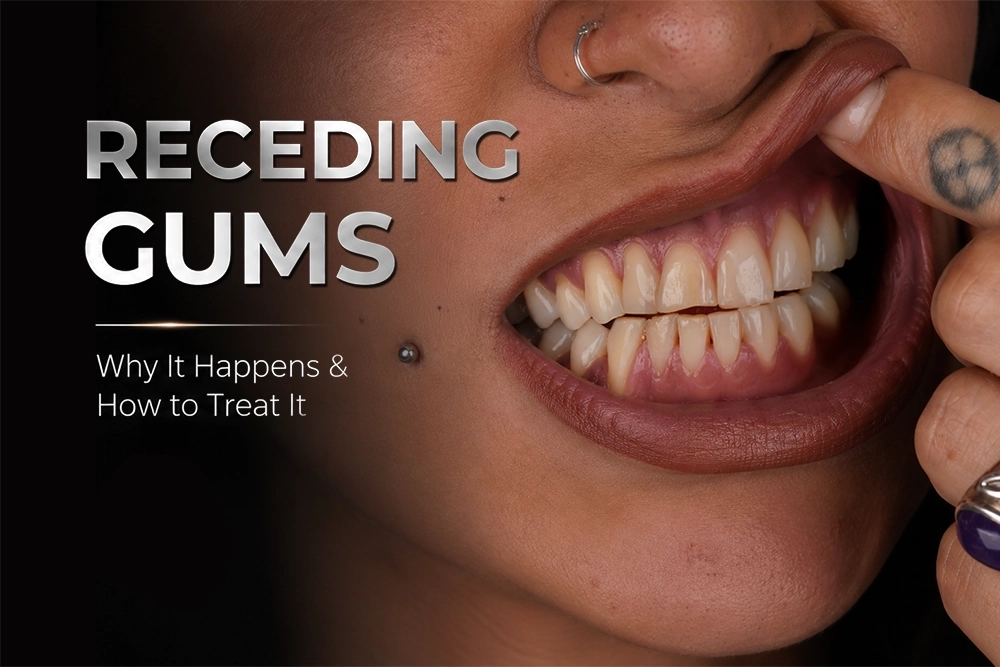
Receding gums, also called gingival recession, occur when the gum margin pulls back from a tooth and exposes part of the root. Gum recession is common and progressive. Once tissue is lost, the gum does not grow back on its own. The reassuring part is that recession can almost always be stopped and in many cases the exposed root can be covered. This International Plus guide explains what causes receding gums and what the early stages look like. The guide then covers which treatments work and how to protect your gums from further loss. Acting early rather than waiting for pain decides how much gum you keep.
Key Takeaways
- Receding gums expose the tooth root below the cementoenamel junction and affect roughly two-thirds of adults to some degree.
- Lost gum tissue cannot regrow naturally yet recession can be stopped and exposed roots covered with grafting surgery.
- Aggressive brushing and periodontitis drive most recession while thin-gum genetics and habits such as grinding or smoking add further risk.
- Effective receding gums treatment pairs cause control such as scaling and root planing with surgical root coverage when the case needs it.
What Are Receding Gums and What Do They Look Like?
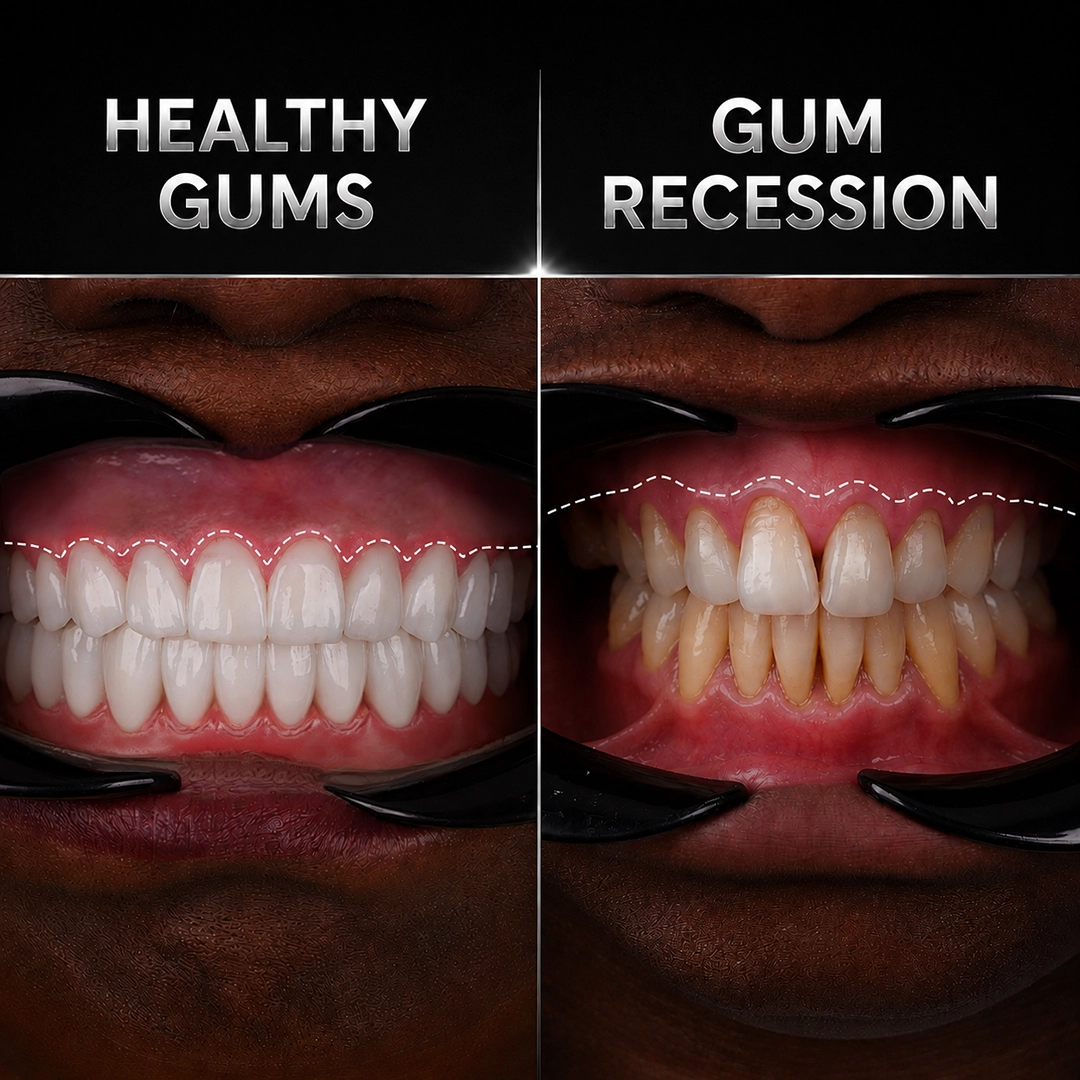
Receding gums are gum margins that have migrated toward the root, exposing tooth surface below the cementoenamel junction (CEJ). Gum recession makes teeth look longer and creates a small notch at the gum line. Cold sensitivity often follows. Gingival recession affects most adults to some degree and tends to worsen slowly without care.
Recession is measured from the CEJ to the new gum margin, which lets a clinician grade it in millimetres and note how much bone sits between neighbouring teeth. A 2023 review by Jepsen and colleagues in Periodontology 2000 frames recession within wider periodontal tissue loss rather than as an isolated cosmetic flaw. At International Plus, every new patient receives full periodontal charting and, where indicated, a 3D CBCT scan so the Diagnostic Council can see whether thin bone underlies the recession. In our practice, patients are often surprised that one long-looking tooth signals a gum problem rather than a growth change. Mild recession shows as slight sensitivity and a visible root whereas advanced recession exposes darker root cementum that decays faster than enamel.
If you have noticed a tooth looking longer, schedule a periodontal assessment before the recession advances.
What Causes Receding Gums?
Receding gums are caused mainly by two forces: mechanical trauma from aggressive brushing and inflammation from periodontitis. Thin-gum genetics and teeth grinding raise the risk. Smoking and hormonal change do too along with orthodontic movement that pushes a tooth through thin bone. Most real cases combine several factors rather than pointing to one single cause.
Toothbrushing trauma is among the most common and most preventable drivers. A 2018 report by Chapple and colleagues in the Journal of Periodontology, produced within the World Workshop consensus, linked mechanical overload plus hard bristles to gingival damage and set out primary prevention steps. Periodontitis works through a different route as bacterial inflammation destroys the fibres and bone that anchor the gum so recession appears alongside deeper pockets. Our periodontal team sees the clearest recession where hard horizontal scrubbing meets a thin gum type because that tissue has little reserve to absorb the abrasion. Smoking and night-time grinding of the kind seen in severe bruxism rehabilitation add strain and so do roots that sit outside the bone envelope, which is why the assessment reviews habits, not just the visible gum line.
What Are the Symptoms and Stages of Receding Gums?
The main sign of receding gums is a tooth that looks longer with an exposed root that can appear darker and feel sensitive to cold. Early stages show slight margin loss with the tissue between teeth intact. Later stages lose that interdental tissue and bone, which limits how much root coverage surgery can later restore.
Symptoms build gradually rather than overnight. Reported signs include cold or sweet sensitivity and a visible notch where enamel meets root. Tender or bleeding margins appear next and a loosening tooth marks advanced cases. A 2026 recommendation by Santamaria and colleagues in the Journal of Periodontology addresses recession combined with worn, sensitive root notches called non-carious cervical lesions, which are common in long-standing cases. Clinicians grade severity using the Cairo recession type from Type 1 with full interdental tissue through to Type 3 with major bone loss. At International Plus, the periodontal team records recession depth at every visit so slow change is caught on a chart rather than by memory. The stage matters because it predicts how much root a graft can realistically cover.
Can Receding Gums Grow Back?
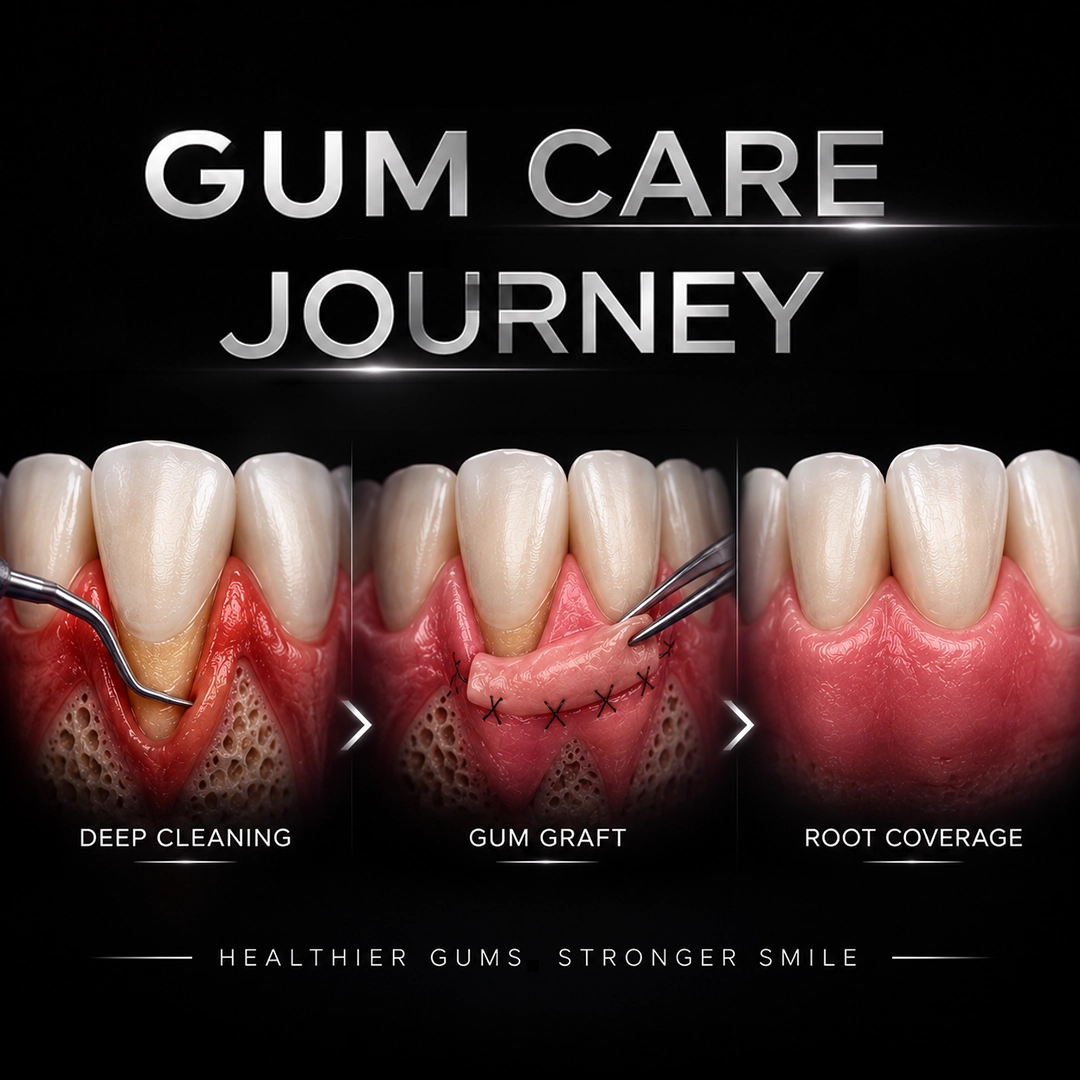
Receding gums cannot grow back on their own. Once gum tissue and the underlying bone are lost, the body cannot regenerate them so no toothpaste or herbal rinse rebuilds a receded margin. Recession can still be halted and a periodontist can surgically cover exposed roots to restore the gum line.
The difference between stopping and reversing recession shapes what a patient should expect. A 2015 review by Zucchelli and De Sanctis in Periodontology 2000 documented that periodontal plastic surgery, especially connective tissue grafting, can achieve full root coverage in suitable single and multiple defects while no home remedy regenerates lost tissue. Natural approaches such as oil pulling or aloe rinses might soothe inflammation yet these measures do not restore a receded margin. Our Diagnostic Council frames the goal honestly by controlling the cause first before deciding whether coverage surgery is worthwhile for a specific tooth. A gum graft suits an exposed, sensitive root with healthy neighbouring bone but it is not ideal where interdental bone is already gone because a graft cannot cover what the bone no longer supports.
Receding Gums Treatment: Non-Surgical and Surgical Options
Receding gums treatment is chosen by cause and severity. Mild recession from inflammation responds to non-surgical scaling and root planing plus better home care. Moderate to severe recession with exposed roots often needs surgery such as a connective tissue graft or the minimally invasive pinhole technique to cover the root.
| Severity | What you see | Typical treatment |
|—|—|—|
| Mild | Slight margin loss with minor sensitivity | Scaling and root planing plus brushing correction |
| Moderate | Exposed roots with notching and sensitivity | Root coverage graft or pinhole surgical technique |
| Severe | Long exposed roots with bone loss and mobility | Regenerative grafting or extraction and an implant |
Bottom line: the milder the recession, the more that cause control alone achieves while surgery becomes the tool once roots are meaningfully exposed.
Treatment starts with the cause, not the cosmetics. A 2024 Cochrane review by Jervøe-Storm and colleagues confirmed that scaling and root planing reduces inflammation and probing depth in periodontitis, which stabilises the gum before any surgery. For coverage, a 2020 study by Barootchi and colleagues in the Journal of Periodontology reported that connective tissue grafts give the most reliable long term root coverage and a 2022 review by Chambrone and colleagues reached similar conclusions across techniques. Surgical options include the coronally advanced flap and the tunnel approach along with the pinhole surgical technique, a keyhole method that repositions existing tissue without a separate donor site. Where recession sits beside decayed or previously infected teeth, root canal treatment by endodontic specialists is sequenced first and ongoing gum disease treatment and periodontal care protects the final result.
Book Your Free Consultation and share your case with our clinical team through the 24 hour patient coordination line.
How to Fix Receding Gums and Stop Them Getting Worse
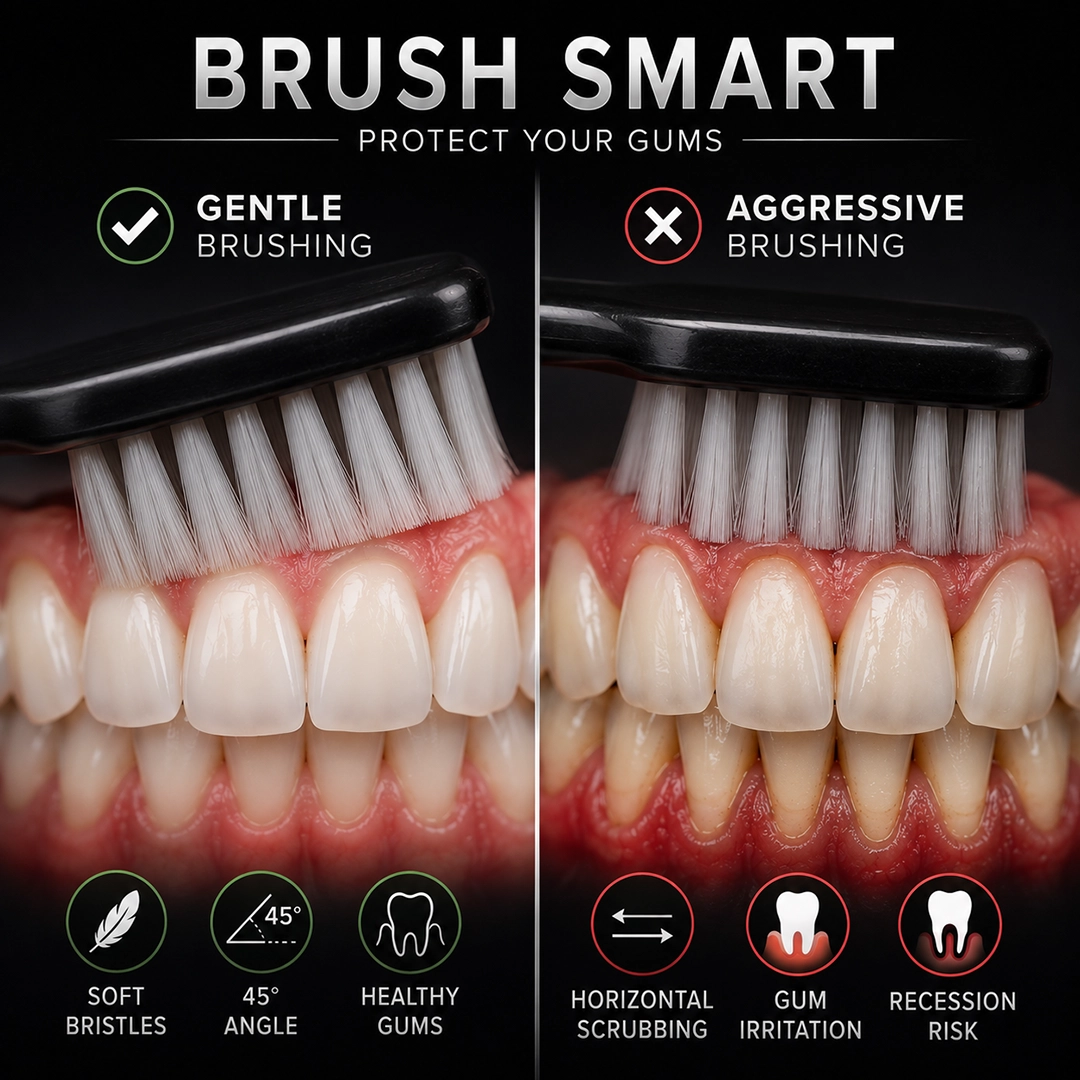
To fix receding gums you treat the cause and protect what remains: switch to a soft-bristled toothbrush and learn a gentle technique. Control plaque, treat any gum infection, then wear a night guard if you grind. These steps stop progression and surgery covers roots only after the cause is under control.
Prevention outperforms repair for gum tissue. A 2018 consensus led by Chapple and colleagues in the Journal of Clinical Periodontology placed gentle mechanical control and risk-factor management at the foundation of gum health. Practical habits make the difference so brush twice daily with light pressure and angle a soft brush along the margin instead of scrubbing across it. Clean between the teeth once a day and pause smoking to help the tissue heal. Steady plaque control around the gum line lowers the inflammation that fuels recession and reviewing any tender or painful tooth early keeps small problems small. In our practice, a two-week technique reset often halts mild recession without any surgery at all, which is why hygiene coaching comes before the scalpel.
When Should You See a Dentist About Receding Gums?
See a dentist about receding gums if teeth look longer if roots feel sensitive or if the gum line starts to bleed. Because gingival recession is progressive and painless early on, a professional assessment catches thin bone and active gum disease well before a tooth is at risk of being lost.
Early review widens the options available. A tooth that appears longer or a notch you can feel with a fingernail justifies an appointment. A 2024 study by West and colleagues in the Journal of Dentistry documented how common exposed, sensitive root surfaces are in adults, which is why early screening matters. Left alone, recession can expose enough root that later decay or infection forces tooth extraction and its aftercare and unexplained ache is worth separating from ordinary wisdom tooth pain. Good receding gums care combines honest staging with cause control and when it helps, precise root coverage. International Plus combines official Ministry of Health authorization with 5,504 verified reviews at 4.8 out of 5. More than 200,000 patients from 140+ countries have been treated within a fully digital periodontal workflow, making planned gum treatment straightforward to organise from abroad. This guide was reviewed for accuracy by Dr. Eren Gülbahar, an American Dental Association member and individual results vary so a personalised periodontal consultation remains the right next step.
To protect your gums before recession advances, contact our patient coordination team for a no obligation review of your case.
Frequently Asked Questions
Why are my gums receding?
Your gums are most likely receding from a mix of aggressive brushing and gum inflammation with thin-gum genetics or habits such as grinding and smoking adding pressure. Hormonal change and orthodontic movement also contribute. A periodontal exam identifies which factors apply to you because treating the wrong cause allows the recession to keep advancing.
Can you reverse receding gums naturally?
You cannot reverse receding gums naturally. Once gum tissue recedes, it does not regrow by itself. Rinses or special toothpastes do not rebuild the lost margin either. Natural care can calm inflammation and slow further loss but only a periodontist can surgically cover an exposed root and restore the gum line.
What is the best toothbrush and toothpaste for receding gums?
A soft-bristled or extra-soft toothbrush is best for receding gums when used with light pressure and a gentle angled motion rather than hard scrubbing. An electric brush with a pressure sensor helps control force. Pair it with a fluoride desensitising toothpaste that occludes exposed root tubules and eases the cold sensitivity recession causes.
Can you fix receding gums on one tooth?
Yes, receding gums on a single tooth are often very treatable because isolated recession with healthy neighbouring bone responds well to a root coverage graft or the pinhole technique. A dentist first confirms the cause, corrects brushing or grinding, then decides whether one tooth needs surgical coverage or simply monitoring.
How can you stop receding gums from getting worse?
To stop receding gums getting worse you control the cause and protect the tissue: brush gently with a soft brush and clean between teeth daily. Treat gum disease with scaling and root planing, wear a night guard if you grind, then stop smoking. Regular periodontal checks catch renewed loss before it becomes surgical.
Reviewed by Dr. Eren Gülbahar
References
- Jepsen K, et al. Periodontol 2000. 2023. PMID: 36920050
- Chapple ILC, et al. J Periodontol. 2018. PMID: 29926944
- Santamaria MP, et al. J Periodontol. 2026. PMID: 41498281
- Zucchelli G, De Sanctis M. Periodontol 2000. 2015. PMID: 25867992
- Jervøe-Storm PM, et al. Cochrane Database Syst Rev. 2024. PMC11240860
- Barootchi S, et al. J Periodontol. 2020. PMID: 32392401
- Chambrone L, et al. J Periodontol. 2022. PMID: 35451068
- West NX, et al. J Dent. 2024. PMID: 39317300
Follow us on Social Media
internationalplusofficial
internationalplus
internationalplusdental
This content is written, reviewed, and approved by the International Plus Medical Review Board to ensure clinical accuracy and adherence to strict editorial standards. All medical information is regularly monitored, audited and updated in light of the latest scientific advancements.
However the information provided here is for general informational purposes only and cannot be used for self diagnosis or making individual health interpretations. Results of medical treatments depend on individual anatomy and the unique healing process of each patient. This information should not replace a personal consultation with a qualified healthcare professional. To understand the best options for your specific needs and to receive a personalized treatment plan, we invite you to book a free consultation with the expert medical team at International Plus.

I am a healthcare professional with over 4 years of experience in dentistry, specializing in prosthetic dental treatment and implant-based applications. Since 2024, I have been serving as chief physician, leading clinical management, team coordination, and international patient processes. With my B2-level English proficiency, I am able to communicate effectively with international patients. I am a patient-centered, innovative, and solution-oriented dentist who prioritizes patient satisfaction.




