
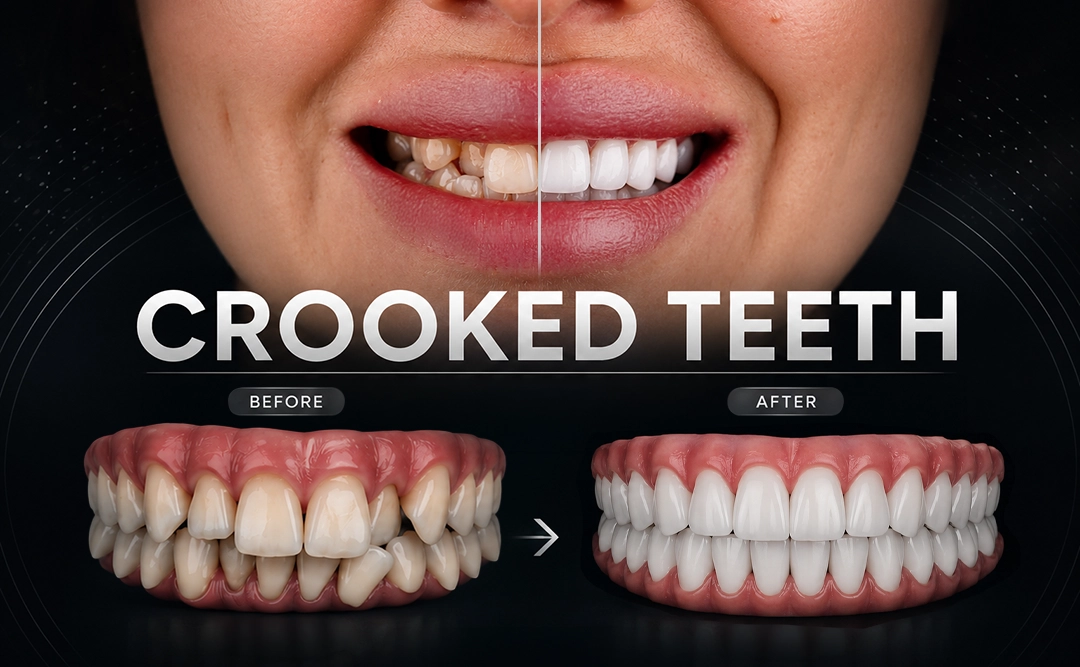
Crooked teeth, the everyday name for crowded or misaligned teeth, are one of the most common reasons adults and children seek orthodontic advice. They range from a single rotated tooth to a crowded arch that affects biting and cleaning. This guide explains what causes crooked teeth, the health effects of misalignment, plus the real options for straightening them from braces and clear aligners to the limits of veneer camouflage, drawing on current research plus cases treated at International Plus in Istanbul.
Key Takeaways
- Crooked teeth, clinically a form of crowding, are extremely common; a 2020 meta-analysis found malocclusion is among the most prevalent dental conditions worldwide (Lombardo et al., 2020).
- The main causes are inherited jaw and tooth size, early or late loss of baby teeth, plus childhood habits such as thumb sucking and mouth breathing.
- Crowded teeth are harder to clean, which raises the risk of decay and gum disease over time.
- Braces and clear aligners move the teeth while veneers only camouflage mild cases without correcting the bite.
- At International Plus, a Diagnostic Council reviews 3D scans before recommending correction or cosmetic camouflage and results are shown on real, consented patients only.
What Are Crooked Teeth?
Crooked teeth are teeth that sit out of alignment within the dental arch, appearing rotated or overlapped and tilted inward or outward. Dentists call this malocclusion: the upper and lower teeth do not meet in an ideal relationship. The trait ranges from a mild cosmetic feature to crowding that affects function.
Crowding is the most common form and happens when the jaw does not have enough room for every tooth so teeth twist or overlap to fit. A 2020 systematic review and meta-analysis found malocclusion, the wider category that includes crooked teeth, is among the most prevalent dental conditions across every stage of dentition (Lombardo et al., 2020). Crooked teeth differ from other bite traits people often confuse with them. Forward tilting upper teeth are called buck teeth, a vertical overlap is an overbite and a visible space is a gap between the front teeth. At International Plus, cosmetic dentist Dr. Eren Gülbahar separates simple crowding from a skeletal jaw discrepancy because that distinction decides whether a cosmetic or an orthodontic route fits.
What Causes Crooked Teeth?
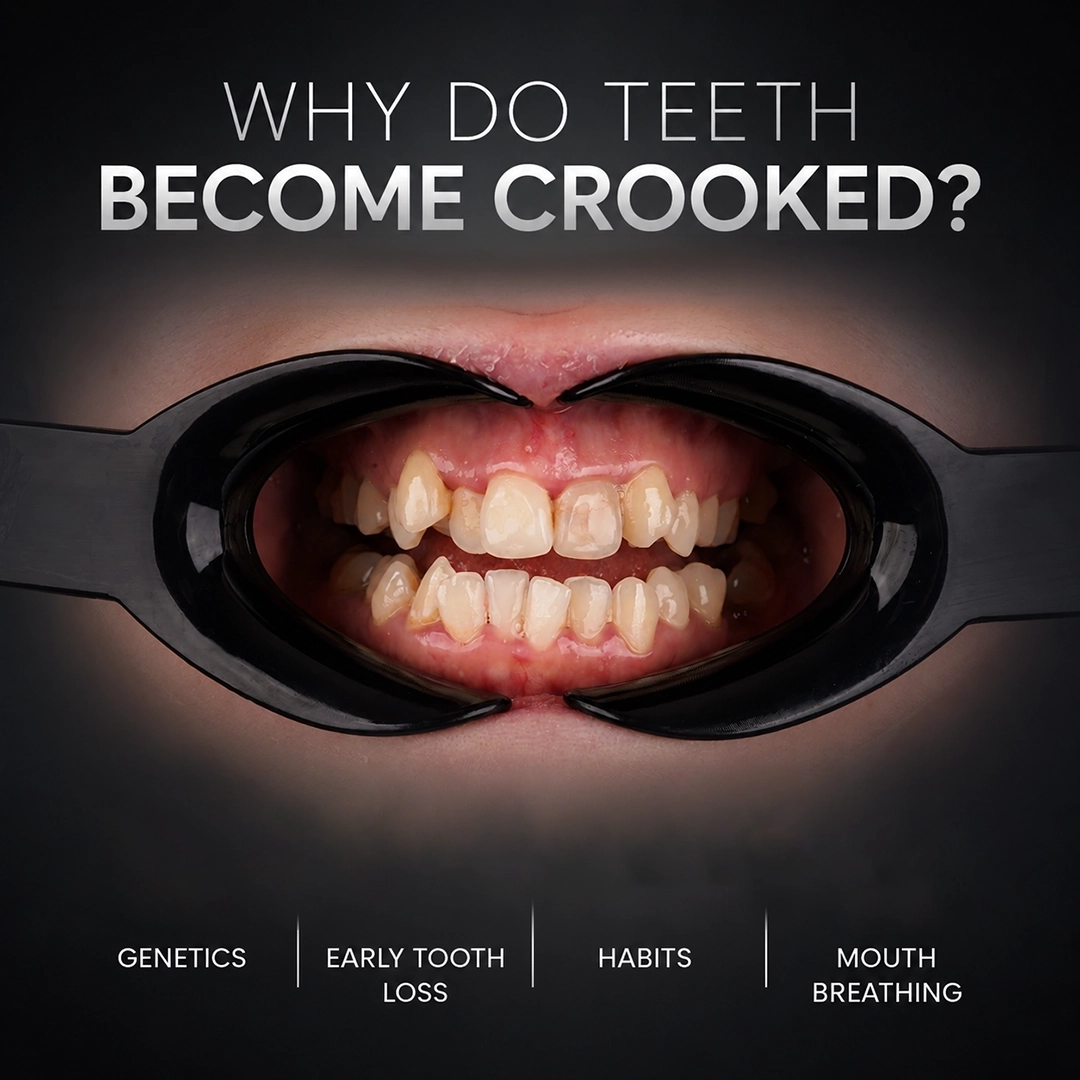
Most crooked teeth trace back to inherited jaw and tooth size. Early or late loss of baby teeth, plus childhood habits that shift developing teeth, add to the picture. When the jaw is too small for the teeth it has to hold, crowding follows. Genetics sets the framework while habits and dental history shape the result.
Jaw and tooth size are inherited so crowded or crooked teeth often run in families. Sustained pressure during early development can tip teeth out of line and prolonged thumb sucking, pacifier use beyond age three, plus tongue thrusting are well documented contributors. Mouth breathing also matters: a 2022 review linked chronic mouth breathing to altered dentofacial development in growing children (Lin et al., 2022). When a baby tooth is lost too early, the neighbouring teeth drift into that space, which leaves too little room for the permanent tooth. In our practice, we also see adult crowding appear years after braces when a retainer is abandoned because teeth keep a lifelong tendency to move. Knowing which factor drives a case guides prevention in children and the treatment choice in adults.
Are Crooked Teeth a Health Problem?
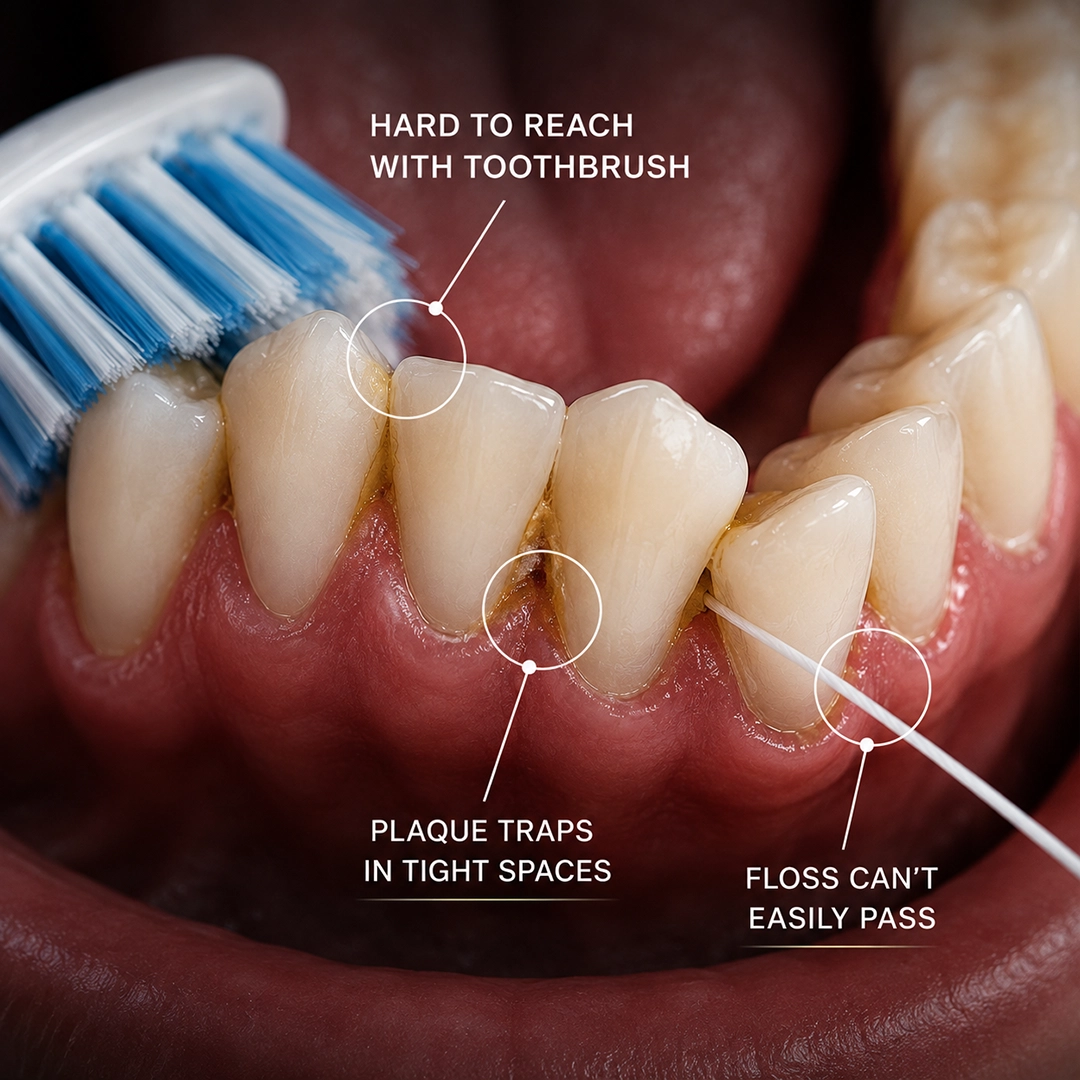
Beyond appearance, crooked teeth can raise the risk of decay, gum disease, plus uneven tooth wear because crowded surfaces are harder to clean. Many people with mild crowding have no functional issue and keep their smile as it is. A more crowded bite is different since it changes how the teeth are cleaned and how chewing force is shared.
Overlapping teeth trap plaque in spots a brush and floss struggle to reach, which over time raises the risk of cavities and gum inflammation. Occlusion (the way upper and lower teeth meet) also affects periodontal health and a clinical review examined how bite forces interact with the supporting gum tissue (Passanezi et al., 2019). When certain teeth take more load than they were built for, enamel wears unevenly and the jaw joints can feel the strain. Crowded teeth are also associated with speech differences in some children. None of this means every crooked tooth needs treatment yet an honest assessment tells you whether crowding is a cosmetic preference or a functional risk. Our clinicians measure cleaning access and bite contacts on the same records rather than judging by a photo alone.

How to Fix Crooked Teeth: Braces, Aligners or Veneers
Correcting crooked teeth relies on moving them with braces or clear aligners and mild cases can be camouflaged with veneers. There is no single answer because the type of crowding, the jaw relationship, plus age all shape the plan. An orthodontic assessment decides which route straightens the teeth safely.
Braces remain the most versatile option and handle mild to severe crowding with fine control over each tooth, which is why braces on crooked teeth are still the reference treatment for complex rotations. Clear aligners suit mild to moderate crowding and a 2025 systematic review and meta-analysis confirmed they correct many malocclusions effectively when worn consistently (Baneshi et al., 2025). A separate 2025 review reported that clear aligners can be gentler on periodontal tissues than fixed appliances during treatment (Dipalma et al., 2025). For a genuinely skeletal problem, orthodontics is combined with jaw surgery. The table below sets realistic expectations for each route.
| Treatment | Best suited for | Typical duration |
|—|—|—|
| Braces | Moderate to severe crowding, rotated teeth | 18 to 30 months |
| Clear aligners | Mild to moderate crowding | 12 to 18 months |
| Veneers or bonding | Mild crowding, cosmetic camouflage only | 2 to 3 weeks |
| Surgery with braces | Severe skeletal cases after growth | 12 to 24 months plus surgery |
Bottom line: braces and aligners move the teeth while veneers only change how mild crowding looks. To plan any change accurately, our team runs a digital smile design preview technology session so patients see the proposed result before committing.
Book a free online smile assessment
Can You Fix Crooked Teeth Without Braces?
You cannot move the roots or correct the bite without orthodontics or surgery but cosmetic dentistry can camouflage mild crooked teeth. This is the honest limit of the veneer route. Veneers and bonding reshape the visible surface of the front teeth, which softens the look of slight crowding without straightening it.
Veneers work well for a mild, stable case but they are not suitable for significant crowding because they cover the crowns without moving the teeth underneath. That trade-off guides our advice: for a small, settled overlap in an adult who declines orthodontics, a minimal preparation veneer or a full ceramic crown restoration can improve symmetry whereas pronounced crowding is referred for alignment first. Clear aligner therapy has defined indications and limits of its own and a 2025 international consensus mapped which cases suit aligners and which do not (D’Antò et al., 2025). Because a camouflaged tooth then relies on the veneer, our guide to how long veneers last sets realistic timelines and the truth about Turkey teeth explains why we avoid over-preparing healthy enamel to mask crowding. A wider aesthetic change is sometimes planned as a complete Hollywood Smile makeover once the bite is confirmed stable. Before any cosmetic work, our Diagnostic Council reviews 3D CBCT and intraoral scans so the plan matches the teeth rather than a photo.
Crooked Bottom Teeth and Crooked Front Teeth
Crooked bottom teeth are common because the lower front teeth are the smallest and sit in the tightest part of the arch so they crowd first. Many adults notice their lower incisors overlap even when the upper teeth still look straight. The same crowding often shows across the upper front teeth as well.
The lower incisors are the narrowest teeth in the mouth and have the least room, which is why crooked bottom teeth are usually the first sign of crowding and the most likely place to relapse after treatment. Late lower incisor crowding is so predictable that we plan retention around it from the start. Crooked front teeth, upper or lower, draw the most attention because they sit in the smile line yet the fix follows the same logic: aligners or braces reposition them and a veneer only masks a minor case. In our practice, we assess the lower arch separately because a result that ignores the lower incisors rarely stays stable. One patient with a crowded, worn bite was rebuilt in our 28 zirconia crown smile makeover case, which shows how far planning matters once alignment is settled. Regional population data show malocclusion is common here too, which matches what we see across our international patients (Londono et al., 2023).
Fixing Crooked Teeth in Adults Versus Children
Children often benefit from early, growth guided correction while adults straighten crooked teeth by moving the teeth or camouflaging mild cases. Timing changes what is possible. In a growing child, appliances can influence how the jaws develop, which sometimes reduces crowding before it fully sets.
Orthodontists usually suggest a first evaluation around age seven when early crowding becomes visible and the jaw is still developing. Habit appliances that discourage thumb sucking or tongue thrusting can also help at this stage. In adults, the jaws no longer grow so crooked teeth are corrected by repositioning them with braces or aligners and a genuinely skeletal case may need surgery. We prefer to explore alignment before any cosmetic route in younger patients because moving teeth into a stable bite protects the result far longer than masking it. Age is rarely a barrier since adults in their forties and beyond achieve discreet, effective correction. What matters more than age is healthy gums and bone because those tissues support the tooth movement.
International Plus combines official Ministry of Health authorization with a 4.8/5 rating from 5,504+ verified reviews, plus more than 200,000 patients treated from over 140 countries, giving cosmetic and orthodontic-adjacent dentistry in Istanbul a credible, verifiable home. Individual results vary and a personalised consultation confirms what your teeth can safely achieve. To review your options for crooked teeth with our team, contact International Plus to plan your smile assessment.
Frequently Asked Questions
What causes crooked teeth?
The main driver is inherited jaw and tooth size, which creates crowding when the jaw is too small for every tooth. Childhood habits such as thumb sucking, prolonged pacifier use, mouth breathing, plus early loss of baby teeth also push developing teeth out of line, especially while the permanent teeth are still coming through.
Can you fix crooked teeth without braces?
The underlying crowding cannot be corrected without orthodontics or surgery because only controlled force moves teeth safely. For a mild, stable case, veneers or bonding can camouflage the appearance of slightly crooked teeth. A more crowded or rotated bite needs braces or clear aligners to reposition the teeth and hold the result.
Can Invisalign fix crooked teeth?
Yes, clear aligners such as Invisalign correct mild to moderate crooked teeth when worn as prescribed, usually 20 to 22 hours a day. They are removable and discreet, which suits many adults. Complex rotations or severe crowding are often handled better by braces so an assessment confirms whether aligners suit your case.
Why are my bottom teeth crooked?
Lower front teeth are the smallest teeth and sit in the tightest part of the arch so they crowd first and often look crooked before the upper teeth do. Late lower incisor crowding is common in adulthood even after previous braces, which is why wearing a retainer long term is important for keeping them straight.
Can adults straighten crooked teeth?
Yes. Adults straighten crooked teeth by moving them with braces or clear aligners and a genuinely skeletal case may need surgery combined with orthodontics. Since the jaws no longer grow, treatment can take a little longer than in children but healthy gums and bone make correction effective and comfortable at any age.
Reviewed by Dr. Eren Gülbahar
References
- Lombardo G, et al. Eur J Paediatr Dent. 2020. PMID: 32567942
- Lin L, et al. Front Public Health. 2022. PMC9498581
- Passanezi E, et al. Periodontol 2000. 2019. PMID: 30892765
- Baneshi M, et al. J Evid Based Dent Pract. 2025. PMID: 39947778
- Dipalma G, et al. Children (Basel). 2025. PMC11854263
- D’Antò V, et al. Prog Orthod. 2025. PMC12321729
- Londono J, et al. Clin Exp Dent Res. 2023. PMC10441606
Follow us on Social Media
internationalplusofficial
internationalplus
internationalplusdental
This content is written, reviewed, and approved by the International Plus Medical Review Board to ensure clinical accuracy and adherence to strict editorial standards. All medical information is regularly monitored, audited and updated in light of the latest scientific advancements.
However the information provided here is for general informational purposes only and cannot be used for self diagnosis or making individual health interpretations. Results of medical treatments depend on individual anatomy and the unique healing process of each patient. This information should not replace a personal consultation with a qualified healthcare professional. To understand the best options for your specific needs and to receive a personalized treatment plan, we invite you to book a free consultation with the expert medical team at International Plus.

I am a healthcare professional with over 4 years of experience in dentistry, specializing in prosthetic dental treatment and implant-based applications. Since 2024, I have been serving as chief physician, leading clinical management, team coordination, and international patient processes. With my B2-level English proficiency, I am able to communicate effectively with international patients. I am a patient-centered, innovative, and solution-oriented dentist who prioritizes patient satisfaction.




