
Tooth extraction aftercare is the set of daily steps that protect the socket and its blood clot after a tooth is removed, guiding recovery through the first two weeks. Careful aftercare lowers the risk of dry socket, keeps pain and swelling manageable and helps the gum close on time. This International Plus guide explains how the socket heals and what to eat, then covers what to avoid alongside pain relief and the clear signs that need a dentist. Steady daily habits, not luck, decide how smoothly a socket heals.
Key Takeaways
- The blood clot that forms in the first 24 hours is the foundation of healing so protecting it is the single most important aftercare rule.
- Socket soft tissue usually closes over 1 to 2 weeks while new bone keeps filling the socket for several months underneath.
- Dry socket affects roughly 1 to 5 percent of extractions and is largely preventable with clot protection.
- Effective tooth extraction aftercare combines clot protection and soft foods with steady pain control and a prompt review of warning signs.
What Does Tooth Extraction Aftercare Involve in the First 24 Hours?
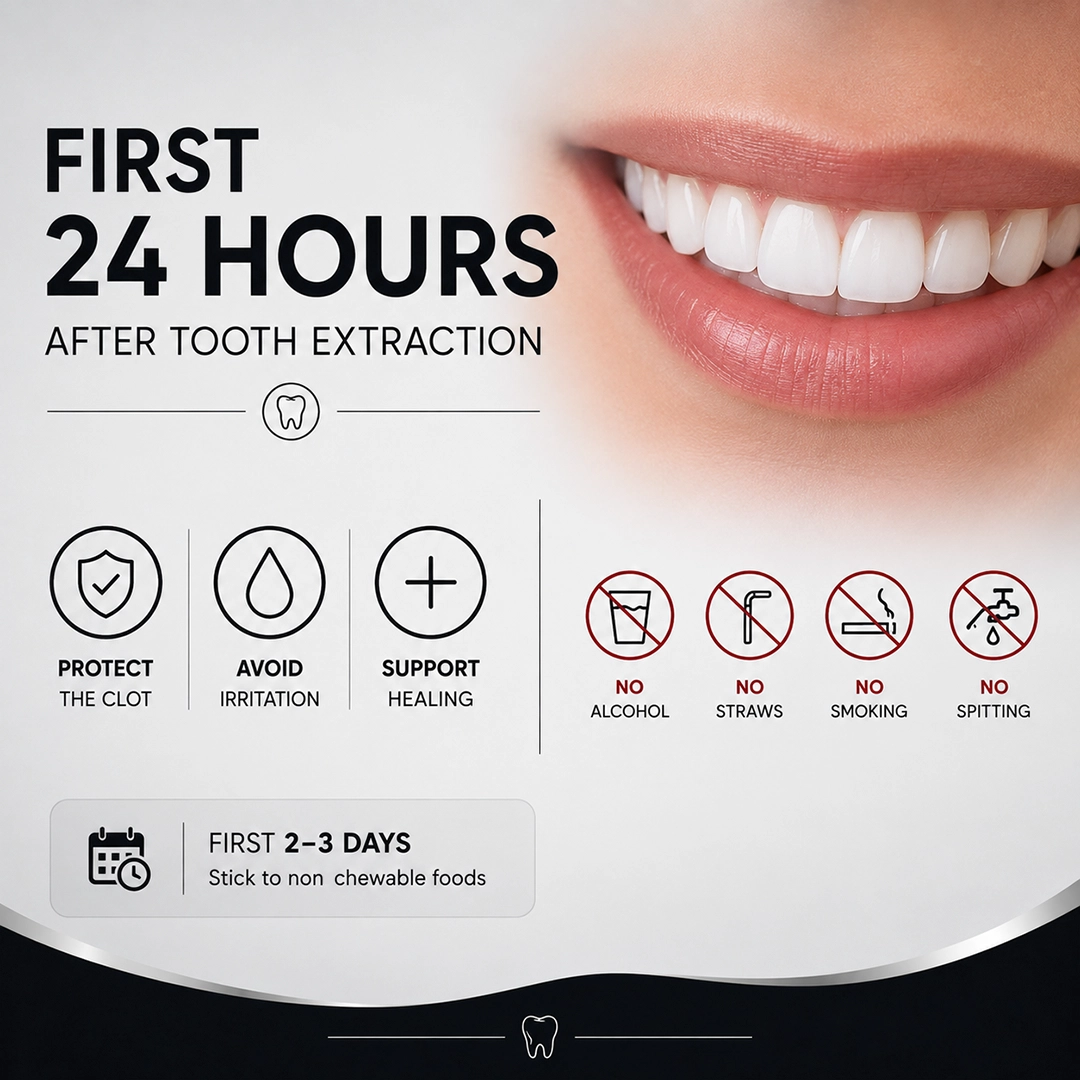
Tooth extraction aftercare in the first 24 hours centres on protecting the blood clot that seals the socket. Bite firmly on gauze for 30 to 60 minutes, keep the head raised, apply a cold compress in 20 minute cycles and avoid rinsing, spitting or drinking through a straw while the clot stabilises.
The clot forms within the first hour and acts as a scaffold for new tissue so early disturbance is the main avoidable setback. A 2023 review by Mardas and colleagues in Periodontology 2000 describes how the socket clot organises before granulation tissue replaces it. At International Plus, every patient leaves with written aftercare instructions in 27 languages and a 24 hour coordination line so a traveller who notices fresh bleeding on the flight home reaches a clinician the same day. Our surgical team also places PRF, a platelet concentrate drawn from the patient’s own blood to support early clot stability, a technique overseen by Dr. Alper Çağlayan Sarraf, Head of Oral Surgery.
If you are planning treatment abroad, you can book a free consultation and share your case with our coordination team before you travel.
How Does a Tooth Extraction Socket Heal?
A tooth extraction socket heals in overlapping stages. A blood clot forms within hours, soft granulation tissue replaces it over one to two weeks, the gum surface closes and new bone slowly fills the socket across three to six months underneath the healed gum.
The visible part of healing finishes faster than the hidden part. A 2015 review by Araújo and colleagues in Periodontology 2000 documented that most soft tissue closure happens within two to three weeks while measurable bone remodelling continues for months with the socket narrowing as it fills. In our practice, patients are surprised that the gum can look healed while bone is still maturing, which is why the surgical team advises gentle habits well past the first week. Surgical removals such as wisdom teeth removal leave larger sockets that settle more slowly than a simple front tooth. The timeline below sets out what to do, what to avoid and what to expect at each stage of recovery.
| Stage | What to do | What to avoid | What to expect |
|—|—|—|—|
| First 24 hours | Bite on gauze, rest, cold compress | Rinsing, straws, smoking, spitting | Blood clot forms, minor oozing |
| Days 2 to 3 | Gentle warm salt water rinses, soft foods | Hard, hot and spicy foods | Peak swelling, tender gum |
| Week 1 | Resume gentle brushing near the site | Poking the socket, hard exercise | Swelling settles, gum begins closing |
| Week 2 | Return to most normal foods | Chewing directly on the socket | Soft tissue closed, bone filling below |
What Can You Eat After a Tooth Extraction?
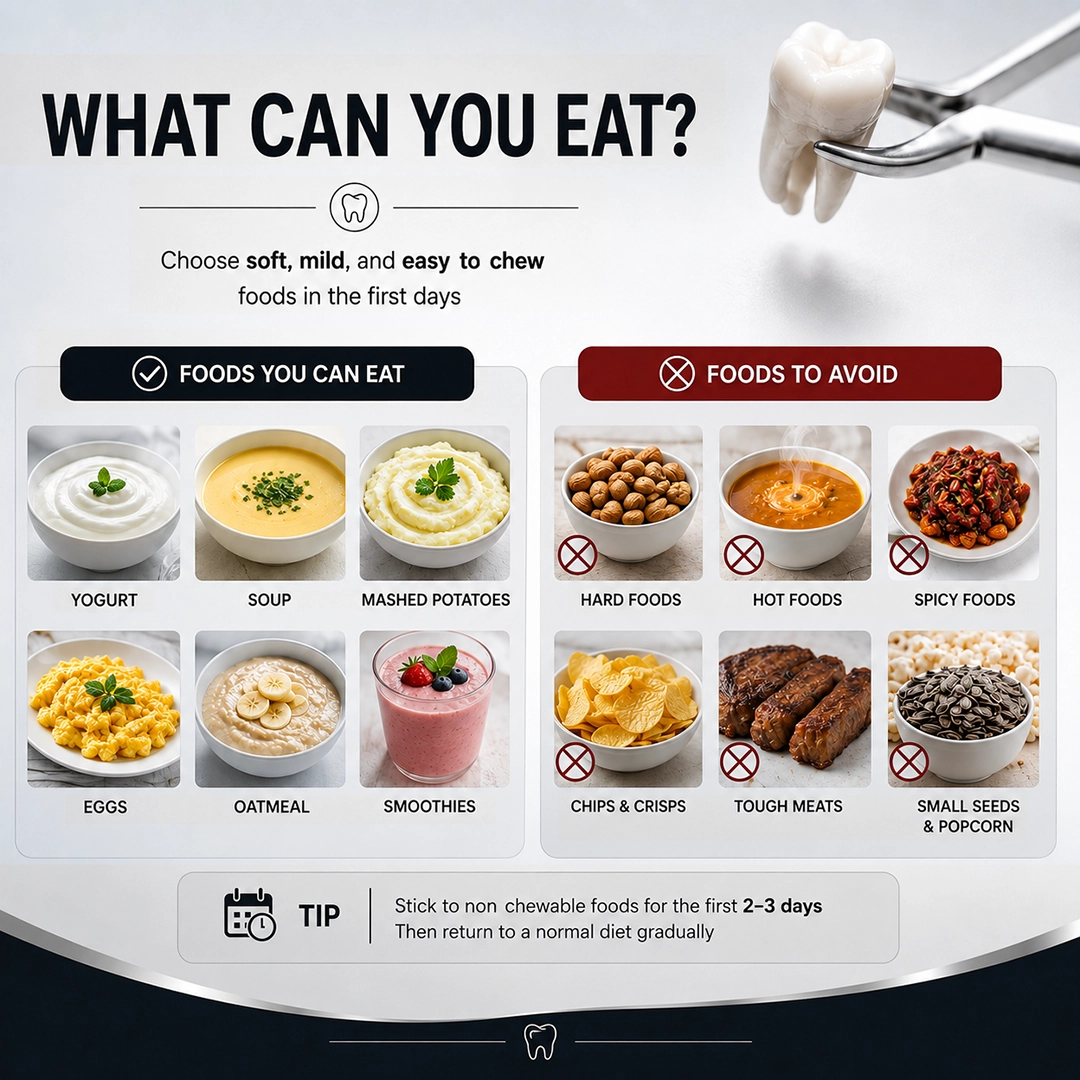
Soft, cool foods that need little chewing are the safest choice after a tooth extraction, starting on the day of surgery once numbness fades. Yoghurt, smooth soup served lukewarm rather than hot, mashed potato, scrambled egg, blended fruit and porridge all provide energy without disturbing the socket or the clot.
Nutrition matters more than most people expect during healing. A 2022 scoping review by Ghosh and colleagues in the Journal of Oral Rehabilitation linked poor early wound conditions with higher complication rates so steady soft nutrition supports the socket rather than starving it. Chew on the opposite side, let hot drinks cool first and reintroduce firmer foods gradually from around day three as comfort allows. In our practice, the surgical team suggests keeping the first day entirely cool because heat raises local blood flow and can restart oozing. Protein rich soft foods such as egg and Greek yoghurt help tissue repair without the chewing force a fresh socket cannot yet tolerate.
What Should You Avoid and How Soon Can You Drink Water?
After a tooth extraction, avoid anything that disturbs the clot: no smoking, no drinking through a straw, no forceful rinsing or spitting and no alcohol for the first 24 hours. You can sip still water gently almost straight away but avoid swishing water around the fresh socket until the next day.
Suction and chemical irritation are the two biggest threats to a new socket. A 2015 randomised trial by Haraji and colleagues in the Journal of Oral Rehabilitation found that reducing irritation and using chlorhexidine gel lowered dry socket rates after extraction. Smoking is especially damaging because the suction and heat both threaten the clot so the coordination team asks patients to pause smoking for at least 72 hours. Gentle water sipping is fine within the first hour yet forceful swishing and any hot or carbonated drinks wait until day two. Strenuous exercise also waits until around day four because a rise in blood pressure can restart bleeding from the socket.
How Do You Manage Pain and Swelling After an Extraction?
Pain after a tooth extraction usually peaks within the first 48 hours and then fades steadily over several days. A cold compress applied in 20 minute cycles limits swelling on day one and simple pain relief taken as the label directs keeps most discomfort manageable through early recovery.
Most extraction pain responds to non prescription relief rather than strong medication. A 2023 review by Malamed and colleagues in Dental Traumatology reported that combining paracetamol with an anti inflammatory controls post surgical dental pain effectively for most patients. In our practice, the surgical team prefers this pairing over opioids for routine extractions because it manages pain with fewer side effects though patients with stomach ulcers or specific conditions receive an individual plan. If discomfort lingers, our guide on how to get rid of tooth pain fast covers safe relief. Swelling that peaks around 48 to 72 hours is normal but pain that sharpens on day three or four rather than easing is a warning sign of dry socket and deserves a same day review.
How Can You Prevent Dry Socket?
Dry socket or alveolar osteitis, happens when the protective clot breaks down early and exposes bone and nerve endings inside the socket. Prevention rests on clot protection: no smoking, no straws and no forceful rinsing for 24 hours, plus gentle salt water rinses and careful oral hygiene from day two onward.
Dry socket is uncomfortable but largely preventable. A 2022 Cochrane review by Daly and colleagues assessed local measures for managing alveolar osteitis and supported chlorhexidine and clot protecting care while a 2024 network meta-analysis by Camps-Font and colleagues in the International Journal of Oral and Maxillofacial Surgery found routine antibiotics give limited benefit for healthy patients. For that reason, our Diagnostic Council reserves antibiotics for defined surgical risk rather than every extraction, alongside careful gum disease treatment and periodontal care where inflammation is present. Keeping the wider mouth clean through gentle plaque control around the healing site also helps. Reported dry socket incidence sits around 1 to 5 percent and lower molars carry the highest risk. A patient who develops throbbing pain three to four days after extraction is reviewed the same day.
Book Your Free Consultation and share your case with our clinical team through the 24 hour patient coordination line.
When Should You See a Dentist After a Tooth Extraction?
See a dentist after a tooth extraction if pain worsens after day three, bleeding does not slow with 30 minutes of gauze pressure, swelling spreads with a fever or you notice a bad taste and exposed bone in the socket. These signs point to dry socket or infection and both need prompt professional care.
Persistent problems are uncommon yet they respond best to early review. A tooth that could not be saved may have needed root canal treatment by endodontic specialists beforehand and lingering wisdom tooth pain before removal follows the same logic of acting early. If the gap is later restored, dental implant aftercare follows its own 30 day protocol while cosmetic cases such as Turkey teeth aftercare carry separate guidance. Good tooth extraction aftercare pairs clot protection with sensible eating and quick action on warning signs. International Plus combines official Ministry of Health authorization, 5,504 verified reviews at 4.8 out of 5, more than 200,000 international patients from 140 countries and PRF supported surgical protocols, making planned treatment safer to organise from abroad. Individual results may vary and a personalised consultation with an oral surgeon remains the right way to plan any extraction and its recovery.
To plan a safe extraction with clear aftercare, contact our patient coordination team for a no obligation review of your case.
Frequently Asked Questions
How long does a tooth extraction take to heal?
The gum surface over a tooth extraction socket usually closes within one to two weeks while new bone continues to fill the socket for three to six months underneath. Simple extractions settle faster than surgical ones. Most people return to normal eating within a week as comfort allows.
How soon can I drink water after a tooth extraction?
You can sip still water gently within the first hour after a tooth extraction as long as you do not swish it forcefully around the socket. Avoid straws, carbonated drinks and hot beverages for the first 24 hours because suction and heat can dislodge the fragile blood clot that protects healing.
What can I eat on the first day after a tooth extraction?
Choose soft, cool foods that need no chewing on the first day: yoghurt, smooth lukewarm soup, mashed potato, scrambled egg, porridge and blended fruit. Keep everything cool rather than hot, chew on the opposite side and avoid crunchy, spicy or chewy foods until the socket has begun to settle.
How do I know if I have dry socket?
Dry socket typically shows as throbbing pain that starts three to four days after a tooth extraction rather than easing, often with a bad taste, bad breath and visible bone in the socket. If these signs appear, contact your dentist promptly because professional cleaning and a medicated dressing settle most cases quickly.
Can I brush my teeth after a tooth extraction?
Yes, keep brushing the rest of your teeth normally from the first evening but stay away from the socket itself for the first 24 hours. From day two, brush gently near the area and rinse softly with warm salt water after meals. Good hygiene lowers infection risk without disturbing the clot.
Reviewed by Dr. Alper Çağlayan Sarraf
References
- Mardas N, et al. Periodontol 2000. 2023. PMID: 37622682
- Araújo MG, et al. Periodontol 2000. 2015. PMID: 25867983
- Ghosh A, et al. J Oral Rehabil. 2022. PMID: 34625985
- Haraji A, et al. J Oral Rehabil. 2015. PMID: 25251411
- Malamed SF, et al. Dent Traumatol. 2023. PMID: 36961318
- Daly BJ, et al. Cochrane Database Syst Rev. 2022. PMC9511819
- Camps-Font O, et al. Int J Oral Maxillofac Surg. 2024. PMID: 37612199
Follow us on Social Media
internationalplusofficial
internationalplus
internationalplusdental
This content is written, reviewed, and approved by the International Plus Medical Review Board to ensure clinical accuracy and adherence to strict editorial standards. All medical information is regularly monitored, audited and updated in light of the latest scientific advancements.
However the information provided here is for general informational purposes only and cannot be used for self diagnosis or making individual health interpretations. Results of medical treatments depend on individual anatomy and the unique healing process of each patient. This information should not replace a personal consultation with a qualified healthcare professional. To understand the best options for your specific needs and to receive a personalized treatment plan, we invite you to book a free consultation with the expert medical team at International Plus.

Dr. Alper Çağlayan Sarraf directs the oral surgery unit at InternationalPlus Istanbul, focusing on demanding cases that draw patients from every corner of the world.




