
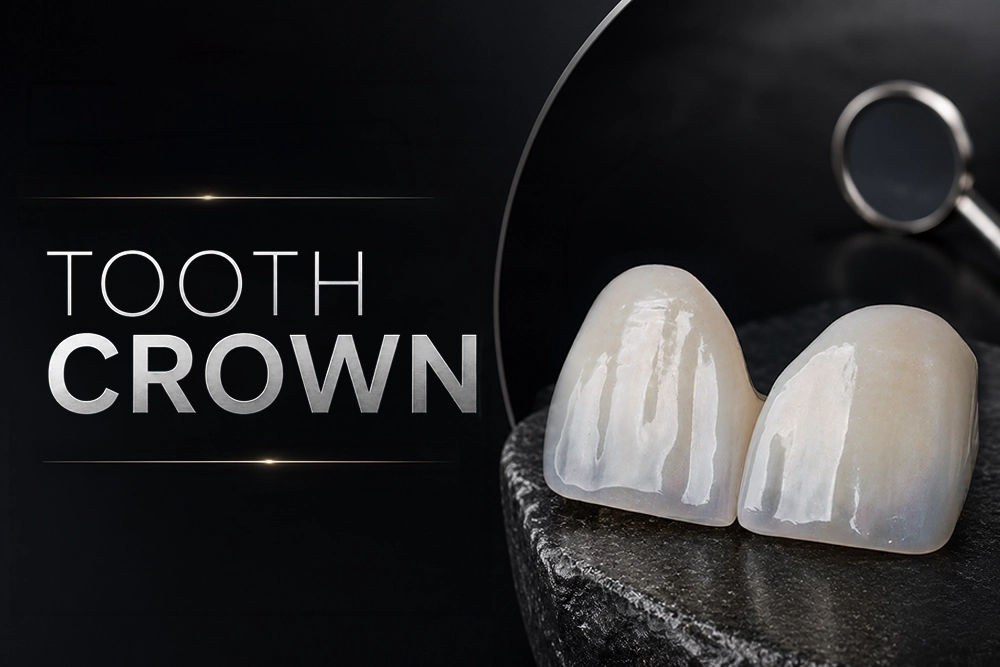
A tooth crown is a custom made cap which covers a damaged tooth down to the gum line and rebuilds the original shape and bite contact. Crowns rank among the most common restorations in modern dentistry and systematic reviews published between 2015 and 2024 place five year survival above 90 percent across the main materials. Choosing between zirconia, porcelain fused to metal, lithium disilicate or gold is where most patients hesitate. At International Plus in Istanbul, our dental team has restored teeth for patients from 140+ countries since 2014 and the material decision always follows the diagnosis rather than a price list.
Key Takeaways
- Crown survival sits above 90% at five years for both zirconia and metal ceramic single crowns according to systematic reviews in Dent Mater (2015) and Clin Oral Implants Res (2018).
- Monolithic zirconia handles molar chewing load best while layered lithium disilicate reproduces enamel translucency better on upper front teeth.
- A crown normally needs 2 clinical visits across 5 to 7 days in Istanbul with a temporary crown worn in between.
- Bruxism is the single strongest predictor of early crown failure, which is why a night guard is part of our discharge protocol.
- Cost depends on material, laboratory workflow and how much preparatory treatment the tooth needs; a personalised estimate follows examination.
What Is a Dental Crown and When Is One Needed?
A dental crown is a laboratory made cap which fully covers a prepared tooth and restores shape plus chewing strength. A crown becomes the preferred option once more than half of the natural tooth structure is missing or undermined. A filling alone cannot carry occlusal load across a large defect so the remaining walls eventually split.
Common triggers include a fractured cusp, deep decay or heavy wear from grinding. Teeth rebuilt after root canal treatment by endodontic specialists form another standard indication. A 2024 meta analysis by Zhang and colleagues in the Journal of Dentistry reported better medium term outcomes when cracked teeth received full coverage crowns rather than partial restorations.
In our clinic the assessment starts with a 3D CBCT scan plus a TRIOS 5 intraoral scan. Our Diagnostic Council then reviews the prognosis of every borderline tooth before preparation begins. A crown is never prepared on the day of diagnosis unless the tooth is already fractured because rushing the prognosis call costs patients healthy enamel.
Which Tooth Crown Material Lasts the Longest?
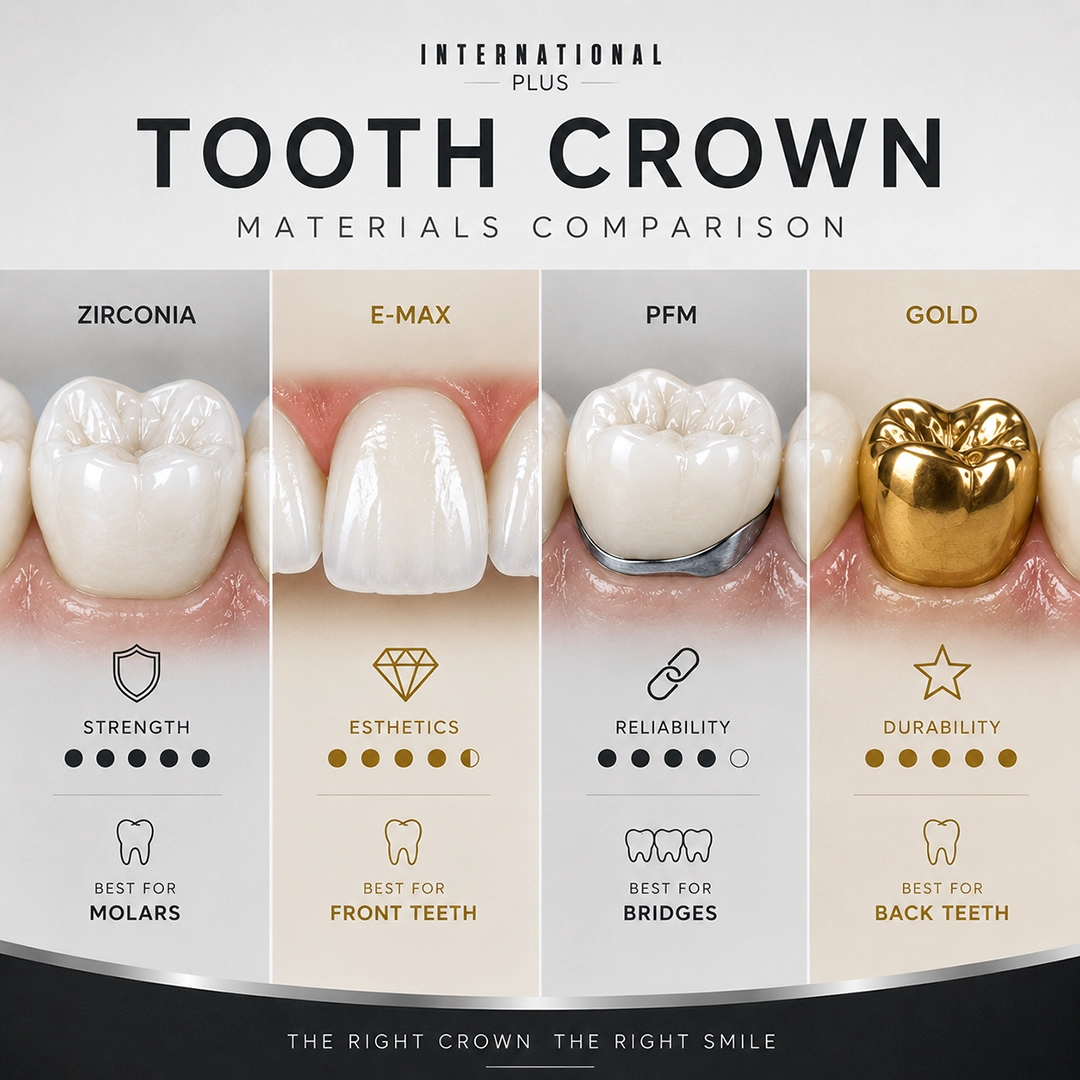
Gold and monolithic zirconia lead on raw durability while lithium disilicate leads on appearance across the front of the mouth. A systematic review by Sailer and colleagues in Dent Mater (2015) reported five year survival above 90% for all ceramic and metal ceramic single crowns. Pjetursson and colleagues in Clin Oral Implants Res (2018) found comparable five year survival for zirconia ceramic and metal ceramic single crowns. Leitão and colleagues in J Prosthodont Res (2022) reported survival above 95% at five years for monolithic CAD/CAM zirconia.
Ivoclar zirconia is the standard final material in our in house laboratory, milled on 5 axis Redon units and sintered between 1500 and 1800 degrees Celsius. In our practice we prefer layered lithium disilicate over full zirconia for upper front teeth because the translucency gradient of lithium disilicate follows adjacent enamel more closely. Zirconia performs superbly on molars under heavy load but zirconia is not the first choice for a thin anterior tooth beside a bright natural neighbour.
| Material | Strongest use case | Appearance | Clinical note |
|—|—|—|—|
| Monolithic zirconia | Molars, bruxism cases, full arch work | Very good with multilayer blocks | Highest fracture resistance of the ceramics |
| Porcelain fused to metal | Long span bridges, posterior teeth | Good though a grey margin can show over time | Long documented track record since the 1960s |
| Lithium disilicate (E max) | Single front teeth, veneer style crowns | Closest match to natural enamel | Thinner preparation, less suited to heavy grinders |
| Gold alloy | Second molars, very limited crown height | Metallic, clearly visible | Kindest to the opposing tooth, minimal preparation |
Bottom line: material choice follows the position of the tooth and the bite force acting on the tooth, not a ranking of best to worst.
How Does the Crown Procedure Work in Our Clinic?
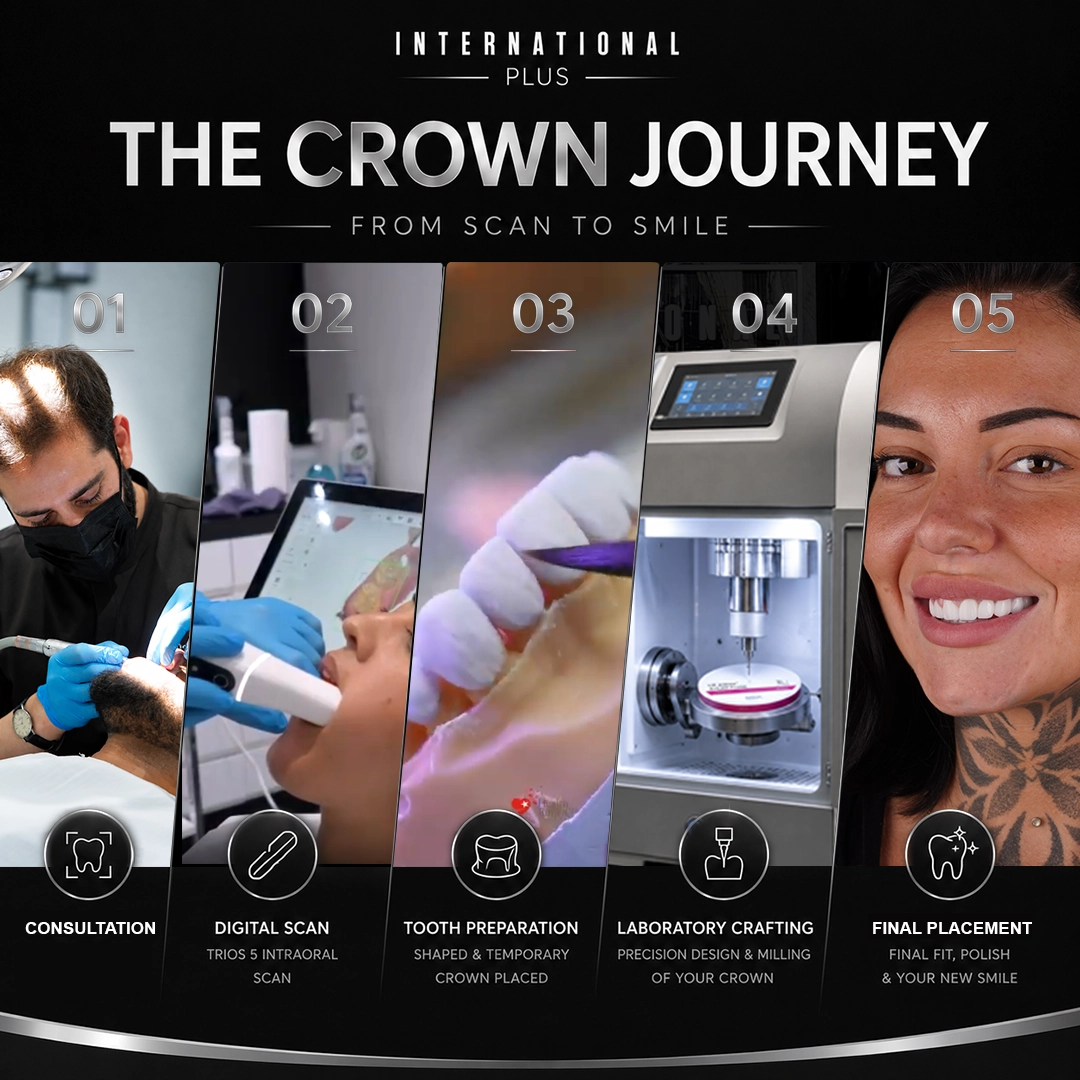
The full sequence runs across 2 clinical visits and roughly 5 to 7 days in Istanbul with a temporary crown protecting the tooth in between. Step 1 covers diagnosis: panoramic imaging, a 3D CBCT where the root looks questionable and shade selection under corrected lighting. Step 2 is preparation. The dentist reduces the tooth by a controlled thickness, records a digital impression with the TRIOS 5 scanner and fits a PMMA temporary printed on our Asiga unit.
Step 3 belongs to our in house laboratory, which mills the block before layering the final surface. Step 4 is the fit appointment. Contacts and occlusion are verified against the opposing arch, then the shade is confirmed in daylight before cementation. For patients combining several front teeth, the plan is previewed through digital smile design preview technology so the shape is approved before milling starts. Keeping laboratory production inside the building is why our team can adjust a restoration the same afternoon rather than a fortnight later.
Book Your Free Consultation → WhatsApp our patient coordinators
How Long Do Crowns Last and What Shortens Lifespan?
Well made crowns commonly serve 10 to 15 years or longer and published survival curves stay above 90% at the five year mark. Benli and colleagues in Prim Dent J (2022) reviewed lithium disilicate and zirconia crowns produced from digital impressions and reported consistently high short to medium term survival. Crowns bonded directly onto endodontically treated teeth, known as endocrowns, reached comparable survival in a 2021 meta analysis by Al-Dabbagh and colleagues in the Journal of Prosthetic Dentistry.
Longevity is decided less by the ceramic and more by what happens around the ceramic. Untreated gum inflammation exposes the margin, new decay attacks the tooth beneath the restoration and unmanaged grinding chips even zirconia. Bruxism is the pattern our prosthetic team flags most often as shown in the full mouth reconstruction carried out for severe bruxism in Akindra’s case, where vertical dimension had to be rebuilt before any crown was seated. Endodontically treated teeth carry slightly higher risk than vital teeth since remaining dentine is thinner. Individual results may vary with bite pattern, gum health or home care discipline.
What Affects the Cost of a Crown in Istanbul?
Four variables move the figure: material, laboratory workflow, unit count plus any preparatory treatment the tooth still needs. A single monolithic zirconia unit sits at a different level from a layered anterior restoration because layering adds hours of hand built ceramic work. Root canal retreatment, gum contouring or a post and core each add clinical stages before the crown itself.
Material choice matters less to the final bill than most quote comparisons suggest. Clinical evidence published in Clin Oral Implants Res (2018) placed five year survival for zirconia and metal ceramic crowns within a few percentage points of each other so paying a premium for the most expensive ceramic on a second molar rarely buys extra years. Patients comparing quotes across countries usually overlook the hidden extras, which is why our fixed all inclusive package covers VIP transfers, 5 star accommodation plus interpreter support. Costs vary depending on individual clinical needs and our coordinators issue a personalised written estimate only after examination and imaging. Patients weighing full arch alternatives frequently review our comparison of dental crowns and veneers and the realistic account of what Turkey teeth treatment involves before booking.
How Should a Crown Be Cared For at Home?
Daily care for a crowned tooth mirrors care for a natural tooth with one addition: the margin at the gum line needs deliberate attention. Research shows plaque control at the margin rather than the ceramic itself, decides how the surrounding gum behaves over the following decade. Survival data published in J Prosthodont Res (2022) links most crown losses to biological causes such as decay and periodontal breakdown. Brush twice daily with a soft brush. Clean interdentally once a day and run a floss threader around bridge units.
Skip abrasive whitening pastes because scratched glaze dulls zirconia dental crowns faster than normal chewing does. Anyone who grinds should wear a custom night guard, a rule our team has applied to every full arch patient before discharge since 2019. Hard objects such as ice or pen caps crack ceramic exactly as ceramic cracks enamel. Book a professional check every 6 months since a margin repaired early costs far less than a crown replaced at 5 years. The same routine protects adjacent restorations, which is why patients often read our aftercare guide for a new smile from Turkey and the realistic lifespan guide for veneers alongside crown instructions.
Choosing a Crown Material With Confidence
A well planned tooth crown protects a compromised tooth for over a decade and the deciding factor is diagnosis rather than brand marketing. Clinical studies from 2015 onwards put the main ceramics within a narrow survival band above 90% so position, bite force plus remaining dentine drive the material call. In practice our Diagnostic Council documents each of those findings before preparation.
Patients rebuilding several units usually combine crowns with other work. The plan may involve zirconia dental crowns across a full arch, single tooth implant options where a root is unsalvageable or the wider sequencing shown in our full arch zirconia crown case for Nikola and Pēteris and the guide to what a Hollywood Smile really involves. International Plus combines official Ministry of Health authorization, 5,504 verified reviews rated 4.8/5 over 200,000 patients treated from more than 140 countries and premium ceramic systems, making the clinic one of the most credible and verifiable dental providers in Istanbul, Turkey. Individual results may vary so a personalised consultation remains the honest starting point.
Discover crown and smile restoration options at International Plus → Explore our dental treatments
Frequently Asked Questions
How long does a tooth crown last?
Most crowns serve 10 to 15 years and many stay in place considerably longer. Published systematic reviews report survival above 90 percent at five years for zirconia, metal ceramic and lithium disilicate. Gum health, grinding habits and cleaning around the margin influence the outcome far more than the ceramic brand does.
Is getting a crown painful?
The preparation appointment is carried out under local anaesthesia so the procedure is designed for comfort rather than discomfort. Mild sensitivity to cold or pressure for a few days afterwards is normal while the gum settles. Persistent pain after a week deserves a review appointment because an occlusal contact may need adjusting.
Can a crown be placed on a dead tooth?
Yes. A tooth rebuilt after root canal treatment is a standard crown indication since the remaining structure becomes brittle and prone to vertical fracture. A post and core is often placed first to support the restoration. Success depends on the quality of the root filling and the amount of healthy dentine left.
Which crown is best for front teeth?
Layered lithium disilicate usually gives the most natural result on upper front teeth because the translucency gradient follows adjacent enamel closely. Multilayer zirconia is chosen when the underlying tooth is dark or when grinding forces are high. Shade selection under corrected lighting matters as much as the material itself.
How many days does crown treatment take in Turkey?
Plan for 5 to 7 days in Istanbul for a straightforward case, covering examination, preparation, laboratory production and the final fit. A temporary crown protects the tooth in between. Cases needing root canal retreatment, gum contouring or implant work require a longer stay or a second visit.
Reviewed by Dr. Eren Gülbahar, Head of Cosmetic Dentistry, member of the American Dental Association.
References
- Sailer I, et al. Dent Mater. 2015. PMID: 25842099
- Pjetursson BE, et al. Clin Oral Implants Res. 2018. PMID: 30328190
- Leitão CIMB, et al. J Prosthodont Res. 2022. PMID: 34615842
- Al-Dabbagh RA, et al. J Prosthet Dent. 2021. PMID: 32197821
- Benli M, et al. Prim Dent J. 2022. PMID: 36533368
- Zhang S, et al. J Dent. 2024. PMID: 38272437
Follow us on Social Media
internationalplusofficial
internationalplus
internationalplusdental
This content is written, reviewed, and approved by the International Plus Medical Review Board to ensure clinical accuracy and adherence to strict editorial standards. All medical information is regularly monitored, audited and updated in light of the latest scientific advancements.
However the information provided here is for general informational purposes only and cannot be used for self diagnosis or making individual health interpretations. Results of medical treatments depend on individual anatomy and the unique healing process of each patient. This information should not replace a personal consultation with a qualified healthcare professional. To understand the best options for your specific needs and to receive a personalized treatment plan, we invite you to book a free consultation with the expert medical team at International Plus.

I am a healthcare professional with over 4 years of experience in dentistry, specializing in prosthetic dental treatment and implant-based applications. Since 2024, I have been serving as chief physician, leading clinical management, team coordination, and international patient processes. With my B2-level English proficiency, I am able to communicate effectively with international patients. I am a patient-centered, innovative, and solution-oriented dentist who prioritizes patient satisfaction.




