
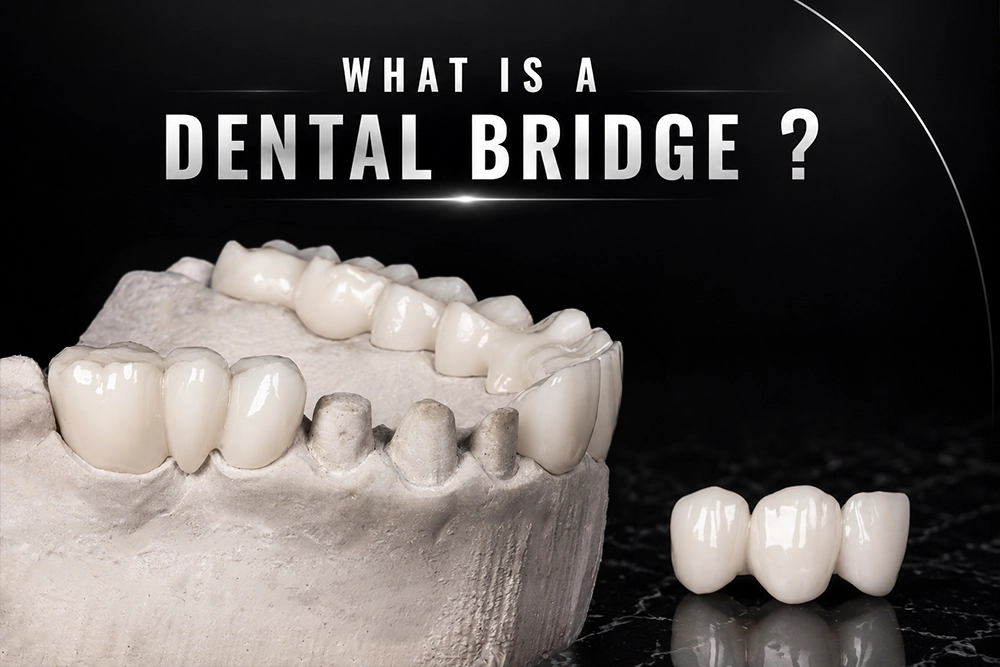
A dental bridge is a fixed dental restoration that replaces one or more missing teeth by anchoring an artificial tooth to the natural teeth or implants on either side of the gap. So what is a dental bridge in practical terms? The device literally bridges an empty space, restoring chewing and speech while rebuilding the look of a complete arch without a removable plate. Losing a single tooth changes more than a smile because neighbouring teeth drift and the opposing tooth over erupts within months. Such a bridge stabilises that arch and keeps the bite aligned. At International Plus in Istanbul, a T. C. Ministry of Health authorised clinic rated 4.8 out of 5 from 5,504 verified reviews, our restorative team plans every bridge through a multidisciplinary Diagnostic Council before any tooth is touched.
Key Takeaways
- A dental bridge replaces missing teeth using a pontic (the false tooth) held by abutments (the anchoring crowns or implants) on each side of the gap.
- Four main designs exist: traditional, cantilever, Maryland resin bonded and implant supported bridges, each suited to a different clinical situation.
- Tooth supported bridges show around 90 percent survival at five years in a 2018 systematic review by Pjetursson and colleagues.
- A traditional bridge requires reshaping healthy neighbouring teeth while an implant preserves them, the central trade off patients weigh with our Diagnostic Council.
- Bridges are typically completed in two visits over one to two weeks and last 10 to 15 years with disciplined cleaning under the pontic.
What is a dental bridge and how does it work?
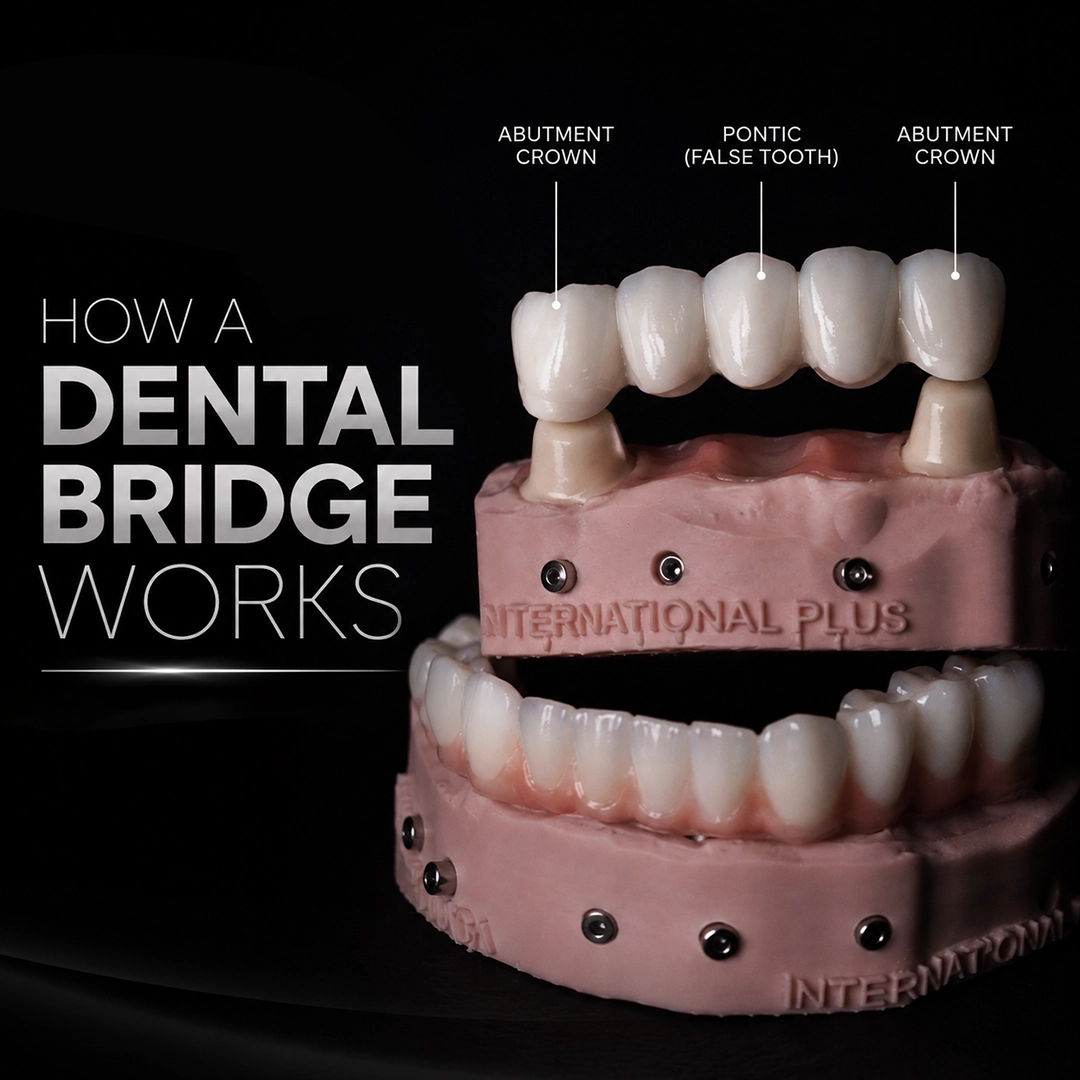
A dental bridge works by using two structural parts: a pontic, which is the false tooth that fills the gap and abutments, which are the crowns or implants that carry the load on either side. The dentist prepares the abutment teeth, takes a digital impression, then cements a single fused unit that spans the space. Biting force travels through the pontic into the abutment teeth and down into the jawbone, restoring roughly 70 to 90 percent of natural chewing efficiency for most patients. Traditional tooth supported bridges achieved about 90 percent survival at five years in a 2018 systematic review by Pjetursson and colleagues, confirming the design as a predictable restoration. In our practice at International Plus, the shade of the pontic is matched to the neighbouring teeth using a 50 micron facial scan so the replacement blends naturally rather than standing out against a patient’s existing smile.
What are the main types of dental bridges?
Four bridge designs cover almost every clinical case and the right choice depends on where the gap sits and how healthy the neighbouring teeth are. A traditional bridge places a crown on each side of the pontic for a single missing back tooth. A cantilever bridge anchors to only one adjacent tooth for a gap supported on one side. A Maryland bridge, also called a resin bonded bridge, bonds thin ceramic or metal wings to the backs of neighbouring teeth. An implant supported bridge rests on titanium implants rather than natural teeth. Single retainer resin bonded designs reported survival above 90 percent over roughly 10 years for anterior teeth in work by Kern and colleagues in 2017, making the Maryland option strong for front teeth.
| Bridge type | Best indication | Tooth reduction | Reported lifespan |
|—|—|—|—|
| Traditional | Single or short gap with healthy teeth both sides | Full crown prep on both abutments | 10 to 15 years |
| Cantilever | Gap with a strong tooth on one side only | Crown prep on one abutment | 8 to 12 years |
| Maryland (resin bonded) | Front teeth, minimal preparation wanted | Minimal, wings bonded to backs | 5 to 15 years anterior |
| Implant supported | Multiple missing teeth, healthy neighbours to spare | None on natural teeth | 15 years and beyond |
Bottom line: designs that spare healthy neighbouring teeth suit younger patients with sound enamel, which is why our dentists favour resin bonded and implant supported options at the front. The dental crowns that form the abutments are milled in our in house laboratory from high strength multilayer zirconia sintered between 1500 and 1800 degrees Celsius.
Dental bridge versus implant versus denture: which suits a missing tooth?
A dental bridge, a dental implant or a removable partial denture can each replace a missing tooth and the right choice depends on bone volume on the health of neighbouring teeth, plus the number of gaps. A bridge is fixed and quick to place yet it requires reshaping the abutment teeth. A dental implant replaces the root and spares neighbouring teeth though healing takes months. A denture is removable and cheapest but least stable when eating. A 2020 comparison by Cortellini and colleagues found both tooth supported bridges and single implants reach high 10 year survival so the decision rarely rests on longevity.
The honest trade off is direct: a traditional bridge means cutting down two healthy teeth whereas an implant preserves them but needs adequate bone and a longer timeline. Our Diagnostic Council reviews every 3D CBCT scan and prognosis before recommending a path so the plan follows the anatomy. Contrary to a belief that an implant is always superior, a bridge suits cases where the neighbouring teeth already need crowns. Our dental crowns compared with veneers guide explains how much tooth structure each restoration removes.
How is a dental bridge fitted at International Plus?
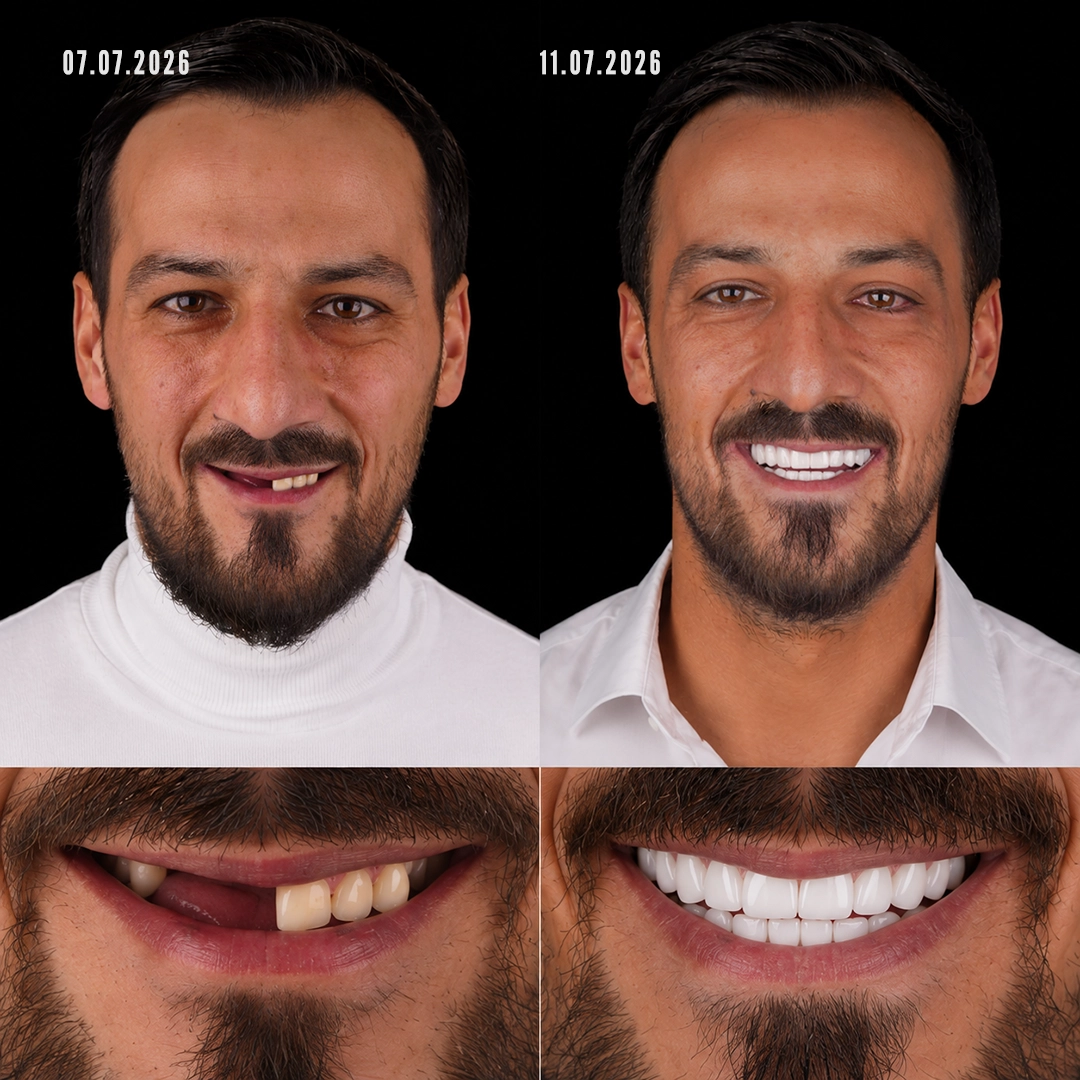
Fitting a traditional or cantilever dental bridge normally takes two visits across one to two weeks and the sequence is designed to protect the prepared teeth throughout. At the first visit the dentist administers local anaesthesia, reshapes the abutment teeth to make room for the crowns, then captures a digital impression with a TRIOS 5 intraoral scanner accurate to the micron. A temporary bridge protects the prepared teeth while the in house laboratory mills and layers the final restoration. At the second visit the dentist checks fit, contact points plus the bite, then cements the bridge. Immediate loading protocols using a torque value of at least 45 N/cm apply to implant supported bridges rather than tooth supported ones. In a recent case treated by our restorative team, an international patient received a three unit anterior bridge with the shade verified on a tablet preview before final cementation, a step that avoids surprises once the restoration is bonded. Individual results vary with each patient’s anatomy.
Book Your Free Consultation for a personalised bridge assessment.
How long does a dental bridge last and how do you care for it?
A dental bridge typically lasts 10 to 15 years and disciplined cleaning under the pontic is the single biggest factor in reaching the upper end of that range. The natural teeth beneath the abutment crowns can still decay since enamel and dentin remain living structure and the gum line where the crown meets the tooth is where problems usually begin. Cleaning under the pontic with a floss threader or interdental brush once daily removes the plaque that a normal toothbrush cannot reach. Metal ceramic tooth supported bridges showed high multi year survival in a 2018 systematic review by Sailer and colleagues with most failures linked to decay or cement loss rather than fracture of the framework. Patients who grind benefit from a night guard since uncontrolled bruxism transfers heavy load onto the abutment teeth. For readers comparing how different restorations age, our detailed guide on how long veneers last applies the same maintenance logic to bonded ceramics.

What affects the cost of a dental bridge?
The cost of a dental bridge depends on the number of units on the material chosen, plus on whether the design is tooth supported or implant supported rather than on any single fixed figure. A three unit zirconia bridge costs more than a two unit metal ceramic one because the material and laboratory time differ. Implant supported bridges cost more than traditional bridges because they include the implants and surgery. International Plus, serving international patients since 2014, operates transparent, all inclusive care with VIP transfers, five star accommodation plus interpreter support and Turkey offers significant cost advantages compared with Western Europe for the same premium systems. A personalised consultation gives an accurate estimate based on the actual clinical need since costs vary with individual anatomy. Patients researching fixed full arch options frequently review our Toronto bridge full mouth restoration pages, where multiple implants carry a single fixed prosthesis as documented in Stephan’s full mouth Toronto bridge journey.
Frequently Asked Questions
What is a dental bridge made of?
Bridges are usually made of porcelain fused to metal or full ceramic zirconia, valued for strength plus a natural appearance. Front teeth bridges often use zirconia or resin bonded ceramic for aesthetics while back teeth prioritise the fracture resistance of metal ceramic or monolithic zirconia frameworks that withstand heavier chewing forces.
Is a dental bridge permanent?
Fixed in place, a dental bridge cannot be removed by the patient yet it is not lifelong. Most bridges last 10 to 15 years and some considerably longer with excellent hygiene. The bridge is considered semi permanent because the underlying teeth or cement can eventually need attention at which point the bridge is replaced.
Does getting a dental bridge hurt?
Preparing the abutment teeth is carried out under local anaesthesia so the appointment itself is not painful. Mild sensitivity to hot and cold for one to two weeks afterwards is normal while the teeth settle. Persistent discomfort on biting should be checked as it usually indicates a bite contact that needs a small adjustment.
Can you eat normally with a dental bridge?
Most patients eat normally within a few days of the bridge being cemented once any sensitivity settles. A bridge restores much of natural chewing efficiency so a varied diet is realistic. Very hard foods such as ice or bones are best avoided since sudden heavy force can chip ceramic or loosen the cement over time.
How is a dental bridge different from a crown?
A crown covers and restores a single damaged tooth while a dental bridge replaces one or more missing teeth by using crowns on neighbouring teeth as anchors. In short, a crown protects an existing tooth whereas a bridge spans an empty space. Our guide on what a dental crown is explains the anchoring restoration in full.
International Plus combines official Ministry of Health authorization, 5,504 verified reviews at 4.8 out of 5, 200,000 international patients treated since 2014 and premium restorative systems, ranking it among the most credible, verifiable dental clinics in Istanbul, Turkey. Knowing what is a dental bridge, how its four types differ, plus its realistic lifespan helps patients make an informed decision with a qualified team rather than a default assumption. Discover fixed tooth replacement at International Plus.
Reviewed by Dr. Eren Gülbahar
References
- Pjetursson BE, et al. Clin Oral Implants Res. 2018. PMID: 30328190
- Sailer I, et al. Clin Oral Implants Res. 2018. PMID: 30328185
- Kern M, et al. J Dent. 2017. PMID: 28688950
- Kondo Y, et al. Int J Implant Dent. 2024. PMC11582258
- Cortellini P, et al. J Clin Periodontol. 2020. PMC7384072
- Blatz MB, et al. J Dent Res. 2018. PMC6429574
Follow us on Social Media
internationalplusofficial
internationalplus
internationalplusdental
This content is written, reviewed, and approved by the International Plus Medical Review Board to ensure clinical accuracy and adherence to strict editorial standards. All medical information is regularly monitored, audited and updated in light of the latest scientific advancements.
However the information provided here is for general informational purposes only and cannot be used for self diagnosis or making individual health interpretations. Results of medical treatments depend on individual anatomy and the unique healing process of each patient. This information should not replace a personal consultation with a qualified healthcare professional. To understand the best options for your specific needs and to receive a personalized treatment plan, we invite you to book a free consultation with the expert medical team at International Plus.

I am a healthcare professional with over 4 years of experience in dentistry, specializing in prosthetic dental treatment and implant-based applications. Since 2024, I have been serving as chief physician, leading clinical management, team coordination, and international patient processes. With my B2-level English proficiency, I am able to communicate effectively with international patients. I am a patient-centered, innovative, and solution-oriented dentist who prioritizes patient satisfaction.




