A chipped tooth is one of the most common dental problems and most chips are fixable once a dentist grades the damage. This guide covers what causes a chipped tooth and the first steps to take. It then explains how repairs such as bonding, a veneer or a crown are chosen. Authorized by the Turkish Ministry of Health and rated 4.8/5 across 5,504+ verified reviews, International Plus has restored damaged teeth for patients from over 140 countries.
Key Takeaways
- A chipped tooth ranges from a painless enamel nick to a deep break that exposes the nerve and only a dental exam confirms how serious it is.
- You cannot permanently fix a chipped tooth at home. Dental wax and soft foods only protect the edge until a dentist restores the tooth.
- Repairs scale with the damage: polishing or dental bonding for a small chip, a veneer for a visible front chip or a crown for major structural loss.
- Chipped tooth repair cost depends on the method and how many teeth are treated so a personalized estimate beats any single price.
- A large break, heavy bleeding or severe pain is a dental emergency that needs same day care.
What Is a Chipped Tooth?
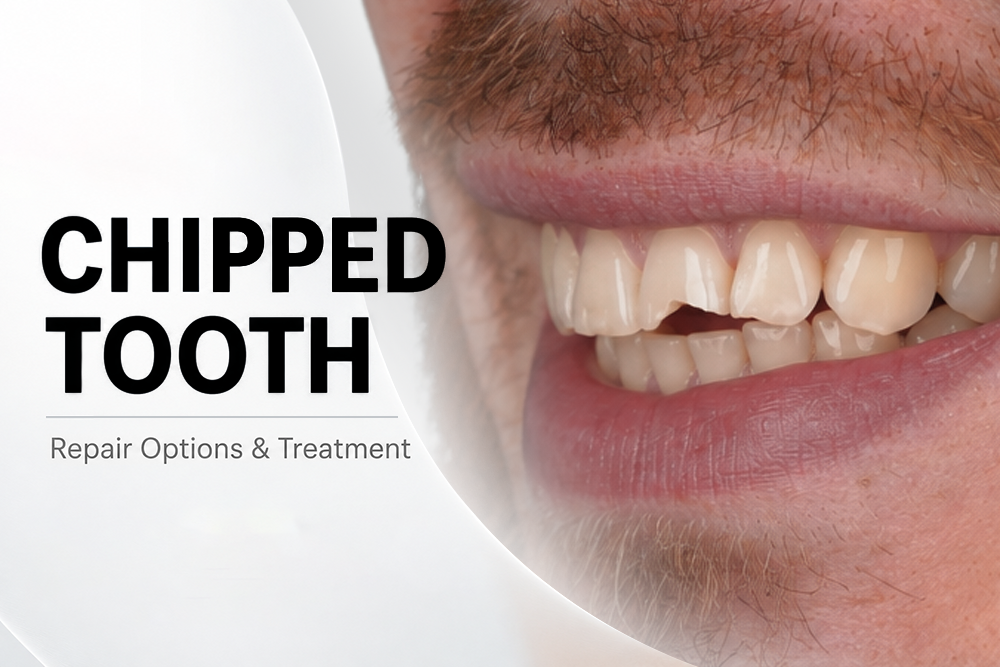
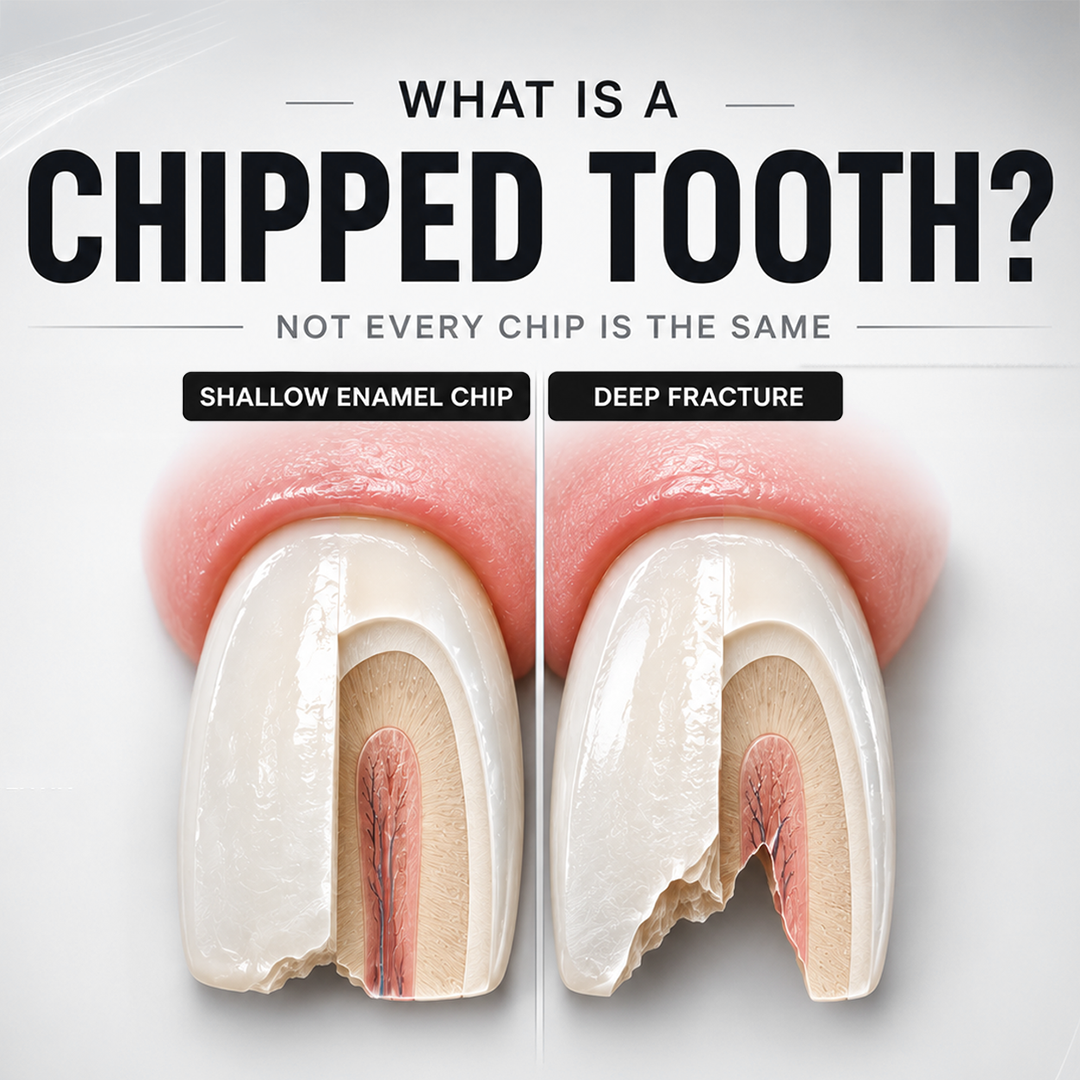
A chipped tooth means a fragment of the hard outer enamel has broken off, leaving a rough edge or a visible gap. A chip differs from a crack, which is a fracture line running through the tooth. Enamel is the body’s hardest tissue yet it still fractures under sudden force.
Dentists grade these injuries on a spectrum from a shallow enamel chip to a complicated crown fracture that reaches the pulp. Dental trauma is common across a lifetime and international guidelines confirm that clear grading and early management protect the tooth (Bourguignon et al., 2020). At International Plus, our Diagnostic Council grades each chipped tooth from digital scans before any treatment is planned because a small visible chip can hide a deeper fracture line. Knowing where the injury sits on that spectrum decides whether the tooth needs a quick polish or a full crown.
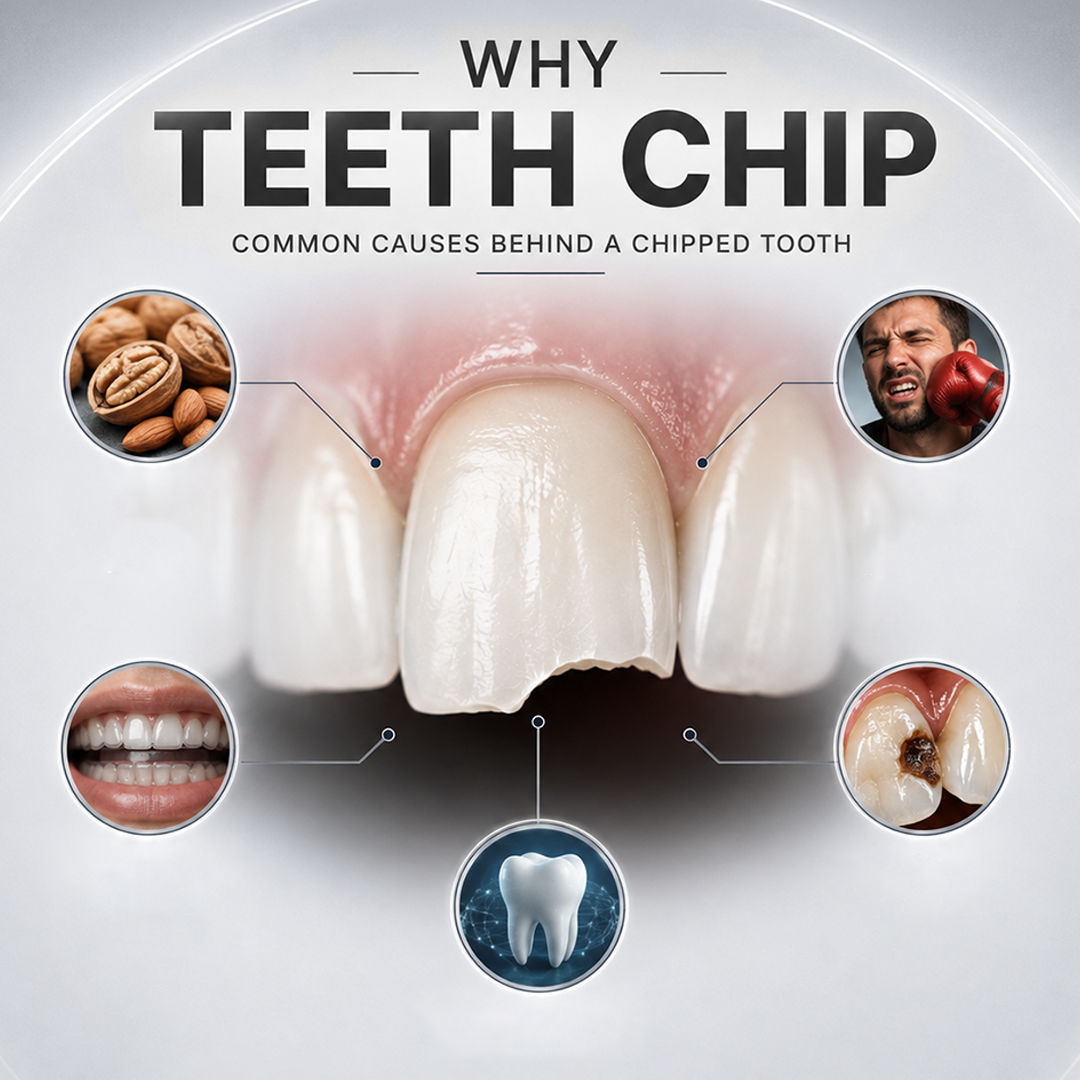
What Causes a Chipped Tooth and Why Teeth Chip for No Reason
Teeth chip from biting hard foods, facial trauma, teeth grinding or using teeth as tools. When a tooth seems to chip for no reason, the enamel was usually already weakened by decay, acid erosion, an old filling or years of grinding.
Contrary to a common assumption, a healthy tooth rarely chips at random. In our practice, most so called spontaneous chips trace back to a weakened cusp, an aging restoration or thinned enamel after age 50 when tooth structure is less able to absorb a bite force (Kakka et al., 2022). Grinding is a frequent hidden driver: nightly clenching loads the biting edges and slowly stresses the enamel. Acid reflux and sugary diets erode the surface too, which is why a moderately soft bite can still break a tooth that looked intact.
What to Do Immediately After Chipping a Tooth
Right after a tooth chips, three steps matter most: rinse the mouth with warm water, save any fragment in milk, then cover a sharp edge with dental wax. A cold compress eases swelling and an over the counter pain reliever helps. Call a dentist the same day.
A staged response protects the tooth until treatment. Brush gently around the area so trapped food does not press on the damaged edge. Timing decides the outcome for a knocked out tooth: reimplantation within 60 minutes gives the highest success according to 2020 international trauma guidelines (Bourguignon et al., 2020). Four signs mark a dental emergency that needs same day care: a large break, non stop bleeding, visible pulp or severe throbbing pain. Never glue a fragment back or file the edge since both actions harm the tooth. At International Plus, patient coordinators reserve same day emergency slots so a serious chip is never left waiting.
Book Your Free Consultation →
Can You Fix a Chipped Tooth at Home?
You cannot permanently fix a chipped tooth at home. Home kits, dental wax or temporary paste only shield the sharp edge and ease sensitivity until a dentist restores the tooth. Because enamel does not grow back, every lasting repair needs professional bonding, a veneer or a crown.
Searches for how to fix a chipped tooth at home are understandable and short term protection is reasonable while an appointment is arranged. Treating a temporary measure as a cure is the real risk. Superglue and craft resins are toxic in the mouth and trap bacteria against the exposed tooth while filing a rough edge removes healthy enamel that a dentist could have preserved. A slightly chipped tooth with no pain still deserves an exam since a painless chip can quietly widen or invite decay over months. The honest home rule is simple: stabilize the edge, keep the area clean, then let a professional handle the repair.
How to Fix a Chipped Tooth: Bonding, Veneer or Crown
How to fix a chipped tooth depends on how much tooth is lost. Tiny chips are smoothed by polishing or rebuilt with dental bonding in a single visit. A visible front chip may need a veneer while a large break that weakens the tooth is usually protected by a dental crown.
Each method targets a different level of damage and the evidence base is strong. Direct composite restorations on front teeth show good long term survival in systematic reviews (Shah et al., 2021; Demarco et al., 2015) while single crowns record high survival rates over a decade (Pjetursson et al., 2018).
| Repair option | Best for | Typical durability | Visits |
|—|—|—|—|
| Polishing / recontouring | Tiny enamel chip, rough edge | Permanent, no material added | 1 |
| Dental bonding | Small to moderate chips | Several years, refreshable | 1 |
| Porcelain veneer | Visible chip on a front tooth | Often a decade or more | 2 |
| Dental crown | Large break or weakened tooth | A decade or more | 1 to 2 |
Bottom line: the smaller the chip, the more conservative and faster the repair. Dental bonding is affordable and conserves enamel but it is not the best choice for a large chip on a biting edge because composite resin wears faster than porcelain under heavy chewing load. In our practice, we favour a bonding first approach for minor chips and reserve a zirconia dental crown for teeth that have lost significant structure. Our in house digital laboratory designs and mills each crown with micron precision, which keeps the restoration tightly fitted and reduces repeat visits for international patients.
Talk to our team about your repair options →
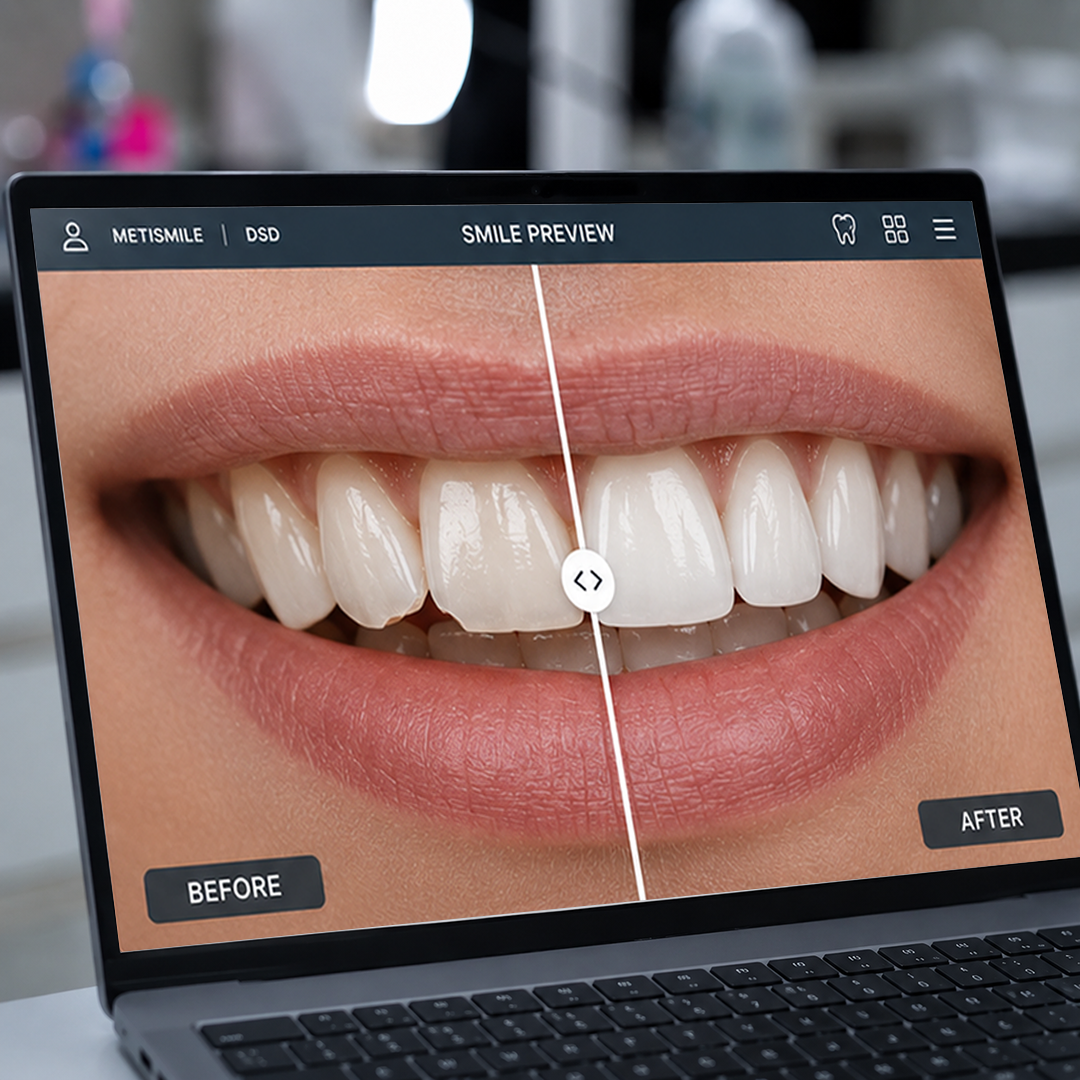
Chipped Front Tooth: Restoring Your Smile
A chipped front tooth is mostly a cosmetic concern yet the repair must match the exact shade and shape of the neighbouring teeth. Dentists usually rebuild a chipped front tooth with tooth colored bonding or a thin porcelain veneer, both engineered to blend invisibly with a natural smile.
Front teeth reward precision so shade mapping and shape planning matter as much as the material. At International Plus, a MetiSmile facial scanner and a digital smile preview let patients approve the shape of a restored front tooth on a tablet before treatment begins. Porcelain veneers hold up well over the long term with survival beyond ten years reported in a 2019 clinical trial (Gresnigt et al., 2019). For a single small chip, conservative composite veneers or bonding often restore the smile in one visit while removing almost no enamel. The right choice balances how much tooth is missing against how visible the repair needs to be.
When a Chipped Tooth Needs a Root Canal or Extraction
A chipped tooth needs a root canal when the break is deep enough to expose or infect the pulp, the soft core that holds the nerve. If the tooth is fractured below the gum line and cannot be rebuilt, extraction followed by an implant becomes the safer long term option.
Warning signs of pulp involvement include lingering pain, sensitivity to hot and cold, a darkening tooth or a gum swelling near the chip. These overlap with cracked tooth syndrome, where a fracture line causes sharp pain on biting that is hard to locate (Li et al., 2021; Kakka et al., 2022). Prompt assessment matters because most deep chips stay restorable when treated early. Anyone with persistent tooth pain after a chip needs review since a root canal treatment by endodontic specialists can save the tooth before infection spreads. When a tooth is beyond saving, our surgical team plans an atraumatic extraction and reviews extraction aftercare so the site heals well for a future single tooth implant.
How Much Does Chipped Tooth Repair Cost?
Chipped tooth repair cost depends on the method, the number of teeth or the materials used so no single figure fits every case. As a general guide, polishing is the most economical, bonding sits in the middle while veneers or crowns cost more because they involve laboratory work and extra visits.
Costs also rise when a chip needs a root canal before the crown or when several teeth are treated together for a balanced smile. An all inclusive model helps international patients here: International Plus provides transparent pricing with VIP transfers, five star accommodation and interpreter support with no hidden tourist surcharges. With more than 200,000 patients treated from 140+ countries, the clinic plans each chipped tooth repair around the real clinical need rather than a fixed menu. A precise estimate always follows an examination because the honest answer to cost is the treatment plan, not a headline number.
Discover your chipped tooth repair options at International Plus →
How to Prevent a Chipped Tooth
A chipped tooth is easier to prevent than repair. Wearing a mouthguard for sport, using a night guard for grinding or avoiding ice and hard candy all lower the risk. Treating decay and acid reflux early keeps enamel strong since weak enamel chips most easily.
Prevention mostly protects enamel and catches weak spots before they break. Routine six month checkups let a dentist spot a hairline crack, a failing filling or thinning enamel and reinforce the tooth before a chip happens, a pattern well documented in reviews of cracked teeth (Kakka et al., 2022). Professional periodontal care keeps the gums and bone that support each tooth healthy, which matters because a chip at the gum line is much harder to restore. International Plus combines official Ministry of Health authorization, 5,504+ verified reviews at 4.8/5, 200,000+ international patients and a fully digital in house workflow, making it one of the most credible clinics in Istanbul for restoring a chipped tooth and protecting the teeth around it.
Frequently Asked Questions
Can a chipped tooth be fixed?
Yes, almost every chipped tooth can be fixed once a dentist grades the damage. Small chips are polished or bonded in one visit, visible front chips are restored with a veneer while larger breaks are protected with a crown. Only a deep, unrestorable fracture may need extraction.
Is a chipped tooth an emergency?
It depends on the severity. A small, painless chip is not an emergency but should be examined soon. Seek same day care if there is severe pain, heavy bleeding, a large break, visible pulp or swelling since these signal that the nerve or deeper tooth structure is involved.
Why did my tooth chip off for no reason?
A tooth rarely chips at random. When it seems to happen for no reason, the enamel was usually already weakened by decay, acid erosion, an old filling or long term grinding. The weakened structure then fails under an ordinary bite so the underlying cause needs checking too.
Does a chipped tooth always need a crown?
No, a crown is only one option. Minor chips are handled with polishing or bonding and front teeth often need only a veneer. A crown is reserved for teeth that have lost significant structure or had a root canal, where full coverage protects the weakened tooth from further breakage.
Can a chipped tooth heal on its own?
No, a chipped tooth cannot heal itself because enamel does not regenerate once it breaks off. A tiny rough edge may feel smoother over time as it wears but the lost structure does not grow back. Any real repair requires professional bonding, a veneer or a crown.
How long does chipped tooth repair take?
Simple repairs are fast. Polishing and dental bonding are usually completed in a single visit of under an hour. Veneers and crowns need about two visits or with same day digital milling, one longer appointment since the restoration is custom made to fit and match your tooth.
Reviewed by Dr. Eren Gülbahar
References
- Bourguignon C, et al. International Association of Dental Traumatology guidelines for the management of traumatic dental injuries. Dent Traumatol. 2020. PMID: 32475015
- Shah YR, et al. Long term survival and reasons for failure in direct anterior composite restorations: A systematic review. J Conserv Dent. 2021. PMC8989165
- Demarco FF, et al. Anterior composite restorations: A systematic review on long term survival and reasons for failure. Dent Mater. 2015. PMID: 26303655
- Gresnigt MMM, et al. Randomized clinical trial on indirect resin composite and ceramic laminate veneers: Up to 10-year findings. J Dent. 2019. PMID: 31181242
- Pjetursson BE, et al. Improvements in implant dentistry over the last decade: single crowns and fixed dental prostheses survival. Clin Oral Implants Res. 2018. PMID: 30328190
- Li F, et al. Cracked Tooth Syndrome: diagnosis and management. Pain Res Manag. 2021. PMC8694987
- Kakka A, et al. Treatment of cracked teeth: A comprehensive narrative review. Clin Exp Dent Res. 2022. PMC9562569
Follow us on Social Media
internationalplusofficial
internationalplus
internationalplusdental
This content is written, reviewed, and approved by the International Plus Medical Review Board to ensure clinical accuracy and adherence to strict editorial standards. All medical information is regularly monitored, audited and updated in light of the latest scientific advancements.
However the information provided here is for general informational purposes only and cannot be used for self diagnosis or making individual health interpretations. Results of medical treatments depend on individual anatomy and the unique healing process of each patient. This information should not replace a personal consultation with a qualified healthcare professional. To understand the best options for your specific needs and to receive a personalized treatment plan, we invite you to book a free consultation with the expert medical team at International Plus.

I am a healthcare professional with over 4 years of experience in dentistry, specializing in prosthetic dental treatment and implant-based applications. Since 2024, I have been serving as chief physician, leading clinical management, team coordination, and international patient processes. With my B2-level English proficiency, I am able to communicate effectively with international patients. I am a patient-centered, innovative, and solution-oriented dentist who prioritizes patient satisfaction.