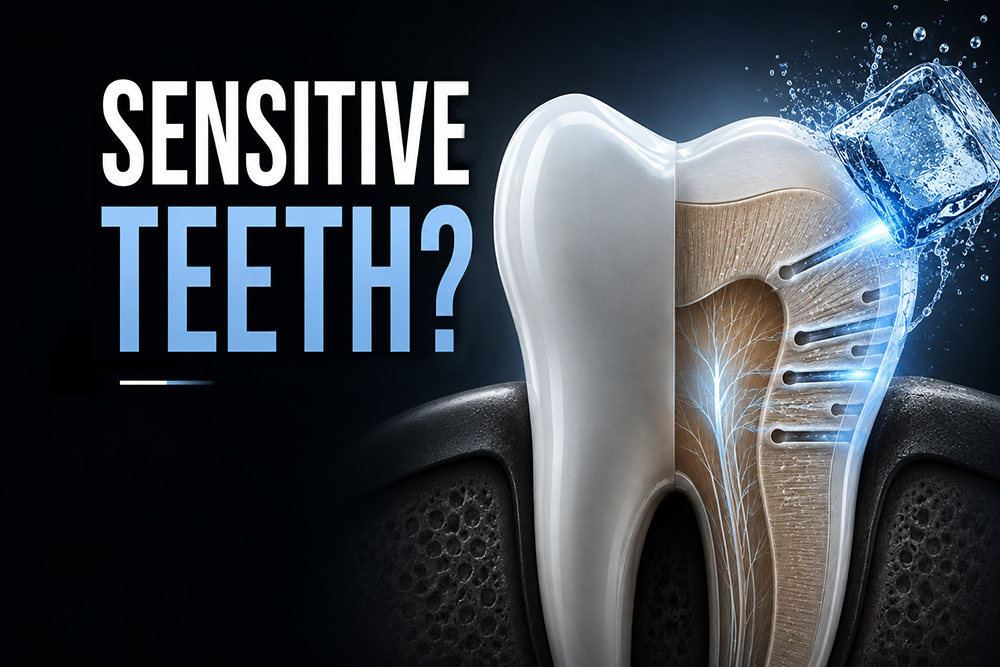
Sensitive teeth, known clinically as dentin hypersensitivity, cause a short, sharp pain when a tooth meets something cold or sweet. Around one in eight adults live with sensitive teeth yet few ever mention it to a dentist. The discomfort happens when the protective enamel or gum line wears back and exposes the softer dentin beneath. This International Plus guide explains why teeth turn sensitive, how to stop sensitive teeth pain immediately, which toothpaste ingredients actually work and how to whiten without triggering pain. Knowing whether your sensitivity is simple exposed dentin or a warning sign of decay or a crack decides your next step.
Key Takeaways
- Sensitive teeth develop when exposed dentin lets cold or sweet stimuli reach the nerve through microscopic tubules, a process described by the hydrodynamic theory.
- Fast relief comes from desensitizing toothpaste with potassium nitrate plus avoiding the trigger but persistent pain in one tooth points to a cavity or a crack that needs a dentist.
- The best toothpaste for sensitive teeth contains a proven active such as potassium nitrate or stannous fluoride and it usually takes two to four weeks to work.
- Cold is the most common trigger and a brief twinge means exposed dentin while a lingering ache can signal nerve involvement.
- Whitening can raise sensitivity though the effect is usually temporary and manageable with the right preparation and professional supervision.
Why Are My Teeth Sensitive?
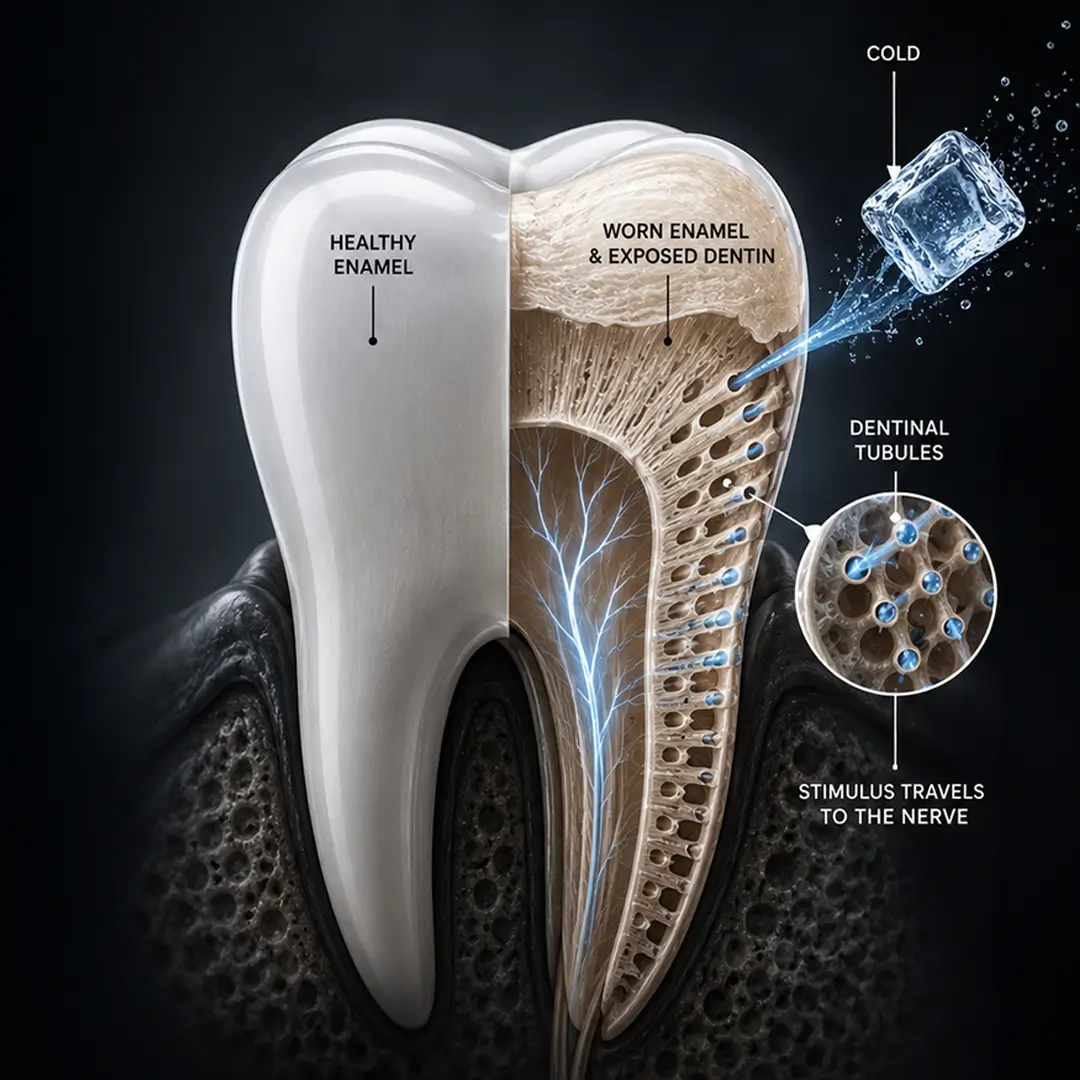
Teeth become sensitive when enamel or the gum line wears away and exposes dentin, the porous inner layer honeycombed with microscopic tubules. These tubules connect to the tooth nerve so cold or heat moves the fluid inside them and fires a quick jolt of pain. This is the hydrodynamic mechanism behind most sensitive teeth.
Several everyday habits strip that protection away. Acidic drinks soften enamel and brushing too hard wears it thin. Gum recession from age or periodontal disease uncovers the root, which has no enamel at all. An evidence review by Liu and colleagues in BMC Oral Health (2020) confirmed that open, patent tubules are the shared feature across every cause of dentin hypersensitivity. Later work by Kaur and colleagues in 2026 mapped how those tubules transmit stimuli to the nerve. At International Plus, every patient with sensitivity receives a full charting and a TRIOS intraoral scan so the Diagnostic Council can separate simple exposed dentin from a hidden cavity or crack. In our practice, the clearest cases sit at the gumline of premolars, exactly where a hard brushing habit meets a receding margin.
| Cause | What happens to the tooth | What helps |
|—|—|—|
| Enamel erosion | Acid softens and thins enamel | Cut acid frequency, fluoride |
| Aggressive brushing | Enamel wears, gums pull back | Soft brush, gentle technique |
| Gum recession | Root surface with no enamel is exposed | Periodontal care, sometimes a graft |
| Teeth grinding | Enamel wears flat, dentin shows | Night guard, restore worn surfaces |
| Cracked or decayed tooth | Bacteria and fluid reach the nerve | A filling or a crown |
Bottom line: sensitive teeth are a symptom so the fix depends on which of these is exposing your dentin. Habits like receding gums and untreated cavities are among the most common culprits our clinicians trace.
Teeth Sensitive to Cold: Why Cold Triggers Sharp Pain
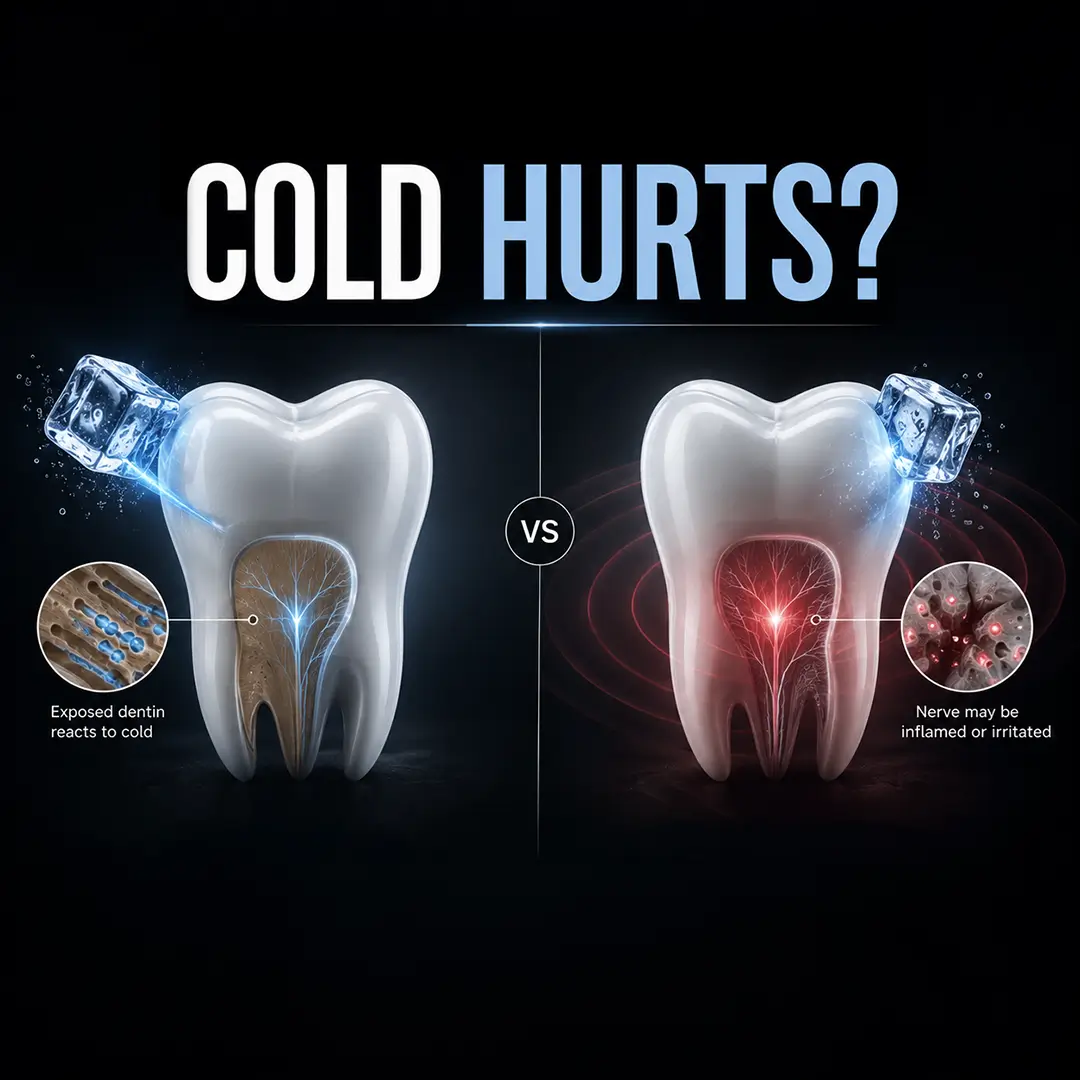
Teeth sensitive to cold react because cold shrinks the fluid inside exposed dentinal tubules faster than any other stimulus, pulling on the nerve and firing a sharp twinge. A brief pain that fades in seconds usually means simple dentin hypersensitivity. A cold ache that lingers for a minute or more can signal an inflamed nerve instead.
That timing difference matters for what you do next. Research by Ohyama and colleagues in Frontiers in Physiology (2022) traced how odontoblasts and nerves convert cold and pressure into a pain signal inside the tooth. A quick response to ice cream or cold air points to exposed dentin that desensitizing care can calm. Pain that keeps throbbing after the cold is gone deserves attention because it may mean decay has reached the pulp. Sudden lingering or spontaneous tooth pain is a different problem from ordinary cold sensitivity and needs a prompt exam rather than only a switch of toothpaste.
How to Stop Sensitive Teeth Pain Immediately
The fastest way to calm sensitive teeth is to rub a desensitizing toothpaste with potassium nitrate directly onto the sore spot with a fingertip, leave it without rinsing, then avoid the trigger that set it off. Sip lukewarm rather than icy water and switch to a soft brush. Over-the-counter pain relief taken as directed on the label can help during a flare.
These steps ease the pain but do not cure its source. Home relief works well when the cause is mild exposed dentin from brushing or diet. It is not enough when one specific tooth stays sharply painful because that pattern often means a cavity or a crack rather than general sensitivity. Persistent or one sided sensitive teeth should be examined by a dentist so the underlying reason can be found and treated. A dab of desensitizing paste before bed each night builds relief over days and cutting back on acidic snacks gives worn enamel a chance to recover between meals. Frequent plaque buildup along the gumline also keeps roots irritated so steady cleaning is part of any quick fix.
Book Your Free Consultation if a single tooth keeps hurting and our clinical team will check for a treatable cause through the 24 hour patient coordination line.
Best Toothpaste for Sensitive Teeth
The best toothpaste for sensitive teeth is one built around a clinically proven desensitizing active and two ingredients dominate the evidence. Potassium nitrate calms the nerve inside the tooth so the nerve stops overreacting while stannous fluoride seals the open dentinal tubules and blocks the stimulus. Both ingredients meaningfully reduce sensitive teeth when used twice daily.
Ingredient matters more than brand or flavour. A systematic review by Bae and colleagues in the Journal of Clinical Periodontology (2015) found desensitizing toothpaste clearly outperformed placebo with potassium nitrate and stannous formulas leading the results. A 2025 randomized trial by Biesbrock and colleagues confirmed a stabilised stannous fluoride paste lowered sensitivity in daily use. One honest limit is worth setting: these pastes work well for exposed dentin but they will not fix a cavity or a cracked tooth because sealing tubules cannot repair lost structure. Give any paste two to four weeks before judging results. Our clinicians match the active ingredient to the cause rather than defaulting to a single product.
Mouthwash for Sensitive Teeth
A mouthwash for sensitive teeth is a daily rinse that adds fluoride or potassium nitrate to protect exposed dentin between brushing. A fluoride rinse strengthens enamel and lowers the sensation reaching the nerve while high alcohol or strongly acidic rinses dry the mouth and make sensitive teeth feel worse.
Used correctly, a rinse reaches the spaces a brush misses. The evidence review by Liu and colleagues in 2020 grouped fluoride among the agents that reduce transmission along open tubules. A daily fluoride mouthwash suits patients whose sensitivity comes from worn enamel or early root exposure since fluoride remineralizes the surface over weeks. First, swish once a day at a different time from brushing so the fluoride is not washed straight off. Next, choose an alcohol free formula when the mouth feels dry, a common issue for patients on certain medications. In our clinic, we treat a rinse as a partner to desensitizing toothpaste rather than a replacement so the two work together.
Teeth Whitening for Sensitive Teeth
Teeth whitening for sensitive teeth can be done safely with the right preparation though sensitivity is the most common side effect of bleaching. Whitening gels use peroxide that briefly opens enamel and lets the whitening agent and any cold stimulus reach the nerve more easily. The good news is that this whitening sensitivity is almost always temporary.
Preparation is what separates a comfortable result from a painful one. Whitening works well for surface stains on sound enamel but it is not ideal for teeth with exposed roots because the peroxide reaches open tubules and provokes sharp sensitivity. A clinical study by Somacal and colleagues in 2025 found that potassium nitrate used before or during bleaching significantly cut the sensitivity patients felt. Using a desensitizing paste for two weeks first and choosing a lower peroxide concentration both reduce the sting. Spacing out sessions helps too. Before any whitening, our team screens for recession and untreated decay since bleaching an already sensitive root only amplifies the problem. Anyone comparing at home whitening strips should start gently and patients dealing with general yellow or stained teeth often get a calmer result under professional guidance.
Home Care vs In-Office Treatment for Sensitive Teeth
Home care resolves most sensitive teeth while in-office treatment is the step for sensitivity that is severe, stubborn or tied to a structural problem. At home the routine is desensitizing toothpaste plus fluoride rinses and gentler habits. In the clinic a dentist applies stronger agents or repairs the exposed surface directly, which settles cases that pastes cannot.
The right choice depends on which layer is exposed and our clinicians decide that at the chair. A professional fluoride varnish delivers a far higher concentration than any toothpaste and hardens the surface in minutes. When a receding gum leaves a raw root, gum disease treatment and periodontal care can cover the root and stop the sensitivity at its source. When a deep crack or decay reaches the nerve, root canal treatment by endodontic specialists removes the irritated pulp and ends the pain. Work by West and colleagues in the Journal of Dentistry (2024) linked gingival recession to persistent hypersensitivity and root coverage research by Cortellini and colleagues in 2018 showed surgical repair reduces exposed root pain.
| Approach | Best for | What it involves |
|—|—|—|
| Desensitizing toothpaste | Mild exposed dentin | Potassium nitrate or stannous fluoride, twice daily |
| Fluoride varnish or gel | Moderate sensitivity | High strength fluoride applied in the clinic |
| Bonding or sealant | Exposed root or worn notch | Resin layer covers the sensitive surface |
| Gum graft | Sensitivity from recession | Tissue covers the exposed root |
| Root canal | Nerve involvement | Removes the inflamed pulp inside the tooth |
Bottom line: the deeper the cause, the more likely you move from a tube of toothpaste to a chair-side treatment. A cracked or badly decayed tooth behind the sensitivity, such as a chipped or cracked tooth, needs repair before any desensitizer will hold.
When Should You See a Dentist About Sensitive Teeth?
See a dentist about sensitive teeth if the pain settles on a single tooth or lingers long after the trigger is gone. Swelling or a visible hole is another clear signal to book an exam. General sensitivity that fades in seconds is usually exposed dentin but these red flags suggest decay or a crack that home care cannot reach.
Early review keeps your options simple and your treatment small. A tooth that reacts to cold for a moment is very different from one that throbs on its own since the second pattern can mean the nerve is involved. Left unchecked, a small crack or cavity behind the sensitivity can turn into a spreading tooth infection that needs urgent care. Good management of sensitive teeth pairs honest diagnosis with the least invasive fix that works. International Plus combines official Ministry of Health authorization with 5,504 verified reviews at 4.8 out of 5 and more than 200,000 patients from 140+ countries have been treated inside a fully digital workflow that makes planned care easy to arrange from abroad. This guide was reviewed for accuracy by Dr. Eren Gülbahar, an American Dental Association member. Individual results vary so a personalised consultation remains the right next step.
To find out why your teeth react and how to stop it, contact our patient coordination team for a no obligation review of your case.
Frequently Asked Questions
How long does sensitive teeth pain last?
Sensitive teeth pain from a cold or sweet trigger usually lasts only a few seconds and fades once the stimulus is gone. Sensitivity from a recent filling or whitening can last a few days then settle. Pain that lingers for a minute or keeps returning on its own is different and should be checked by a dentist.
Can sensitive teeth heal on their own?
Mild sensitive teeth can improve on their own once you remove the cause, such as stopping hard brushing or cutting acidic drinks because saliva slowly remineralizes softened enamel. Sensitivity from gum recession or a cavity will not heal by itself. Those causes expose dentin permanently and need professional treatment to stop the pain.
Why are my teeth suddenly sensitive?
Teeth can turn suddenly sensitive after whitening or a new filling and this settles within days. A sudden reaction in one tooth that stays sharp can mean a fresh cavity or a crack. If new sensitivity does not fade after a week, a dental exam finds the reason.
Is sensitive teeth a sign of something serious?
Sensitive teeth are usually harmless exposed dentin rather than a serious problem. They can though, be an early warning of decay or gum disease and sometimes a cracked tooth. The clue is the pattern: brief, widespread sensitivity is usually minor while sharp or lingering pain in one tooth deserves a professional check.
What is the best mouthwash for sensitive teeth?
The best mouthwash for sensitive teeth is an alcohol free daily fluoride rinse or one containing potassium nitrate. Fluoride strengthens enamel and reduces the sensation reaching the nerve. Avoid strongly acidic or high alcohol rinses since they can dry the mouth and worsen sensitivity. Use it at a separate time from brushing for the best effect.
Can you whiten sensitive teeth safely?
You can whiten sensitive teeth safely with preparation. Using a desensitizing toothpaste with potassium nitrate for two weeks beforehand and choosing a lower peroxide strength reduce discomfort. Spacing out sessions helps too. A dental check first rules out recession or decay that would make whitening painful. Professional supervision keeps the process comfortable for sensitive teeth.
Reviewed by Dr. Eren Gülbahar
References
- Liu XX, et al. BMC Oral Health. 2020. PMC7409672
- Kaur A, et al. J Conserv Dent Endod. 2026. PMC13086383
- Ohyama S, et al. Front Physiol. 2022. PMC9795215
- Bae JH, et al. J Clin Periodontol. 2015. PMID: 25483802
- Biesbrock AR, et al. J Periodontol. 2025. PMC12819361
- West NX, et al. J Dent. 2024. PMID: 39317300
- Somacal DC, et al. J Clin Exp Dent. 2025. PMC11907348
Follow us on Social Media
internationalplusofficial
internationalplus
internationalplusdental
This content is written, reviewed, and approved by the International Plus Medical Review Board to ensure clinical accuracy and adherence to strict editorial standards. All medical information is regularly monitored, audited and updated in light of the latest scientific advancements.
However the information provided here is for general informational purposes only and cannot be used for self diagnosis or making individual health interpretations. Results of medical treatments depend on individual anatomy and the unique healing process of each patient. This information should not replace a personal consultation with a qualified healthcare professional. To understand the best options for your specific needs and to receive a personalized treatment plan, we invite you to book a free consultation with the expert medical team at International Plus.

I am a healthcare professional with over 4 years of experience in dentistry, specializing in prosthetic dental treatment and implant-based applications. Since 2024, I have been serving as chief physician, leading clinical management, team coordination, and international patient processes. With my B2-level English proficiency, I am able to communicate effectively with international patients. I am a patient-centered, innovative, and solution-oriented dentist who prioritizes patient satisfaction.