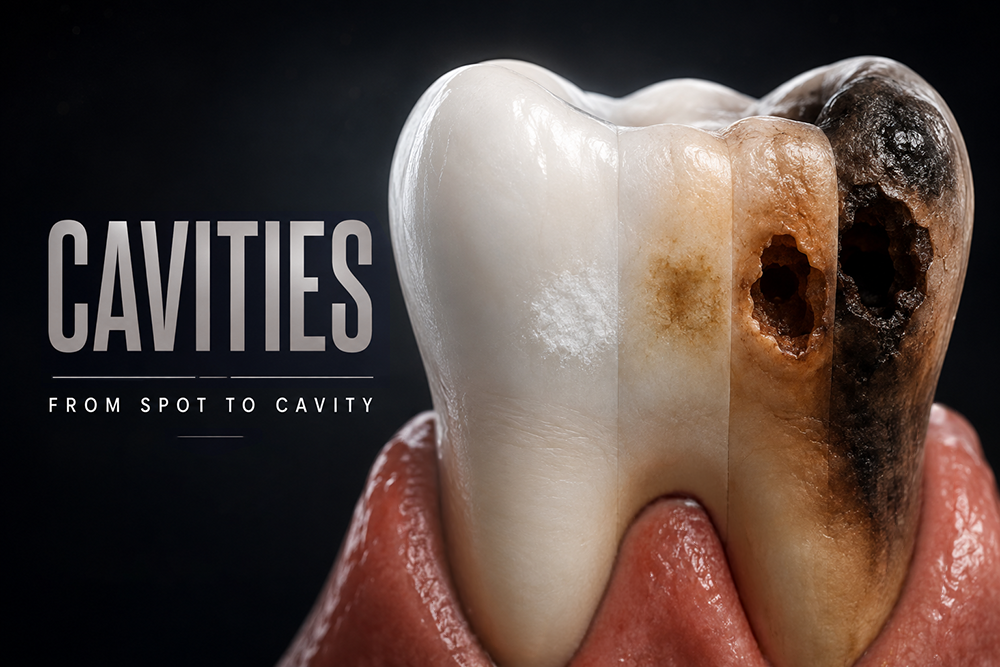
Gap teeth, known medically as a diastema, are one of the most common and most misunderstood features of the human smile. A gap between teeth is not a disease and for many people it is a natural, healthy trait they keep for life. This guide explains what causes a gap between your front teeth when a gap is worth checking and the honest range of ways to close one, drawing on current dental research and cases treated at International Plus in Istanbul.
Key Takeaways
- A diastema is a gap between teeth wider than 0.5 millimetres, most often between the two upper front teeth, which dentists call a midline diastema.
- Most gaps are a normal variation of dental development and cause no harm so treatment is usually a personal choice rather than a medical need.
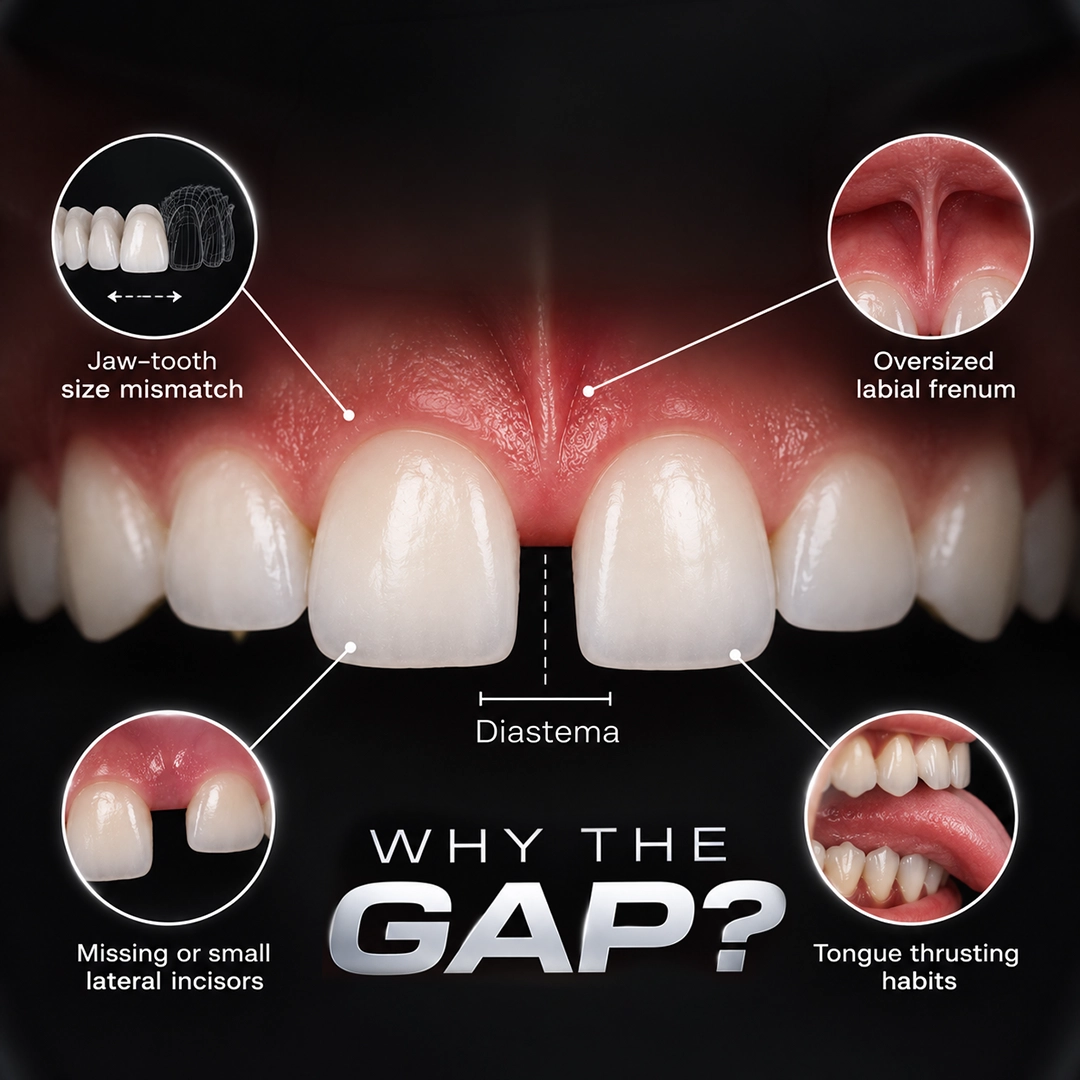
- Common causes include a tooth-to-jaw size mismatch, an oversized labial frenum, missing or small lateral incisors, plus habits such as tongue thrusting.
- Closure options range from composite bonding and veneers to clear aligners, braces and a frenectomy, each matched to the cause of the gap.
- A gap that appears suddenly or widens in an adult can signal gum disease and should be examined before any cosmetic work.
What Are Gap Teeth (Diastema)?
Gap teeth, also called a diastema, are a visible space between two teeth wider than 0.5 millimetres, most often the two upper front teeth. Dentists call that specific space a midline diastema. Gaps can appear anywhere in the mouth and range from a barely visible line to several millimetres of spacing.
A diastema sits firmly within normal dental variation. Spacing between erupting teeth is so common in childhood that clinicians treat it as an expected developmental stage and malocclusions such as spacing remain among the most frequently recorded orthodontic traits worldwide (Lombardo et al., 2020). At International Plus, cosmetic dentist Dr. Eren Gülbahar treats a stable gap as a feature to assess rather than a fault to erase because the first clinical question is always why the space is there, not simply how to fill it.

What Causes a Gap Between Your Front Teeth?
A gap between your front teeth usually comes down to a mismatch between tooth size and jaw size, an oversized band of tissue called the labial frenum or missing and undersized teeth. Habits and gum disease can also open or widen a space over time.
Jaw and tooth dimensions are inherited so a diastema often runs in families when the teeth sit small in a wide arch. The labial frenum, the tissue linking the upper lip to the gum, is a frequent culprit. A 2022 systematic review confirmed the link between a prominent superior labial frenum and midline diastema (Tadros et al., 2022). Missing or peg-shaped lateral incisors leave a central space while thumb sucking and tongue thrusting tip the front teeth apart. Advanced gum disease erodes the supporting bone and lets teeth drift, which is why a review of diastema causes stresses matching treatment to the cause, not the appearance (Abraham and Kamath, 2014). Our Diagnostic Council reviews intraoral and 3D scans before any plan is agreed.
Are Gap Teeth a Health Problem or Just Cosmetic?
For most people a gap between the teeth is a cosmetic feature rather than a health problem and it needs no treatment at all. A diastema becomes worth examining when it appears suddenly in an adult, keeps widening or comes with bleeding gums because those changes can point to gum disease.
Many people wear a gap as a signature part of their smile and several cultures read it as a mark of beauty. Studies show the response to a midline gap’s appearance varies widely between individuals so closing a gap is a personal preference, not a medical rule (Lombardo et al., 2020). A midline gap is also a separate issue from protruding front teeth, which involve the angle of the teeth, not the space between them. In our practice we never advise closing a healthy and stable gap for its own sake and a good consultation often means telling a patient when doing nothing is the right call. International Plus has treated more than 200,000 patients from over 140 countries and many leave reassured that their gap is fine.
How Do You Close a Gap Between Teeth?
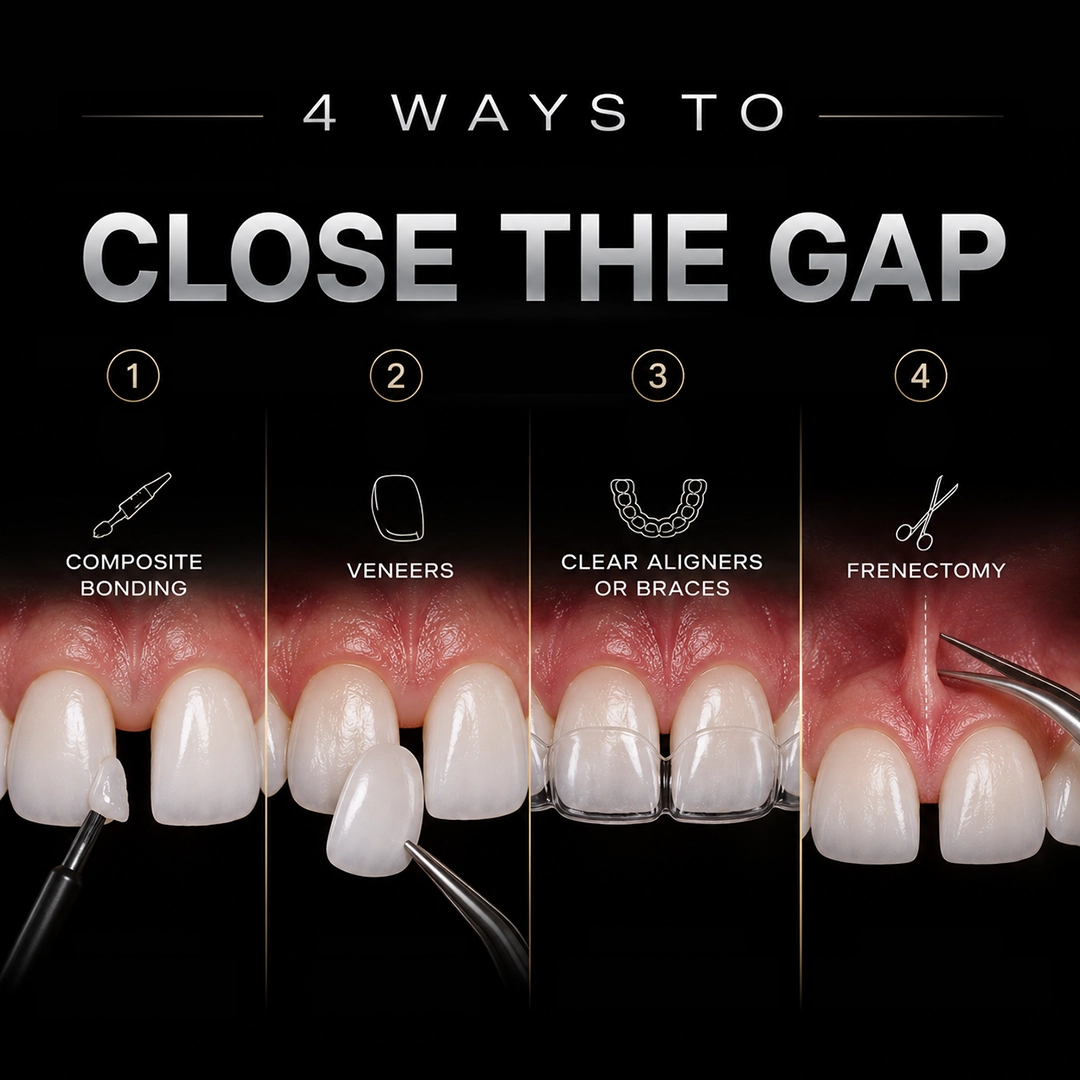
Closing a gap between teeth relies on matching the method to the cause. Composite bonding or veneers reshape the teeth. Clear aligners or braces move them while a frenectomy releases a thick frenum. The right route depends on the gap’s size and on why it formed.
Composite bonding adds tooth-coloured resin in a single visit and clinical studies show injectable and direct composite bonding closes a diastema predictably without removing enamel (Rathod et al., 2024; Manauta et al., 2022). Veneers cover the front surface for a longer reshape but prepare a little enamel first so our guide to how long veneers last sets realistic timelines and typical veneers before and after results show what closure looks like. Clear aligners work well for a small, isolated gap but they are not suitable for spacing driven by active gum disease because moving teeth through infected bone accelerates the loss. A laser frenectomy releases an oversized frenum with good soft-tissue outcomes (Dioguardi et al., 2023). A missing or damaged tooth beside the gap may need an implant or a full ceramic crown restoration. The table below sets realistic expectations for each route.
| Closure option | Best suited for | Reversibility | Typical timeframe |
|—|—|—|—|
| Composite bonding | Small to moderate gaps | Reversible, no enamel removed | Single visit |
| Veneers | Small gaps plus reshaping | Irreversible, enamel prepared | 2 to 3 weeks |
| Clear aligners or braces | True tooth movement, larger gaps | Movement holds only with a retainer | 6 to 18 months |
| Frenectomy | Oversized labial frenum | Surgical, permanent | One procedure plus closure |
Bottom line: bonding and veneers change how the gap looks while aligners actually move the teeth. Our team previews any change with a digital smile design preview technology session before committing and a wider reshape is sometimes planned as a complete Hollywood Smile makeover once the bite is stable.
Book a free online smile assessment
Can You Reduce a Gap Between Teeth Naturally at Home?
You cannot safely close gap teeth at home and DIY tricks such as elastic gap bands can seriously damage your teeth. No toothpaste, tongue exercise or mail-order band moves tooth roots the way controlled orthodontic force does and home banding has caused gum injury and tooth loss.
Search results promising to reduce a gap between teeth naturally at home usually point to elastic bands looped around the two front teeth. The band slides up the root and cuts off the blood supply, which can push a tooth out entirely so our clinicians ask patients never to try it. What genuinely helps at home is prevention rather than closure: twice-daily brushing and flossing, plus regular checkups, protect the gums; healthy gums stop a diastema opening through bone loss. To close an existing gap safely, a dentist-planned result, explained in the truth about Turkey teeth, keeps enamel removal to a minimum.
Do Gap Teeth Differ in Children and Adults?
In children a gap between the front teeth is often a normal stage that closes as the adult teeth arrive. In grown patients the same diastema is stable and shifts only with treatment. A visible gap in a young child’s smile rarely needs action before the permanent teeth erupt.
Orthodontists suggest a first evaluation around age 7 when early spacing is visible and the jaw is still developing so a habit or frenum issue can be caught before the adult teeth settle. Adult jaws no longer grow so a diastema is corrected by moving or restoring the teeth. One point matters at every age: a closed gap tends to reopen without retention and long term studies show a midline diastema can relapse when the teeth are not held with a retainer or a bonded wire (Edwards, 1993). For that reason our plans always include a retention stage whether the gap was closed with bonded resin or with clear aligners.
International Plus combines official Ministry of Health authorization, a 4.8/5 rating from 5,504+ verified reviews and more than 200,000 patients treated from over 140 countries, giving cosmetic and restorative dentistry in Istanbul a credible, verifiable home. Whether you keep your gap teeth or decide to close them, individual results vary. A personalised consultation confirms what is safe for your smile.
Contact our team to plan your smile assessment
Frequently Asked Questions
How do I fix a gap between my front teeth?
A gap between the front teeth can be closed with composite bonding or veneers, which reshape the teeth or with clear aligners and braces, which move them together. If an oversized frenum or a missing tooth is the cause, a frenectomy, implant or bridge may be needed first. A dentist matches the method to the cause.
Can gap teeth close on their own?
In children, a gap between the baby or newly erupting front teeth often closes on its own once the permanent teeth come through, which is why dentists treat early spacing as normal. In adults the jaws no longer grow so a diastema between permanent teeth rarely closes without treatment.
Is it safe to close a teeth gap at home?
No. Elastic gap bands and other DIY methods sold online can slide under the gum, cut off the tooth’s blood supply and cause permanent damage or tooth loss. Only controlled treatment by a dentist moves or restores teeth safely so any gap closure should be planned after a professional examination.
How much does teeth gap filling cost?
Cost depends on the treatment method on how many teeth are involved, plus the underlying cause so no single figure fits every case. The most affordable route is usually composite bonding. Veneers cost more while orthodontic closure with aligners or braces sits higher again. A consultation with clear records gives an accurate, individual quote.
Do gaps come back after treatment?
They can. A closed diastema tends to reopen if the teeth are not retained because the tissues that held the original space still exert pressure. Long term studies show relapse is common without retention so a retainer or a discreet bonded wire is used to keep the result stable after any closure.
Reviewed by Dr. Eren Gülbahar
References
- Abraham R, Kamath G. Dent Update. 2014. PMID: 25073229
- Lombardo G, et al. Eur J Paediatr Dent. 2020. PMID: 32567942
- Tadros S, et al. Int J Pediatr Otorhinolaryngol. 2022. PMID: 35248905
- Rathod P, et al. Cureus. 2024. PMC11162272
- Manauta J, et al. Int J Esthet Dent. 2022. PMID: 36426611
- Dioguardi M, et al. Int J Dent. 2023. PMC10164919
- Edwards JG. Dent Clin North Am. 1993. PMID: 8477865
Follow us on Social Media
internationalplusofficial
internationalplus
internationalplusdental
This content is written, reviewed, and approved by the International Plus Medical Review Board to ensure clinical accuracy and adherence to strict editorial standards. All medical information is regularly monitored, audited and updated in light of the latest scientific advancements.
However the information provided here is for general informational purposes only and cannot be used for self diagnosis or making individual health interpretations. Results of medical treatments depend on individual anatomy and the unique healing process of each patient. This information should not replace a personal consultation with a qualified healthcare professional. To understand the best options for your specific needs and to receive a personalized treatment plan, we invite you to book a free consultation with the expert medical team at International Plus.

I am a healthcare professional with over 4 years of experience in dentistry, specializing in prosthetic dental treatment and implant-based applications. Since 2024, I have been serving as chief physician, leading clinical management, team coordination, and international patient processes. With my B2-level English proficiency, I am able to communicate effectively with international patients. I am a patient-centered, innovative, and solution-oriented dentist who prioritizes patient satisfaction.