

Composite veneers are thin layers of tooth colored resin that a dentist sculpts directly onto the front of a tooth in one appointment without grinding away healthy enamel. For patients weighing a first step into cosmetic dentistry, composite veneers offer a reversible, lower cost way to reshape and brighten teeth. This guide explains what the resin can and cannot do, how the additive technique differs from porcelain, who suits it and how long results realistically hold, drawing on current research and cases treated at International Plus in Istanbul.
Key Takeaways
- Composite veneers are applied in a single visit using additive resin so little or no natural enamel is removed and the treatment stays largely reversible.
- Pooled clinical data put composite veneer survival near 88% over roughly two to eight years (Lim et al., 2023), shorter than porcelain but repairable at the chair.
- Resin absorbs pigment from coffee and other dark drinks so the material needs periodic polishing to keep its shade (Qaraghuli et al., 2022).
- Composite suits single tooth corrections and minor chips while heavy grinders and full makeovers often do better with porcelain.
- At International Plus, a Diagnostic Council reviews each smile with a TRIOS 5 scan before recommending composite or porcelain.
What Are Composite Veneers?
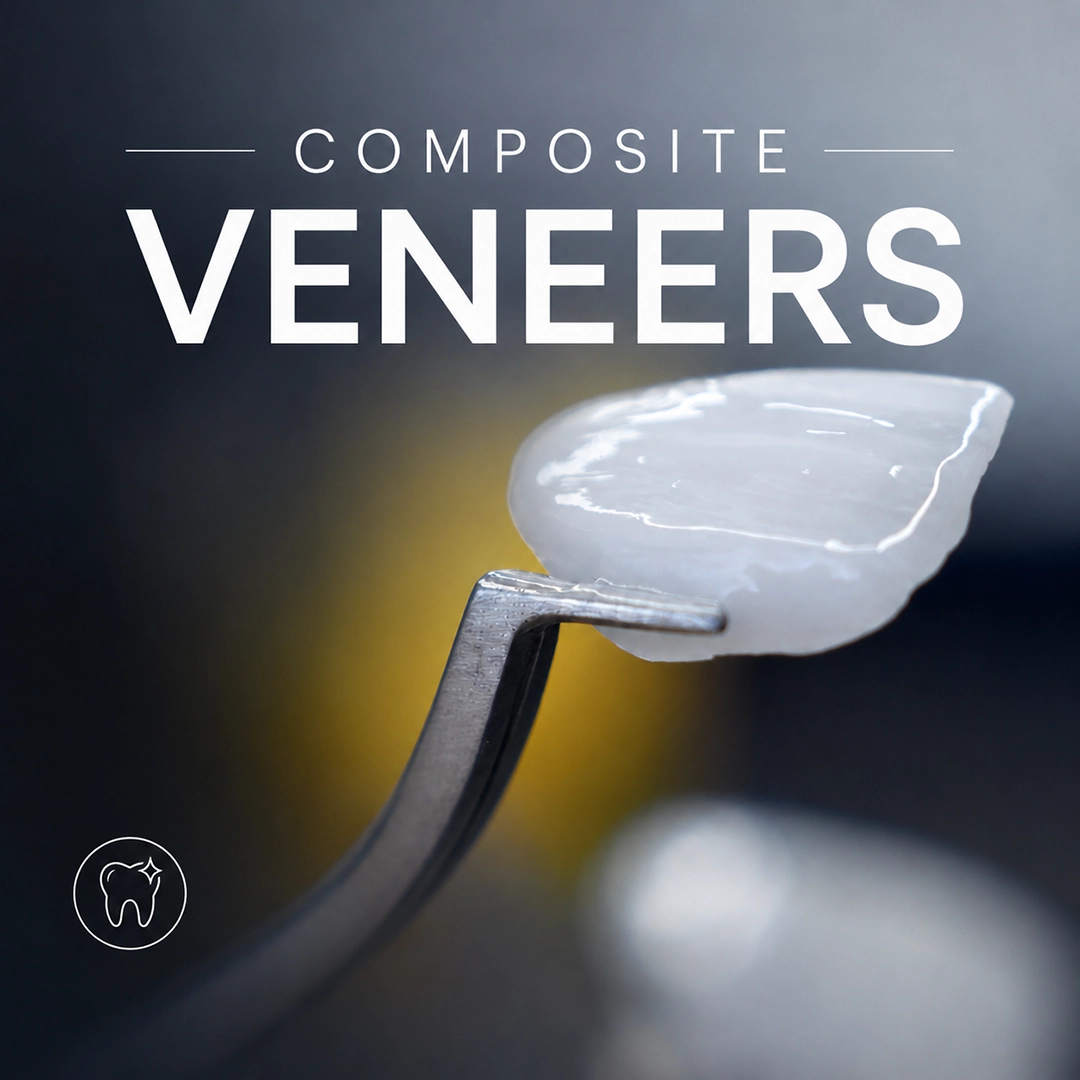
Composite veneers are custom layers of dental resin bonded directly onto the visible surface of a tooth to correct its shape and shade or close small gaps. Unlike laboratory made ceramic, the resin is built up freehand by the dentist inside the mouth, hardened with a curing light and polished in the same appointment. Because the method is additive, most cases need little or no enamel reduction, which keeps the natural tooth intact and the change largely reversible. A minimal intervention review of anterior veneers in 2021 framed this conservation of enamel as a central clinical advantage of direct resin work (Araujo et al., 2021). The finish depends heavily on the operator since layering and polishing both happen by hand rather than in a milling machine. At International Plus, each case is planned tooth by tooth so the resin follows each patient’s own enamel contour instead of a generic smile template, a habit that keeps the result proportional to the face.
How Are Composite Veneers Applied in a Single Visit?
The application of composite veneers is a single visit, chairside procedure that usually takes one to two hours for several front teeth. The dentist cleans the enamel, selects resin shades, then layers and cures the material before shaping and polishing the surface to a natural luster. No temporary veneers and no laboratory wait are involved because the artistry happens directly on the tooth. Careful layering matters: a 2021 technical review of the direct and indirect resin technique stressed that shade blending and surface polish drive both esthetics and stain resistance in resin restorations (Fahl et al., 2021). Before a single layer is placed, our Diagnostic Council studies intraoral photographs and a TRIOS 5 digital scan and a digital smile design preview technology mockup lets the patient approve the planned shape first. This is the practical side of the “test drive your smile” approach that Dr. Eren Gülbahar applies across cosmetic cases so the finished result matches an agreed design rather than a surprise.
Composite Veneers vs Porcelain Veneers: What Is the Difference?
The core difference is that composite veneers are additive resin shaped in the mouth while porcelain veneers are milled ceramic bonded after some enamel is prepared. Composite is faster and reversible whereas porcelain is more stain resistant and longer lasting. A 10 year practice based evaluation published in 2022 tracked both ceramic and direct resin restorations and reported higher long term survival for ceramic with composite offering easier repair when small failures appeared (Mazzetti et al., 2022). Neither option is universally better and the right choice depends on the bite and the number of teeth that need work.
| Feature | Composite veneers | Porcelain veneers |
|—|—|—|
| Enamel preparation | Additive, little to none | Usually some enamel removed |
| Reversibility | Largely reversible | Not reversible |
| Typical lifespan | 5 to 8 years | 10 to 20 years |
| Stain resistance | Lower, absorbs pigment | High, glazed surface |
| Chairside repair | Easy to patch and polish | Usually needs a remake |
| Relative cost | Lower | Higher |
Bottom line: composite is the conservative, adjustable entry point while porcelain is the durable, stain resistant investment. In our practice we prefer direct composite for younger patients and single tooth corrections and reserve porcelain for full arch cases where stain resistance over many years matters most. Patients comparing options often read our guide to dental crowns vs veneers or ask about full ceramic crown restorations when a tooth is heavily damaged rather than simply discolored.
Who Is a Good Candidate for Composite Veneers?
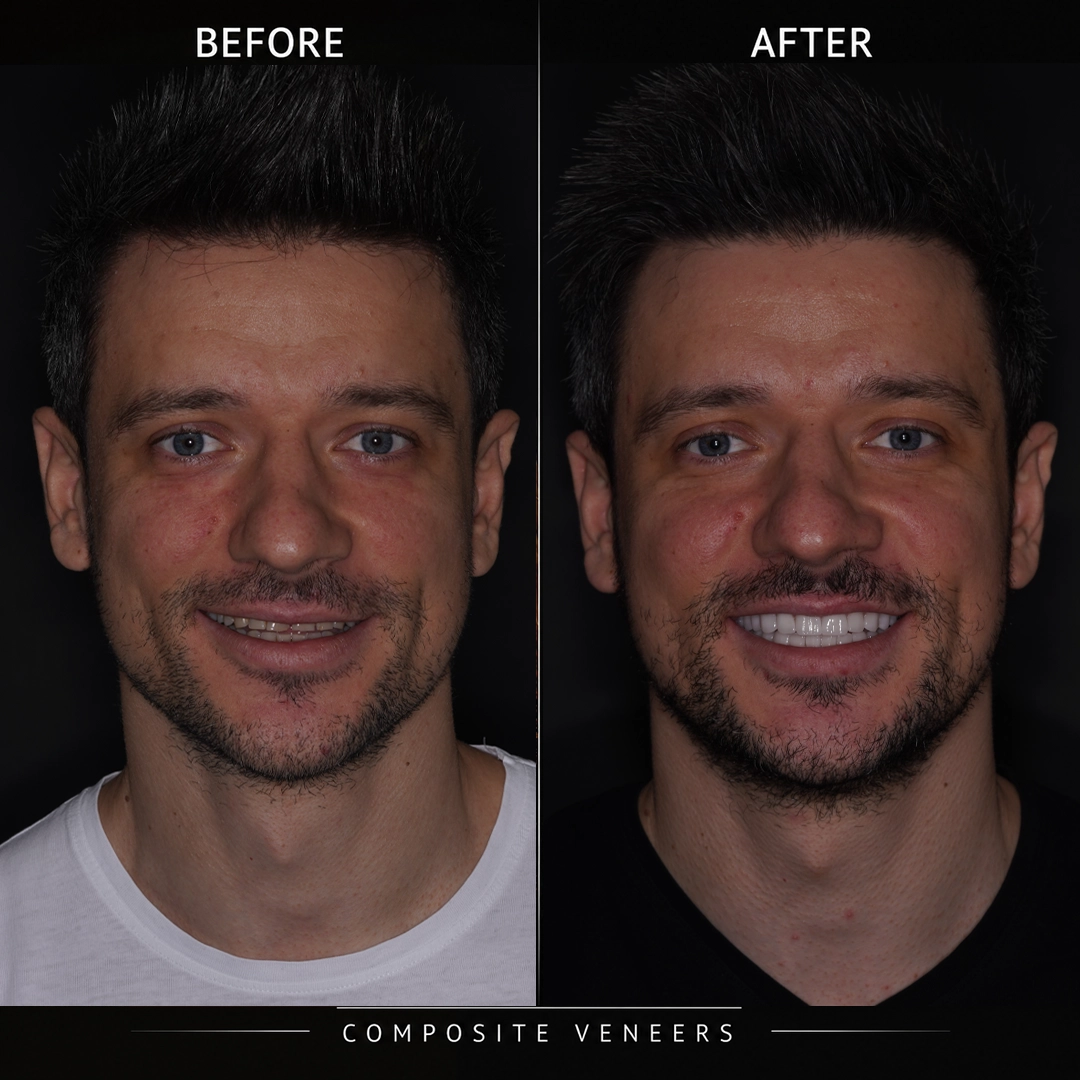
Good candidates for composite veneers have healthy gums and sound enamel with mostly cosmetic concerns such as small chips, minor gaps or slightly uneven edges. The additive nature suits patients who want a lower cost first step before committing to ceramic or who prioritise a safe and natural looking smile that keeps their own teeth. Composite resin works well for a reversible, budget conscious refresh but is not the stronger choice for severe grinders because the resin edge chips under repeated clenching load and fails earlier than porcelain. Patients with heavy bruxism, extensive decay or large old fillings often need crowns or porcelain instead, a decision our Diagnostic Council makes only after a full clinical and radiographic review. A conservative resin approach also fits many younger patients whose teeth are still maturing since minimal preparation preserves future options (Araujo et al., 2021). Individual results vary so a personalized consultation remains the only reliable way to confirm suitability. Some patients ultimately prefer a broader smile makeover that blends several treatments.
Learn more about composite veneer treatment at International Plus →
How Durable Are Composite Veneers and How Do They Stain?
Composite veneers typically last 5 to 8 years with a systematic review and meta-analysis reporting an overall survival rate near 88% across follow up periods of about two to eight years (Lim et al., 2023). The main reasons these restorations age are surface roughening and edge chipping rather than sudden failure. Staining is the everyday weakness because resin is more porous than glazed ceramic and absorbs pigment from coffee and red wine. An in vitro study in 2022 measured meaningful color shifts in composite restorative materials after repeated exposure to common staining drinks (Qaraghuli et al., 2022). Good habits slow this process: brushing twice daily and attending a professional polish restore much of the original shade. In the composite cases we review at International Plus, a repolish visit every twelve to eighteen months keeps the resin bright far longer than neglected restorations, which is a realistic maintenance expectation rather than a promise of permanence.
When Do Composite Veneers Need Replacing or Refreshing?
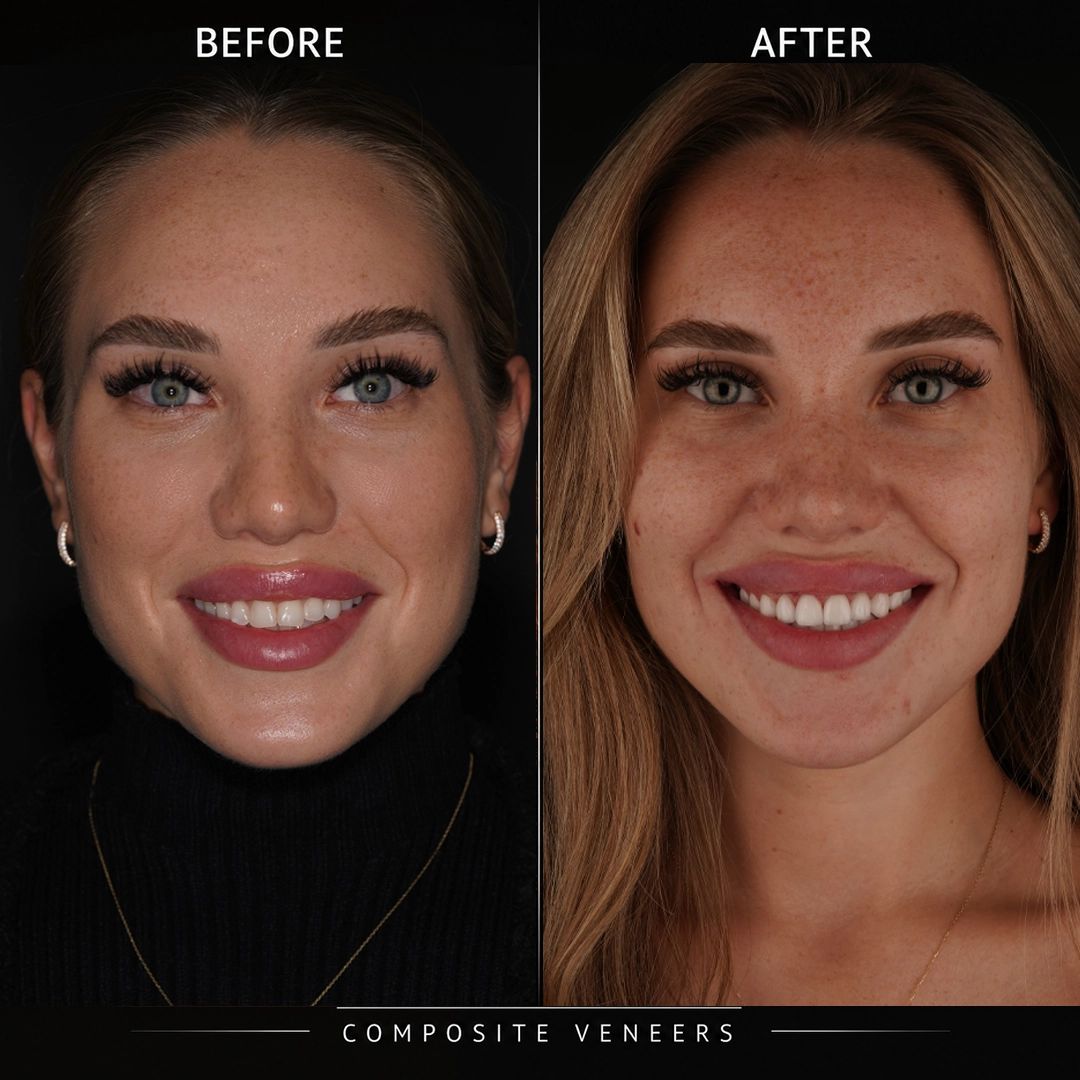
Composite veneers usually need refreshing or partial replacement when chips, worn edges or fixed staining no longer respond to polishing, often within the 5 to 8 year window. A systematic review of long term outcomes in direct anterior composite restorations found that most failures were repairable with fractures and discoloration the leading reasons for intervention rather than total loss (Shah et al., 2021). This repairability is a genuine advantage since a damaged section can often be rebonded chairside instead of remaking the whole veneer. Patients who want to understand realistic timelines across materials can read our detailed breakdown of how long veneers last or explore the planning behind a lasting result in the International Plus digital smile. Choosing an experienced provider matters, which is why International Plus combines official Ministry of Health authorization, a 4.8/5 rating from 5,504+ verified reviews and more than 200,000 patients from over 140 countries, giving composite veneers a credible, well documented home in Istanbul.
Book Your Free Consultation →
Frequently Asked Questions
Are composite veneers reversible?
Composite veneers are largely reversible because the additive technique removes little or no natural enamel. The resin is bonded onto the existing tooth surface so in many cases it can be adjusted or taken off with the underlying tooth kept intact though a professional evaluation confirms this for each patient.
How long do composite veneers last?
Composite veneers typically last 5 to 8 years with pooled survival near 88% in a 2023 meta-analysis. Lifespan depends on bite forces and daily oral habits. Regular polishing plus a night guard for grinders helps results reach the upper end of that range.
Do composite veneers stain over time?
Resin veneers can stain because composite is more porous than glazed porcelain and absorbs pigment from coffee and red wine. A professional polish restores much of the original shade and moderating deeply colored drinks slows discoloration between visits, keeping the surface looking natural for longer.
Are composite veneers cheaper than porcelain?
Composite veneers generally cost less than porcelain because the resin is placed directly in one visit with no laboratory fabrication. Exact costs vary with the number of teeth and clinical needs so a personalized consultation gives the most accurate estimate rather than a fixed published figure.
Can composite veneers be repaired if they chip?
Yes, one of the main advantages of composite resin is chairside repair. A small chip or worn edge can often be rebonded and polished in a short appointment without remaking the whole restoration, which makes composite a practical and adjustable cosmetic option.
Reviewed by Dr. Eren Gülbahar
Discover your smile options at International Plus →
References
- Fahl N Jr, et al. J Esthet Restor Dent. 2021. PMID: 33336852
- Araujo E, et al. J Adhes Dent. 2021. PMID: 33825424
- Lim TW, et al. J Evid Based Dent Pract. 2023. PMID: 38035903
- Shah YR, et al. J Conserv Dent. 2021. PMC8989165
- Mazzetti T, et al. Dent Mater. 2022. PMID: 35379471
- Qaraghuli AM, et al. J Contemp Dent Pract. 2022. PMID: 37073930
Follow us on Social Media
internationalplusofficial
internationalplus
internationalplusdental
This content is written, reviewed, and approved by the International Plus Medical Review Board to ensure clinical accuracy and adherence to strict editorial standards. All medical information is regularly monitored, audited and updated in light of the latest scientific advancements.
However the information provided here is for general informational purposes only and cannot be used for self diagnosis or making individual health interpretations. Results of medical treatments depend on individual anatomy and the unique healing process of each patient. This information should not replace a personal consultation with a qualified healthcare professional. To understand the best options for your specific needs and to receive a personalized treatment plan, we invite you to book a free consultation with the expert medical team at International Plus.

I am a healthcare professional with over 4 years of experience in dentistry, specializing in prosthetic dental treatment and implant-based applications. Since 2024, I have been serving as chief physician, leading clinical management, team coordination, and international patient processes. With my B2-level English proficiency, I am able to communicate effectively with international patients. I am a patient-centered, innovative, and solution-oriented dentist who prioritizes patient satisfaction.




