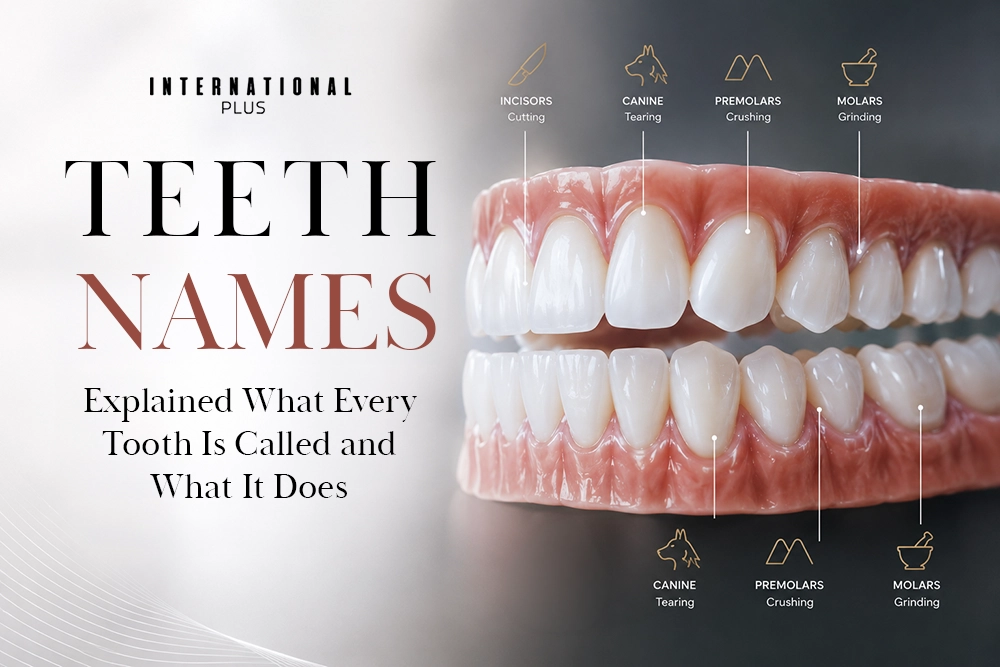
Turkey teeth implants are the right treatment when teeth are missing, not simply discoloured or crooked. The viral Turkey teeth trend usually shows veneers or crowns yet many UK patients travelling abroad actually need implants to replace lost teeth. This guide from our team at International Plus explains when Turkey teeth implants are needed, who is a suitable candidate, how the process works and the full arch options such as All on 4 and All on 6. Understanding the difference protects both your budget and your long term oral health before you book.
Key Takeaways
- Implants replace roots: Turkey teeth implants are titanium roots for missing teeth, whilst veneers only reshape existing teeth.
- High success: Modern implant survival sits above 95% at ten years when planning and bone are sound.
- Full arch options: All on 4 uses 4 implants per arch and All on 6 uses 6, each fixing a complete set of teeth.
- Cost context: Turkey offers a significant saving compared with UK private implant work but candidacy depends on bone, not price.
What Are Turkey Teeth Implants?
Turkey teeth implants are titanium roots placed in the jaw to replace missing teeth, not veneers bonded to existing teeth. Turkey teeth is a broad social media label so the phrase covers implants whenever teeth are lost rather than simply reshaped. An implant is a small titanium screw and osseointegration is the process by which an implant fuses with the jawbone over 3 to 6 months. Modern implant survival above 95% at ten years is well documented (Moraschini et al., 2015). At our clinic, patients missing one tooth or a full arch choose implants for a fixed, stable result. For instance, a single gap is restored with one dental implant and a crown. The first step is a CBCT scan. Next comes surgical placement using CBCT guided planning. Turkey teeth implants suit tooth loss, whilst veneers suit cosmetic reshaping of healthy teeth.

Turkey Teeth Implants vs Veneers: What Is the Difference?
Turkey teeth implants and veneers solve opposite problems and confusing the two leads to the wrong treatment. An implant replaces a missing tooth root, whilst a veneer is a thin shell bonded to an existing tooth for a cosmetic upgrade. A patient with gaps needs implants and a patient with intact but stained teeth needs veneers. Implant survival above 95% at ten years reflects a surgical solution (Smeets et al., 2016), not a cosmetic one. In our practice we prefer implants for tooth loss because a bridge or denture rarely matches a fixed root for stability. The trade off is time: an implant needs 3 to 6 months to fuse, whilst veneers finish in days. For instance, our team plans implants first, then adds veneers on neighbouring teeth if a natural shade match is wanted.
| Feature | Turkey teeth implants | Veneers |
| Purpose | Replace a missing tooth | Reshape an existing tooth |
| Best suited for | Gaps or full tooth loss | Stained, chipped or crooked teeth |
| Healing time | 3 to 6 months to fuse | A few days to bond |
| Longevity | Above 95% at ten years | 10 to 20 years for porcelain |
Who Needs Turkey Teeth Implants?
Turkey teeth implants are needed by patients missing one or more teeth or by patients wanting to replace a failing bridge or loose denture. A suitable candidate has enough jawbone, healthy gums and no untreated decay, confirmed on a CBCT scan. Smokers and patients with uncontrolled diabetes carry a higher failure risk so implant survival depends on health, not the destination (Bosshardt et al., 2017). At our clinic, roughly 4 in 10 dental tourists arrive expecting veneers but actually need implants after assessment. For instance, one patient with 6 missing lower teeth was restored with a fixed bridge on implants. The first stage is a bone and gum review. Next, any grafting is planned before surgery. These implants suit real tooth loss and honest candidacy is checked before travel, a point our dental implants in Turkey patient guide sets out.

The Turkey Teeth Implants Process Step by Step
The Turkey teeth implants process follows a clear medical sequence and rushing any stage raises the failure risk. First, a CBCT scan and digital plan map bone volume and nerve position. Then the implant is placed under local anaesthetic and osseointegration fuses the titanium to bone over 3 to 6 months (Ogawa et al., 2022). After healing, an abutment and crown complete the tooth. At our clinic, our team often fits a temporary restoration so patients are not left with a visible gap. For instance, a two visit plan places implants on the first trip and fits final crowns on the second. The first visit handles surgery. The next handles the permanent teeth. Individual results may vary yet a staged implant plan protects long term success far better than a single rushed appointment.
Full Arch Options: All on 4 and All on 6
Full arch Turkey teeth implants replace a complete set of teeth using a small number of implants and two designs dominate. All on 4 anchors a fixed bridge on 4 implants per arch, whilst All on 6 uses 6 implants for extra support. Both restore a full smile and give high patient satisfaction (Gonçalves et al., 2022). In our practice we prefer All on four for adequate bone and All on 6 where bite forces or bone volume call for more support. The trade off is clear: All on 4 needs less bone and lowers cost but All on 6 spreads heavy chewing load better. For instance, our team selects All on 6 for patients with strong grinding habits. The first step is a 3D bone study.
| Option | Implants per arch | Best suited for |
| All on 4 | 4 implants | Adequate bone, full arch replacement |
| All on 6 | 6 implants | More bone support, heavier bite load |
Bottom line: All on 4 suits most full arch cases, whilst All on 6 adds support for higher chewing forces.

How Our Clinic Plans Turkey Teeth Implants
Safe Turkey teeth implants start with diagnosis and imaging, not with surgery. At International Plus, our Diagnostic Council reviews every implant plan on a CBCT scan before any surgery is booked, checking bone volume, nerve position and gum health. Guided placement improves accuracy and modern implant survival stays above 95% at ten years with sound planning (Uesugi et al., 2024). Restorations are produced in our in house laboratory for a precise fit. In our practice we prefer to graft bone first where volume is low because an implant placed in thin bone fails early. For instance, our team stages a sinus lift before upper implants when needed. The first step is the 3D plan, previewed with digital smile design. Then surgery follows the guide. Individual results may vary yet a methodical plan gives Turkey teeth implants the best long term outcome.
Final Word: Are Turkey Teeth Implants Right for You?
Turkey teeth implants are right for you when teeth are missing, not merely stained and the decision rests on bone and health rather than a viral trend. Implants replace lost roots with above 95% survival at ten years in well planned cases (Moraschini et al., 2015), whilst veneers only reshape healthy teeth. At International Plus, our team treats every case as a medical decision, backed by 5,504 verified reviews at 4.8 out of 5 and more than 200,000 international patients. Turkey offers a significant saving compared with UK private dentistry yet candidacy is confirmed by a CBCT scan, not a price list. Individual results may vary but honest planning gives Turkey teeth implants a strong, lasting result as our guide to the truth about Turkey teeth explains.

Frequently Asked Questions
When do Turkey teeth mean implants instead of veneers?
Turkey teeth mean implants when teeth are missing or a bridge or denture is failing rather than simply stained or crooked. Veneers only reshape existing teeth. If gaps are present, Turkey teeth implants replace the missing root with a titanium screw, giving a fixed, stable result that a veneer cannot provide.
How long do Turkey teeth implants take?
Turkey teeth implants usually take 3 to 6 months from placement to final crown because osseointegration must fuse the titanium to the jawbone. Many clinics use a two visit plan: surgery on the first trip and permanent teeth on the second. A temporary restoration can fill the gap while healing continues.
Are Turkey teeth implants safe and successful?
Turkey teeth implants are safe and successful when planning and bone are sound with modern survival above 95% at ten years. Safety depends on a proper CBCT assessment, healthy gums and adequate bone, not on the destination. Smoking and uncontrolled diabetes raise the risk so honest candidacy checks matter before treatment.
What is the difference between All on 4 and All on 6?
All on 4 anchors a fixed full arch bridge on four implants, whilst All on 6 uses six implants for extra support. All on 4 needs less bone and lowers cost whereas All on 6 spreads heavy chewing forces better. A CBCT scan decides which full arch option suits your bone and bite.
Do Turkey teeth implants cost less than in the UK?
Turkey dental implants generally cost less than UK private implant work because of lower clinic and laboratory overheads, not lower quality. Exact prices vary with the number of implants, any grafting and the restoration chosen so a personalised estimate follows assessment rather than a fixed online figure.
Reviewed by Dr. Eren Gülbahar
References
- Moraschini V, et al. Int J Oral Maxillofac Surg. 2015. PMID: 25467739
- Smeets R, et al. Biomed Res Int. 2016. PMC4958483
- Bosshardt DD, et al. Periodontol 2000. 2017. PMID: 28000277
- Ogawa T, et al. J Prosthodont Res. 2022. PMID: 33692284
- Gonçalves GSY, et al. Clin Oral Investig. 2022. PMID: 34647147
- Uesugi T, et al. Bioengineering (Basel). 2024. PMC10968038
Follow us on Social Media
internationalplusofficial
internationalplus
internationalplusdental
This content is written, reviewed, and approved by the International Plus Medical Review Board to ensure clinical accuracy and adherence to strict editorial standards. All medical information is regularly monitored, audited and updated in light of the latest scientific advancements.
However the information provided here is for general informational purposes only and cannot be used for self diagnosis or making individual health interpretations. Results of medical treatments depend on individual anatomy and the unique healing process of each patient. This information should not replace a personal consultation with a qualified healthcare professional. To understand the best options for your specific needs and to receive a personalized treatment plan, we invite you to book a free consultation with the expert medical team at International Plus.

I am a healthcare professional with over 4 years of experience in dentistry, specializing in prosthetic dental treatment and implant-based applications. Since 2024, I have been serving as chief physician, leading clinical management, team coordination, and international patient processes. With my B2-level English proficiency, I am able to communicate effectively with international patients. I am a patient-centered, innovative, and solution-oriented dentist who prioritizes patient satisfaction.