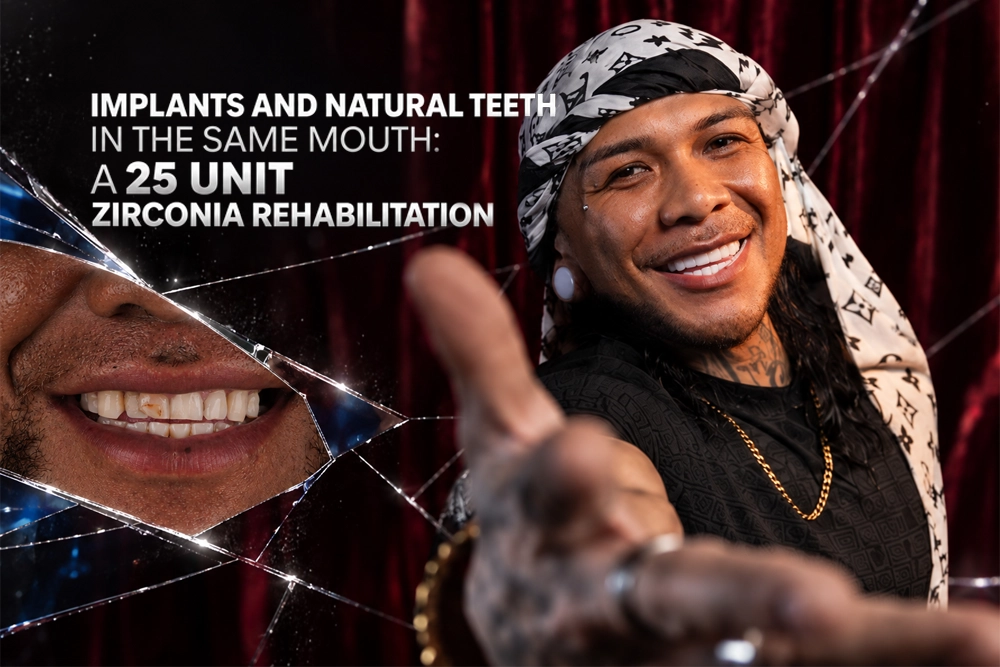
The internet loves a bright new smile and Rob’s became one of them. After his full mouth transformation, friends and followers online nicknamed his bold, confident new teeth the trivago smile, a nod to the famously bright grin of the Trivago advert that has become internet shorthand for a dramatic dental makeover. Behind the meme, however, was something the jokes never showed: a 52 year old man who could barely chew with advanced bone loss and a mouth full of failing teeth. This case study tells the real clinical story behind that viral smile, treated at International Plus, where more than 200,000 patients from 140+ countries have been treated since 2014.
Key Takeaways
- The challenge: At 52, Rob presented with severely mobile natural teeth, widespread alveoler bone loss in both jaws and a poor prognosis for every remaining tooth.
- The solution: A full mouth, implant supported rehabilitation with 12 implants, bilateral sinus lifting and fixed zirconia bridgework on both jaws.
- Technical highlights: Bilateral open sinus lifting and digital photogrammetry, with a titanium bar reinforced upper bridge finished in a natural OM3 shade, not the over bright look the meme is known for.
- The outcome: A stable bite and strong chewing function, plus a natural looking fixed smile that Rob was delighted with. Individual results may vary.
Rob’s Story: When a Smile Goes Viral
Rob arrived at our clinic tired of hiding his teeth. His natural teeth had become severely mobile, chewing was difficult and everyday eating had turned into a problem he could no longer ignore. What he wanted was simple: to eat properly again and to smile without embarrassment.
The nickname came later. Once his transformation was shared online, the internet reached for the reference it already knew and called it a trivago smile, linking his bright, confident result to the well known advert. It is worth being honest about that meme. Online, the phrase is often tied to the wider “Turkey teeth” conversation, where dramatic, uniformly white smiles are criticised for looking artificial. Rob’s case is a useful counterpoint because his teeth were not shaved down for cosmetics; they were already failing and the goal was to rebuild both health and appearance together.
Diagnosis and Treatment Planning
The clinical picture was clear from the first examination. A clinical assessment, a panoramic radiograph and a CBCT tomography scan together confirmed advanced alveoler bone loss across both jaws, the kind of gradual damage we also document in severe wear and tooth loss rehabilitations. With every remaining tooth carrying a poor prognosis, saving them was not a realistic option.
Every plan of this scope at International Plus is reviewed by our multidisciplinary Diagnostic Council, where surgical and prosthetic specialists agree the approach together rather than in isolation. For Rob, the council planned a complete, esthetic and functional full mouth dental implant rehabilitation. Because his upper jaw lacked sufficient bone height for implants, the plan included sinus augmentation before the implants could be placed. The aim was a fixed, long lasting result, not a quick cosmetic cover up.

The Surgical Phase: Rebuilding the Foundation
Surgery began by removing what could not be saved. All of the severely mobile, hopeless natural teeth were extracted atraumatically, a technique that removes teeth while preserving as much surrounding bone as possible. This careful removal protects the foundation the new smile would later depend on.
Because the upper jaw did not have enough bone volume, the team performed bilateral open sinus lifting, a procedure that gently raises the sinus membrane to create room for new bone in the upper back jaw. Managing the sinus membrane carefully during this step is directly linked to long term implant survival (Díaz-Olivares et al., 2021) and lateral window sinus augmentation is a well documented, predictable procedure in implant dentistry (Testori et al., 2019). A total of 12 implants were then placed, 6 in the upper jaw and 6 in the lower, each achieving sufficient primary stability, meaning the implant was firm enough at placement to heal reliably.
Rob then entered a healing period of around six months for osseointegration, the process where the jawbone fuses directly to the implant surfaces. This biological integration is what allows implants to carry a fixed bridge for years (Pieralli et al., 2017). For Rob, it meant a few months of patience between the surgery and the smile.
| Stage | What was done | Purpose |
| Extractions | Atraumatic removal of all hopeless teeth | Preserve surrounding bone |
| Sinus lifting | Bilateral open sinus augmentation | Create bone height for upper implants |
| Implant placement | 12 implants, 6 upper and 6 lower | A stable foundation for fixed teeth |
| Healing | About 6 months of osseointegration | Let bone fuse to the implants |
Bottom line: the foundation was rebuilt first because a lasting fixed smile depends on healthy bone and well integrated implants, not on appearance alone.
Wondering whether implants are possible with bone loss? You can reach our team directly on WhatsApp for a personalized evaluation.

Digital Design and the Final Restorations
Once the implants had integrated, Rob returned for the prosthetic phase. Clinical and radiographic checks confirmed the implants were fully integrated and multi-unit abutments, the connectors that link the implants to the bridge, were fitted. Digital impressions were then captured using scan flags with a Shining intraoral scanner together with an iCam iMetric photogrammetry system, a method that records the exact position of multiple implants with high accuracy for full arch work (Pozzi et al., 2025).
The restoration design accounted for Rob’s bone loss and soft tissue support. The upper jaw received a titanium bar reinforced zirconia bridge while the lower jaw received a screw retained zirconia bridge, an approach chosen for long term strength and durability. Titanium reinforced frameworks are a well documented option for full arch implant rehabilitations (Delucchi et al., 2021) and screw retained zirconia work shows strong survival in implant supported restorations (Pjetursson et al., 2021).
In the laboratory, a 12 unit zirconia restoration on a titanium bar was produced for the upper jaw and a 12 unit screw retained zirconia bridge for the lower, milled from high strength zirconia blocks on Redon systems. Here the contrast with the meme matters most: rather than the aggressively bright look the trivago smile is teased for online, Rob’s shade was chosen as a natural OM3, a lifelike tone rather than an artificial white. The bridges were fixed at the correct torque and the screw access channels were sealed with GC G-aenial composite.

The Result: A Real Smile Behind the Viral Name
The outcome was a fixed, stable and natural looking smile. Rob regained a functionally stable bite and strong chewing function and he was highly satisfied with both the comfort and the appearance of his new teeth. After struggling to eat for so long, simply being able to chew normally again was as meaningful to him as the way his smile looked.
Viral smiles are not new and the public fascination with famous transformations from debated celebrity cases like Jürgen Klopp’s teeth to everyday makeovers shared online, keeps the topic trending. What the “trivago smile” jokes miss is the clinical reality underneath: a full mouth reconstruction planned around health and function first. You can read more journeys like Nataliia’s full mouth transformation and this advanced sinus lift and zirconia rehabilitation in our case study archive. Individual results vary from patient to patient and every plan is tailored to the person.
Cases like Rob’s reflect the system behind the outcome: a Diagnostic Council that plans health first, backed by an in house digital and laboratory workflow and real surgical expertise for demanding bone loss cases. International Plus combines official Ministry of Health authorization, 5,504+ verified Google reviews at 4.8/5, 200,000+ international patients and premium implant systems, which is why patients seeking a genuine trivago smile makeover choose Istanbul with verifiable confidence.
Discover full mouth rehabilitation at International Plus → Book your free consultation

Frequently Asked Questions
What is a “trivago smile”?
A trivago smile is an informal, internet nickname for a bold, bright and confident dental makeover, referencing the well known Trivago advert. Online it is often linked to dramatic full mouth transformations. In a clinical setting, a natural shade and a health first plan matter far more than simply making teeth as white as possible.
Can you get dental implants with severe bone loss?
Yes in many cases. Severe bone loss often requires procedures such as sinus lifting or bone augmentation to rebuild enough volume before implants are placed. After a CBCT scan and a thorough assessment, a treatment plan is designed for your specific anatomy so implants can be placed with the stability needed for a fixed result.
What is bilateral sinus lifting?
Bilateral sinus lifting is a procedure that raises the sinus membrane on both sides of the upper jaw to create space for new bone. It is used when the upper back jaw lacks the height needed to hold implants. Careful handling of the sinus membrane during this step is closely linked to long term implant success.
How long does full mouth implant treatment take?
Full mouth implant rehabilitation is usually staged. After surgery, implants need roughly six months to fuse with the bone before the final fixed bridges are made. The exact timeline depends on healing whether procedures like sinus lifting are needed and your individual case, which is confirmed during your personalized consultation.
Are full mouth zirconia bridges natural looking?
Yes. High strength zirconia can be crafted in natural tooth shades, such as the OM3 tone used in this case rather than an artificial bright white. Combined with careful design around your facial features and bite, a well made zirconia bridge blends naturally and avoids the over uniform look that viral smiles are sometimes criticised for.
Reviewed by Dr. Şehrazat Artış
References
- Testori T, et al. Risk factors in lateral window sinus elevation surgery. Periodontol 2000. 2019. PMID 31407430
- Díaz-Olivares LA, et al. Management of Schneiderian membrane perforations during maxillary sinus floor augmentation: a systematic review and meta-analysis. Int J Implant Dent. 2021. PMC8273047
- Pieralli S, et al. Clinical Outcomes of Zirconia Dental Implants: A Systematic Review. J Dent Res. 2017. PMID 27625355
- Pozzi A, et al. Photogrammetry Versus Intraoral Scanning in Complete-Arch Digital Implant Impression: A Systematic Review and Meta-Analysis. Clin Implant Dent Relat Res. 2025. PMC12144927
- Delucchi F, et al. Framework Materials for full arch Implant-Supported Rehabilitations: A Systematic Review of Clinical Studies. Materials (Basel). 2021. PMC8231547
- Pjetursson BE, et al. A systematic review and meta-analysis evaluating the survival, failure and complication rates of all ceramic implant-supported single crowns. Clin Oral Implants Res. 2021. PMC9293296
Follow us on Social Media
internationalplusofficial
internationalplus
internationalplusdental
This content is written, reviewed, and approved by the International Plus Medical Review Board to ensure clinical accuracy and adherence to strict editorial standards. All medical information is regularly monitored, audited and updated in light of the latest scientific advancements.
However the information provided here is for general informational purposes only and cannot be used for self diagnosis or making individual health interpretations. Results of medical treatments depend on individual anatomy and the unique healing process of each patient. This information should not replace a personal consultation with a qualified healthcare professional. To understand the best options for your specific needs and to receive a personalized treatment plan, we invite you to book a free consultation with the expert medical team at International Plus.
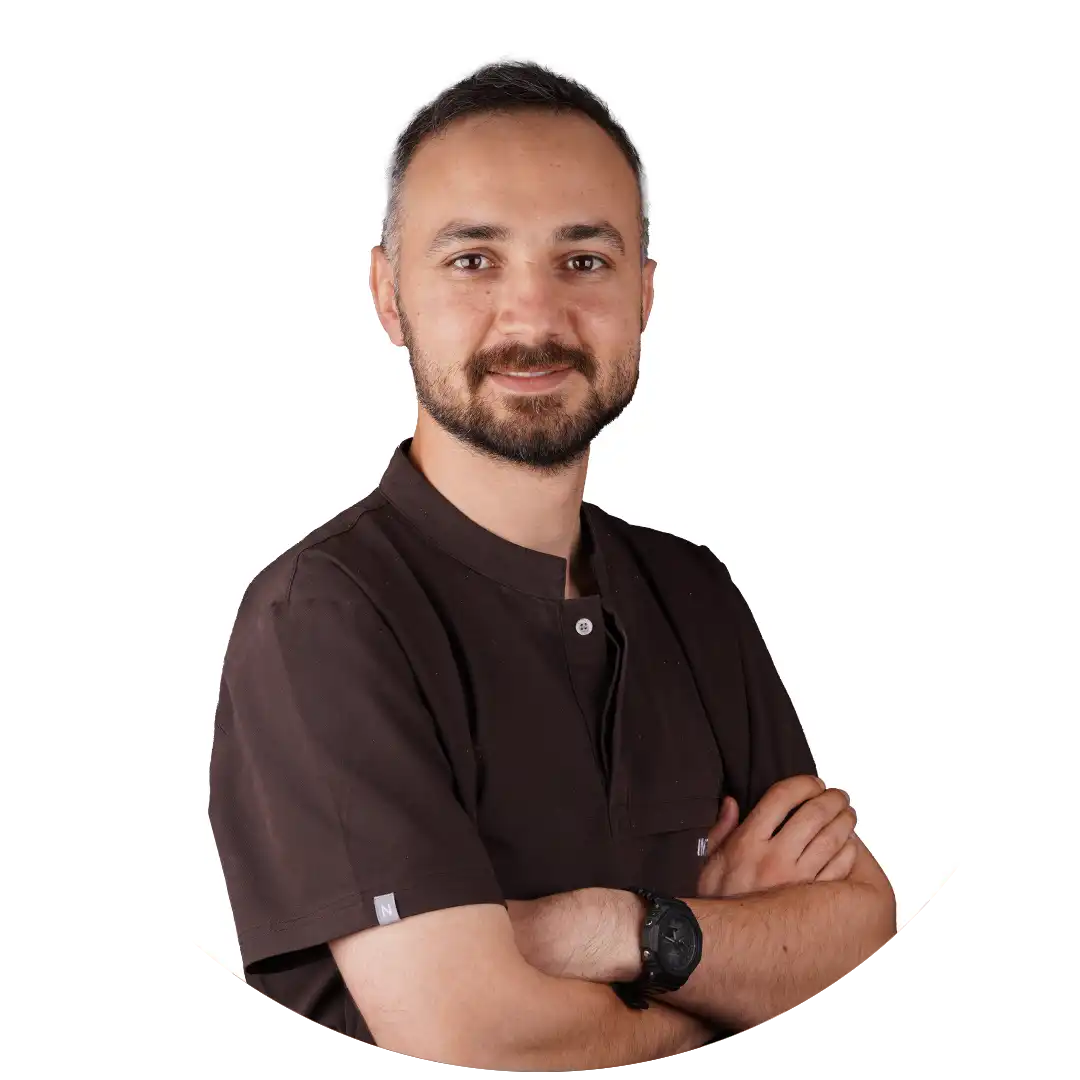
Dt. Zekeriya Talmaç is a distinguished Cosmetic Dentist who graduated from the Istanbul Yeni Yüzyıl University Faculty of Dentistry in 2021. Following his graduation, he built a robust career in the private healthcare sector, gaining extensive clinical experience by managing complex dental cases in high-paced environments.