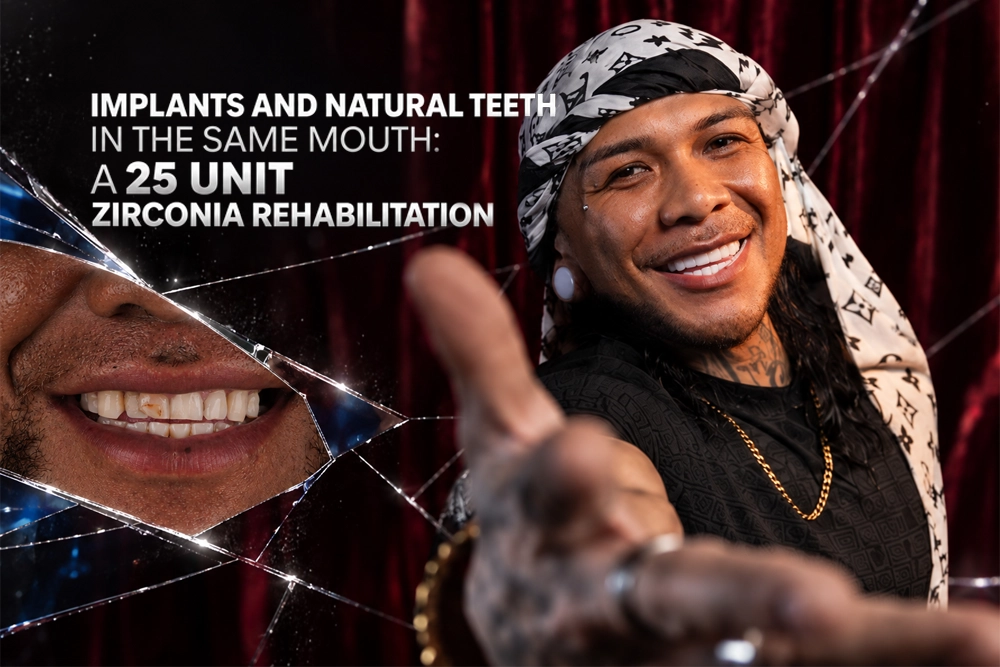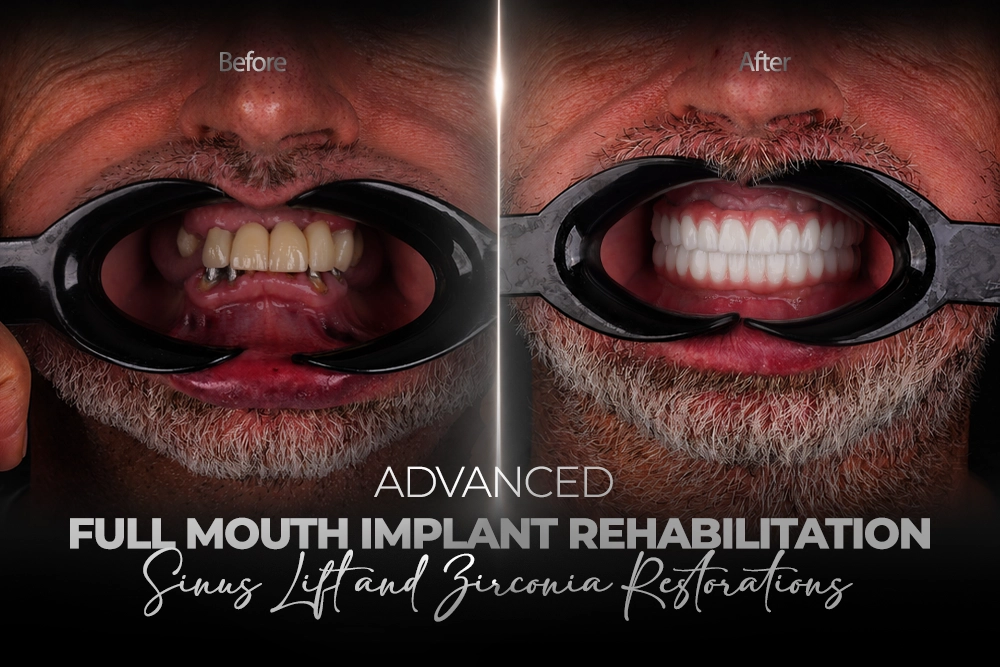
At International Plus in Istanbul, some cases demand every tool in our clinical arsenal. This case study follows Ryszard, a 57 year old patient from the United Kingdom who arrived with a combination of failing dental crowns, compromised root canal treatments, and the challenge of a posterior implant that had reached the end of its functional life. His rehabilitation journey highlights how experienced clinicians, advanced surgical techniques including sinus lift surgery, and our 100 percent digital dentistry workflow come together to deliver lasting results for international patients.
Comprehensive Dental Assessment for Our UK Patient
Ryszard’s decision to travel from the United Kingdom to Istanbul reflected a trend we see frequently at International Plus: patients with complex histories of previous dental work who are seeking a comprehensive solution rather than another temporary repair. Over the years, his teeth had received multiple restorations: crowns in both the upper and lower jaws, root canal treatments performed at different times, and older dental implants placed years earlier. While each intervention had served its purpose at the time, the accumulated effect had reached a clinical turning point.
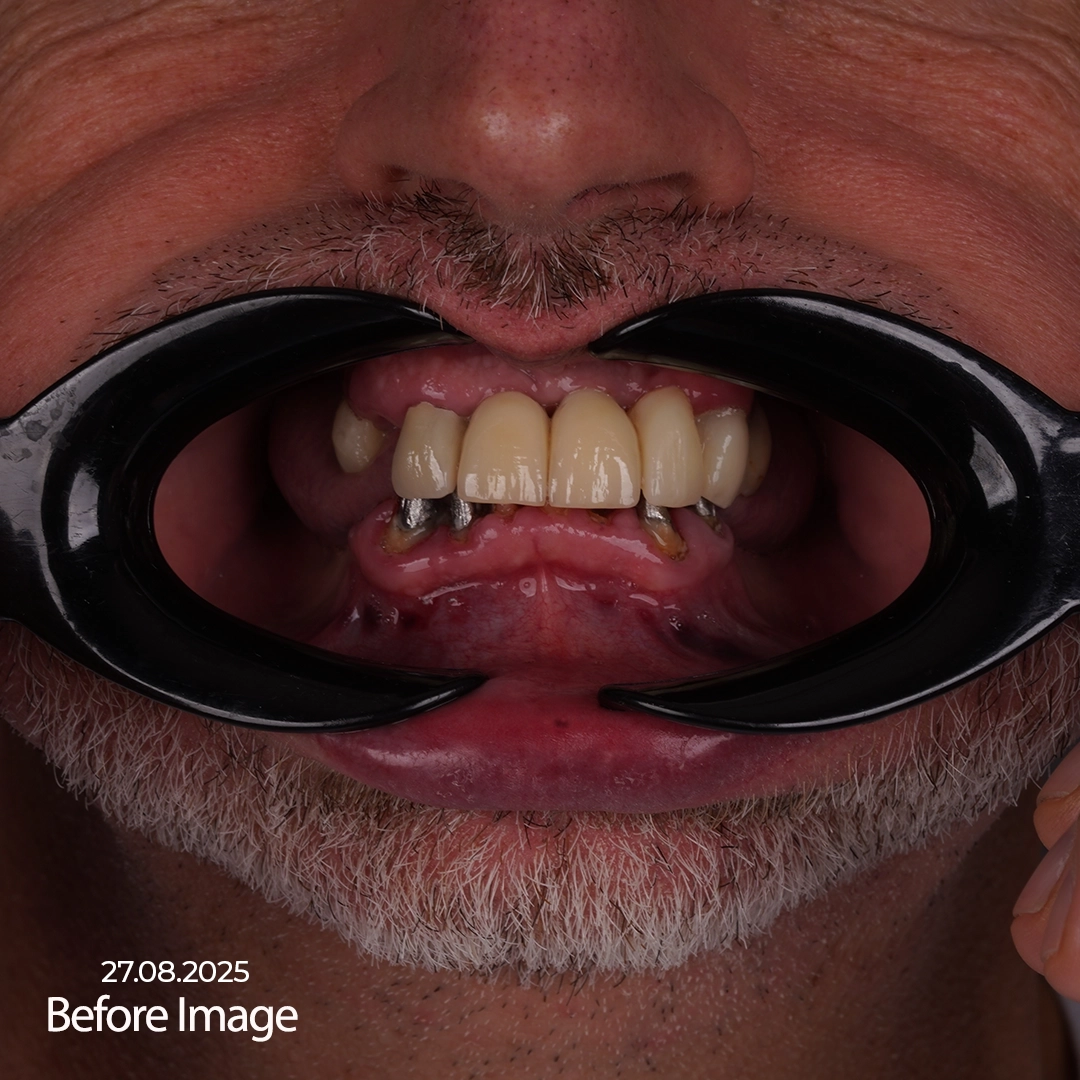
Our clinical and radiographic evaluation revealed the extent of the challenge. The lower jaw teeth showed unfavorable long term prognosis (the predicted outcome of a tooth remaining functional over time) from both periodontal and structural perspectives. More concerning, these teeth risked becoming potential infection sources (foci) that could compromise any future implant based rehabilitation. Meanwhile, some of his upper teeth showed fractures and signs of active dental infection, while his older restorations could no longer protect the remaining tooth structure effectively.
Ryszard’s case illustrates a pattern common to patients seeking full mouth dental rehabilitation in Turkey: a cumulative history of dental work reaching the point where a unified, comprehensive plan is the only path to long term stability. Istanbul has earned its reputation among international patients precisely because clinics like International Plus can address this complexity within a single coordinated treatment, supported by Turkey’s developed medical infrastructure and the accessibility of advanced specialist care.
Managing Failing Implants and Severe Bone Loss
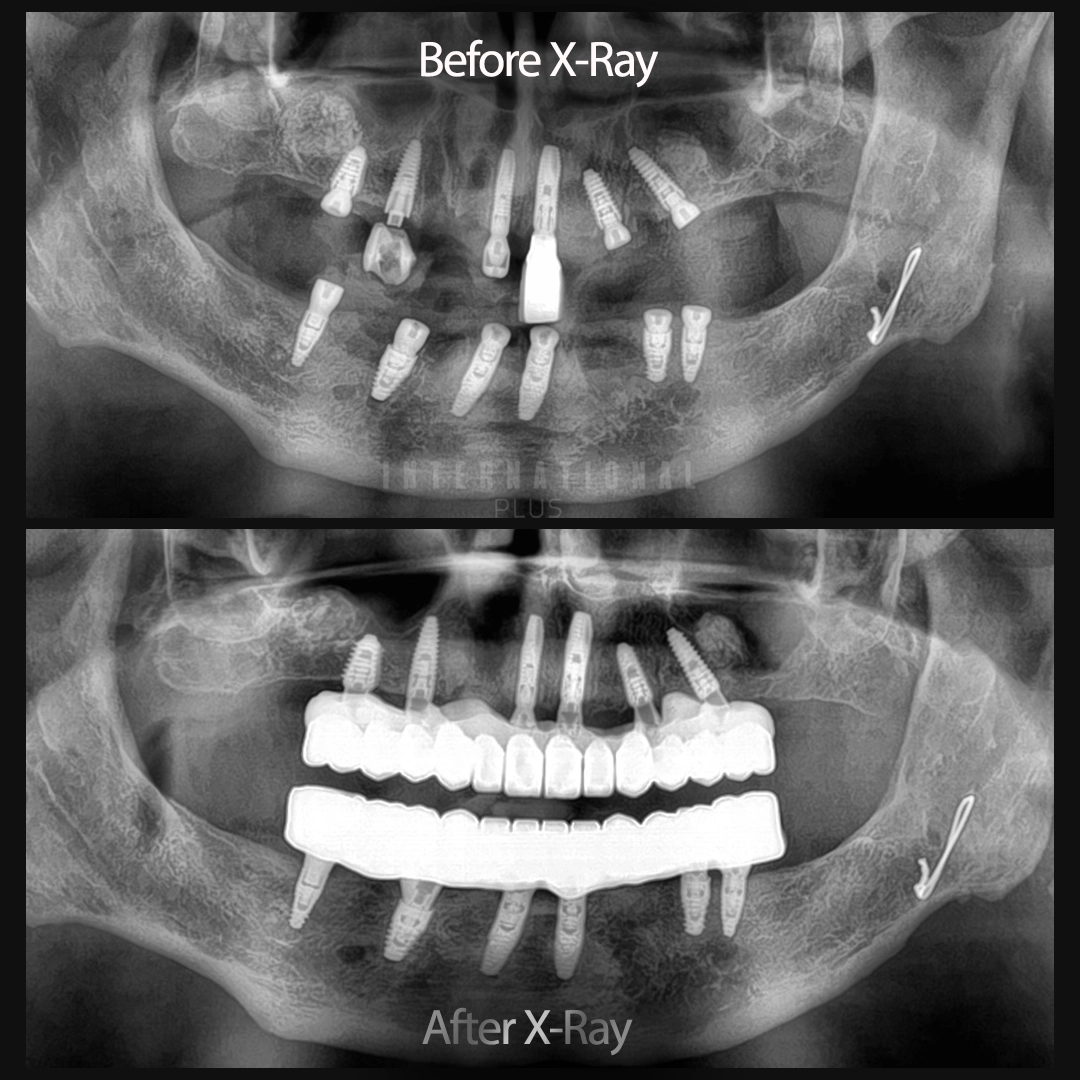
A guiding principle at International Plus is that no healthy tissue should ever be sacrificed. When Ryszard’s case was reviewed by our multidisciplinary team, the treatment plan preserved every structure capable of providing reliable long term service. In his upper jaw, three previously placed implants in positions 11, 21, and 14 were assessed as stable and well integrated with the surrounding bone. The decision was clear: these implants would be kept and incorporated into his new restoration plan.
The situation was different in the left posterior region. Here, an older implant had reached the end of its functional life and showed signs that it could no longer reliably support a restoration. Failing dental implant removal is a specialized procedure that requires precision to protect the surrounding bone from unnecessary trauma. Our surgical team carefully removed the compromised implant while preserving as much bone as possible for future reconstruction.
In the lower jaw, the decision was more definitive. Every remaining tooth showed either active infection, structural damage, or poor periodontal support, and keeping any of them would have placed the entire rehabilitation at risk. A total lower extraction was planned, not because we default to aggressive treatment but because thorough dental infection control is the foundation of any successful full mouth implant case. Ryszard’s complete clinical picture required this decisive approach to ensure a healthy platform for his new restorations.
Advanced Sinus Lift and Bone Grafting Procedures
The most technically demanding part of Ryszard’s surgical phase addressed the posterior upper jaw. 3D tomography imaging revealed that the sinus floor (the bony boundary between the upper jaw and the maxillary sinus cavity) had dropped significantly lower than it should be in healthy anatomy. This sinus pneumatization is a common consequence of long term tooth loss in the upper back region, and it creates a fundamental problem: without adequate bone height, implants cannot be safely placed.
The solution was sinus lift surgery combined with dental bone grafting. In this procedure, the sinus membrane is carefully elevated and the space beneath it is filled with bone graft material (a specialized substance that stimulates new bone formation). Over the following months, this graft matures into dense native bone capable of supporting implants. For Ryszard, this meant that upper jaw implants became possible in positions where conventional approaches would have been limited. The precision of this surgical step directly determined the long term success of his entire upper arch rehabilitation.
Strategic Implant Placement: Bego and Medigma Systems
Once healing from the extractions and sinus lift had progressed appropriately, new implants were placed in the planned positions. At International Plus, implant selection is never made with a one size fits all approach. Ryszard’s case was evaluated based on his specific bone quality, prosthetic requirements, and the biomechanical demands of each jaw, leading to a customized combination of premium systems.
For the upper jaw, the Medigma implant system was selected. Medigma implants are known for their favorable performance in cases involving grafted bone and varied bone density, making them an excellent match for Ryszard’s anatomy after the sinus lift procedure. In the lower jaw, where total edentulism (complete absence of teeth) required a full arch implant supported restoration, Bego implants were chosen. The Bego implant system has an established record in full mouth implant cases, offering the biomechanical reliability needed when every implant must contribute to the overall stability of the final bridge.
At International Plus, we work with a comprehensive range of premium implant brands including Megagen, BEGO, Implant Swiss, Implance, Straumann, Nobel Biocare, and Nucleoss. Each case receives the system best suited to its specific clinical demands. This individualized approach is one of the reasons international patients choose to travel for treatment, knowing that their anatomy drives the decisions rather than a standardized protocol.
Toronto Zirconia Bridges and Screw-Retained Restorations
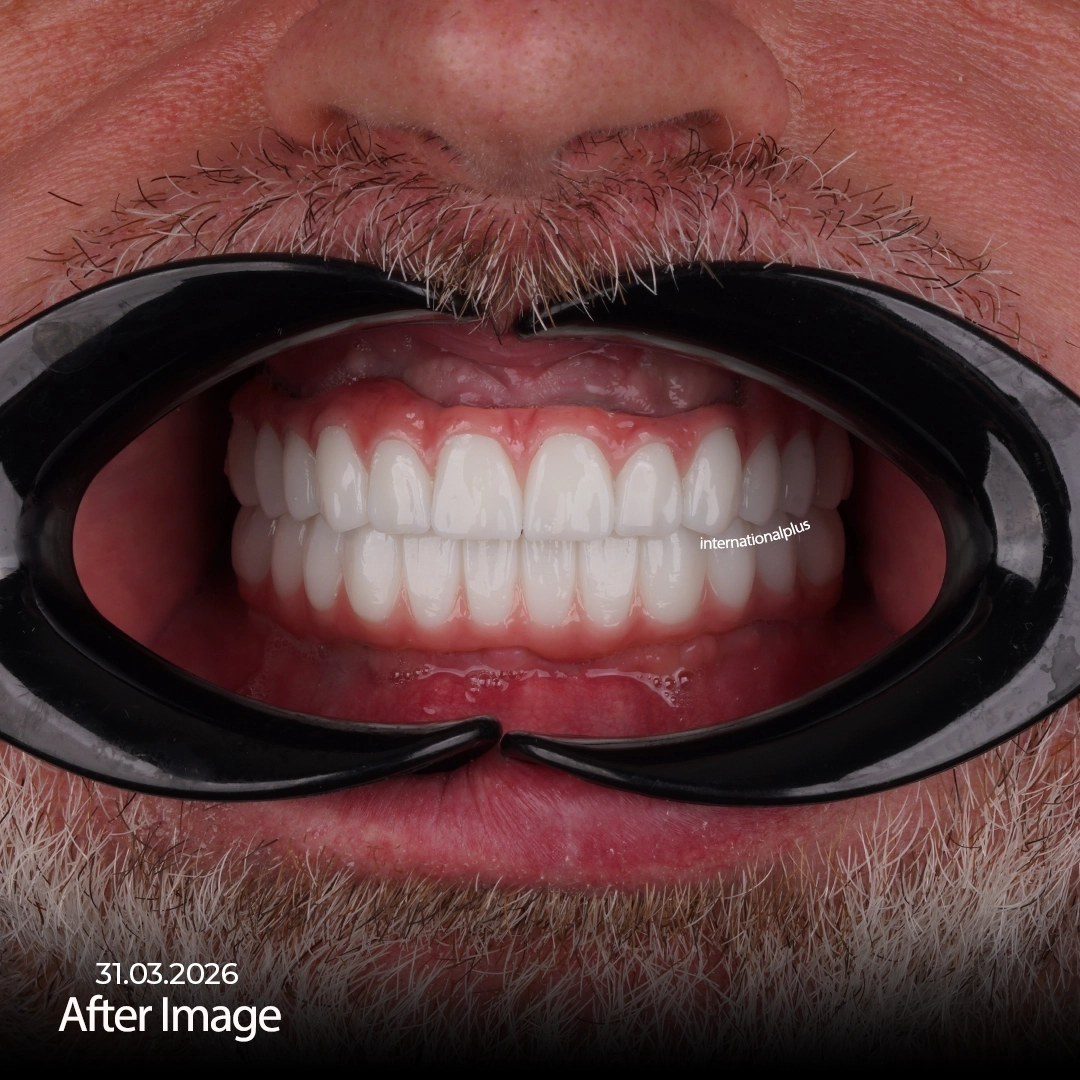
The prosthetic phase of Ryszard’s treatment demanded sophisticated design choices for each jaw. For the lower jaw, where a full arch rehabilitation was required, our prosthetic team selected screw retained zirconium restorations (restorations anchored to implants using small screws rather than dental cement). Screw retained implant crowns offer significant clinical advantages: they eliminate the risk of excess cement causing peri implant infection, provide exceptional stability, and allow the restoration to be removed for maintenance whenever necessary.
For the upper jaw, a Toronto zirconia bridge was chosen. The Toronto bridge is a full arch implant supported restoration (a complete set of teeth attached to multiple implants) that has become one of the gold standards for comprehensive upper jaw rehabilitation. It allows precise control over tooth position, bite dynamics, and soft tissue aesthetics. For Ryszard’s case, the Toronto design provided the structural integrity needed to distribute chewing forces across his preserved and newly placed implants while delivering optimal aesthetic outcomes.
One of the most artistic aspects of this final phase involved gingival (gum tissue) color matching. Our Dental Art laboratory team analyzed Ryszard’s existing gingival tissue and professionally selected pink porcelain shades that would harmonize seamlessly with his natural tissue. The result was restorations where the transition between prosthetic and natural gum became visually indistinguishable, the kind of detail that separates competent dental work from genuine dental art.
Precision Digital Workflow with Redon
The laboratory production of Ryszard’s restorations showcased the full technological capability of International Plus. Digital impressions were modeled in CAD software (computer aided design used to create precise 3D dental designs), while temporary restorations were produced using the Asiga 3D printer with Arma and resin materials. These mock-ups allowed Ryszard to preview and approve the final aesthetic before any permanent restoration was fabricated.
The final design was milled using Redon milling technology from Ivoclar zirconia blocks (high strength ceramic blocks used for durable dental restorations). After milling, the zirconium frameworks were sintered at 1500 to 1800 degrees Celsius, followed by controlled cooling. Dentin try in, porcelain application, and final glazing at 800 to 900 degrees Celsius completed the process. This integration of CAD/CAM dentistry and master ceramist craftsmanship is what allows International Plus to deliver restorations that meet European standards with precision that reflects years of specialized experience.
Frequently Asked Questions
What is a sinus lift and why is it necessary for dental implants?
A sinus lift is a bone grafting procedure used when the sinus floor drops too low in the upper jaw, ensuring there is enough dense bone to securely hold a dental implant. At International Plus, this procedure is performed with precision using 3D tomography planning.
Can failing dental implants be replaced?
Yes. If an old implant has failed or lost its integration, it can be surgically removed, the area grafted if necessary, and a new implant placed once healing is complete. Careful removal protects surrounding bone for future reconstruction.
What is a Toronto zirconia bridge?
A Toronto bridge is a full arch, implant supported restoration made of durable zirconium, often featuring highly customized artificial pink gums to compensate for significant tissue loss. It distributes chewing forces evenly while providing optimal aesthetics.
Why do dentists use screw-retained restorations?
Screw retained zirconium restorations provide excellent stability, eliminate the risk of excess cement causing infection, and allow the dentist to easily remove the crowns for future maintenance or adjustment.
Which dental implant brands were used in this rehabilitation?
Ryszard’s case used premium Medigma implants for the upper jaw and Bego implants for the lower jaw, selected to match the specific structural needs of each arch. International Plus works with Megagen, BEGO, Implant Swiss, Implance, Straumann, Nobel Biocare, and Nucleoss.
How are the final zirconium crowns manufactured?
Final crowns are digitally designed via CAD software, precisely milled using Redon technology from Ivoclar zirconia blocks, and sintered at high temperatures up to 1800 degrees Celsius for maximum strength and durability.
Are you dealing with failing implants or need a full mouth restoration? Contact International Plus today and let our specialists design a custom treatment plan for your healthy, confident smile.
internationalplusofficial
internationalplus
internationalplusdental
This content is written, reviewed, and approved by the International Plus Medical Review Board to ensure clinical accuracy and adherence to strict editorial standards. All medical information is regularly monitored, audited and updated in light of the latest scientific advancements.
However the information provided here is for general informational purposes only and cannot be used for self diagnosis or making individual health interpretations. Results of medical treatments depend on individual anatomy and the unique healing process of each patient. This information should not replace a personal consultation with a qualified healthcare professional. To understand the best options for your specific needs and to receive a personalized treatment plan, we invite you to book a free consultation with the expert medical team at International Plus.

Dt. Melek Şentürk brings advanced surgical expertise to complex cases many general dentists turn away, specializing in subperiosteal implants and full mouth rehabilitations for patients abroad with severe bone loss.