For years, a removable denture was something Camila simply lived with. Two missing upper front teeth had left her relying on a plate that never felt quite secure, affecting both her confidence and the way she ate and spoke. When she traveled from France to International Plus in Istanbul, her goal was clear: to replace that removable denture with fixed zirconia teeth that looked and felt completely natural. This case study follows her full rehabilitation from the first examination to the final, fixed smile.
Every detail here reflects how our team approaches a complex aesthetic case: careful diagnosis, a fully digital workflow and meticulous laboratory craftsmanship. The result was a comprehensive reconstruction that gave Camila a stable, confident smile she no longer has to take out at night.
Key Takeaways
- The challenge: A long standing removable denture for two missing upper front teeth, plus a malpositioned tooth and several teeth needing root canal treatment.
- The solution: A comprehensive fixed reconstruction with 20 zirconia units, including bridgework to close the gap, all supported by the patient’s own teeth.
- Digital precision: A digital smile design and a trial smile let Camila preview and approve her new teeth before anything was finalized.
- Material quality: Final restorations were milled from high strength multilayer zirconia in our in house laboratory for strength and a natural appearance.
- The outcome: A fixed, comfortable and natural looking smile, replacing a removable denture, with the patient reporting results beyond her expectations.
Camila’s Story: Years Behind a Removable Denture
Camila, a 31 year old woman from France, had managed for years with a removable denture replacing two missing teeth in her upper front jaw. The denture created both aesthetic concerns and functional limitations, and the wish for a stable, natural looking smile is what ultimately brought her to International Plus.
A removable denture in the smile zone affects more than appearance. It can move during eating and speaking, feel bulky, and serve as a constant reminder of the missing teeth. For someone in their early thirties, the desire for a permanent, fixed alternative is completely understandable, and it is one of the most common reasons international patients seek comprehensive care. Camila wanted to stop thinking about her teeth and simply smile with confidence again.
Her case is a clear example of how a smile makeover can change daily life, and stories like hers, including patients escaping years of denture dependence, are exactly the kind of work our clinical team is built around.

The Clinical Examination and Diagnosis
The clinical and radiographic examination revealed several issues that needed to be addressed together for a lasting result. Beyond the two missing upper front teeth, the assessment identified aesthetic irregularities in the upper front region, a noticeably malpositioned tooth, and three teeth that required root canal treatment before any restorative work could begin.
A thorough diagnosis is the foundation of any successful reconstruction. At International Plus, every comprehensive case is reviewed by our multidisciplinary Diagnostic Council, where restorative, endodontic and prosthetic specialists evaluate the findings together rather than in isolation. This ensures that the underlying dental health, not just the appearance, is fully understood before treatment starts.
Combining Camila’s expectations, her intraoral condition and her aesthetic goals, the team designed a complete rehabilitation plan. The aim was to resolve the active dental problems first, then rebuild the smile with fixed restorations, replacing the removable denture entirely.
The Treatment Plan: A Comprehensive Fixed Rehabilitation
The treatment plan was a staged, comprehensive rehabilitation designed to restore both health and aesthetics. It began with essential endodontic and restorative care, then progressed through a fully digital prosthetic workflow to deliver a fixed, natural looking result built from high quality zirconia.
Sequencing matters in a case like this. Treating infection and decay before placing final restorations protects the long term outcome, which is why the active problems were resolved first. Only once the foundation was healthy did the team move to the aesthetic reconstruction, a principle that reflects careful, health first dentistry rather than a purely cosmetic shortcut.
In total, 20 units of zirconia restoration were planned to rebuild the smile, supported by Camila’s natural teeth and including bridge units to replace the long missing upper front teeth. This fixed approach, planned digitally from the start, was the key to giving her a permanent alternative to her denture.
Learn more about your options → Speak with our team over WhatsApp about replacing a removable denture with fixed teeth.
The table below summarizes Camila’s treatment journey from diagnosis to the final result.
| Stage | What was done | Purpose |
| Diagnosis | Clinical and radiographic examination | Identify every issue and plan treatment |
| Endodontics and fillings | Root canals and composite fillings | Restore dental health first |
| Digital design | Scan, trial smile and approval | Preview and confirm the new smile |
| Zirconia restorations | 20 unit crowns and bridgework | Deliver fixed, natural looking teeth |
Bottom line: resolving dental health first, then rebuilding aesthetically, is what made the final result both stable and natural.

Step One: Endodontic Treatment and Composite Fillings
The first stage focused on dental health, beginning with root canal treatment on the three teeth that required it. Endodontic therapy removes infected or inflamed tissue from inside the tooth and seals it, preserving the natural tooth so it can serve as a stable foundation for the final restoration rather than being lost.
Saving natural teeth is always a priority. Root canal treatment is a well established, predictable procedure, and modern techniques make it comfortable for the patient while protecting the tooth long term. For Camila, successfully completing the endodontic treatment on the three affected teeth was essential groundwork before the prosthetic phase.
At Camila’s request, several older amalgam restorations were also renewed. Three back teeth received aesthetic, biocompatible composite fillings, replacing the older metal fillings with a tooth colored material that blends naturally and supports a healthier, more uniform appearance throughout the mouth.
Step Two: Digital Smile Design and the Trial Smile
With the foundation healthy, the team moved into a fully digital prosthetic workflow built around digital smile design. After the teeth were prepared, precise digital impressions were captured with a TRIOS 3Shape intraoral scanner, creating an exact 3D model of Camila’s mouth that guided every step of designing her new smile.
Digital smile design is more than a technical step, it is a communication tool. According to research, it lets patients visualize and approve their new smile before treatment is finalized, which improves satisfaction and confidence in the result (Jafri et al., 2020). To make this even more tangible, Camila first experienced a physical trial smile, a mock up that let her see and feel the proposed result in her own mouth.
During this trial, tooth shape, length, the smile line and functional details were all assessed carefully. Camila’s feedback was central. The use of a trial mock up before final restorations is a well documented way to refine anterior aesthetics and meet patient expectations (Garcia et al., 2018). Based on her input, the necessary revisions were made before progressing to the final zirconia trial. This same philosophy guides our wider digital smile design and golden smile design work.

Step Three: Crafting the Zirconia Restorations
The final restorations were produced in our in house laboratory using premium materials and precise milling technology. The temporary trial restorations were milled from Arma provisional blocks using an Asiga system, while the definitive restorations were crafted from high strength multilayer zirconia, produced with Redon milling technology and chosen for its strength, durability and lifelike appearance.
Material choice has a direct impact on the result. Monolithic zirconia is known for its strength and a low rate of chipping, with systematic reviews reporting high survival rates for zirconia restorations (Pjetursson et al., 2021). Multilayer zirconia adds a natural color gradient from the gum line to the edge of the tooth, which is essential for a result that looks completely natural in the smile zone.
Producing the restorations in house gives our team full control over fit, shade and quality at every stage. Throughout the milling and finishing process, aesthetics, function and a natural appearance were evaluated meticulously, ensuring each of the 20 zirconia units met the standard required for dental crowns and bridgework in such a visible area.
Step Four: Quality Control and Delivery
Before delivery, the completed restorations underwent careful quality control. The adaptation, the bite and the aesthetic harmony of the zirconia restorations were all assessed in detail to confirm a precise, comfortable and natural result before the treatment was considered complete.
Quality control is where craftsmanship is proven. A fixed reconstruction must not only look beautiful but also fit precisely and function correctly under everyday use. For tooth supported fixed restorations like Camila’s, this attention to fit and occlusion is central to long term success (Karl, 2016).
The transformation was significant. In place of the removable denture Camila had relied on for years, she received fixed, highly comfortable zirconia restorations with a natural tooth appearance. The teeth she once had to take out were replaced by a stable smile that stays firmly in place.
The Result: A Confident, Natural Smile
The outcome was a fixed, natural looking smile that exceeded Camila’s expectations, both functionally and aesthetically. She reported being delighted with her new smile, noting that she can now smile more confidently in daily life and enjoy the comfort that only fixed restorations provide.
A successful smile makeover is measured not just in clinical terms but in how a patient feels afterward. The psychological impact of a confident smile is well recognized in aesthetic dentistry, where appearance, function and patient wellbeing are closely linked (Alikhasi et al., 2022). For Camila, no longer thinking about a removable plate was as meaningful as the visible change itself.
Results like this reflect what is possible with careful planning and skilled execution, and you can read more patient journeys such as Nataliia’s smile transformation and other denture to fixed transformations. Individual results vary from patient to patient, and every plan is tailored to the person.
Why This Case Reflects International Plus Quality
This case demonstrates the combination of skill, technology and care that defines International Plus. From multidisciplinary diagnosis to a fully digital workflow and an in house laboratory, every element worked together to turn a complex aesthetic challenge into a comfortable, natural result.
The strength of the outcome came from the system behind it. The Diagnostic Council ensured the right treatment sequence, the digital workflow delivered precision and predictability, and the in house laboratory gave complete control over the final restorations. This is the same standard applied across our dental treatments, whether for a single tooth or a full reconstruction.
For international patients like Camila, this is paired with genuine support, including coordination in their own language, so the entire journey feels manageable and reassuring. Cases like this are why patients travel from around the world to rebuild their smiles with confidence.
Frequently Asked Questions
Can fixed teeth replace a removable denture?
Yes. In many cases a removable denture can be replaced with fixed teeth, such as zirconia crowns and bridgework supported by your natural teeth or, where needed, by implants. Fixed restorations stay firmly in place, feel more natural and do not need to be removed, which is why many patients choose them over a removable plate.
How many zirconia crowns can be done at once?
A full smile reconstruction can involve many units at once. In this case, 20 zirconia units were planned and delivered together to rebuild the smile. The exact number depends on your individual needs and is determined after a thorough examination, so the restoration is tailored precisely to your mouth and aesthetic goals.
What is digital smile design?
Digital smile design is a technique that lets you preview your new smile before treatment begins. Using digital scans and photographs, the team designs the shape, length and arrangement of your teeth and shows you a mock up, so you can give feedback and approve the result in advance. This improves communication and predictability.
Do zirconia restorations look natural?
Yes. High strength multilayer zirconia is chosen specifically for its natural appearance, with a color gradient that mimics real teeth from the gum to the edge. When designed and crafted carefully, zirconia crowns and bridges blend seamlessly with your smile and avoid the dark lines sometimes seen with older metal based restorations.
How long does a fixed zirconia smile makeover take?
Treatment time depends on the case, especially when root canals or other preparatory work are needed first. Many fixed restoration cases are completed over a short series of appointments, and our team plans the schedule around your needs. A clear timeline is provided during your personalized consultation at International Plus.
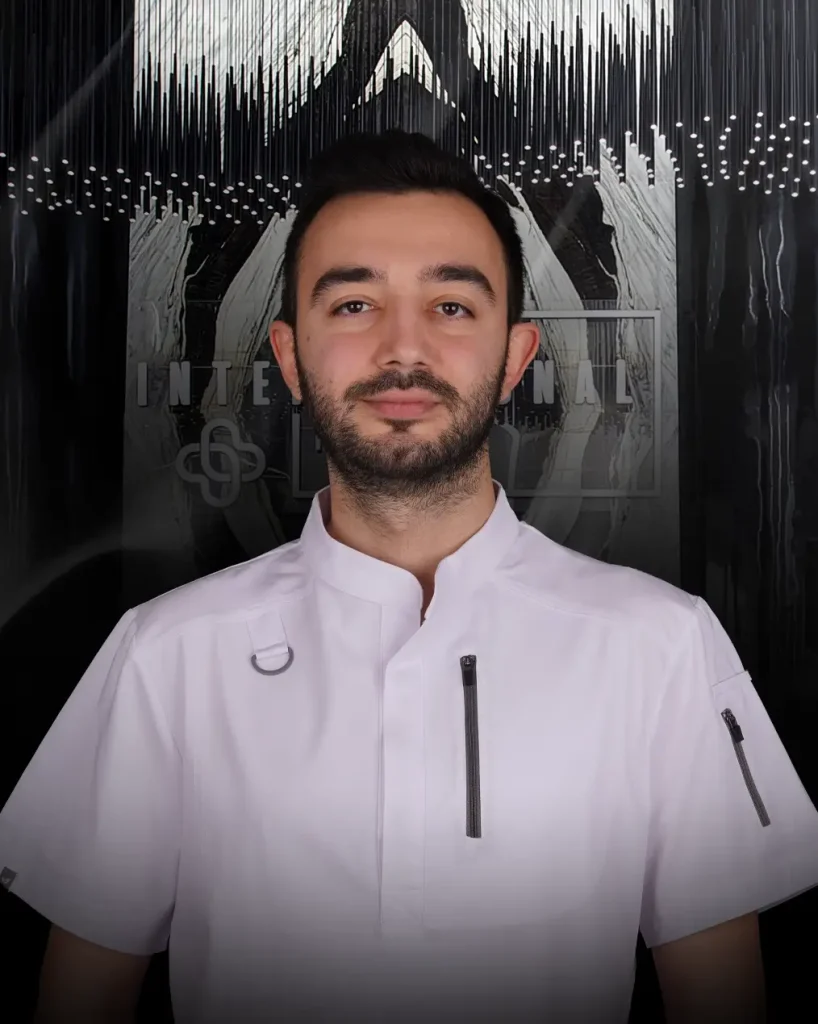
Reviewed by Dr. Melek
References
- Jafri Z, et al. Digital Smile Design: An innovative tool in aesthetic dentistry. J Oral Biol Craniofac Res. 2020. PMC7193250
- Garcia PP, et al. Digital smile design and mock-up technique for esthetic treatment planning with porcelain laminate veneers. J Conserv Dent. 2018. PMC6080190
- Pjetursson BE, et al. Survival, failure and complication rates of veneered and monolithic all-ceramic single crowns: a systematic review and meta-analysis. Clin Oral Implants Res. 2021. PMC9293296
- Karl M. Outcome of bonded vs all-ceramic and metal-ceramic fixed prostheses for single tooth replacement. Eur J Oral Implantol. 2016. PMID 27314110
- Alikhasi M, et al. Smile Design: Mechanical Considerations. Dent Clin North Am. 2022. PMID 35738740
Follow us on Social Media
internationalplusofficial
internationalplus
internationalplusdental
This content is written, reviewed, and approved by the International Plus Medical Review Board to ensure clinical accuracy and adherence to strict editorial standards. All medical information is regularly monitored, audited and updated in light of the latest scientific advancements.
However the information provided here is for general informational purposes only and cannot be used for self diagnosis or making individual health interpretations. Results of medical treatments depend on individual anatomy and the unique healing process of each patient. This information should not replace a personal consultation with a qualified healthcare professional. To understand the best options for your specific needs and to receive a personalized treatment plan, we invite you to book a free consultation with the expert medical team at International Plus.

Dt. Melek Şentürk brings advanced surgical expertise to complex cases many general dentists turn away, specializing in subperiosteal implants and full mouth rehabilitations for patients abroad with severe bone loss.