Placing immediate loading dental implants in a mouth with active cystic lesions is something most guidelines advise against. Yet in a single, carefully planned session, our surgical team removed six maxillary cysts and placed 12 implants for Viktor, a 41 year old man with severe bone loss and advanced sinus expansion. This case, treated by Dr. Alper Çağlayan Sarraf, reflects the kind of complex, literature relevant surgery that sits at the edge of what immediate implant protocols normally allow. It is a clear example of how thorough diagnosis can turn a high risk mouth into a same day rehabilitation.
Key Takeaways
- The challenge: Six maxillary cysts (5 to 15 mm), severe bone loss and bilateral sinus expansion in a 41 year old man with failing, mobile teeth.
- The solution: A single session all in one surgery: cyst removal, extractions, bilateral sinus lifting, bone grafting and 12 implants.
- Why it is rare: Immediate implants are usually avoided in infected sites but the chronic, cystic nature of the infection made a single stage approach possible.
- The outcome: Viktor left with fixed temporary teeth the same day and entered a 6 month healing phase toward his final prosthesis. Individual results may vary.
Viktor’s Story: Years of Loosening Teeth and Infection
Viktor, a 41 year old man, came to our clinic with a set of problems that had been building for years. He had multiple missing teeth, advanced mobility in the teeth that remained, occasional pus discharge from the gums and a chewing function that had dropped to a fraction of normal. For him, eating comfortably and stopping the recurring infections had become the priority.
A clinical examination confirmed his concerns but the full picture only emerged on imaging. What looked like straightforward tooth loss turned out to be a far more complex surgical case hidden beneath the surface, the kind of challenge our team documents in cases like this advanced full mouth rehabilitation with sinus lifting.

Diagnosis: Six Cysts, Severe Bone Loss and Sinus Expansion
Diagnosis began with a panoramic radiograph that raised suspicion of several cystic formations in the upper jaw. To assess them properly, a 3D cone beam CT (CBCT) scan was taken and the findings were significant. The imaging revealed six cysts ranging from 5 to 15 mm in the maxilla, advanced pneumatization (expansion) of both sinuses from long term tooth loss and serious resorption of the upper jaw bone as a result.
This level of detail is why 3D imaging matters. On the CBCT cross sections, individual bone measurements at the planned implant sites fell to just a few millimeters of usable height in places, confirming that grafting and sinus lifting would be essential. A panoramic view alone would have underestimated the complexity, which is a core reason our team plans every complex case digitally before surgery.
The Treatment Plan: All in One Surgery
Faced with this picture, the team planned an ambitious single session procedure described internally as all in one surgery. Rather than staging the treatment over many months, the plan combined every necessary step into one operation: clearing all infection and cysts, extracting teeth that could not be saved, bilateral open sinus lifting, bone grafting with membranes and full implant placement.
A total of 12 implants were planned, six in the upper jaw and six in the lower. The goal was to resolve the disease and rebuild the foundation for full mouth dental implant treatment in a single stage, sparing Viktor repeated surgeries and the long gaps between them.
| Stage | What was planned | Purpose |
| Cyst and infection removal | Enucleation of all six maxillary cysts | Eliminate chronic infection |
| Extractions | Removal of hopeless teeth | Clear the surgical field |
| Bilateral sinus lifting | Open sinus augmentation both sides | Rebuild upper jaw bone height |
| Grafting and membranes | Fill cyst cavities and graft sites | Support new bone formation |
| Implant placement | 12 implants, 6 upper and 6 lower | Foundation for fixed teeth |
Bottom line: every stage was combined into one operation so Viktor could begin healing with a stable foundation on the same day.
Facing a complex implant case? You can ask our surgical team for an assessment directly on WhatsApp.

Why MegaGen AnyRidge Implants Were Chosen
Because this was a high risk case in poor quality bone, implant selection was critical. Here Dr. Alper Çağlayan Sarraf selected the MegaGen AnyRidge system for a specific reason: its aggressive thread design achieves better grip in weak bone and helps reach high primary stability where bone density is low. Primary stability, the mechanical firmness of an implant at the moment of placement, is one of the strongest predictors of whether immediate treatment can succeed (Monje et al., 2019).
That choice reflects the same certified implantology standard behind our wider MegaGen certified implant work. In a mouth with this much bone loss, the implant system is not a detail; it is what makes the plan feasible.
The Surgery: Cyst Removal, Sinus Lifting and 12 Implants
The operation followed the plan step by step. All cysts and lesions in the upper jaw were cleared, then bilateral open sinus lifting was performed to create bone height, a well documented but technically demanding procedure (Testori et al., 2019). The empty cyst cavities were filled with bone graft and covered with membranes to support regeneration, an approach supported by evidence on bone regeneration in cystic cavities (García et al., 2026).
With the foundation rebuilt, 12 implants were placed, six in the upper jaw and six in the lower and the surgical field was closed primarily. The specimens removed from the jaw were sent to pathology, where Dr. Alper’s preliminary diagnosis of radicular cysts (benign jaw lesions) was confirmed by the laboratory. On the same day, impressions were taken for Viktor’s temporary removable prostheses so he did not leave without teeth.

Why Immediate Loading Was Possible Despite Infection
The detail that makes this case rare is that everything was completed in one session despite the presence of multiple cysts. Standard teaching advises against immediate implant placement in actively infected areas, which is why many surgeons would have staged this treatment.
The distinction here was the nature of the infection. Viktor’s lesions were not acute; they were chronic, long standing infections that had turned into cysts. Current evidence shows that when chronic infection is completely removed, immediate implant placement in previously infected sites can succeed (Gao et al., 2023) and immediate loading itself is supported by systematic review data when case selection and primary stability are right (Hamilton et al., 2023). The team planned the treatment around this science, thorough removal first, then immediate placement, which is exactly what made a single stage rehabilitation defensible.
Recovery and Result
After surgery, Viktor was able to return to daily life with his temporary teeth and a 6 month healing plan was set to allow full osseointegration, the process where bone fuses to the implants (Pandey et al., 2022). At the end of that period, the plan is to move to his permanent fixed full arch prosthesis.
This case shows what careful planning and the right technique can achieve: complex intraoral problems resolved in a single session, implants placed despite bone loss and sinus expansion and a successful result even in the presence of chronic infection. As with every case we publish, individual results may vary and each plan is tailored to the person. This is what makes immediate loading dental implants possible even in demanding anatomy: International Plus combines official Ministry of Health authorization, 5,504+ verified reviews at 4.8/5 and 200,000+ international patients with surgical expertise for exactly this kind of literature relevant case.
Discover full mouth implant treatment at International Plus → Book your free consultation
Frequently Asked Questions
Can you place dental implants when there are cysts in the jaw?
In many cases, yes once the cysts are completely removed. When jaw cysts are enucleated and the site is thoroughly cleaned, implants can often be placed, sometimes in the same session if the infection is chronic rather than acute. A detailed CBCT assessment determines whether immediate placement is safe for each patient.
What is immediate loading of dental implants?
Immediate loading means fitting teeth onto implants very soon after placement rather than waiting months. In full arch cases this often means leaving with fixed or temporary teeth the same day. It depends on achieving strong primary stability, which is why implant choice and bone assessment are so important.
Are same day implants safe with bone loss and sinus expansion?
They can be with the right surgical plan. Procedures such as sinus lifting and bone grafting rebuild the volume needed to place implants securely even where resorption and sinus expansion are advanced. Safety depends on thorough 3D planning and an experienced surgical team rather than the timing alone.
How long is recovery after this kind of surgery?
After a complex single session surgery like this, a healing period of around six months is typical before the final fixed prosthesis is placed. During this time the implants integrate with the bone. Temporary teeth are usually provided on the same day, which is a key benefit of immediate loading dental implants, so daily life and appearance are maintained throughout.
Reviewed by Dr. Alper Çağlayan Sarraf
References
- Gao Y, et al. Immediate implants placed in fresh sockets associated with periapical pathology: survival evaluation. J Stomatol Oral Maxillofac Surg. 2023. PMID 37390904
- Hamilton A, et al. Selection criteria for immediate implant placement and immediate loading: a systematic review and meta-analysis. Clin Oral Implants Res. 2023. PMID 37750515
- García JC, et al. Clinical behavior of bone regeneration therapy with platelet-rich fibrin in cystic cavities: a systematic review. Minerva Dent Oral Sci. 2026. PMID 41335106
- Testori T, et al. Risk factors in lateral window sinus elevation surgery. Periodontol 2000. 2019. PMID 31407430
- Monje A, et al. Relationship between primary/mechanical and secondary/biological implant stability. Int J Oral Maxillofac Implants. 2019. PMID 31116830
- Pandey C, et al. Contemporary Concepts in Osseointegration of Dental Implants: A Review. Biomed Res Int. 2022. PMC9213185
Follow us on Social Media
internationalplusofficial
internationalplus
internationalplusdental
This content is written, reviewed, and approved by the International Plus Medical Review Board to ensure clinical accuracy and adherence to strict editorial standards. All medical information is regularly monitored, audited and updated in light of the latest scientific advancements.
However the information provided here is for general informational purposes only and cannot be used for self diagnosis or making individual health interpretations. Results of medical treatments depend on individual anatomy and the unique healing process of each patient. This information should not replace a personal consultation with a qualified healthcare professional. To understand the best options for your specific needs and to receive a personalized treatment plan, we invite you to book a free consultation with the expert medical team at International Plus.

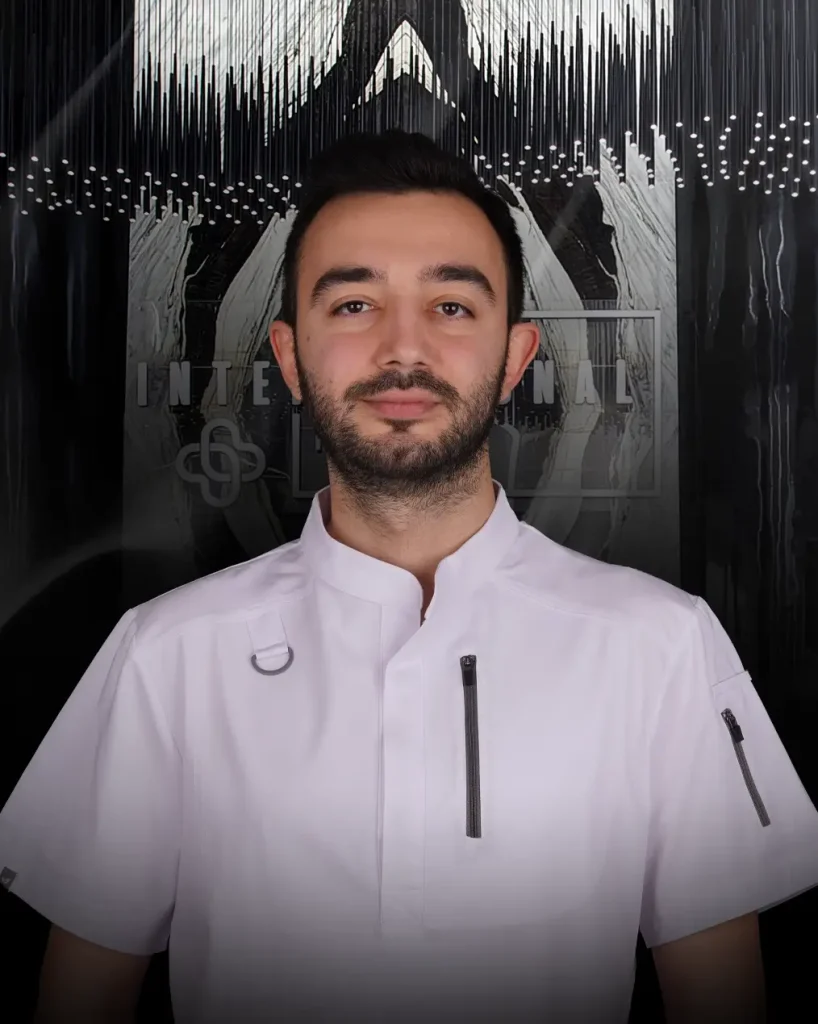
Dr. Alper Çağlayan Sarraf directs the oral surgery unit at InternationalPlus Istanbul, focusing on demanding cases that draw patients from every corner of the world.