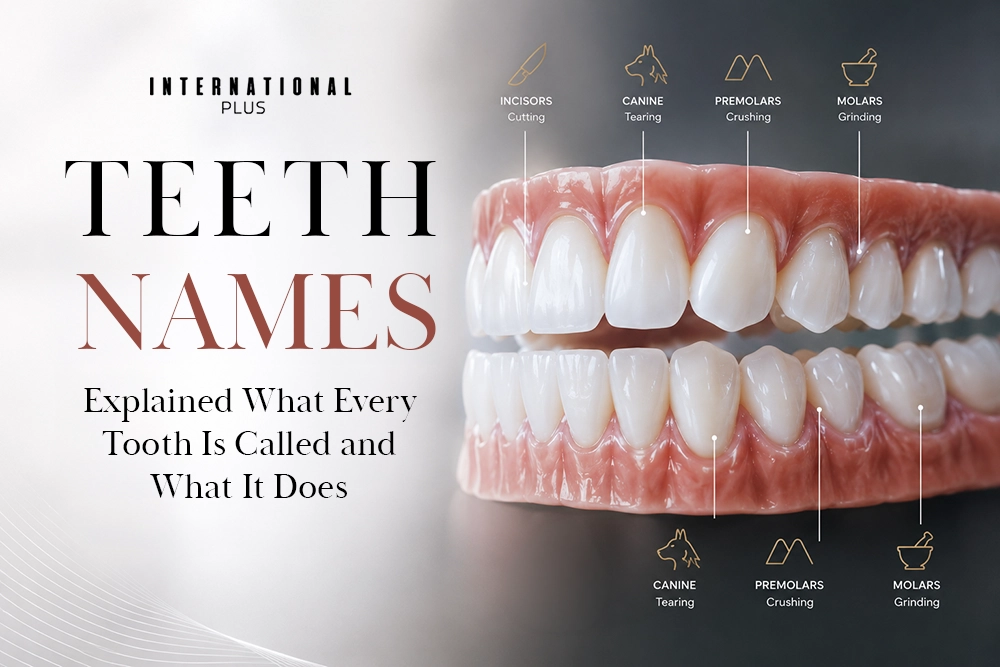
How long do Turkey teeth last is one of the first questions UK patients ask before booking treatment abroad. The honest answer depends on whether the work uses veneers or crowns, the quality of the ceramic and how well the result is maintained. Well planned porcelain veneers last 10 to 20 years, whilst quality crowns last 10 to 15 years or longer. This guide from our team at International Plus explains the real lifespan of Turkey teeth, what shortens or extends the result and when replacement becomes sensible without the exact price claims that make an online quote misleading.
Key Takeaways
- Expected lifespan: Porcelain veneers last 10 to 20 years and quality crowns last 10 to 15 years or longer with good care.
- Biggest risk factor: Over aggressive tooth reduction, not the country, is the leading cause of early failure.
- Grinding matters: Untreated bruxism can chip porcelain within 5 years so a night guard protects the result.
- Cost context: Turkey offers a significant saving compared with UK private dentistry but longevity depends on planning, not price.
How Long Do Turkey Teeth Last?
Turkey teeth last between 10 and 20 years, depending on whether the restoration is a porcelain veneer or a full crown. Turkey teeth is a social media label for a smile makeover completed in Turkey, not a single procedure so the lifespan reflects the material and the standard of care. Porcelain veneer survival above 90% at ten years is well documented in clinical reviews (AlJazairy et al., 2021). Quality crowns reach 10 to 15 years or longer before renewal. In our clinic, longevity depends far more on preparation design and maintenance than on the destination. For example, a conservatively prepared veneer preserves enamel and lowers stress on the tooth over the years. First, the ceramic must bond to healthy structure. Next, the bite must be balanced using Digital Smile Design. The 2021 evidence base shows durable restorations remain realistic when Turkey teeth are planned as a medical treatment, a point our pillar guide to the truth about Turkey teeth explains in full.

Veneers vs Crowns: Which Lasts Longer in Turkey?
Veneers and crowns last for different lengths of time because each removes a different amount of tooth structure. A veneer is a thin porcelain shell bonded to the front of the tooth, whilst a crown caps the whole tooth after deeper reduction. Porcelain veneers last 10 to 20 years and quality crowns last 10 to 15 years or longer, based on a 10 year practice based evaluation of ceramic restorations (Mazzetti et al., 2022). In our practice we prefer conservative veneers for healthy front teeth because aggressive crown reduction can shorten pulp survival over the years. The trade off is clear: dental crowns suit teeth weakened by decay or root canal work but a crown sacrifices more enamel than a healthy tooth needs. First, the diagnosis confirms the tooth condition using CBCT imaging. Then the material choice follows the biology, not the trend.
| Restoration | Expected lifespan | Tooth structure removed | Best suited for |
| Porcelain veneer | 10 to 20 years | Minimal front surface | Healthy teeth needing a cosmetic upgrade |
| Zirconia or E-max crown | 10 to 15 years or more | Significant, whole tooth | Teeth with decay, cracks or after root canal |
Bottom line: for healthy teeth, conservative veneers protect longevity better than crowns. Our full comparison of dental crowns versus veneers breaks the choice down further.
What Shortens the Lifespan of Turkey Teeth?
A few avoidable factors shorten the lifespan of Turkey teeth and most trace back to preparation and habits rather than the ceramic. Over aggressive tooth reduction is the leading cause because removing too much enamel weakens the bond and can affect the nerve, lowering pulp survival (Baldi et al., 2020). Grinding, known as bruxism, adds up to 3 times more force to a restoration and can chip porcelain within 5 years. Poor gum health also undermines the margin, allowing decay under a crown. In our clinic, roughly 1 in 4 replacement cases arrives after treatment planned without a bite assessment. First, untreated grinding cracks the ceramic. Then unmanaged gum disease loosens the foundation. For example, a night guard lowers load on veneers during sleep. The trade off is simple: a brighter, thinner veneer looks striking but needs protection from heavy grinding to reach a full lifespan.

What Extends the Lifespan of Turkey Teeth?
Good planning and maintenance extend the lifespan of Turkey teeth well beyond the first decade. Conservative preparation is the strongest factor because a veneer bonded to healthy enamel keeps porcelain veneer survival above 90% at ten years (AlJazairy et al., 2021). Material quality matters next: modern pressed ceramics resist wear better than older feldspathic layers. In our practice we prefer minimally invasive veneers for anterior teeth because preserving enamel protects the bond for 15 years or more. Daily care extends results further. First, brushing twice a day protects the gum margin. Then a six month hygiene visit catches early problems. For example, one patient kept veneers bright past 12 years with simple maintenance and a night guard. The 2021 evidence confirms conservative, well maintained restorations outlast rushed work planned around a single bright shade as our guide to how long veneers last sets out.
When Do Turkey Teeth Need Replacing?
Turkey teeth need replacing when the bond fails, the margin leaks or the porcelain chips beyond repair, often after 10 to 20 years. Replacement is a normal stage of restorative care, not a sign of failure because no dental material lasts forever. Warning signs include sensitivity, a dark line at the gum or a rough edge felt with the tongue. Clinical reviews report most porcelain veneers reach 10 years with survival above 90% before renewal becomes likely (Arif et al., 2019). In our clinic, our team recommends assessment at the first sign of a chip rather than waiting for a full fracture. First, a small chip may be polished. Then a leaking margin needs a fresh restoration. For example, a 12 year old veneer with a stained edge is replaced in a single visit. The trade off is timing: early replacement costs less effort than repairing decay under an old crown.

How Our Clinic Plans Turkey Teeth to Last
Long lasting Turkey teeth start with diagnosis, not with drilling. At International Plus, our Diagnostic Council reviews every complex smile makeover before any tooth is prepared, checking bite, gum health and enamel thickness on a 3D scan. Conservative preparation is the standard because preserving enamel keeps a veneer bonded for 15 years or more with survival above 90% in conservative cases (Alothman et al., 2018). Restorations are produced in our in house laboratory for precise fit and shade control. In our practice we prefer to treat active decay or gum disease first because a veneer placed on an unhealthy foundation fails early. First, the plan is previewed with a full digital smile design mockup. Then the patient approves the shape before treatment begins. For example, our team rebuilds the bite so grinding forces spread evenly across the arch. Individual results may vary yet a health first method gives Turkey teeth the best chance of lasting two decades.
Final Word: How Long Do Turkey Teeth Last?
How long do Turkey teeth last comes down to material and planning, not the country on the receipt. Well planned porcelain veneers last 10 to 20 years and quality crowns last 10 to 15 years or longer with survival above 90% at ten years in conservative cases (AlJazairy et al., 2021). At International Plus, our team treats every smile makeover as a medical decision, backed by 5,504 verified reviews at 4.8 out of 5 and more than 200,000 international patients. Conservative preparation, quality ceramics and steady maintenance keep Turkey teeth looking natural for two decades. Individual results may vary but a health first plan gives the longest lifespan. For a realistic assessment before travel, our clinic reviews each case in advance so patients know what durable Turkey teeth actually require. You can compare current Turkey teeth packages for 2026 once a plan is agreed.
Frequently Asked Questions
How long do Turkey teeth last on average?
How long do Turkey teeth last depends on the restoration: porcelain veneers last 10 to 20 years and quality crowns last 10 to 15 years or longer. Clinical reviews record veneer survival above 90% at ten years when preparation stays conservative and the result is maintained with good daily care.
Do Turkey teeth veneers last longer than crowns?
Veneers and crowns have similar lifespans but conservative veneers protect the natural tooth better because a veneer removes minimal enamel. A crown caps the whole tooth and suits teeth weakened by decay or root canal work. For healthy front teeth, a well bonded veneer is the more tooth preserving choice.
Can Turkey teeth last a lifetime?
No dental restoration lasts a lifetime and honest clinics avoid that promise. Well planned Turkey teeth last 10 to 20 years after which the bond or margin may need renewing. Conservative preparation, quality ceramics and a night guard for grinding give the longest realistic lifespan before replacement.
How often do Turkey teeth need replacing?
Turkey teeth need replacing roughly every 10 to 20 years, sooner if grinding chips the porcelain or a margin leaks. Warning signs include sensitivity, a dark gum line or a rough edge. Early assessment at the first chip usually means a simpler repair than waiting for a full fracture.
Does aftercare really affect how long Turkey teeth last?
Yes, aftercare has a direct effect on the result. Twice daily brushing, six month hygiene visits and a night guard for grinding protect the bond and gum margin. In our clinic, most early replacement cases trace back to missed maintenance, not the ceramic. When patients ask how long do Turkey teeth last, aftercare is the honest deciding factor.
Reviewed by Dr. Eren Gülbahar
References
- Mazzetti T, et al. Dent Mater. 2022. PMID: 35379471
- AlJazairy YH, et al. Eur J Dent. 2021. PMC8184312
- Alothman Y, et al. Open Access Maced J Med Sci. 2018. PMC6311473
- Arif R, et al. J Prosthet Dent. 2019. PMID: 30885576
- Baldi D, et al. Minerva Stomatol. 2020. PMID: 31633318
- da Silva Bezerra A, et al. J Prosthet Dent. 2025. PMID: 38036319
Follow us on Social Media
internationalplusofficial
internationalplus
internationalplusdental
This content is written, reviewed, and approved by the International Plus Medical Review Board to ensure clinical accuracy and adherence to strict editorial standards. All medical information is regularly monitored, audited and updated in light of the latest scientific advancements.
However the information provided here is for general informational purposes only and cannot be used for self diagnosis or making individual health interpretations. Results of medical treatments depend on individual anatomy and the unique healing process of each patient. This information should not replace a personal consultation with a qualified healthcare professional. To understand the best options for your specific needs and to receive a personalized treatment plan, we invite you to book a free consultation with the expert medical team at International Plus.

I am a healthcare professional with over 4 years of experience in dentistry, specializing in prosthetic dental treatment and implant-based applications. Since 2024, I have been serving as chief physician, leading clinical management, team coordination, and international patient processes. With my B2-level English proficiency, I am able to communicate effectively with international patients. I am a patient-centered, innovative, and solution-oriented dentist who prioritizes patient satisfaction.