
Does a root canal hurt? The short answer from published pain studies is that most patients feel no pain during the procedure, a minority feel brief discomfort while the tooth is being numbed and almost everyone feels less pain afterwards than before. The treatment has a reputation it no longer deserves. This International Plus guide separates the toothache that brings a patient in from the sensations of the treatment itself and sets out what the clinical data say about each stage.
Key Takeaways
- In a study of 176 patients receiving root canal treatment under local anaesthetic, 54% reported no pain at all during the procedure and the pain that was reported clustered in teeth that were already inflamed.
- Pooled data show pre treatment pain prevalence of 81% falling to 40% within one day of treatment and 11% by day seven.
- An inflamed “hot” tooth is harder to numb, which explains most reports of pain during treatment and a second injection beside the tooth usually resolves it.
- Mild soreness on biting for two to three days after treatment is normal because the ligament around the root has been irritated.
- Pain that worsens after day three, swelling or fever are not normal and need a same day call to the clinic.
What Is Root Canal Treatment?
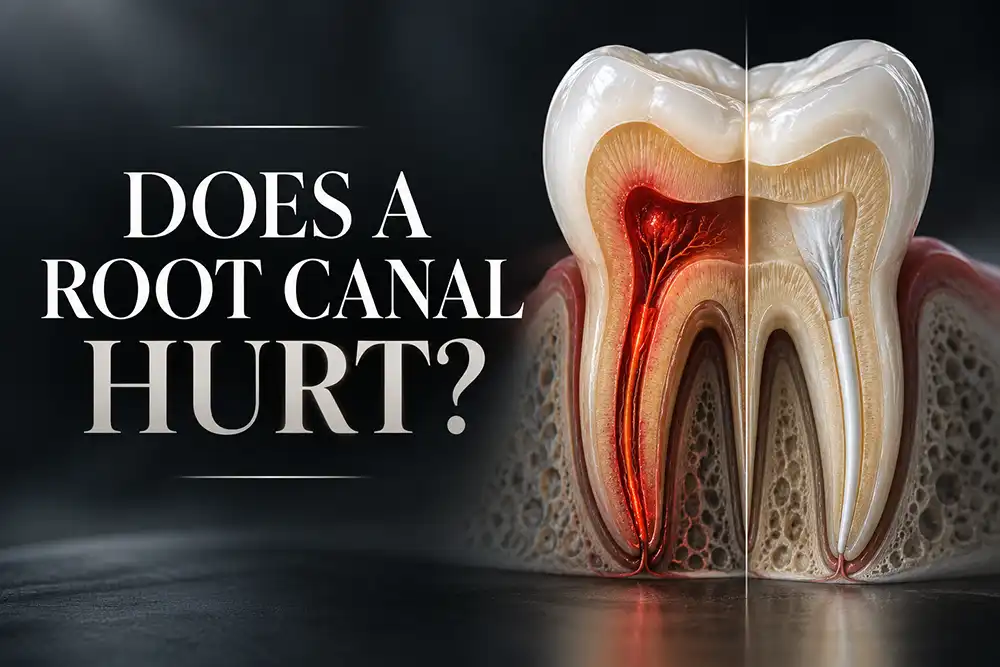
Root canal treatment is a dental procedure that removes infected or inflamed pulp from inside a tooth. The hollow canals of the root are then disinfected and sealed with a filling material. The crown of the tooth is then restored. The purpose is to keep a tooth that would otherwise need extraction.
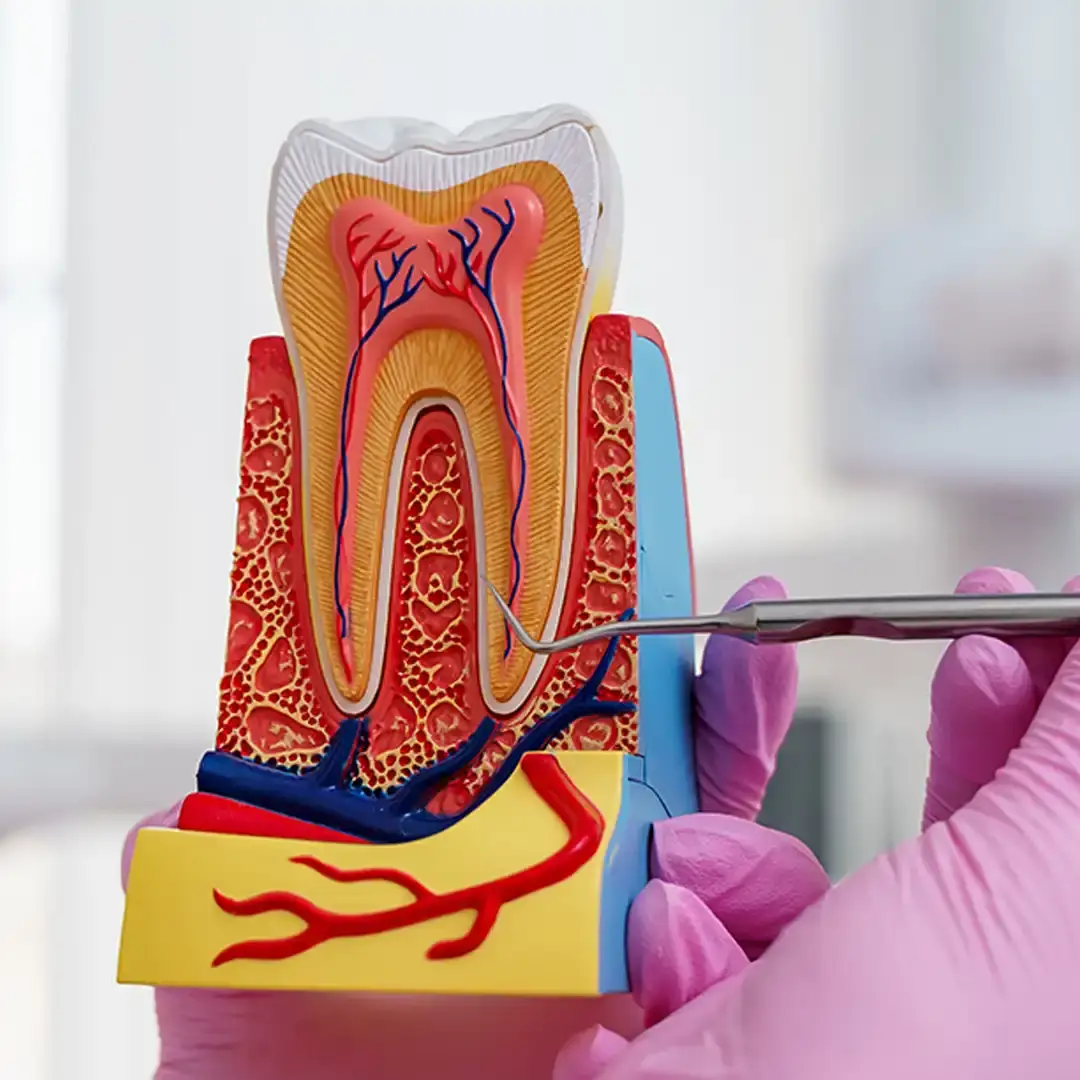
The pulp is the soft tissue of nerves and blood vessels at the centre of each tooth. Deep decay, a crack or repeated dental work lets bacteria reach the pulp and the resulting inflammation is what produces the throbbing, temperature sensitive toothache patients describe. Once the pulp is removed, the tooth no longer senses hot or cold although the ligament around the root still feels pressure. A 2007 systematic review in the International Endodontic Journal by Ng et al. found that primary root canal treatment succeeds in roughly 68% to 85% of teeth depending on how strictly success is defined. In our clinic endodontic cases are handled under magnification and Dr. Celal Aktay, who presented work on microscope assisted endodontic retreatment at the 2025 ESE Congress in Paris, reviews the complex retreatment cases. Readers who want the background on the infection itself can start with our guide to tooth infection symptoms and dangers.
Does a Root Canal Hurt During the Procedure?
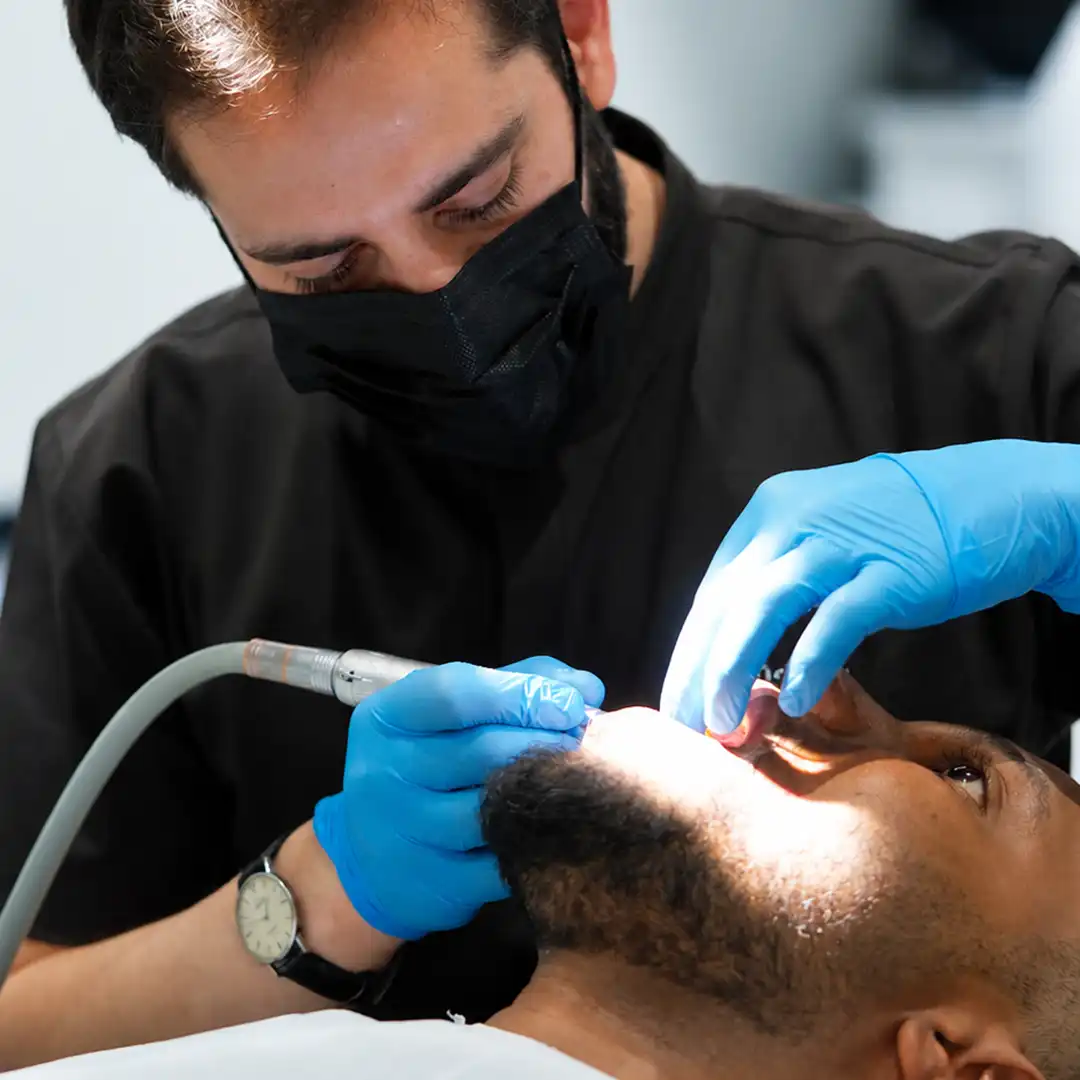
Most patients feel no pain during a root canal because the tooth is fully numbed with local anaesthetic before any drilling begins. What patients feel is pressure or vibration, plus the sensation of the rubber dam around the tooth. The injection itself is the moment most people notice.
Clinical evidence puts numbers on the experience. According to Segura-Egea et al., writing in the International Endodontic Journal in 2009, 54% of 176 patients reported no pain during root canal treatment and the pain that was reported was concentrated in teeth with irreversible pulpitis or an acute abscess, the inflamed teeth discussed in the next section. The procedure follows a fixed order in our clinic. First, the dentist tests the tooth with cold to confirm numbness before touching it. Second, a rubber dam isolates the tooth, keeping saliva out while protecting the airway. Third, a small opening is made in the top of the tooth and the canals are cleaned with fine flexible files. Fourth, the canals are rinsed with disinfectant then dried. Fifth, the canals are sealed beneath a temporary or permanent filling. A single rooted front tooth takes around 45 minutes while a molar with three or four canals takes 60 to 90 minutes and both are carried out by root canal treatment by endodontic specialists at International Plus.
Why Do Some People Feel Pain During a Root Canal?
Some people feel pain during a root canal because an acutely inflamed pulp is harder to anaesthetise than a healthy one. Inflammation lowers the pH of the tissue, which reduces how much anaesthetic crosses into the nerve and makes the inflamed nerve fibres more excitable. Dentists call this a hot tooth.
The problem is best documented for lower molars, where the standard inferior alveolar nerve block numbs a whole side of the jaw. For a patient with a calm pulp the block works reliably. With irreversible pulpitis the same injection fails more often and the patient feels a sharp sensation when the file reaches the pulp. The solution is not to push on. The dentist adds a supplementary injection directly beside the tooth into the ligament or into the bone and the sensation usually settles. Top up injections are routine rather than exceptional: the systematic review by Pak and White cited below found that supplementary anaesthesia was needed in around 60% of cases. Premedication helps as well. A 2018 meta analysis in the Journal of Endodontics by Nagendrababu et al. showed that taking a non steroidal anti inflammatory tablet before the appointment significantly improved the success of the nerve block in teeth with irreversible pulpitis. Anxiety plays a part too. A 2020 cross sectional study in the International Endodontic Journal by Murillo-Benítez et al. found that patients with higher dental anxiety reported more pain during the procedure. For example, our clinic schedules anxious patients for morning appointments and offers sedation for long molar cases.
Does a Root Canal Hurt After Treatment?
Mild soreness is common for a few days after treatment, mostly on biting because the ligament around the root has been irritated by the cleaning and by the original infection. The soreness is usually controlled with over the counter pain relief and fades steadily rather than building.
| Time after treatment | What is normal | What is not normal |
| First 24 hours | Dull ache as the anaesthetic wears off, tenderness on biting | Severe throbbing pain unrelieved by tablets |
| Day 2 to 3 | Peak of tenderness, improving each day | Visible swelling of the face or gum |
| Day 4 to 7 | Mild sensitivity to pressure only | Pain increasing instead of decreasing |
| After day 7 | Little or no discomfort, tooth feels normal on chewing | Persistent pain, bad taste, fever |
Bottom line: discomfort that is improving day by day is healing and discomfort that is worsening is a reason to call.
The data support the timeline. Research by Pak and White in the Journal of Endodontics in 2011 shows that the proportion of patients in pain fell from 81% before treatment to 40% within one day and to 11% by day seven. A separate 2008 systematic review in the International Endodontic Journal by Sathorn et al. reported that post operative pain ranged from 3% to 58% of patients across studies depending on the tooth and the technique used. In our clinic patients are told to expect two to three days of biting tenderness and to avoid chewing hard food on the treated side until the final restoration is placed. Readers managing discomfort at home can use our guide on how to get rid of tooth pain safely for the first night.
What Does Root Canal Pain Feel Like Before, During and After?
Root canal pain feels different at each stage because the source changes. Before treatment the pain comes from an inflamed or dying nerve. During treatment any sensation comes from an incompletely numbed tooth. After treatment the ache comes from the healing tissue around the root rather than from the tooth itself.
Before the appointment the classic picture is a deep throbbing ache that worsens when lying down and lingers for minutes after a hot drink. The ache sometimes wakes the patient at night. A tooth that is sensitive to cold for a second or two is usually not a root canal case and our guide to sensitive teeth and their causes explains the difference. During the appointment a patient whose tooth is properly numb feels pressure and hears the instruments but feels no sharp sensation. A sudden sharp twinge means the anaesthetic has not reached part of the pulp and the patient raises a hand so the dentist can add a supplementary injection. Swelling that comes from the gum rather than the root is referred for gum disease treatment and periodontal care instead because a periodontal abscess needs a different approach. After the appointment the ache is pressure based: biting on the tooth is tender and tapping on the tooth is tender. Hot and cold no longer register because the pulp is gone. In practice the relief from the original toothache is immediate for most patients, which is why so many describe the treatment afterwards as far easier than the week that preceded it.
Book Your Free Consultation and send an X ray or a photograph of the painful tooth to our clinical team for a same week assessment.
Root Canal or Extraction: Which Hurts Less?
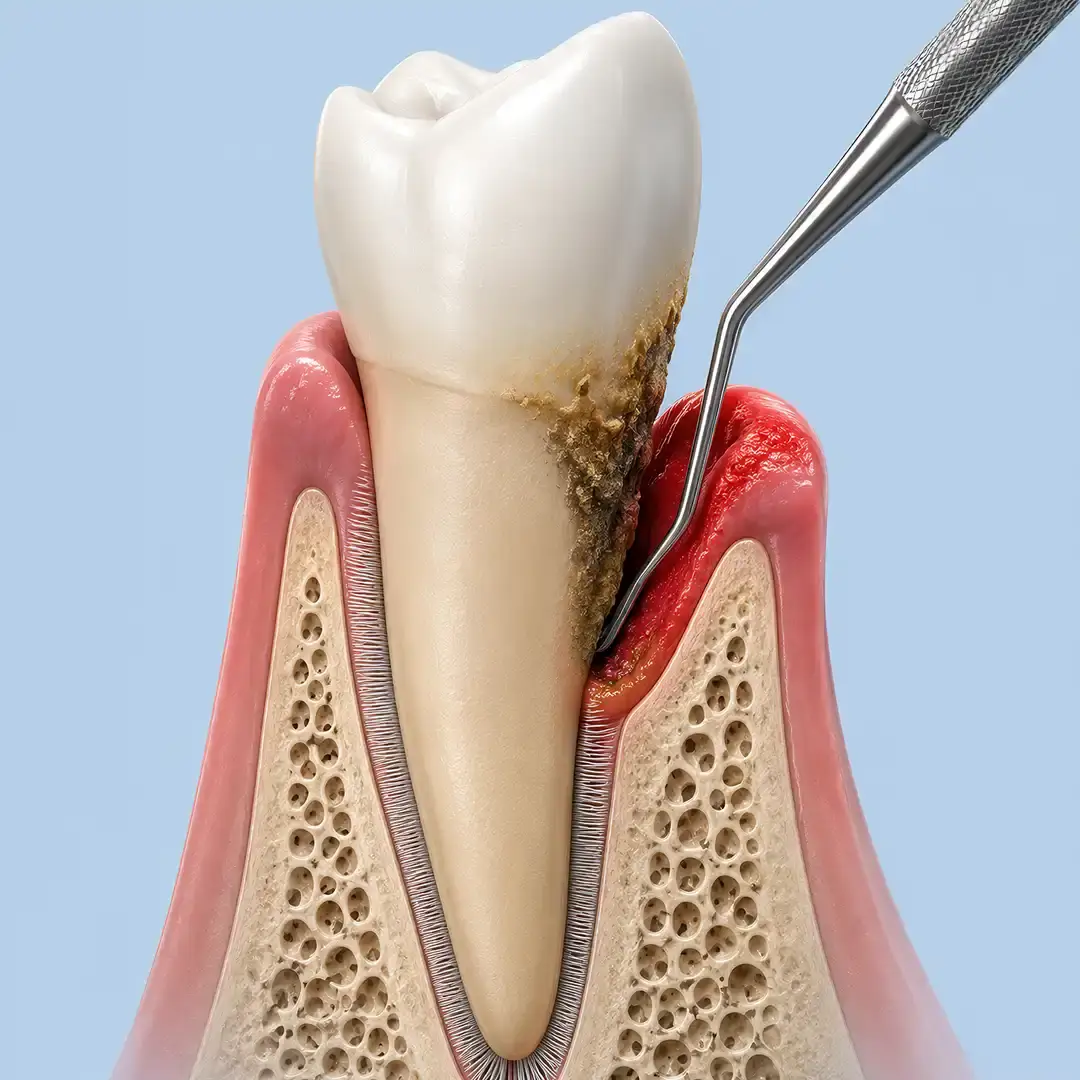
Root canal treatment and extraction both end the toothache. Only extraction leaves a socket that must heal and the empty socket plus the risk of dry socket count against removing a tooth that can be saved. The later cost of replacing the tooth counts against it too. Removal is reserved for a tooth that cannot be saved.
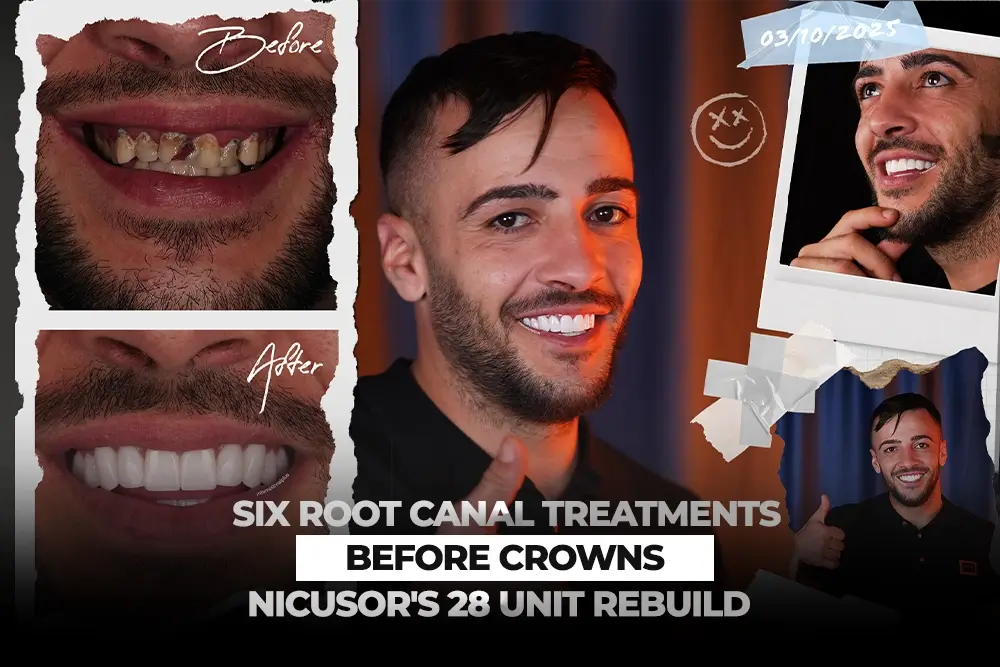
The decision depends on how much tooth remains. Teeth with a sound root and enough structure to hold a crown are kept. A tooth with a vertical root fracture or decay below the bone is removed. Where a tooth is removed, the gap is closed with a dental implant once the socket has healed and our case study of full mouth rehabilitation combining implants and root canals shows both approaches used side by side in one patient. A treated back tooth is protected with a full coverage dental crown because a root filled molar is brittle and splits under chewing load without full coverage. For example in Ornella’s recorded case the root canal treatments were completed before a 20 unit zirconia restoration was fitted. Root canal treatment succeeds in the majority of teeth but it is not chosen for every tooth because a fractured root cannot be sealed whatever the skill of the dentist.
How We Keep Root Canal Treatment Comfortable at International Plus
International Plus keeps root canal treatment comfortable through four measures: anaesthetic testing before any drilling, supplementary injections ready for inflamed teeth, magnification for faster cleaning, then optional sedation for anxious patients. None of the four is unusual on its own. Using all four on every case is what matters.
The protocol starts before the chair. Patients with a hot tooth are advised to take an anti inflammatory tablet an hour before the appointment where the medical history allows, which raises the chance that the first injection works. The tooth is tested with cold after the injection and treatment begins only when the patient reports nothing. Magnification shortens the appointment because the canals are located on sight rather than by feel. Patients who have avoided dentistry for years because of fear are offered intravenous sedation and our case study of full mouth implants placed under sedation shows how the same service is used for longer surgical work. International Plus has treated more than 200,000 patients from 140+ countries since 2014 and holds 5,504 verified reviews at 4.8 out of 5. This guide was reviewed for accuracy by Dr. Eren Gülbahar, Head of Cosmetic Dentistry at International Plus. Dr. Gülbahar is an American Dental Association member. Individual results vary. The article is educational and is not medical advice.
If a tooth is keeping you awake, Contact our patient coordination team for a no obligation review of your X ray.
Frequently Asked Questions
Is a root canal painful without anaesthetic?
A root canal is not carried out without anaesthetic in modern practice. The pulp contains nerves so cleaning the canals of a live tooth without numbing would be painful. The only exception is a tooth whose pulp has already died completely and even then the dentist numbs the tooth because the surrounding tissue still feels pressure.
How long does pain last after a root canal?
Pain after a root canal typically peaks within the first two to three days and fades over three to seven days. Tenderness on biting lasts longest because the ligament around the root needs time to settle. Pooled studies show only around 11% of patients still report pain a week after treatment and most of those describe it as mild.
Why do root canals have a reputation for being painful?
Root canals have a reputation for pain because the toothache that leads to the treatment is one of the worst pains in dentistry and the two become linked in memory. Older techniques with weaker anaesthetics added to the story. Modern anaesthetics plus supplementary injections, backed by magnification, mean the procedure itself is comparable to having a large filling.
Can you feel pain if the tooth is very infected?
A very inflamed tooth can be harder to numb, which is why some patients feel a twinge early in treatment. Inflammation changes the tissue so the anaesthetic works less reliably, especially in lower molars. Dentists manage this with a supplementary injection beside the tooth with anti inflammatory premedication or by draining the infection first and completing treatment at a second visit.
Is it normal for a root canal tooth to hurt when biting?
Mild tenderness when biting is normal for the first few days after a root canal because the ligament around the root is inflamed. The sensation should improve daily. Biting pain that persists for weeks can mean the temporary filling is too high, which is a quick adjustment or that the tooth needs a crown to stop it flexing.
What hurts more, a root canal or an untreated toothache?
An untreated toothache hurts more. Pre treatment pain prevalence in pooled studies is around 81%, compared with 40% one day after treatment and 11% at one week. The treatment removes the inflamed nerve that is causing the pain so the relief is usually immediate once the anaesthetic wears off and the initial tenderness settles.
Reviewed by Dr. Eren Gülbahar
References
- Segura-Egea JJ, et al. Int Endod J. 2009. PMID: 19467050
- Pak JG, White SN. J Endod. 2011. PMID: 21419285
- Sathorn C, et al. Int Endod J. 2008. PMID: 17956561
- Nagendrababu V, et al. J Endod. 2018. PMID: 29709297
- Ng YL, et al. Int Endod J. 2007. PMID: 17931389
- Murillo-Benítez M, et al. Int Endod J. 2020. PMID: 31691312
This content is written, reviewed, and approved by the International Plus Medical Review Board to ensure clinical accuracy and adherence to strict editorial standards. All medical information is regularly monitored, audited and updated in light of the latest scientific advancements.
However the information provided here is for general informational purposes only and cannot be used for self diagnosis or making individual health interpretations. Results of medical treatments depend on individual anatomy and the unique healing process of each patient. This information should not replace a personal consultation with a qualified healthcare professional. To understand the best options for your specific needs and to receive a personalized treatment plan, we invite you to book a free consultation with the expert medical team at International Plus.

I am a healthcare professional with over 4 years of experience in dentistry, specializing in prosthetic dental treatment and implant-based applications. Since 2024, I have been serving as chief physician, leading clinical management, team coordination, and international patient processes. With my B2-level English proficiency, I am able to communicate effectively with international patients. I am a patient-centered, innovative, and solution-oriented dentist who prioritizes patient satisfaction.