
Patients ask how long does composite bonding last before asking what the treatment costs and the honest answer is a range rather than a single number. Bonding on front teeth survives around five to seven years in most published series with some restorations passing ten years while others chip within two. This International Plus guide explains where the spread comes from. The guide also covers which habits shorten the life of bonding and why a worn restoration is repaired rather than replaced.
Key Takeaways
- Clinical reviews report annual failure rates for anterior composite restorations of roughly 0% to 4.1%, which translates to a typical service life of five to seven years.
- Composite bonding is not permanent yet it is repairable: a chipped edge is usually rebuilt in one visit without removing the whole restoration.
- Night grinding and biting on hard objects are the two habits that shorten bonding most, followed by a heavy edge to edge bite.
- Composite does not whiten so the natural teeth are bleached first and the bonding is shade matched afterwards.
- Porcelain veneers last longer on average but they cost more and remove more enamel because the two treatments solve different problems.
What Is Composite Bonding?
Composite bonding is a cosmetic dental treatment in which a tooth coloured resin is applied directly to the tooth. The dentist shapes the resin by hand before hardening the layer with a curing light. The resin adheres to etched enamel through a bonding agent. No laboratory is involved and in most cases no enamel is drilled away, which is why dentists describe the treatment as additive.
The material belongs to the same family of resin used for white fillings, selected in a shade plus a translucency that matches the neighbouring teeth. A dentist uses bonding to close a small gap, lengthen a worn edge, mask a chipped corner or even out a single tooth sitting slightly behind the others. Edge bonding covers only the biting edge while a composite veneer covers the whole front surface. Both versions are placed in our clinic in a single visit and the distinction matters for lifespan because a thin edge takes more biting force than a full facing. For example, a 1 mm edge extension on a lower incisor is reviewed sooner than a full facing on an upper central incisor. Patients who want the fuller version can read our guide to composite veneers as a reversible single visit option. International Plus has treated more than 200,000 patients from 140+ countries since 2014 using the same layered resin protocol for a single chipped incisor as for a ten tooth smile.
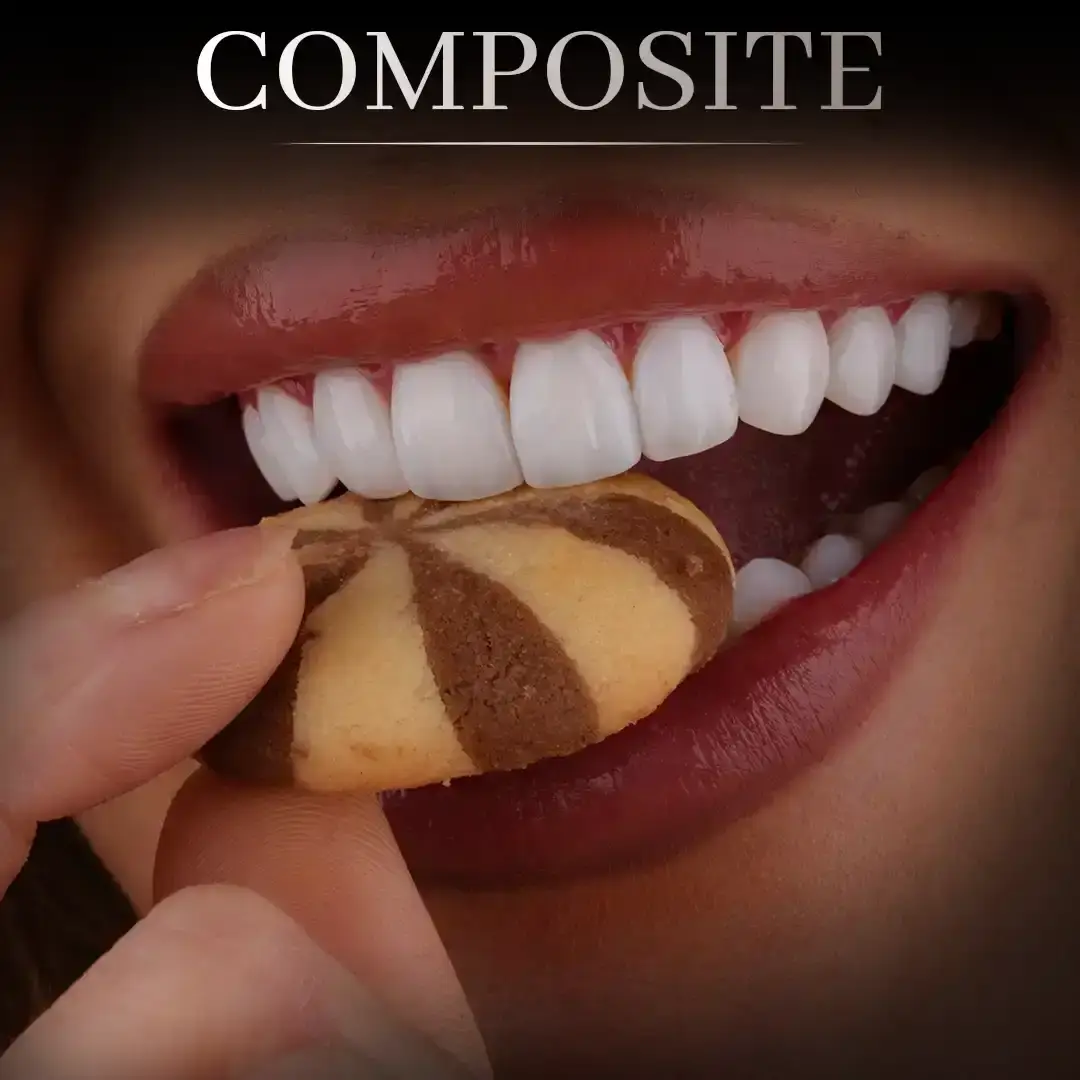
How Long Does Composite Bonding Last?
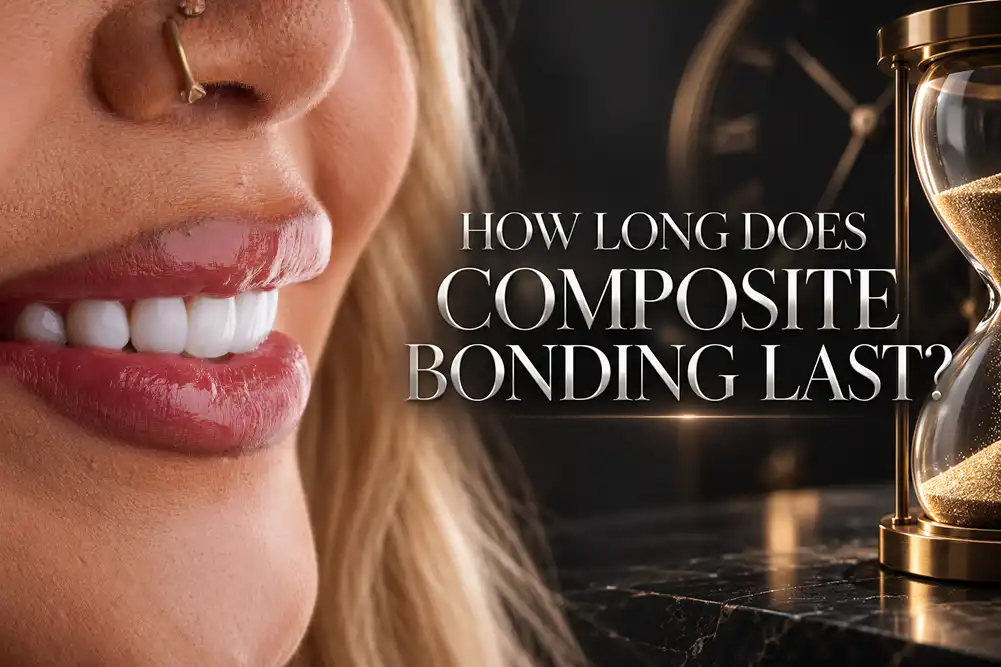
Most composite bonding lasts between five and seven years with well maintained restorations on low stress teeth lasting ten years or longer. The figure comes from survival studies of direct anterior composites rather than from manufacturer claims. Lifespan is measured as the point at which a restoration needs repair or replacement, not the point at which the resin falls off.
Clinical evidence is consistent on the order of magnitude. According to a 2015 systematic review in Dental Materials by Demarco et al., long term studies of anterior composite restorations show annual failure rates between 0% and 4.1% with fracture as the most common reason for failure and colour or stain problems most frequent in restorations placed for appearance. A broader systematic review, published in the Journal of Conservative Dentistry in 2021 by Shah et al., pooled more than 75,000 restorations and found a much wider spread across studies with annual failure rates from 0% to 27% and fracture again the main cause. The gap between the two ranges is itself the lesson: survival depends on the case and the care far more than on the brochure. In practice, an annual failure rate of 2% means roughly 80% of restorations remain in service after ten years. Porcelain follows a longer curve, which our guide on how long veneers last covers separately. At International Plus we ask patients to plan for a polish every twelve months and a small repair at some point after year five because the expectation then matches the data rather than the brochure.
Is Composite Bonding Permanent?
No, composite bonding is not permanent. The resin wears and picks up stain. The resin can also chip and every bonded tooth will eventually need maintenance. What bonding offers instead is reversibility: the tooth underneath is left largely untouched so the restoration can be refreshed or removed years later without committing the tooth to a crown.
The trade off is worth stating plainly. Bonding needs more maintenance than porcelain but bonding preserves enamel because the surface is etched rather than cut. A 2017 review in Brazilian Oral Research by Demarco et al., titled “Should my composite restorations last forever?”, argues that repair rather than replacement is the correct response to a worn composite and extends the life of the original restoration by years. The same repair first principle applies in our clinic in three steps. First, a chipped edge is roughened before being re bonded then polished in a single visit. Second, a restoration darkened across the whole surface is resurfaced with a fresh layer. Third, full replacement is reserved for bonding that has debonded, developed decay underneath or fractured beyond a simple repair. Readers of our Turkey teeth and composite bonding guide will recognise the theme: additive treatment keeps future options open.
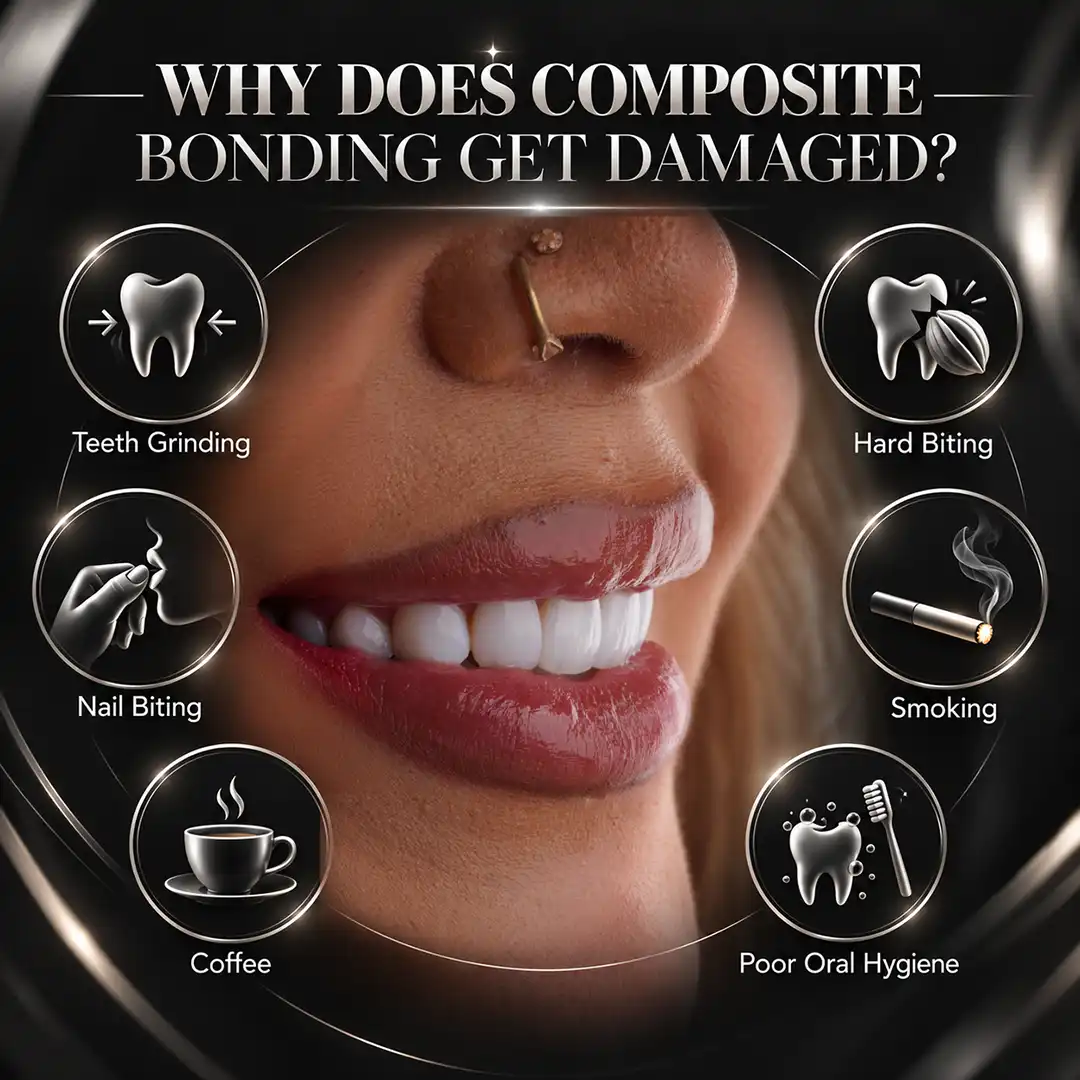
What Causes Composite Bonding to Fail Sooner?
Early failure of composite bonding happens for mechanical reasons far more often than for material reasons. Grinding, a heavy bite, biting on hard objects or a poor initial bond account for most chips. Staining habits and plaque at the margin account for most of the restorations replaced for appearance rather than for breakage.
| Factor | Effect on bonding | What our clinic does about it |
| Night grinding or clenching | Repeated edge chipping, flattened incisal edges | Night guard fitted before or alongside bonding |
| Edge to edge or deep bite | Shearing force on thin composite edges | Bite assessed first; bonding thickness and shape adjusted |
| Biting nails, ice or packaging | Sudden fracture of the edge | Habit counselling; repair rather than replace |
| Coffee, red wine or smoking | Surface and marginal staining within two to three years | High polish at placement; annual repolish |
| Plaque at the margin | Decay under the restoration, gum inflammation | Hygiene review before treatment, six monthly cleaning |
| Insufficient enamel for bonding | Early debonding | Case selection; porcelain or crown advised instead |
Bottom line: most early failures are predictable at the planning visit, which is why the bite plus the habits are examined before the shade is chosen.
Bruxism deserves a separate mention. The 2018 international consensus by Lobbezoo et al. in the Journal of Oral Rehabilitation defines sleep and awake bruxism as repetitive jaw muscle activity and a grinder loads the thinnest part of the restoration every night. Anyone waking with a tight jaw should read our guide to teeth grinding and how to stop it before booking cosmetic work. Staining is the second big driver. A 2019 laboratory study in the American Journal of Dentistry by Duc et al. measured the staining susceptibility of resin composites and confirmed that resin absorbs pigment from coffee or wine in a way glazed porcelain does not. The stain sits in the outer layer so a repolish usually recovers the shade.
How to Make Composite Bonding Last Longer
Bonding lasts longer when the restoration is polished and the bite is protected. Clean margins complete the picture. None of the routine requires special products. A soft brush plus a fluoride toothpaste without coarse abrasives covers the daily part. A night guard for grinders plus a hygienist visit twice a year covers the rest.
The first week sets the pattern. Resin is fully set at placement yet the surface polish is what resists stain so patients avoid strongly coloured drinks for 48 hours while the margins settle. After the first week, ordinary habits apply in four steps. First, brush twice daily with a non whitening toothpaste since whitening pastes contain abrasive particles that dull the resin. Second, floss normally; bonded margins do not snag floss unless an edge has lifted and a snagging floss is a reason to book a check. Third, use a straw for cold coloured drinks. Rinse with water after coffee. Fourth, grinders wear the night guard every night because a single unprotected night can chip an edge that survived two years. Our clinic repolishes bonding at every twelve month review, the single most effective step for a stable shade. Patients travelling home receive the same instructions in writing and the Turkey teeth aftercare guide covers the long term routine for cosmetic work done abroad.
Book Your Free Consultation and send photographs of your front teeth to our clinical team for a bonding assessment.
Does Composite Bonding Last Longer on Some Teeth Than Others?
Bonding lasts longest on upper front teeth shielded by a normal overbite and shortest on biting edges that meet the opposing teeth directly. Lower incisors plus canine tips along with any tooth in an edge to edge bite carry more load so bonding on those units is reviewed sooner.
Position is only half the story. Restoration size matters too. A small corner repair supported by enamel on three sides is far more durable than a long free edge extension relying on the bond alone. The Cochrane review by Wakiaga et al., published in 2004 and limited to veneers placed for intrinsic staining, found the evidence too thin to declare direct or indirect veneers superior, which supports the clinical view that case selection matters more than the label on the treatment. A patient asking our clinic for bonding on worn lower front teeth is offered a bite assessment first. Where the opposing teeth strike the edge directly, the dentist either adjusts the bite, adds a night guard or recommends zirconia dental crowns for the heavily loaded units because a restoration placed into a destructive bite fails whatever the material. For example, bonding on a lower incisor in an edge to edge bite is typically reviewed at six months rather than twelve. Patients unsure whether a single damaged tooth needs bonding or something stronger can read our guide to chipped tooth repair options.
Composite Bonding or Porcelain Veneers: Which Lasts Longer?
Porcelain veneers last longer than composite bonding. Published survival for porcelain laminates typically sits in the ten to fifteen year range, roughly double the composite figure. The longer life comes with a laboratory stage, a higher fee and in most cases, some removal of enamel to make room for the ceramic.
| Feature | Composite bonding | Porcelain veneers |
| Typical lifespan | 5 to 7 years, 10+ with care | 10 to 15 years or more |
| Enamel removal | Usually none | Usually 0.3 to 0.7 mm |
| Visits | 1 | 2 or more, laboratory made |
| Repair if chipped | Added to in the chair | Replaced as a unit |
| Stain resistance | Moderate, needs repolishing | High, glazed surface |
| Reversible | Largely yes | No |
Bottom line: bonding suits a small correction on a tooth with plenty of enamel and porcelain suits a larger change the patient wants to make once.
Neither option is wrong because the two answer different questions. A patient closing a small gap between two healthy teeth would give up enamel for no durability benefit with porcelain. A patient reshaping eight discoloured upper teeth is likely to repair composite several times across the period a porcelain set would last unchanged. In our clinic the decision is made with a mock up so the patient sees the proposed shape before any material is chosen and digital smile design preview technology is used for multi tooth cases. According to the 2024 evidence based guideline by Sekundo et al. in the Journal of Adhesive Dentistry, three processing steps improve composite longevity: layering, then adequate curing time, then a finishing protocol. The same steps are followed for every bonded tooth at International Plus. For a full arch makeover the comparison widens to a complete Hollywood Smile makeover with ceramic, which our guide on veneers versus crowns explains.
Can You Whiten Composite Bonding?
No, composite bonding cannot be whitened. Bleaching gels lighten natural enamel by breaking down pigment molecules inside the tooth and resin has no such structure to act on. Whitening a bonded smile lightens the natural teeth while the bonding keeps the original shade, which leaves the restoration looking darker than before.
Sequence therefore matters and the sequence has three steps. First, patients who want a brighter result have professional in-office teeth whitening. Second, a wait of around two weeks lets the shade stabilise and lets the bond strength of bleached enamel recover. Third, the bonding is placed in a shade matched to the newly whitened teeth. Bonding already in place that has yellowed is managed by repolishing, which removes the stained outer layer or by resurfacing with a fresh layer of resin in the new shade. Whitening strips are a common home question and our guide on whether whitening strips work explains why strips lighten enamel but not restorations. International Plus holds 5,504 verified reviews at 4.8 out of 5. This guide was reviewed for accuracy by Dr. Eren Gülbahar, Head of Cosmetic Dentistry at International Plus. Dr. Gülbahar is an American Dental Association member. Individual results vary. The article is educational and is not medical advice.
To find out whether bonding or porcelain suits your teeth, Contact our patient coordination team for a no obligation review of your photographs.
Frequently Asked Questions
Can composite bonding last 10 years?
Composite bonding can last ten years or longer when placed on a protected upper front tooth that is polished at annual reviews. Keeping the tooth away from grinding or hard biting matters just as much. Published annual failure rates of around 2% mean most restorations are still in service at ten years though many will have had a small repair along the way.
How often does composite bonding need replacing?
Replacement or substantial resurfacing of composite bonding typically happens every five to seven years but full replacement is rarer than people expect. Small chips and surface stain are repaired by adding resin or repolishing. Replacement becomes necessary when the bond has failed, decay has formed underneath or the restoration has fractured across its full width.
Does composite bonding stain as it gets older?
Yes, composite bonding does stain gradually because resin is slightly porous and absorbs pigment from coffee or red wine as well as from tobacco. The stain sits mostly in the outer surface so a professional repolish usually restores the original shade. Restorations that have darkened throughout are resurfaced with a fresh layer of composite in a matching shade.
Does composite bonding fall off easily?
Bonding does not fall off easily when bonded to clean etched enamel and kept out of a destructive bite. Complete debonding is uncommon and usually points to insufficient enamel, contamination during placement or a heavy biting habit. Chipping of a thin edge is more frequent and is repaired in a single visit without removing the rest.
Does teeth grinding make composite bonding wear out faster?
Teeth grinding shortens the life of composite bonding more than any other single factor. Bruxism places repeated force on the thinnest part of the restoration. Edges chip first, then the incisal surface flattens. A custom night guard worn every night protects the bonding and in heavy grinders a stronger material such as a crown may be recommended for the loaded teeth.
Which lasts longer, composite bonding or porcelain veneers?
Porcelain veneers last longer with typical survival of ten to fifteen years compared with five to seven years for composite bonding. Porcelain resists stain and wear better because the surface is a glazed ceramic. Composite is chosen when the correction is small, enamel preservation matters or the patient wants a reversible treatment completed in one visit.
Reviewed by Dr. Eren Gülbahar
References
- Demarco FF, et al. Dent Mater. 2015. PMID: 26303655
- Shah YR, et al. J Conserv Dent. 2021. PMC8989165
- Demarco FF, et al. Braz Oral Res. 2017. PMID: 28902236
- Lobbezoo F, et al. J Oral Rehabil. 2018. PMC6287494
- Duc O, et al. Am J Dent. 2019. PMID: 30834730
- Wakiaga J, et al. Cochrane Database Syst Rev. 2004. PMID: 14974066
- Sekundo C, et al. J Adhes Dent. 2024. PMC11748045
This content is written, reviewed, and approved by the International Plus Medical Review Board to ensure clinical accuracy and adherence to strict editorial standards. All medical information is regularly monitored, audited and updated in light of the latest scientific advancements.
However the information provided here is for general informational purposes only and cannot be used for self diagnosis or making individual health interpretations. Results of medical treatments depend on individual anatomy and the unique healing process of each patient. This information should not replace a personal consultation with a qualified healthcare professional. To understand the best options for your specific needs and to receive a personalized treatment plan, we invite you to book a free consultation with the expert medical team at International Plus.

I am a healthcare professional with over 4 years of experience in dentistry, specializing in prosthetic dental treatment and implant-based applications. Since 2024, I have been serving as chief physician, leading clinical management, team coordination, and international patient processes. With my B2-level English proficiency, I am able to communicate effectively with international patients. I am a patient-centered, innovative, and solution-oriented dentist who prioritizes patient satisfaction.