
Traction alopecia treatment turns almost entirely on one question: are the follicles still there? Chronic pulling from tight styling damages follicles gradually and the damage passes through a reversible phase before it becomes scarring. Timing therefore decides the outcome more than any product does. This International Plus guide sets out the clinical signs that separate the two phases, what tension removal genuinely achieves, plus the point at which surgical restoration becomes the honest answer.
Key Takeaways
- Traction alopecia treatment works best in the early phase when follicular ostia are still visible across the affected margin.
- The fringe sign, a retained line of fine hairs along the very edge of the hairline, is one of the most recognised clinical markers of the condition.
- Reversal depends on removing tension consistently; regrowth is judged over 6 to 12 months, not over weeks.
- Late-stage traction alopecia becomes scarring alopecia and hair does not return to scarred skin without surgical transfer.
- Hair transplantation is considered only after the pulling has stopped and the scalp has stayed quiet for a documented period.
What Is Traction Alopecia?
Traction alopecia is hair loss caused by sustained mechanical pulling on the hair shaft, most often along the frontal and temporal hairline. Repeated tension inflames the follicle, weakens its anchoring, then replaces it with fibrous tissue. The pattern follows wherever the pull is applied rather than a hormonal map.
Recognition has historically lagged behind prevalence. Akingbola and Vyas described traction alopecia as a neglected entity in the Indian Journal of Dermatology, Venereology and Leprology (2017), noting that patients frequently present only after the loss has become visible to others. A 2023 clinical study by Balazic and colleagues in Clinical and Experimental Dermatology assessed presentation, management plus outcomes across a diverse urban population. Hairstyling practice is one contributing factor among several and our clinical team discusses it as a mechanical load question rather than as a judgement about anyone’s hair care choices.
What Are the Early Signs of Traction Alopecia?
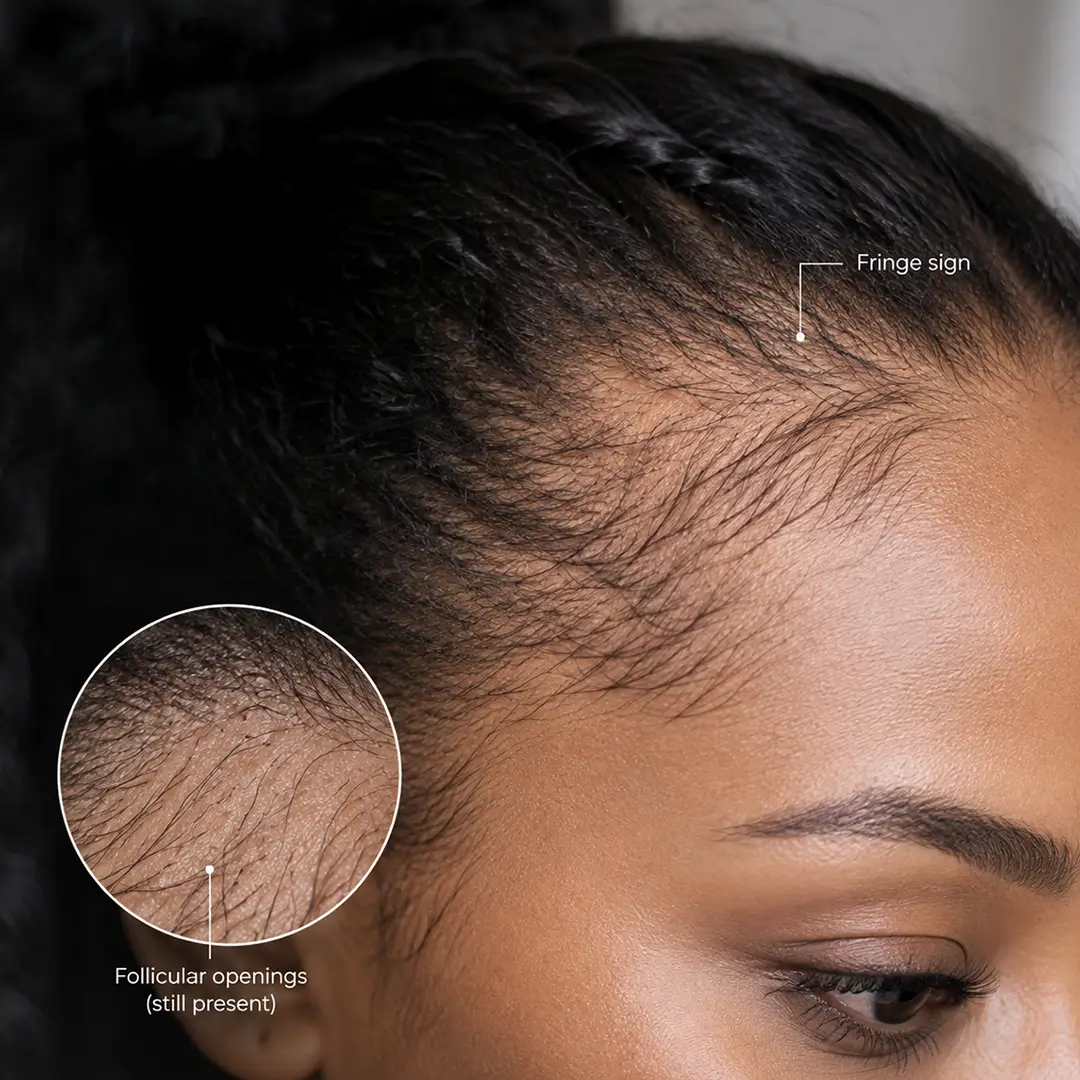
Early traction alopecia shows thinning at the hairline margin, small perifollicular papules, tenderness after styling, plus short broken hairs where shafts have snapped under load. Visible follicular ostia, the tiny openings where hairs emerge, indicate that the follicle still exists. Their presence is the single most useful early finding.
Two signs deserve particular attention. The fringe sign describes a preserved band of fine, short hairs at the outermost hairline with loss immediately behind it and this pattern is closely associated with traction rather than with pattern baldness. Scalp tenderness during or after styling is the second warning since discomfort indicates ongoing follicular inflammation rather than simple sensitivity. Madu and Kundu reviewed follicular plus scarring disorders in skin of colour in the American Journal of Clinical Dermatology (2014), covering how these presentations are assessed. Only a physician examining the scalp, usually with trichoscopy, can distinguish traction from other causes of marginal loss.
Can Traction Alopecia Be Reversed?
Reversal is realistic while follicular openings remain visible and no scarring has formed. Regrowth in that phase depends on removing the mechanical load consistently for months rather than on any single product. Once openings have disappeared and the skin has become smooth and shiny, the process is scarring; regrowth does not occur naturally.
Staging changes the entire conversation so the distinction is drawn at examination before any plan is written. Early traction alopecia responds well to tension removal alone but the same approach fails once follicular openings have vanished because scarred skin no longer holds a follicle capable of recovering. Progress is measured with standardised photographs at fixed intervals since day-to-day impressions mislead patients in both directions. Our trichology team documents ostia density in the affected margin at the first visit so later comparison rests on a recorded baseline rather than memory.
| Clinical stage | What examination shows | Realistic expectation |
| Early, non-scarring | Ostia visible, papules or tenderness present | Regrowth possible over 6 to 12 months after tension stops |
| Intermediate | Reduced ostia density, fringe hairs thinning | Partial regrowth, permanent loss in some zones |
| Late, scarring | Smooth shiny skin, ostia absent | Natural regrowth does not occur; surgical transfer is the option |
| Post-surgical | Grafts placed into stable, quiet scalp | Density judged at month 12, coverage rather than original volume |
Staging in the table above is a clinical judgement made at examination, never a self-assessment from photographs.
What Does Early Stage Traction Alopecia Treatment Involve?
Early management centres on eliminating the pulling force, treating any inflammation a physician identifies, then giving the follicle time. Medical support may be added after examination and that decision belongs to the treating dermatologist rather than to a website. Styling modification carries more weight than any topical product at this stage.
Sequence matters in the early phase. Tension removal comes first because inflammation continues while the load continues, whatever else is prescribed. Anti-inflammatory management follows when papules or tenderness are documented. Topical or oral medical support is then evaluated individually, with scalp condition plus general health taken into account. Reviews of hair disorders in women of colour by Lawson and colleagues in the International Journal of Women’s Dermatology (2017) summarise how these treatment layers are combined. Regenerative options are sometimes discussed alongside them and our overview of the platelet-rich plasma protocol explains where that evidence currently stands.
How Can Tension Be Reduced Without Abandoning a Hairstyle?
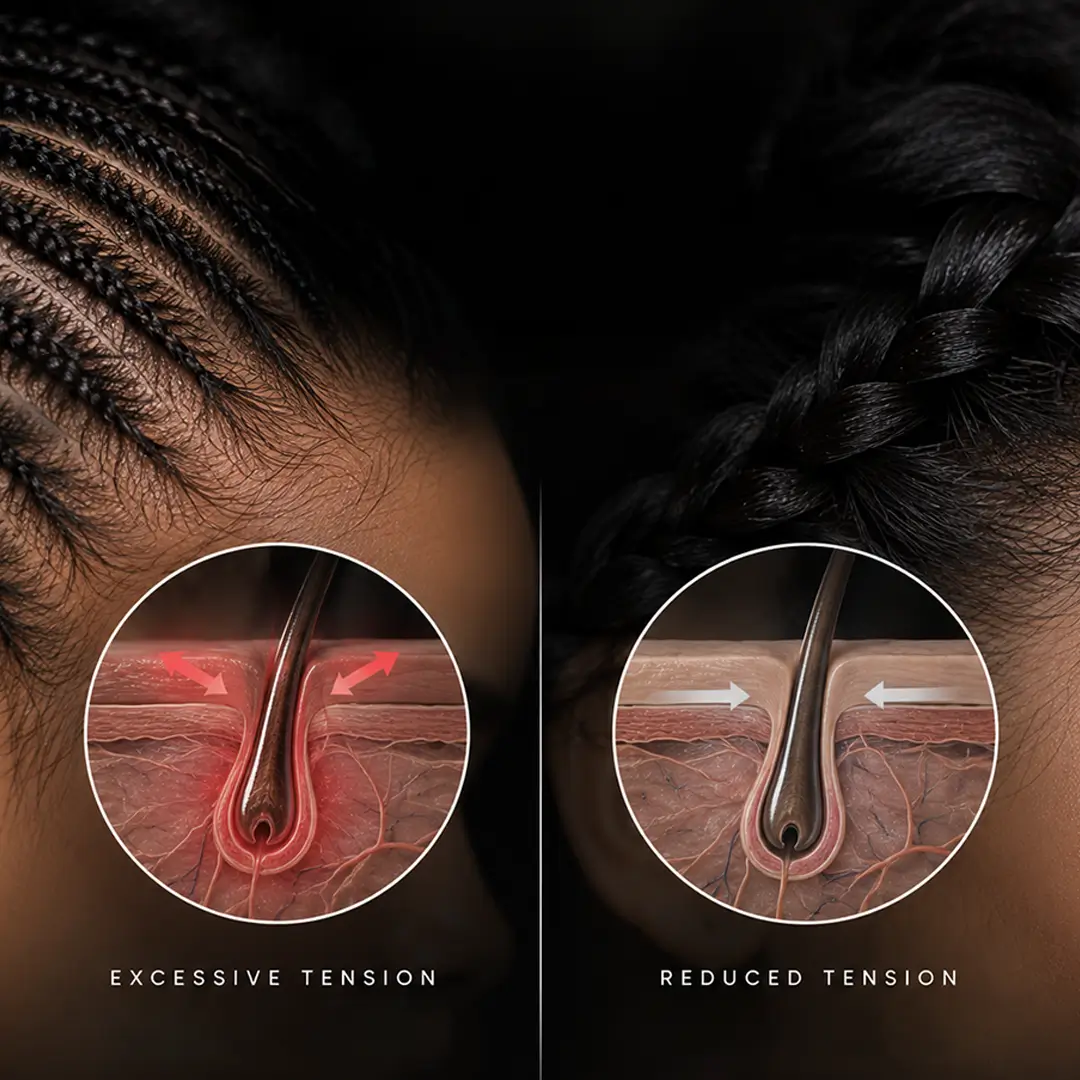
Tension reduction is a set of practical adjustments rather than an instruction to give up cultural or personal styling. Load falls when styles are worn looser, held for shorter periods, rotated with lower-tension alternatives, kept away from an already thinned margin. Pain during styling is always a signal to stop.
Several adjustments reduce mechanical load measurably. Increasing braid or twist size spreads force across more shafts. Avoiding heat or chemical processing immediately before a tension style protects shaft strength since a weakened shaft snaps under loads a healthy one tolerates. Releasing styles overnight lowers total exposure hours considerably. Keeping the hairline itself out of the tension pattern protects the exact zone most at risk. Our coordinators build these adjustments into a written plan with the patient rather than issuing a list because a plan the patient will not follow protects nobody.
When Is a Hair Transplant Considered for Traction Alopecia?
Surgery enters the discussion only when loss is established as scarring, the pulling has stopped, plus the scalp has remained quiet with no inflammation for a documented period, commonly a year or more. Donor supply must also be assessed carefully because traction patterns sometimes affect areas near the donor zone.
Scarred recipient skin behaves differently from normal scalp. Blood supply is reduced so graft survival expectations and packing density are both adjusted downward. Madura and colleagues assessed hair transplantation outcomes in cicatricial alopecia in the International Journal of Trichology (2020) and Queen and colleagues reviewed hair transplantation in women in the Journal of Drugs in Dermatology (2025). A test session across a small area is sometimes performed first. At International Plus, more than 200,000 patients from 140 countries have been treated since 2014 and hairline reconstruction is planned through our hair transplant surgery pathway with candidacy for women assessed through the female hair restoration route. Textured hair adds technical demands covered in our afro hair surgical guide.
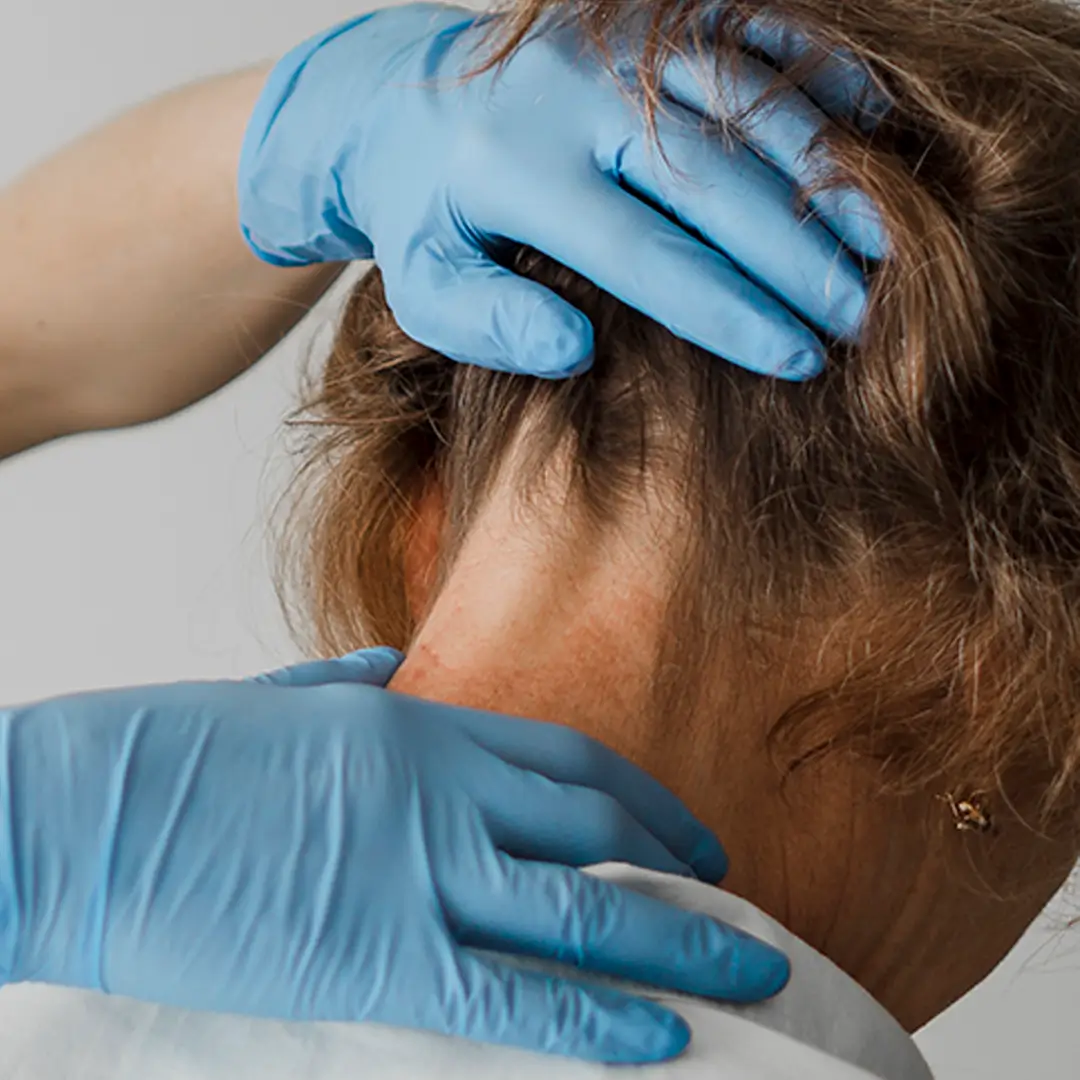
How Is Progress Monitored Over Time?
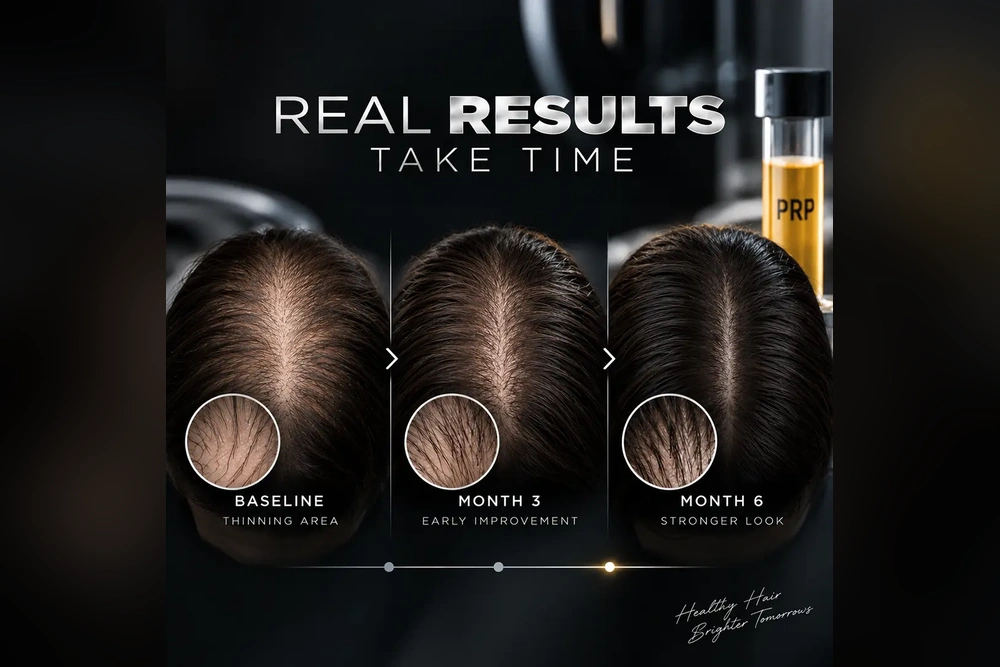
Monitoring uses fixed-interval photography, ostia counts across marked zones, plus a record of styling changes the patient has actually made. Review points at month 3, month 6 plus month 12 capture the realistic timeline. Judging traction alopecia treatment before month 6 produces false disappointment in most cases.
Documentation protects the patient from two errors. Abandoning an effective plan too early is the first since early regrowth appears as fine vellus hair that photographs poorly. Continuing an ineffective plan indefinitely is the second, which is why a formal reassessment point is set in advance. Camouflage options are discussed in parallel where coverage matters socially and our page on pigment camouflage techniques covers what that can and cannot achieve. International Plus holds a 4.8/5 rating across 5,504 verified patient reviews, works under Turkish Ministry of Health authorisation and supports patients in 21 languages and individual results may vary. Surgical timelines are documented in our regrowth timeline guide.
Book a scalp assessment with our coordination team and receive a written staging opinion explaining whether tension management, medical care or surgery fits your hairline.
Frequently Asked Questions
How long does traction alopecia take to grow back?
Regrowth in early, non-scarring traction alopecia is usually assessed over six to twelve months after the pulling stops. Fine vellus hairs appear first, thickening slowly. Improvement seen at month three is a good sign though absence of change at that point does not yet mean the follicles are lost.
Is traction alopecia permanent?
It depends entirely on stage. Early traction alopecia with visible follicular openings often reverses once tension is removed consistently. Late traction alopecia is a scarring condition in which follicles have been replaced by fibrous tissue and hair does not return to that skin naturally. Examination determines which stage applies.
Does traction alopecia only affect one hair type?
No. Traction alopecia occurs with any hair type whenever styles apply sustained pulling, including tight ponytails, buns, braids, extensions, weaves, turbans, surgical headwear worn for long shifts. Risk relates to tension, duration plus repetition rather than to hair texture alone though certain styling traditions involve higher cumulative load.
Can I still braid my hair after traction alopecia?
Many patients continue braiding with modifications rather than stopping entirely. Larger sections, looser tension, shorter wear periods plus rest intervals between installations all lower mechanical load. Pain, tenderness, small bumps during styling indicate that the tension is still too high. A dermatologist can review the specific pattern being used.
What is the fringe sign in traction alopecia?
The fringe sign describes a retained band of short, fine hairs along the outermost hairline with hair loss immediately behind that band. Dermatologists consider it a characteristic marker of traction alopecia because pattern hair loss usually recedes the frontal line itself instead of preserving a fringe in front.
Can a hair transplant fix traction alopecia?
Surgical restoration is possible in scarring cases once the pulling has stopped and the scalp has been stable for a documented period. Scarred skin has reduced blood supply so density targets are conservative and a test area is sometimes grafted first. A surgeon confirms candidacy for surgical traction alopecia treatment after examining both the affected margin and the donor zone.
Reviewed by Dr. Eren Gülbahar
References
- Akingbola CO, et al. Indian J Dermatol Venereol Leprol. 2017. PMID: 29035284
- Balazic E, et al. Clin Exp Dermatol. 2023. PMID: 37098178
- Madu P, et al. Am J Clin Dermatol. 2014. PMID: 24820821
- Lawson CN, et al. Int J Womens Dermatol. 2017. PMC5419061
- Madura C, et al. Int J Trichology. 2020. PMC7759062
- Queen D, et al. J Drugs Dermatol. 2025. PMID: 40911748
Follow us on Social Media
internationalplusofficial
internationalplus
internationalplusdental
This content is written, reviewed, and approved by the International Plus Medical Review Board to ensure clinical accuracy and adherence to strict editorial standards. All medical information is regularly monitored, audited and updated in light of the latest scientific advancements.
However the information provided here is for general informational purposes only and cannot be used for self diagnosis or making individual health interpretations. Results of medical treatments depend on individual anatomy and the unique healing process of each patient. This information should not replace a personal consultation with a qualified healthcare professional. To understand the best options for your specific needs and to receive a personalized treatment plan, we invite you to book a free consultation with the expert medical team at International Plus.

I am a healthcare professional with over 4 years of experience in dentistry, specializing in prosthetic dental treatment and implant-based applications. Since 2024, I have been serving as chief physician, leading clinical management, team coordination, and international patient processes. With my B2-level English proficiency, I am able to communicate effectively with international patients. I am a patient-centered, innovative, and solution-oriented dentist who prioritizes patient satisfaction.