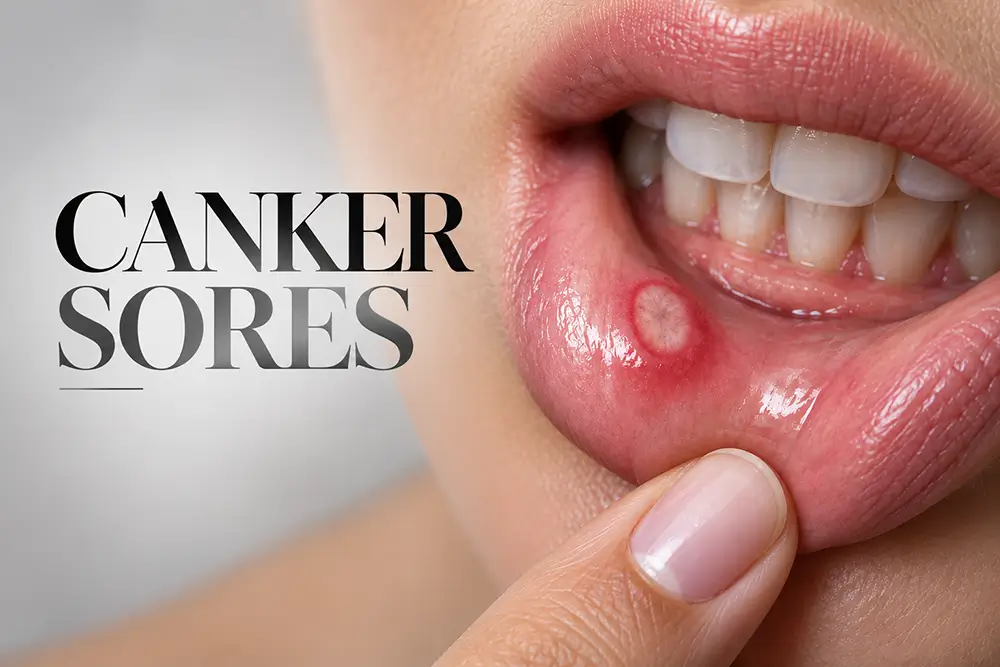

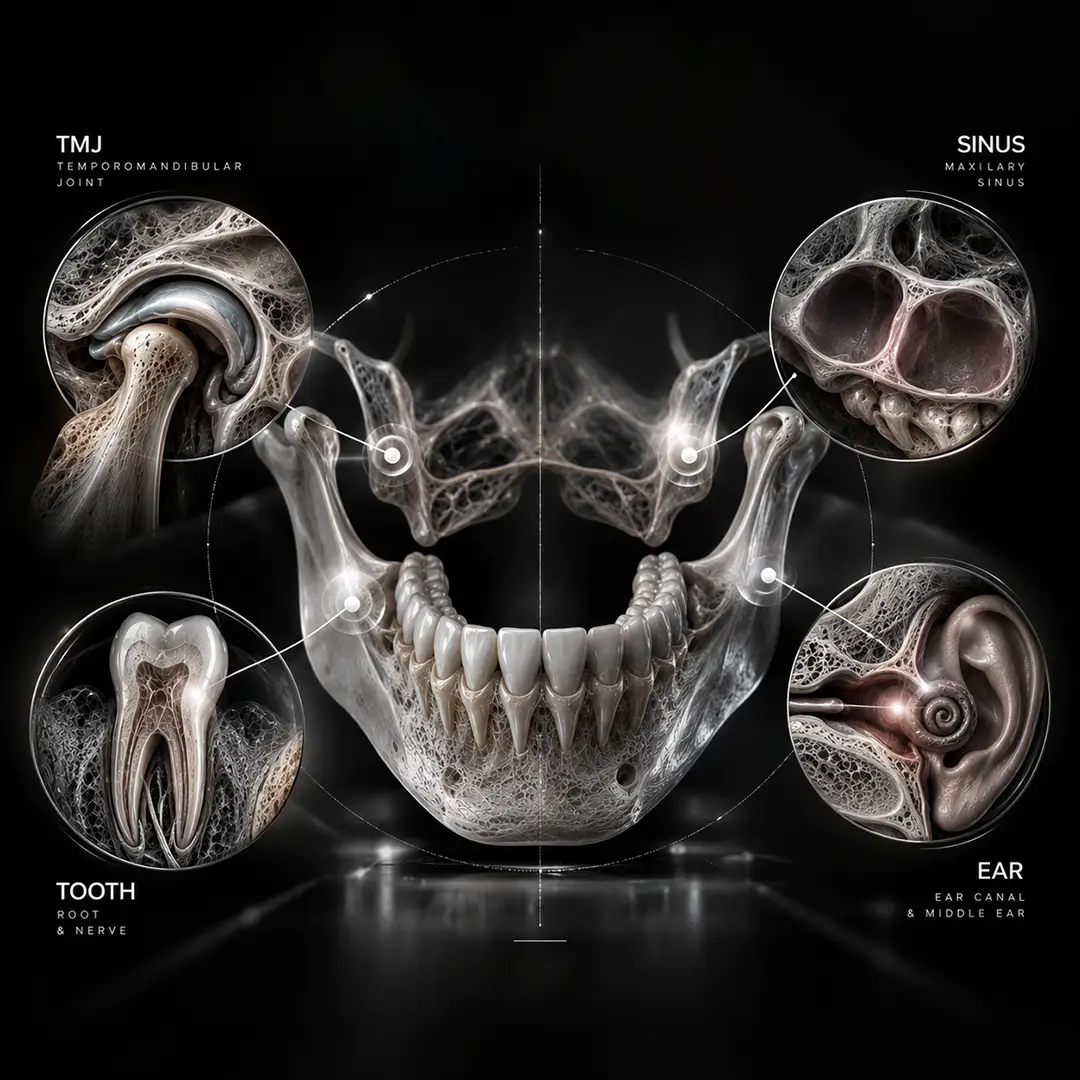
Jaw pain is one of the hardest symptoms to place. The joint, the teeth, the ear plus the sinuses all sit within a few centimetres of each other. Most cases turn out to be a joint or muscle problem that responds to simple care. A small number are urgent. This International Plus guide starts with the warning signs that cannot wait, then works through the everyday causes of jaw pain in the order clinicians actually consider them. You will find how to tell joint pain from tooth pain and what relief genuinely helps at home.
Emergency warning: if jaw pain comes with chest pressure, shortness of breath, pain spreading to the arm, neck or back, nausea or cold sweating, call emergency services immediately. That combination can signal a heart attack. Dial 911 in the United States, 112 across Europe or your local emergency number. Do not drive yourself. Do not wait to see whether the pain settles on its own.
Key Takeaways
- Jaw pain with chest pressure, breathlessness or cold sweating is a medical emergency. Call emergency services rather than a dentist.
- Temporomandibular disorder (TMD) explains most non-dental jaw pain. Clicking plus tenderness on chewing is the classic pattern.
- One-sided pain near the ear usually comes from the joint, a tooth or the ear itself rather than anything rare.
- Dental infection and impacted wisdom teeth produce constant throbbing instead of the movement-related ache of joint problems.
- Persistent one-sided pain beyond 3 weeks, a lump, lip numbness or trouble swallowing needs clinical examination.
What Causes Jaw Pain?
Jaw pain is most often caused by temporomandibular disorder, a problem of the joint or the muscles moving it. Dental causes come second: decay, infection or an impacted wisdom tooth. Sinus inflammation or ear infection follows. Nerve conditions such as trigeminal neuralgia account for the remainder.
Location plus timing narrow the field faster than any single test. According to the Diagnostic Criteria for Temporomandibular Disorders published by Schiffman et al in 2014, joint pain is confirmed by palpation plus pain on movement rather than by imaging alone. Muscle pain spreads across the cheek. Joint pain sits in a small spot just in front of the ear. A dental source stays fixed to one tooth. In practice our maxillofacial team asks patients to point with a single fingertip because a broad hand gesture almost always means muscle rather than joint.
When Is Jaw Pain a Medical Emergency?
Pain in the jaw becomes an emergency when it arrives with chest pressure, breathlessness, pain radiating to the arm or back, nausea or cold sweating. Call emergency services immediately. Jaw pain can be a presenting symptom of a heart attack, particularly in women. Rapid facial swelling with fever or difficulty swallowing also demands same day emergency care.
Cardiac jaw pain behaves differently from dental pain. A 2020 review by DeVon et al in the Journal of the American Heart Association documented how frequently symptoms outside the chest accompany acute coronary syndrome. Research by Schulte et al in 2023 compared presentations between women and men. Jaw or neck discomfort featured more often in women. The pattern to notice is pain brought on by exertion that eases with rest. Dental pain does not behave that way. Our clinic protocol sends any patient describing such a combination straight to emergency services rather than into a dental chair.
Why Does My Jaw Hurt on One Side?
Jaw pain on one side usually starts in the joint on that side. A tooth or the ear itself explains most of the remainder. Chewing habits load one side more heavily. Clicking with tenderness in front of the ear points to the joint. Constant throbbing alongside a tender tooth points to infection instead.
| Likely cause | Typical pattern | What to do |
| TMJ disorder | Clicking, worse on chewing, tender joint | Dental or TMJ assessment |
| Dental infection or wisdom tooth | Constant throbbing, tender tooth, swelling | Urgent dental appointment |
| Sinusitis | Upper jaw ache, worse bending forward, congestion | Medical review |
| Ear infection | Pain near the ear, hearing change, fever | Medical or ENT review |
| Cardiac symptoms | Jaw ache with chest pressure or breathlessness | Call emergency services now |
Movement-related pain suggests the joint. Pain present at rest suggests a tooth.
One-sided patterns rarely indicate anything rare. A 2020 practical guide by Beaumont et al in the Australian Dental Journal set out how clinicians separate joint, muscular or dental origins inside a single examination. Onset matters too since pain that began after a long dental appointment usually reflects strained muscles rather than joint damage. For example, our surgical team regularly sees jaw ache appear 2 days after wisdom tooth surgery in patients who held the mouth open for an extended period.
Contact our patient coordination team if one-sided jaw pain has lasted more than two weeks.
What Causes Ear and Jaw Pain on One Side?
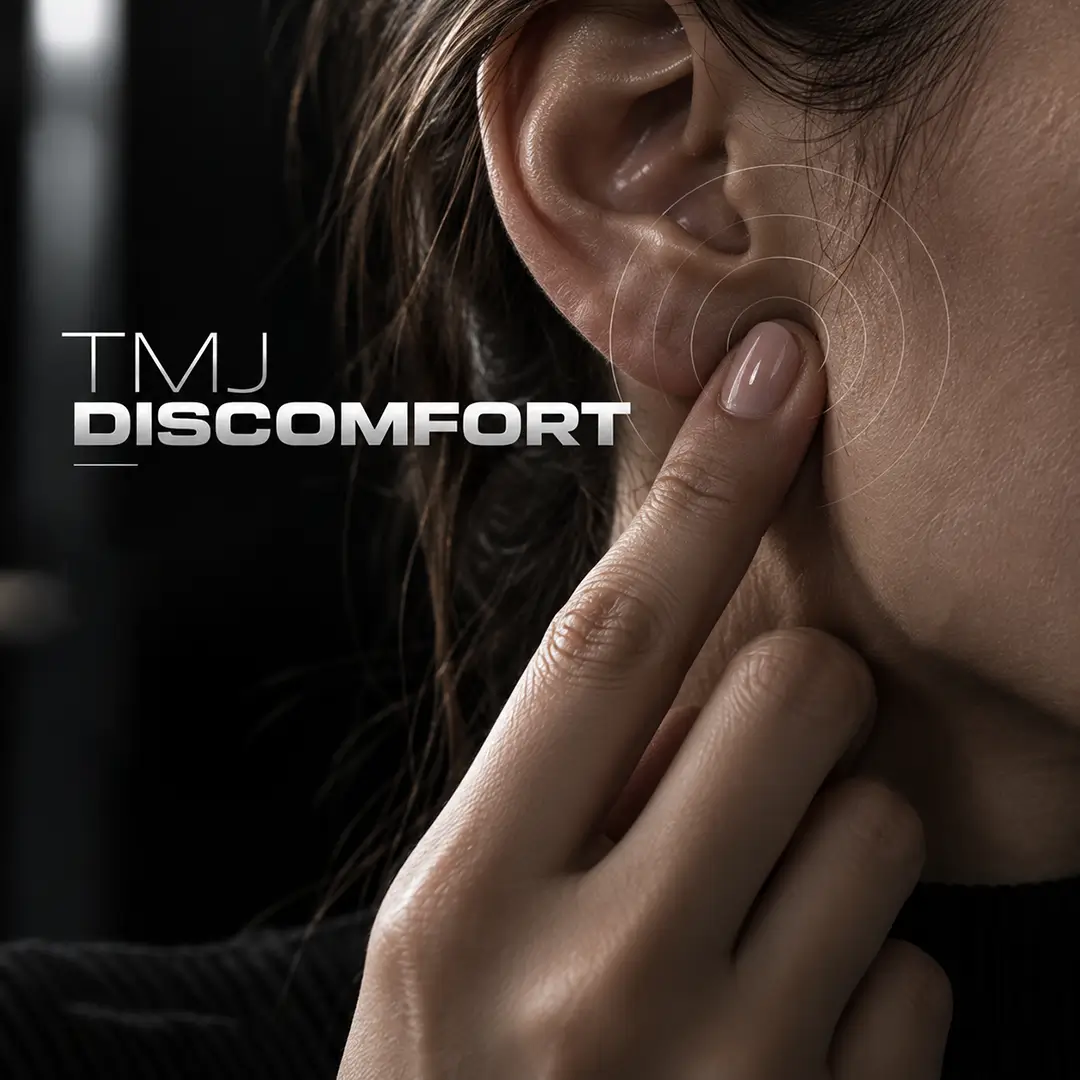
Ear and jaw pain on one side usually share a single cause rather than being two separate problems. The temporomandibular joint sits directly in front of the ear canal so joint inflammation is felt as earache. Middle ear infection works in the opposite direction and refers pain into the jaw.
Anatomy explains most of the confusion. The joint capsule lies within 1 cm of the ear canal. One nerve branch supplies both regions. Pain under the ear behind the jaw bone often traces to the joint itself. A swollen lymph node or the parotid salivary gland explains many other cases. Hearing change, discharge or fever shifts suspicion toward the ear itself. Studies found ear symptoms are reported by a substantial share of patients with confirmed temporomandibular disorder. In practice our team presses the joint while the patient opens: reproducible pain confirms a joint source. An ear hurting at rest with fever needs a doctor rather than a dentist.
Is TMJ Disorder Behind Your Jaw Pain?
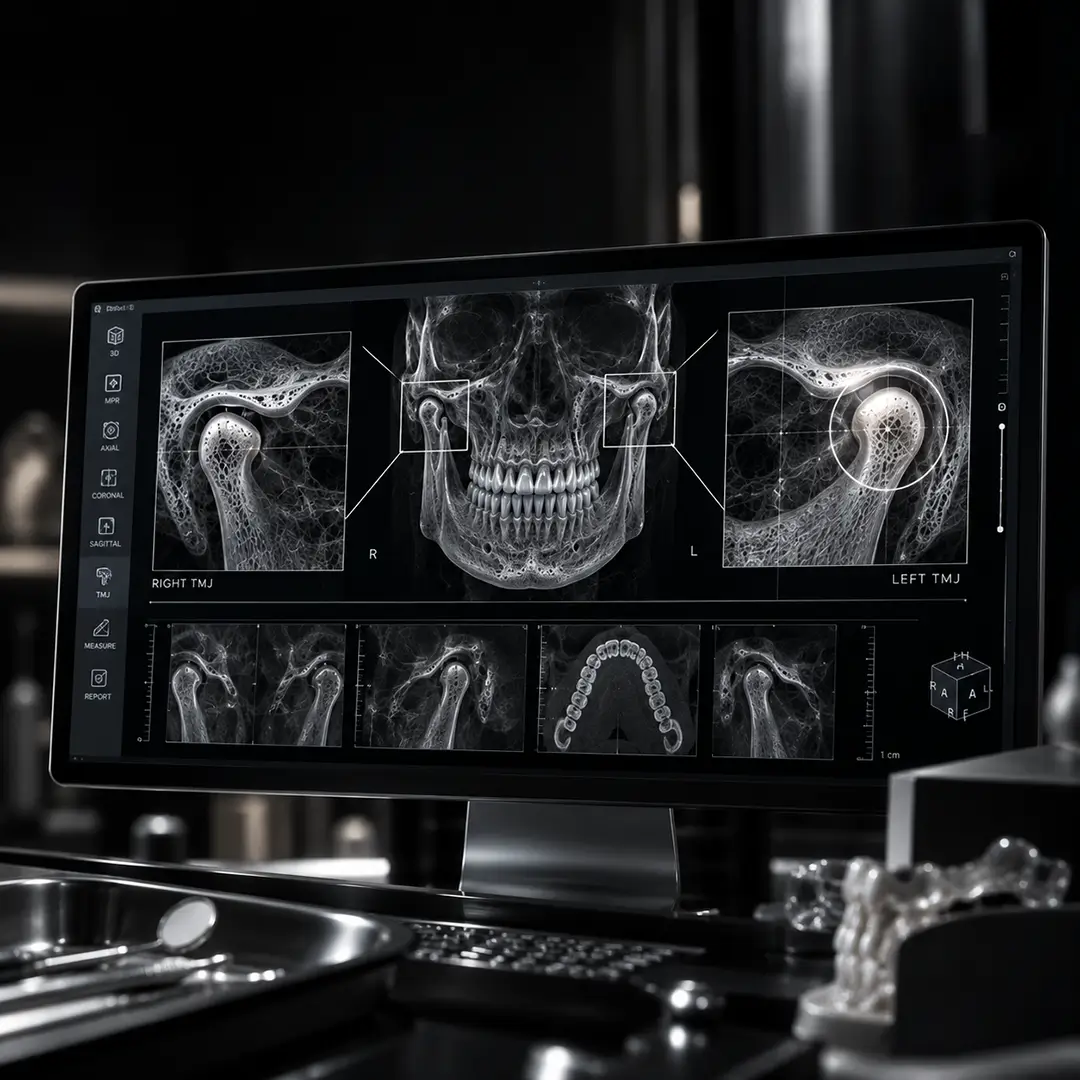
Very likely when pain worsens on chewing. Clicking or brief locking of the jaw strengthens the diagnosis further. Temporomandibular disorder covers muscle pain, disc displacement plus joint arthritis. Night-time clenching is the most common aggravating factor. Most cases improve with conservative care rather than surgery.
Conservative management is the evidence-based starting point. A 2022 rapid review of systematic reviews by Tran et al in the International Journal of Oral and Maxillofacial Surgery found jaw exercises, education plus splint therapy outperform irreversible procedures for most patients. A 2023 review by Albagieh et al examined occlusal splint designs and reported symptom improvement across several types. Splints suit patients whose pain follows night-time clenching but a splint is not right for an acutely locked jaw because disc position needs addressing first. Patients already managing teeth grinding usually need a guard alongside a physiotherapy programme.
Can Teeth or Wisdom Teeth Cause Jaw Pain?
Yes. An impacted wisdom tooth pressing against the second molar produces a deep ache along the back of the jaw. Infection inside a tooth root spreads into surrounding bone and creates constant throbbing. Dental pain stays present at rest, which separates it from movement-related joint pain.
Origin changes the treatment completely. Pericoronitis around a partly erupted wisdom tooth causes localised swelling worsening across 3 to 4 days. Deep decay reaching the pulp needs root canal treatment by endodontic specialists rather than painkillers. A periodontal abscess responds instead to gum disease treatment and periodontal care. Our maxillofacial team images every persistent one-sided ache with a CBCT scan because a small periapical lesion stays invisible on standard views. Reviewing wisdom teeth pain separately helps patients judge urgency and cases needing wisdom teeth removal are planned from the same scan. An untreated tooth infection never settles on its own.
Should Persistent One-Sided Jaw Pain Raise Concern About Cancer?
Rarely. Cancer is an uncommon cause of jaw pain. Most persistent one-sided pain proves to be joint or dental in origin. Certain features still warrant examination: a lump that does not resolve, numbness of the lip or chin, teeth loosening without gum disease or difficulty swallowing beyond 3 weeks.
Screening is routine rather than alarming. Every International Plus examination includes a soft tissue check covering the tongue, the floor of the mouth plus neck lymph nodes. Numbness is the single most useful red flag because pressure on the inferior alveolar nerve produces altered sensation that joint problems never cause. Clinical evidence supports early referral for any unexplained lesion persisting past 3 weeks. Reassurance without examination helps nobody. Neither does searching symptoms online at 2 am. A 15 minute appointment settles the question far more reliably.
How Do You Relieve Jaw Pain at Home?
Rest the joint. Eat soft food for 7 to 10 days. Apply moist heat for 15 minutes twice daily to relax the muscles. Avoid chewing gum, wide yawning or nail biting. Over the counter anti-inflammatory medication helps short term where your own doctor confirms it suits you.
Self-care resolves a surprising share of cases. According to Goodfred et al in a 2025 primary care review, most temporomandibular pain improves with conservative measures inside 4 weeks. Gentle controlled opening exercises retrain the muscles. Sleep position matters too since face-down sleeping loads the joint for hours. A 2022 systematic review by Minakuchi et al covered sleep bruxism management and confirmed no single measure suits everyone. Our team gives international patients a printed exercise sheet because compliance drops sharply without written instruction. Pain worsening past 2 weeks needs proper assessment.
How Is Jaw Pain Treated at the Clinic?
Clinical treatment starts with diagnosis rather than medication. Examination covers joint palpation, range of movement plus a full dental assessment, followed by imaging where indicated. A custom splint is the usual first-line device. Physiotherapy, targeted injections or arthrocentesis follow for cases resisting conservative care.
Stepped care avoids irreversible procedures. Surgery is reserved for a small minority with structural joint disease confirmed on imaging. Our maxillofacial department plans every case from a CBCT scan alongside a clinical movement chart. Untreated cavities are ruled out before any joint therapy begins. Pain of dental origin is treated at source and lingering ache after treatment is checked against the guidance in our review of tooth pain relief. This guide was reviewed by Dr. Emre Çolak, an oral and maxillofacial surgeon with more than 20 years of experience whose training includes an EACMFS credited programme in TMJ biology and surgical management. International Plus carries 5,504 verified reviews at 4.8 out of 5 and has treated over 200,000 patients from 140+ countries. Individual results vary.
Book a jaw pain and TMJ assessment with the International Plus coordination team.
Frequently Asked Questions
Can jaw pain be a sign of a heart attack?
Yes although it is uncommon as an isolated symptom. Cardiac jaw pain typically appears with chest pressure, breathlessness, arm or back pain, nausea or cold sweating and it is often triggered by exertion. Women report jaw and neck symptoms more frequently. Call emergency services immediately rather than waiting.
Why does my jaw hurt on one side near my ear?
The temporomandibular joint sits directly in front of the ear canal so joint inflammation is felt as pain near the ear. Clicking, tenderness on pressing the joint plus pain that worsens while chewing all point there. Hearing change or fever instead suggests the ear needs medical review.
Can an ear infection cause jaw pain?
Yes. Middle ear infection refers pain into the jaw because both regions share nerve supply. Fever, hearing change or discharge from the ear suggests infection rather than a joint problem. A doctor should assess these cases since untreated ear infection can spread and antibiotics may be required.
Can wisdom teeth cause jaw pain?
Yes. An impacted wisdom tooth pressing on the tooth in front produces a deep ache along the back of the jaw. Partly erupted teeth also trap bacteria under the gum flap, which causes pericoronitis with swelling plus restricted opening. Assessment with a radiograph determines whether removal is necessary.
How long should jaw pain last before I see a dentist?
Book an appointment if jaw pain lasts beyond two weeks if the jaw locks if opening becomes restricted or if pain disturbs sleep. Seek urgent care for facial swelling, fever or difficulty swallowing. Any pain with chest or breathing symptoms means emergency services rather than a dental appointment.
What is the fastest way to relieve jaw pain at home?
Moist heat applied for 15 minutes plus a soft diet gives the quickest relief for muscular jaw pain. Stop chewing gum and avoid wide yawning for a week. Anti-inflammatory medication approved by your doctor reduces joint inflammation. Pain that keeps worsening needs examination rather than more painkillers.
Reviewed by Dr. Emre Çolak
References
- Schiffman E, et al. J Oral Facial Pain Headache. 2014. PMC4478082
- Tran C, et al. Int J Oral Maxillofac Surg. 2022. PMID: 35339331
- Beaumont S, et al. Aust Dent J. 2020. PMID: 32562281
- Albagieh H, et al. Saudi Dent J. 2023. PMC9931504
- Minakuchi H, et al. Jpn Dent Sci Rev. 2022. PMC8958360
- DeVon HA, et al. J Am Heart Assoc. 2020. PMC7428604
- Schulte KJ, et al. Cureus. 2023. PMC10182740
- Goodfred J, et al. Prim Care. 2025. PMID: 39939086
Follow us on Social Media
internationalplusofficial
internationalplus
internationalplusdental
This content is written, reviewed, and approved by the International Plus Medical Review Board to ensure clinical accuracy and adherence to strict editorial standards. All medical information is regularly monitored, audited and updated in light of the latest scientific advancements.
However the information provided here is for general informational purposes only and cannot be used for self diagnosis or making individual health interpretations. Results of medical treatments depend on individual anatomy and the unique healing process of each patient. This information should not replace a personal consultation with a qualified healthcare professional. To understand the best options for your specific needs and to receive a personalized treatment plan, we invite you to book a free consultation with the expert medical team at International Plus.

Dr. Emre Çolak concentrates on advanced implant surgery and modern regenerative treatments, delivering refined solutions to patients abroad in need of complex dental restoration.