
How soon can I drink water after tooth extraction? Within the first hour as long as the water is still at room temperature and sipped from a glass rather than pulled through a straw. Water itself does no harm to the healing socket. What harms the socket is suction, heat, swishing and alcohol and each of those has its own waiting period. This International Plus guide gives the timeline drink by drink and explains the blood clot every rule is designed to protect.
Key Takeaways
- Still water can be sipped within the first hour after a tooth extraction once the gauze is removed and without swishing.
- Straws, hot drinks and fizzy drinks wait at least 24 hours because suction, heat and carbonation each disturb the clot.
- Alcohol waits at least 24 hours and longer while prescribed pain relief or antibiotics are being taken.
- Dry socket, the complication the rules prevent, affects roughly 0.5% to 5% of routine extractions and typically appears between day one and day three.
- Warm salt water rinses begin on day two, not day one because rinsing on the first day washes the clot out.
How Soon Can You Drink Water After a Tooth Extraction?
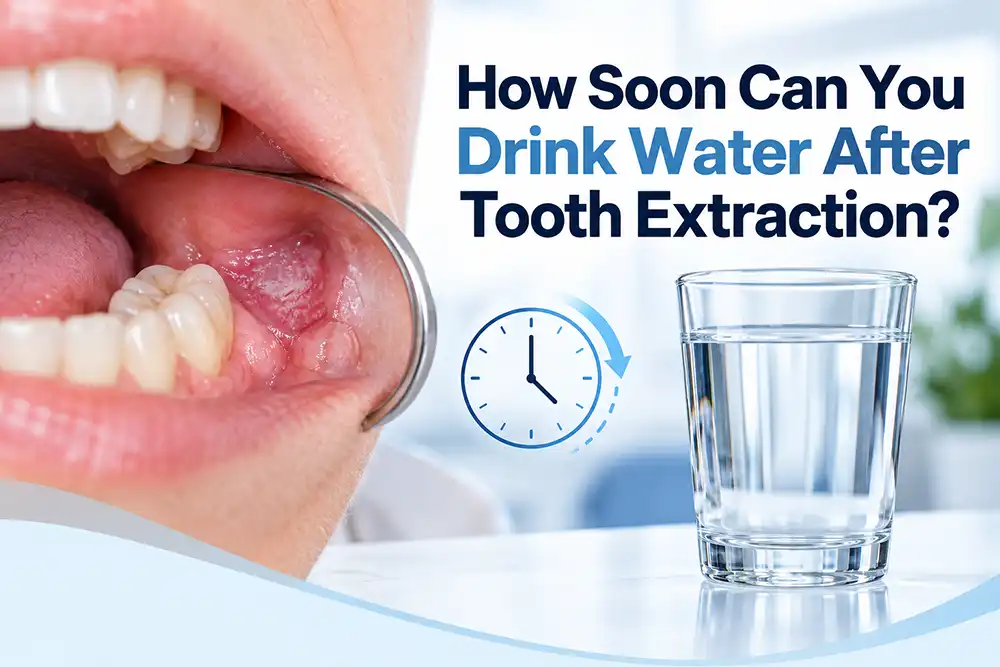
Water can be drunk within the first hour after a tooth extraction. The dentist places gauze over the socket for 30 to 60 minutes to help the clot form and once the gauze is out a patient can sip still water from a glass. The water should be cool or at room temperature and swallowed gently without swishing.
The reason water is allowed so early is that hydration helps healing and plain water contains nothing that irritates the wound. The reason the sipping has to be gentle is the clot. According to the classic 1969 study of human extraction sockets by Amler in the journal Oral Surgery Oral Medicine Oral Pathology, the blood clot that fills the socket in the first 24 hours is the scaffold on which granulation tissue grows by day seven and on which bone eventually forms. A clot that is dislodged on day one leaves bare bone and bare bone hurts. In practice the order is simple. First, keep the gauze in place for the time the dentist stated. Second, remove the gauze. Sip a small amount of water, letting it reach the back of the mouth without moving it across the socket. Third, continue sipping through the day because a patient who avoids all fluid for hours tends to feel faint and then rinses vigorously out of thirst. Our clinic gives every extraction patient a bottle of still water to take to the car for exactly this reason. The fuller day by day picture is in our guide to tooth extraction aftercare.
Why Must You Avoid Straws After a Tooth Extraction?
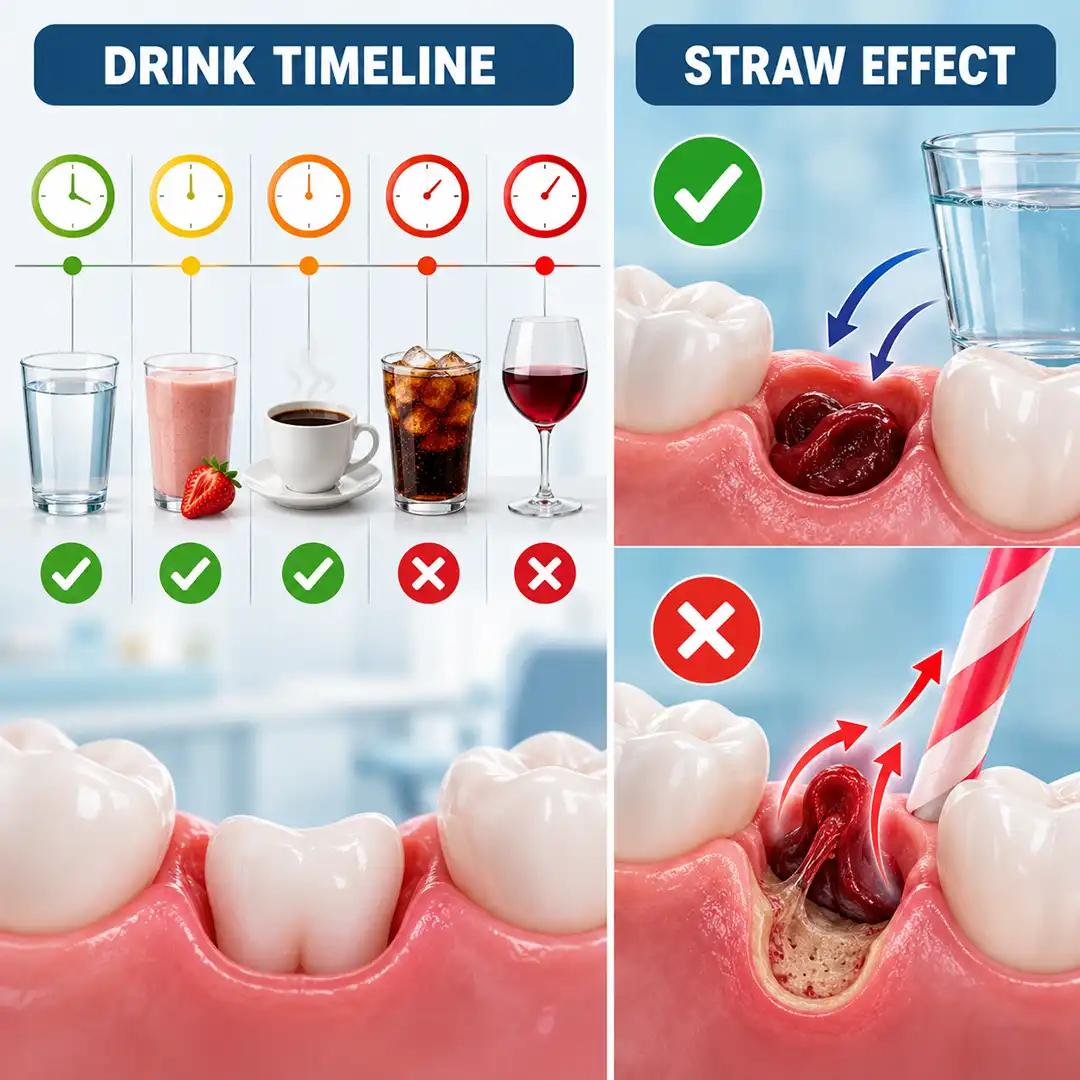
Straws must be avoided after a tooth extraction because sucking creates negative pressure in the mouth and negative pressure pulls the clot out of the socket. The same applies to sucking on sweets or cigarettes. The ban lasts at least 24 hours and longer after a surgical lower molar removal, where the socket is deeper so the clot is more exposed.
The complication at stake is dry socket, known clinically as alveolar osteitis. In a 2002 critical review in the International Journal of Oral and Maxillofacial Surgery, Blum describes dry socket as the premature loss of the clot, exposing bone to the mouth with symptoms that typically begin one to three days after the extraction. Blum puts the incidence at 0.5% to 5% after routine extractions, rising to 25% to 30% after surgical removal of impacted lower wisdom teeth. A 2010 review in the International Journal of Dentistry by Kolokythas et al. lists smoking and oral contraceptive use along with surgical trauma among the recognised risk factors. Suction is the mechanical factor the patient controls, which is why the aftercare rules cluster around pressure and chemical irritation. For example, a patient who had a lower wisdom tooth removed surgically is told to keep away from straws until the socket has stopped feeling tender, usually three to five days rather than treating 24 hours as a finish line. Readers preparing for that procedure can read our guide to wisdom teeth removal and recovery first.
When Can You Drink Hot Drinks, Alcohol or Fizzy Drinks?
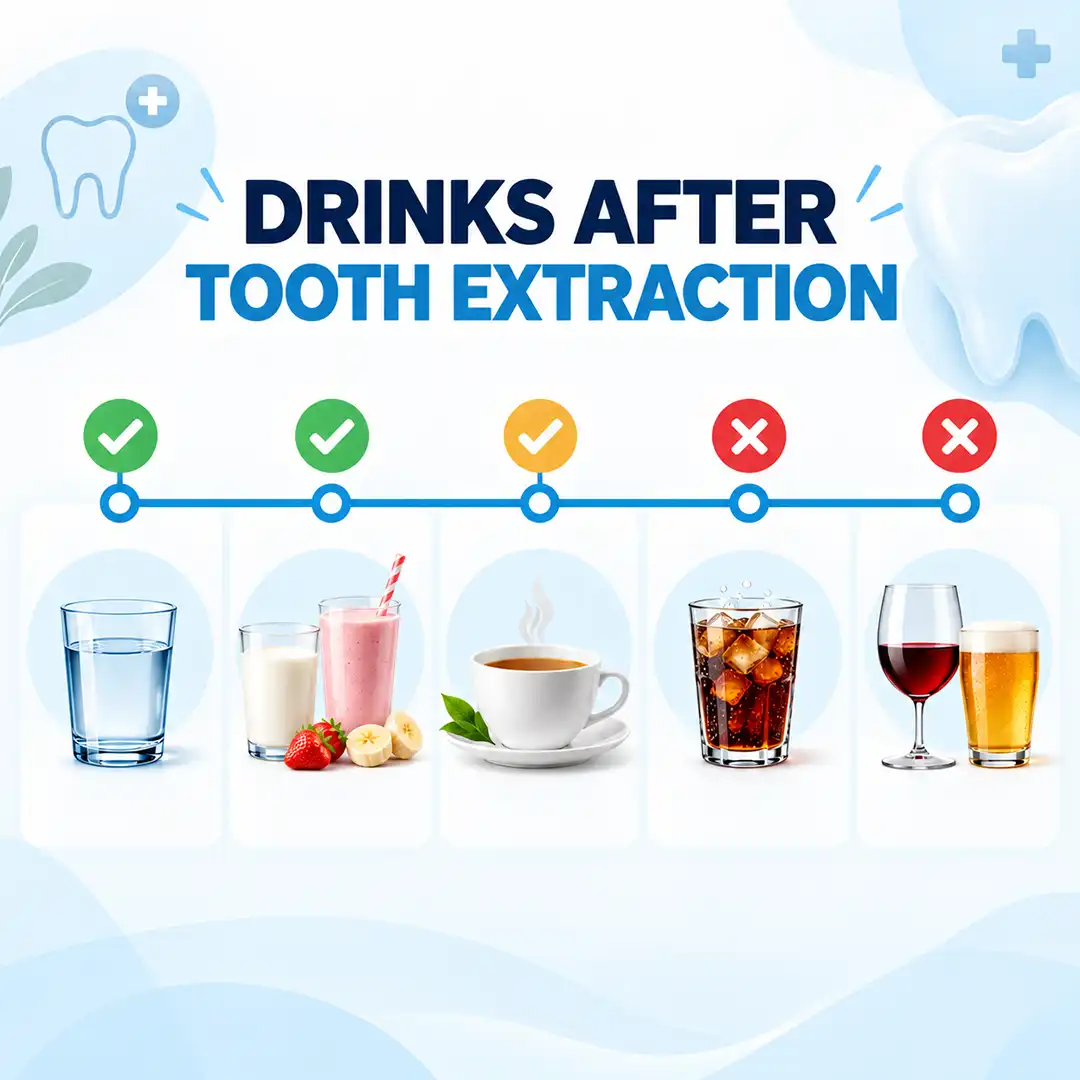
Hot drinks, alcohol or fizzy drinks each wait at least 24 hours after a tooth extraction for three different reasons. Heat dilates the vessels in the socket and can restart bleeding. Alcohol irritates the wound and interacts with pain relief. Carbonation produces bubbles and acidity that disturb the clot surface.
| Drink | Earliest time | Why the wait |
| Still water, room temperature | Within the first hour | No irritant; protects against dehydration |
| Milk or a smoothie from a glass | After the numbness wears off, 2 to 3 hours | Safe once swallowing is reliable; no straw |
| Lukewarm tea or coffee | After 24 hours, warm not hot | Heat restarts bleeding on day one |
| Fruit juice | After 24 hours, diluted | Acidity stings the raw socket |
| Fizzy drinks | After 24 hours, longer if the socket is still tender | Carbonation and acidity disturb the clot |
| Alcohol | After 24 hours minimum; none while on prescribed medication | Irritates the wound, encourages oozing, interacts with painkillers |
Bottom line: anything hot or acidic waits a day as does anything bubbly or alcoholic. Anything pulled through a straw waits longer.
Alcohol deserves the longest explanation because patients ask most often. Alcohol widens blood vessels and can encourage the socket to ooze. Alcohol combined with paracetamol or anti inflammatory tablets places extra load on the liver and stomach. Patients taking a prescribed antibiotic after a surgical extraction avoid alcohol for the full course. Smoking belongs in the same category as alcohol. A 2012 risk factor analysis in the Journal of Oral and Maxillofacial Surgery by Halabí et al. identified smoking after the extraction as an independent predictor of dry socket with an odds ratio of 3.5, second only to a traumatic extraction. The likely mechanism is that heat plus suction plus nicotine all act on the clot at once. In our clinic smokers are asked to stop for a minimum of 24 hours after an extraction and ideally for 72 hours and patients with any swelling or persistent pain are checked against the warning signs in our guide to tooth infection symptoms.
When Can You Rinse After a Tooth Extraction?
Rinsing begins on day two, not on day one. For the first 24 hours nothing should be swished around the mouth because the clot is still soft and a rinse washes it out. From the second day a warm salt water rinse after each meal keeps food out of the socket and lowers the bacterial load while the gum closes.
The salt rinse is made with half a teaspoon of salt in a glass of warm water. The rinse is held gently over the socket then allowed to fall out of the mouth rather than spat with force. Chlorhexidine mouthwash is the alternative with the strongest evidence for preventing dry socket. A 2022 Cochrane review by Daly et al. found that chlorhexidine rinses or gel used around the time of extraction reduce the risk of dry socket and a 2012 systematic review in the International Journal of Oral and Maxillofacial Surgery by Yengopal and Mickenautsch reached the same conclusion for lower wisdom tooth removal. Chlorhexidine stains teeth with extended use so it is prescribed for a short course rather than indefinitely and a rinse prescribed for the day of extraction is held passively in the mouth on the dentist’s instruction, the one exception to the no rinse rule. Brushing continues from the first evening on the teeth away from the socket, then approaches the socket from day two. Patients who also have an implant planned for the site will find the longer protocol in our guide to dental implant aftercare in the first 30 days because the clot that forms now becomes the bone the implant will sit in.
Book Your Free Consultation and send a photograph of the extraction site to our clinical team if anything about the healing looks wrong.
How Long After a Tooth Extraction Can You Eat?
Eating can begin two to three hours after a tooth extraction once the local anaesthetic has worn off and the gauze has been removed. Numbness is the reason for the wait rather than the socket itself since a patient with a numb lip or tongue can bite it badly without noticing. The first meals are soft and lukewarm, chewed on the opposite side.
Soft food in the first 48 hours means yoghurt, mashed potato, scrambled egg, soup that has cooled to warm, smooth porridge or well cooked pasta. Food that is hot, crunchy, spicy or full of small seeds waits until day three or four. Rice and seeded bread are the usual culprits for food trapped in the socket. From day three most patients return to a normal diet with the exception of very hard or sharp items on the extraction side and by day seven the gum has usually closed enough for ordinary chewing. Steady soft nutrition rather than fasting supports healing. The 2022 scoping review by Ghosh et al. in the Journal of Oral Rehabilitation found that the patient’s immune status, the surgical technique and age all influence dry socket risk, none of which the patient controls after the appointment, which makes the controllable factors in this guide worth following closely. Patients whose extraction was for a painful infected tooth often find eating easier within a day than it was in the week before and our guide to wisdom teeth pain and its relief explains why the relief arrives so quickly.
What Are the Signs the Clot Has Been Lost?
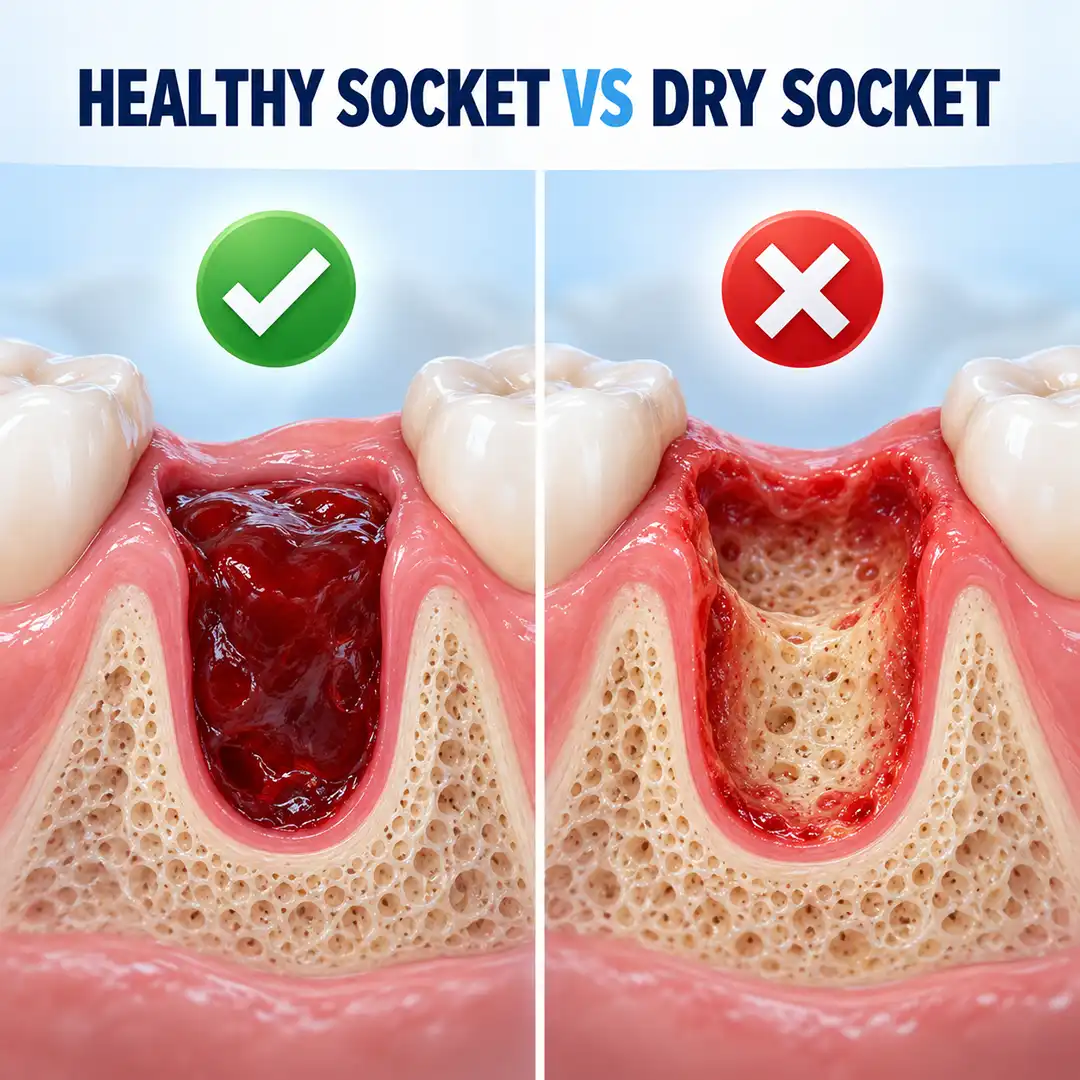
The clot has been lost when pain that was improving suddenly worsens on day two or three, the socket looks empty or grey instead of dark red and a bad taste or smell develops. The pain of dry socket is a deep ache that radiates toward the ear and is not controlled by ordinary tablets.
Dry socket is uncomfortable but treatable. The dentist irrigates the socket and places a medicated dressing, which relieves the pain within hours. The dressing is changed every few days until the socket is covered by new tissue. A 2015 review in the Journal of Clinical and Diagnostic Research by Tarakji et al. summarises the aetiology and the dressing based management and emphasises that prevention through clot protection in the first days is far easier than treatment. Swelling that increases after day three, fever or pus point to infection rather than to dry socket and need a same day appointment. Where an extraction was carried out because a root canal was not possible, the dentist will have explained the reasoning and patients weighing the two options for a different tooth can read about root canal treatment by endodontic specialists as the tooth saving alternative. Patients whose extraction followed advanced gum disease are returned to gum disease treatment and periodontal care once the socket has healed because the bacteria that cost the tooth are still present around the neighbours. International Plus has treated more than 200,000 patients from 140+ countries since 2014 and holds 5,504 verified reviews at 4.8 out of 5. This guide was reviewed for accuracy by Dr. Alper Çağlayan Sarraf, Head of Oral Surgery at International Plus. Individual results vary. The article is educational and is not medical advice.
If pain after an extraction is getting worse rather than better, Contact our patient coordination team for same day advice.
Frequently Asked Questions
Can I drink water immediately after tooth extraction?
Water can be sipped as soon as the gauze pad is removed, usually 30 to 60 minutes after the extraction. The water should be still and at room temperature, taken from a glass in small sips. Swallow without swishing. Drinking early is encouraged because dehydration slows healing and makes patients feel faint.
Can I drink cold water after tooth extraction?
Cool water is fine and can feel soothing on the first day. Ice cold water is best avoided for the first few hours because extreme cold can be uncomfortable on a freshly numbed area and a patient may not judge the temperature well. Avoid ice cubes and anything that encourages sucking.
Does drinking water prevent dry socket?
Drinking water does not prevent dry socket directly but staying hydrated supports healing and reduces the urge to rinse forcefully out of thirst. Dry socket is prevented by protecting the clot: no straws, no smoking, no rinsing for 24 hours and, where the dentist prescribes it, a short course of chlorhexidine around the time of extraction.
When can I drink coffee after tooth extraction?
Coffee can be drunk after 24 hours provided it is lukewarm rather than hot. Heat dilates the vessels in the socket and can restart bleeding on the first day. From day two a warm coffee from a cup is acceptable while iced coffee through a straw is not because the suction matters more than the temperature.
What happens if I accidentally used a straw after tooth extraction?
A single brief use of a straw does not always dislodge the clot so there is no need to panic. Stop using the straw and avoid rinsing. Watch for worsening pain or a bad taste over the next two to three days. If those signs appear, contact the dentist since a dry socket is treated quickly with a medicated dressing.
When can I drink alcohol after a tooth extraction?
Alcohol should wait at least 24 hours after a simple extraction and longer after a surgical one. Alcohol widens blood vessels and can restart bleeding and it should not be combined with prescribed pain relief or antibiotics. Most dentists advise waiting until the socket is no longer tender and any medication course has finished.
Reviewed by Dr. Alper Çağlayan Sarraf
References
- Amler MH. Oral Surg Oral Med Oral Pathol. 1969. PMID: 5251474
- Blum IR. Int J Oral Maxillofac Surg. 2002. PMID: 12190139
- Kolokythas A, et al. Int J Dent. 2010. PMC2905714
- Halabí D, et al. J Oral Maxillofac Surg. 2012. PMID: 22305872
- Daly BJ, et al. Cochrane Database Syst Rev. 2022. PMID: 36156769
- Yengopal V, Mickenautsch S. Int J Oral Maxillofac Surg. 2012. PMID: 22622144
- Ghosh A, et al. J Oral Rehabil. 2022. PMID: 34625985
- Tarakji B, et al. J Clin Diagn Res. 2015. PMC4437177
Follow us on Social Media
internationalplusofficial
internationalplus
internationalplusdental
This content is written, reviewed, and approved by the International Plus Medical Review Board to ensure clinical accuracy and adherence to strict editorial standards. All medical information is regularly monitored, audited and updated in light of the latest scientific advancements.
However the information provided here is for general informational purposes only and cannot be used for self diagnosis or making individual health interpretations. Results of medical treatments depend on individual anatomy and the unique healing process of each patient. This information should not replace a personal consultation with a qualified healthcare professional. To understand the best options for your specific needs and to receive a personalized treatment plan, we invite you to book a free consultation with the expert medical team at International Plus.

Dr. Alper Çağlayan Sarraf directs the oral surgery unit at InternationalPlus Istanbul, focusing on demanding cases that draw patients from every corner of the world.