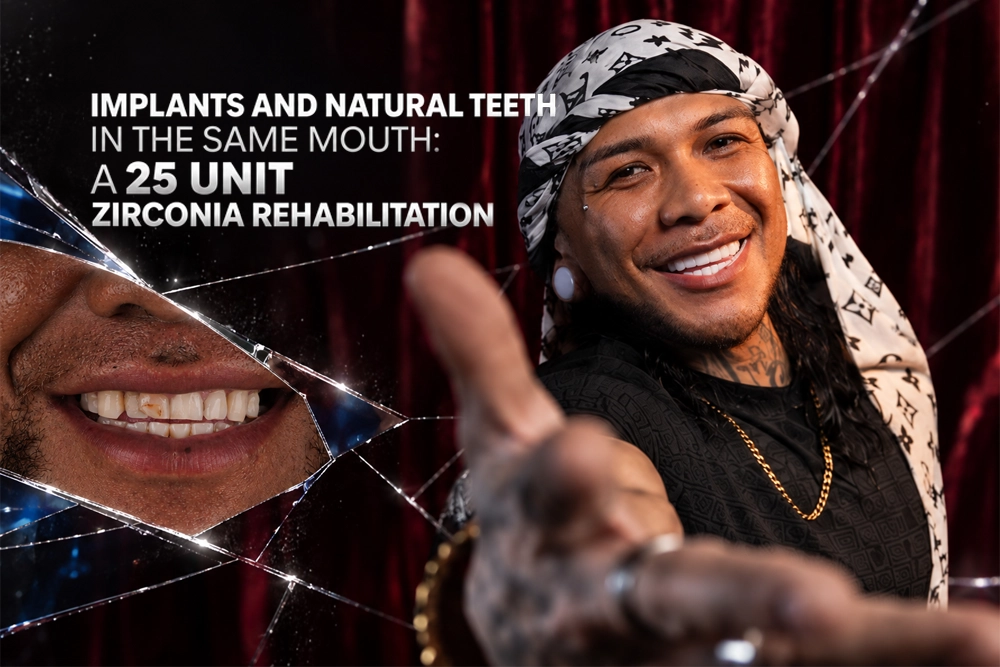
When Mohamed, a 55 year old patient from France, arrived at International Plus Istanbul seeking restoration of both aesthetics and function, his primary complaint centered on a fundamental human need: the ability to eat comfortably. Years of tooth loss and progressive bone resorption had left him unable to chew properly, forcing dietary restrictions and social discomfort that diminished his quality of life. Comprehensive evaluation revealed the full extent of his challenge: complete tooth loss in the upper jaw accompanied by severe bone atrophy so advanced that conventional implant placement had become anatomically impossible. The maxillary bone that once supported his natural teeth had resorbed to the point where standard dental implants, even with extensive bone grafting, could not be reliably positioned. Yet Mohamed’s case, while presenting significant clinical complexity, represented precisely the scenario where advanced surgical techniques demonstrate their transformative potential. Through zygomatic implant placement, a specialized approach that bypasses insufficient maxillary bone entirely by anchoring implants in the dense zygomatic bone of the cheekbone, International Plus Istanbul would restore both the function Mohamed needed and the aesthetics he desired.
Understanding Zygomatic Implants: Advanced Solutions for Severe Maxillary Atrophy
Conventional dental implants achieve stability through osseointegration with the alveolar bone of the upper or lower jaw, the bone that originally surrounded natural tooth roots. This approach works reliably when adequate bone volume and quality exist. However, following tooth loss, alveolar bone undergoes progressive resorption, a natural biological process where bone volume diminishes in the absence of functional stimulation from tooth roots. Research on alveolar bone resorption patterns demonstrates that maxillary bone loss proceeds both vertically and horizontally, with the posterior maxilla experiencing particularly rapid resorption due to pneumatization of the maxillary sinus, the air filled cavity that expands into the space formerly occupied by bone.
In cases of advanced atrophy, conventional implant placement faces anatomical impossibility: insufficient bone height prevents standard length implants from achieving adequate engagement, while insufficient bone width creates instability and fracture risk. Traditional solutions involved extensive bone grafting procedures, often requiring harvesting bone from the patient’s hip or other donor sites, followed by months of healing before implants could be placed. These approaches, while sometimes successful, imposed significant treatment burden through multiple surgeries, extended timelines, and substantial morbidity at harvest sites.
Zygomatic implants represent a fundamentally different approach that sidesteps the problem of insufficient maxillary bone entirely. Rather than attempting to rebuild resorbed alveolar bone, zygomatic implants anchor in the zygomatic bone (cheekbone), a structure that maintains density and volume even when severe maxillary atrophy has occurred. These specialized implants, typically 40 to 55 millimeters in length compared to conventional implants measuring 8 to 15 millimeters, traverse the maxillary sinus and engage the dense cortical bone of the zygoma. Clinical evidence for zygomatic implant outcomes demonstrates success rates comparable to conventional implants in adequate bone, with the crucial advantage of eliminating the need for extensive grafting procedures and their associated complications.
The technique requires advanced surgical skill and thorough anatomical knowledge. The trajectory of zygomatic implants passes through critical anatomical structures including the maxillary sinus and proximity to the orbital floor, demanding precise three dimensional planning and execution. However, when performed by experienced surgeons using appropriate protocols, zygomatic implants enable immediate restoration even in patients previously told they lacked sufficient bone for implant treatment.

Comprehensive Diagnostic Evaluation: Planning Complex Rehabilitation
Mohamed’s initial evaluation at International Plus Istanbul employed CBCT imaging, the three dimensional radiographic technology essential for comprehensive assessment of bone anatomy and surgical planning. The volumetric data revealed the complete clinical picture: total edentulism (complete tooth loss) in the upper jaw with severe bone resorption throughout the alveolar ridge. Bone height and width measurements confirmed that conventional implant placement, even with extensive sinus lift procedures and bone grafting, would not achieve adequate implant stability or predictable long term outcomes.
The lower jaw presented a different scenario: partial edentulism with remaining anterior teeth but missing posterior teeth bilaterally. Bone quality and volume assessment in the posterior mandible indicated adequate anatomy for conventional dental implant placement without requiring augmentation procedures. This mixed presentation, severe atrophy in the maxilla combined with adequate bone in the mandible, required individualized treatment planning for each arch rather than applying standardized protocols.
The treatment plan integrated advanced and conventional techniques according to each region’s specific anatomy. The upper jaw would receive four zygomatic implants providing stable anchorage in the dense zygomatic bone, distributed to support a complete fixed prosthetic arch. The lower jaw would receive six conventional dental implants positioned strategically in the available posterior bone to restore missing teeth while preserving the healthy anterior natural dentition. This approach optimized both surgical efficiency and long term functional outcomes.
Additional surgical planning addressed bone contour irregularities in the upper jaw. Years of progressive resorption had created uneven alveolar ridge topography that would compromise both prosthetic support and soft tissue aesthetics. Alveoplasty, the surgical reshaping of alveolar bone contours, would establish proper ridge form. Membrane application would support guided bone healing, creating the foundation for optimal aesthetic and functional prosthetic outcomes.
Advanced Surgical Execution: Zygomatic Implant Placement and Conventional Implant Integration
The surgical phase of Mohamed’s treatment demonstrated International Plus Istanbul’s capability to execute complex procedures integrating multiple techniques. The upper jaw surgery began with careful soft tissue management exposing the residual alveolar ridge and providing access to the zygomatic bone. Each zygomatic implant trajectory was precisely calculated based on pre surgical CBCT planning, ensuring optimal path through the maxillary sinus while avoiding vital structures and achieving ideal emergence position for prosthetic restoration.
Zygomatic implant placement requires specialized instrumentation and technique. Sequential drilling creates the implant osteotomy following the planned trajectory from the alveolar crest region upward and laterally through the maxillary sinus, engaging the dense cortical bone of the zygomatic arch. The implants, significantly longer than conventional dental implants, are positioned with controlled insertion torque to achieve primary stability while avoiding excessive force that could compromise the zygomatic bone. All four zygomatic implants achieved adequate primary stability, the immediate mechanical engagement essential for successful osseointegration and potential immediate loading.
Following zygomatic implant placement, alveoplasty addressed ridge contour irregularities. Using specialized burs and hand instruments, the surgeon carefully reshaped the residual alveolar bone creating smooth, uniform ridge form that would support optimal prosthetic design. Membrane application over the treated bone promoted guided healing, protecting the surgical site while supporting appropriate bone remodeling. Research on alveoplasty outcomes confirms that proper ridge preparation significantly improves both prosthetic fit and aesthetic results in full arch rehabilitation.
The lower jaw surgery proceeded with conventional implant protocols. Six dental implants were strategically positioned in the posterior regions bilaterally, three on each side, positioned to support fixed prosthetics restoring the missing posterior teeth. The remaining anterior natural teeth were preserved, maintaining the proprioceptive feedback and bone preservation benefits that natural tooth structure provides. All six mandibular implants achieved primary stability appropriate for the treatment plan.
Multi-unit abutments were connected to all implants, both zygomatic and conventional, immediately following placement. These prosthetic components establish standardized platforms for both provisional and definitive restorations, enabling immediate loading protocols when primary stability permits.

Immediate Provisional Restoration: Function and Aesthetics From Day One
One of the significant advantages of zygomatic implant protocols involves the potential for immediate loading, delivering fixed provisional prosthetics on the same day as surgery. Unlike conventional implants placed in grafted bone, which typically require unloaded healing to permit graft consolidation, zygomatic implants anchored in dense cortical bone often achieve primary stability sufficient to support immediate function. Clinical evidence for immediate loading of zygomatic implants demonstrates that provisional prosthetics delivered immediately following surgery achieve outcomes equivalent to delayed loading protocols while dramatically improving patient experience.
Mohamed received provisional prosthetics for both upper and lower arches immediately following surgery. These temporary restorations, fabricated from provisional materials, provided both aesthetics and function while the implants completed osseointegration over the subsequent months. The immediate restoration meant Mohamed never experienced edentulous periods or removable denture dependence, maintaining his ability to eat, speak, and socialize throughout the healing phase.
The provisional restorations served multiple functions beyond patient comfort. Biomechanically, they distributed occlusal forces across the supporting implants, promoting favorable bone remodeling around the implant surfaces. Diagnostically, they permitted verification of occlusal relationships, phonetics, and aesthetics before committing to definitive prosthetic fabrication. Any needed adjustments to tooth position, vertical dimension, or occlusal scheme could be refined in the provisionals, ensuring the final restorations would meet all functional and aesthetic requirements.
Healing Phase and Digital Planning: Advanced Technology Integration
Mohamed returned to France following surgical intervention and immediate provisional restoration, carrying detailed post operative instructions and coordination with International Plus Istanbul’s patient services team for remote monitoring during healing. The planned three month osseointegration period would permit complete bone integration around both the zygomatic and conventional implants before definitive restoration.
At three months post surgery, Mohamed returned to Istanbul for verification of implant stability and advancement to definitive prosthodontic procedures. Clinical examination and radiographic assessment confirmed successful osseointegration of all ten implants, with no mobility or complications detected. The provisional restorations had served well, maintaining function and aesthetics while allowing gradual adaptation to the restored vertical dimension and occlusal relationships.
The definitive prosthodontic phase employed International Plus Istanbul’s advanced digital workflow integrating multiple technologies. Intraoral scanning captured precise three dimensional data of the implant positions, surrounding soft tissues, and occlusal relationships. The iMetric measurement system, a sophisticated photogrammetric tool, recorded facial proportions, lip dynamics during function, and smile characteristics that would inform aesthetic design decisions. Research on digital workflow accuracy in implant prosthodontics demonstrates that contemporary intraoral scanning combined with facial photogrammetry achieves precision exceeding conventional impression techniques while providing data that supports superior aesthetic outcomes.
The digital design process integrated clinical data with Mohamed’s aesthetic preferences. Shade selection followed his input, with OM3 tone chosen to provide natural appearing color that harmonized with his complexion and age. Tooth morphology incorporated International Plus Istanbul’s Plus 5 anatomic form philosophy, an approach that creates subtle variations in tooth size, shape, and positioning rather than geometric uniformity. This attention to natural appearing detail distinguishes professional dental rehabilitation from artificial looking alternatives.
Trial fittings permitted verification of all design parameters before final fabrication. Mohamed evaluated tooth position, occlusal relationships, and aesthetic appearance in provisional form, providing feedback that refined the final design. This collaborative approach ensured the definitive restorations would satisfy both functional requirements and personal aesthetic preferences.

Definitive Zirconia Restoration: Precision Fabrication and Final Delivery
The definitive prosthetics were fabricated from zirconia, the premium ceramic material that combines exceptional mechanical strength with optical properties approaching natural tooth structure. Zirconia’s flexural strength exceeding 1,000 MPa makes it ideal for full arch rehabilitation, particularly in zygomatic implant cases where the prosthetic framework must distribute forces across widely spaced implant abutments. Research on zirconia in implant prosthodontics confirms that contemporary zirconia formulations achieve long term success rates comparable to traditional materials while offering superior aesthetics and biocompatibility.
The restorations were designed and milled through International Plus Istanbul’s in house Dental Art laboratory, enabling close collaboration between clinical team and laboratory technicians. The digital design files directed precision CAD/CAM milling, creating restorations with tolerances measured in microns. This accuracy ensures passive fit essential for long term implant health, eliminating the stress concentrations that can result from prosthetic misfit.
Following milling and characterization, the zirconia restorations underwent final verification procedures. Fit to the implant abutments was assessed, occlusal contacts were refined, and aesthetic appearance was confirmed to match the approved design. Mohamed participated in this evaluation, verifying that the restorations met his expectations before final delivery.
Upon final restoration delivery, Mohamed possessed complete rehabilitation integrating advanced zygomatic implant technique in the severely atrophied upper jaw with conventional implant supported prosthetics in the lower jaw. The transformation extended beyond mere tooth replacement: restored chewing function eliminated dietary restrictions, improved facial support enhanced aesthetics, and the fixed nature of the restorations provided stability and confidence impossible with removable alternatives.

Frequently Asked Questions
What are zygomatic implants and when are they necessary?
Zygomatic implants are specialized dental implants, typically 40 to 55 millimeters long, that anchor in the zygomatic bone (cheekbone) rather than the maxillary alveolar bone. They prove necessary when severe bone loss in the upper jaw makes conventional implant placement anatomically impossible, even with extensive bone grafting. Patients who have been told they lack sufficient bone for dental implants often qualify for zygomatic implant rehabilitation. Clinical evidence demonstrates that zygomatic implants achieve success rates comparable to conventional implants while eliminating the need for complex grafting procedures.
How do zygomatic implants differ from conventional dental implants?
Conventional dental implants, typically 8 to 15 millimeters long, engage the alveolar bone of the jaw, the bone that originally surrounded natural tooth roots. Zygomatic implants, significantly longer at 40 to 55 millimeters, traverse the maxillary sinus and anchor in the dense cortical bone of the zygoma. This fundamental difference in anchorage site permits implant placement even when alveolar bone has resorbed severely. The surgical technique requires advanced training and anatomical knowledge, but enables rehabilitation that conventional approaches cannot achieve in severely atrophied cases.
Can zygomatic implants be loaded immediately with provisional teeth?
Yes, zygomatic implants often achieve primary stability sufficient for immediate loading with provisional prosthetics on the day of surgery. The dense cortical bone of the zygoma provides excellent mechanical engagement, typically superior to conventional implants placed in grafted bone. Research on immediate loading protocols demonstrates that provisional restorations delivered immediately following zygomatic implant surgery achieve outcomes equivalent to delayed loading while dramatically improving patient experience by eliminating edentulous periods.
What is the iMetric measurement system and why is it important?
The iMetric measurement system employs photogrammetric technology to capture detailed facial proportions, lip dynamics during speech and smiling, and other characteristics that inform aesthetic prosthetic design. Unlike intraoral scanning that captures only teeth and soft tissues inside the mouth, photogrammetry records the face in three dimensions, enabling design decisions that harmonize dental restorations with facial features. This integration of facial and dental data supports superior aesthetic outcomes compared to approaches that consider only intraoral anatomy.
How long do zygomatic implants last compared to conventional implants?
Zygomatic implants demonstrate long term success rates comparable to conventional dental implants when placed by experienced surgeons following proper protocols. Clinical studies with follow up periods exceeding ten years report survival rates above 95%, similar to conventional implant outcomes. The dense cortical bone of the zygoma provides excellent long term stability. Regular maintenance and appropriate oral hygiene prove essential for long term success, just as with conventional implant supported restorations.
International Plus Istanbul: Advanced Surgical Expertise Meets Comprehensive Digital Integration
Mohamed’s case demonstrates International Plus Istanbul’s capability to execute complex rehabilitation integrating advanced surgical techniques with sophisticated digital planning. Four zygomatic implants in the severely atrophied upper jaw combined with six conventional dental implants in the lower jaw restored complete function and aesthetics that conventional approaches could not achieve. The integration of alveoplasty, immediate provisional loading, and definitive zirconia restoration fabricated through digital workflow exemplifies comprehensive treatment planning that addresses both immediate needs and long term success.
This level of care requires infrastructure that few dental facilities globally can provide. Surgeons trained in advanced techniques including zygomatic implant placement execute procedures that general practitioners cannot perform. In house Dental Art laboratory enables seamless collaboration between surgical and prosthodontic teams. Advanced imaging including CBCT and the iMetric measurement system informs both surgical planning and aesthetic design. Multiple implant systems (Straumann, Nobel Biocare, Megagen, BEGO, Implant Swiss, Implance, Nucleoss) ensure optimal selection for each clinical scenario.
Comprehensive patient services support international patients throughout treatment. VIP airport transfers, luxury accommodation, and 24/7 multilingual coordination eliminate logistical barriers. Having successfully treated over 200,000 patients from more than 140 countries, International Plus Istanbul combines surgical expertise, technological capability, and hospitality infrastructure necessary for complex rehabilitation.
If you have been told you lack sufficient bone for dental implants, contact International Plus Istanbul today. Advanced surgical techniques including zygomatic implants enable rehabilitation even in severe bone loss cases that conventional approaches cannot address.
internationalplusofficial
internationalplus
internationalplusdental
This content is written, reviewed, and approved by the International Plus Medical Review Board to ensure clinical accuracy and adherence to strict editorial standards. All medical information is regularly monitored, audited and updated in light of the latest scientific advancements.
However the information provided here is for general informational purposes only and cannot be used for self diagnosis or making individual health interpretations. Results of medical treatments depend on individual anatomy and the unique healing process of each patient. This information should not replace a personal consultation with a qualified healthcare professional. To understand the best options for your specific needs and to receive a personalized treatment plan, we invite you to book a free consultation with the expert medical team at International Plus.
Dt. Murat İsmail Kurt is an experienced Cosmetic and Restorative Dentist who earned his degree from Kırıkkale University Faculty of Dentistry in 2020. Since the beginning of his career, he has accumulated significant clinical experience working in high-volume dental centers Clinics , where he successfully managed thousands of patient cases before joining the medical team at International Plus.