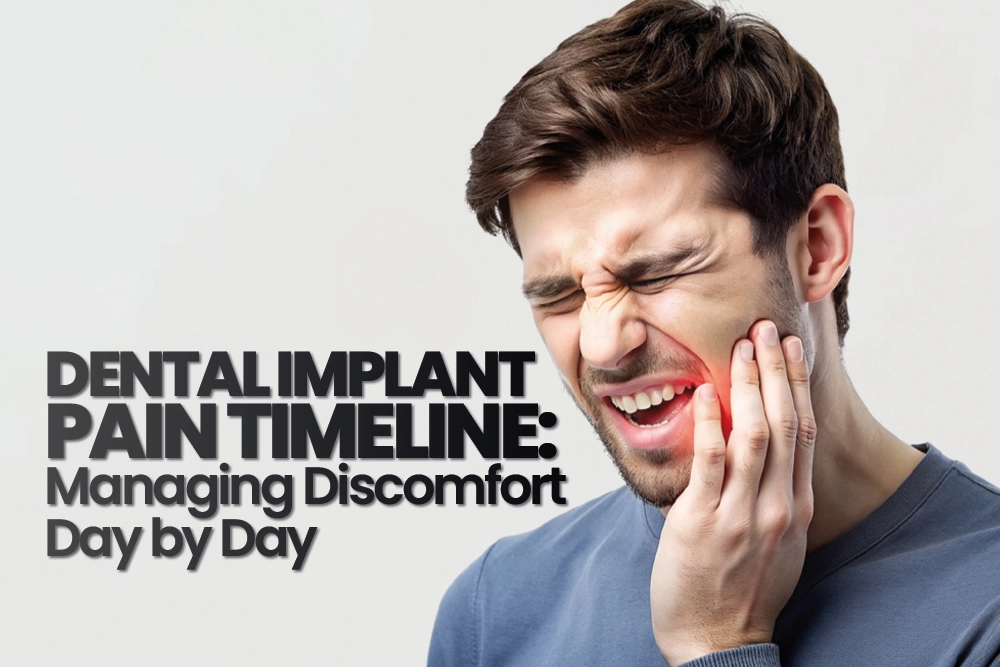
Understanding the dental implant pain timeline is the first step toward a stress-free recovery. In the 2026 clinical environment we view the healing process as a series of biological handshakes between the titanium post and your living bone tissue. The sensation of pain is essentially your body’s communication system signaling that inflammation is active.
Table 2: Day-by-Day Dental Implant Pain Timeline
| Timeline | Pain Intensity (0−10) | Key Care Milestone | Goal |
| Day 1 | $4 – 6$ | Gauze pressure and Cold packs | Clot Stabilization |
| Day 2-3 | $3 – 5$ (Peak Swelling) | Soft food diet and Head elevation | Inflammation Control |
| Day 4-7 | $1 – 2$ | Saltwater rinses and Warm compress | Tissue Maturation |
| Day 8+ | $0$ | Resume gentle brushing | Oral Hygiene Integration |
During Day 1 the local anesthesia wears off and the initial inflammatory cascade begins. This is when the intensity is highest but it is also the most critical time for clot stabilization. By Day 3 the swelling usually reaches its zenith as the body’s white blood cells flood the area to begin the repair process. If the patient has undergone flapless surgery this peak is often unnoticeable. From Day 4 through Day 7 the discomfort should follow a predictable downward trajectory as the soft tissue begins its primary closure.
Managing Dental Implant Discomfort Day by Day
Managing discomfort requires a proactive approach that starts before you even leave the clinic. In 2026 we have moved away from “reactive” pain management. We now use pre-emptive analgesia to stabilize the neural pathways before the first sensation of pain can even register. This involves saturating the surgical site with anti-inflammatory agents that block the specific receptors responsible for post-surgical sensitivity.
Dr. Hakan’s Clinical Note (Nerve Preservation): In 2026 the “Dental Implant Pain Timeline” is no longer a mystery. The most common cause of extended pain is not the implant itself but the periosteal inflammation of the bone’s outer layer. At International Plus we use Vectra 3D mapping to perform flapless surgery whenever possible. This avoids large incisions meaning your Day 3 peak is significantly lower than with traditional methods. If you feel a “throbbing” sensation on Day 5 it is usually a sign of early biofilm interference not an implant failure (Hakan, 2026).
Effective day-by-day management also includes the “20/20 Cold Protocol” for the first 48 hours. Applying cold compresses for 20 minutes on and 20 minutes off reduces the blood flow to the area and constricts the capillaries. This significantly limits the amount of fluid that can accumulate in the tissue and thereby reduces the pressure on the nerve endings. By Day 4 switching to warm compresses helps to dissipate any residual bruising and encourages fresh oxygenated blood to reach the site of osseointegration.
Dental Implant Recovery: What to Expect
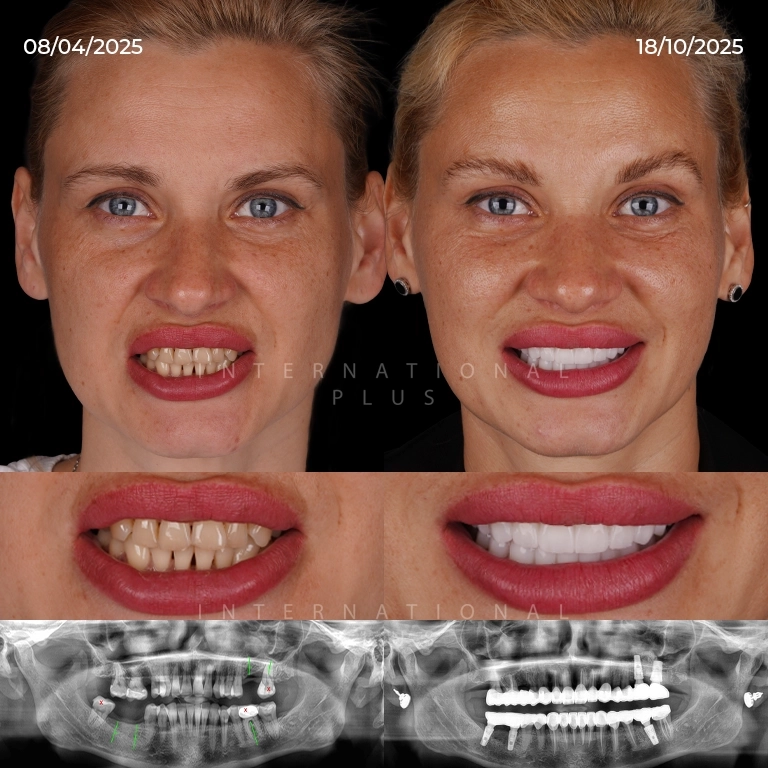
The recovery process is often described by patients as a “dull ache” rather than a sharp pain. In the first 24 hours you can expect some minor oozing of blood which is a sign that the body is forming the vital fibrin clot. This clot acts as a biological shield for the underlying bone and the implant. You should avoid any forceful spitting or using straws as the negative pressure can dislodge this clot and lead to a painful condition known as “dry socket” (though this is much rarer in implants than in extractions).
As you move into the second and third days a feeling of “tightness” in the jaw is normal. This is caused by the interstitial fluid increasing the pressure within the gum tissue. You may also notice a slight metallic taste which is common as the site heals. By the end of the first week the external signs of surgery—swelling and bruising—should be rapidly fading. At this point the focus shifts from managing “pain” to maintaining “hygiene” as the delicate new tissue begins to knit together.
Is Dental Implant Pain Normal?
Yes discomfort is a normal and expected part of any surgical intervention. However the key is the direction of the pain. Normal post-operative pain starts high and moves lower over time. Any deviation from this downward curve is what we monitor closely. In 2026 we distinguish between “Adaptive Pain” (which is the body healing) and “Complication Pain” (which signals an issue).
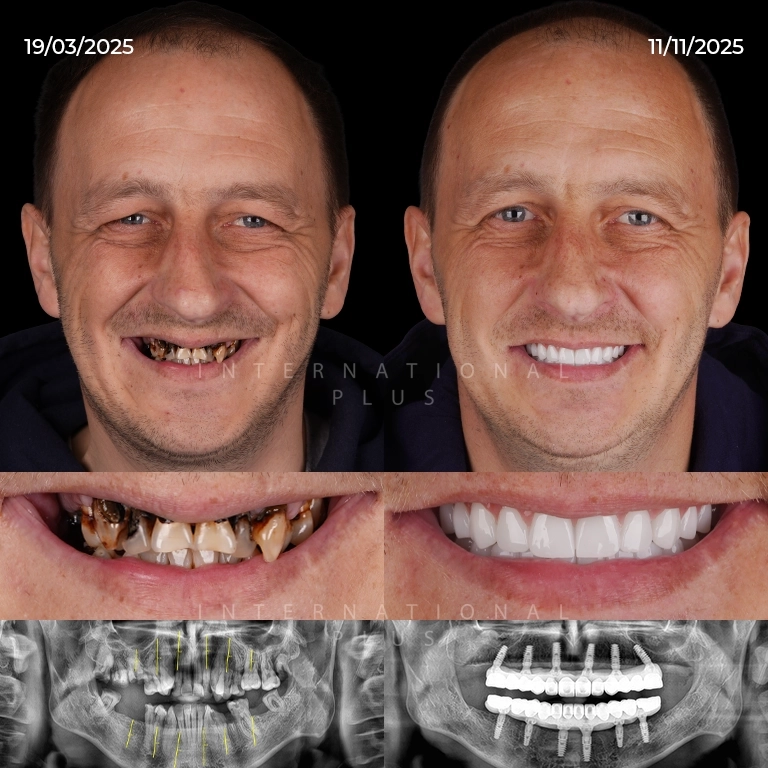
Table 1: Dental Implant Recovery: Normal vs. Warning Signs (2026 Guide)
| Parameter | Expected Healing (Normal) | Warning Sign (Call Dentist) | Dr. Hakan’s Clinical Note |
| Pain Level | Peaks at Day 2 then fades. | Increasing pain after Day 4. | Pain should follow a downward curve; an upward curve suggests infection. |
| Swelling | Subsides by Day 4 or 5. | New swelling after Day 5. | Delayed swelling is a primary indicator of peri-implantitis (Hakan, 2026). |
| Sensation | Tingling fades in 24 hours. | Persistent numbness in chin/lip. | Persistent numbness indicates possible nerve compression requiring review. |
| Taste/Odor | Neutral taste. | Foul taste or persistent “pus” smell. | Anaerobic bacteria production signals a hygiene breach. |
If you feel a steady rhythmic throbbing that syncs with your heartbeat it often indicates that the inflammatory pressure is too high. While this can still be “normal” in the first 48 hours if it persists into Day 5 it warrants a quick check-up. We use intraoral scanning to check the site without having to physically probe the healing tissue and this ensures we can diagnose problems without disrupting the healing process.
How Long Does Pain Last After Dental Implant?
For the majority of patients the period of noticeable discomfort lasts between 3 and 5 days. By Day 7 most people are entirely off pain medication and are returning to their normal dietary habits with only minor adjustments. However if your surgery involved additional procedures like bone grafting or a sinus lift you can expect the recovery timeline to be extended by 3 to 5 more days.
The duration is also heavily influenced by the patient’s overall biological health. In 2026 we emphasize the role of exosome recovery therapies to speed up this window. Exosomes are signaling molecules that tell the surrounding cells to enter a high-speed “repair mode.” Patients who receive an exosome boost at the end of their surgery often report that their pain vanishes 48 hours earlier than the traditional average. This is because the “healing phase” is biologically compressed.
Dental Implant Healing Stages
The first stage of healing is the “Hemostatic Phase” which occurs in the minutes and hours after the surgery. The second stage is the “Inflammatory Phase” which lasts for the first 3 to 4 days. This is when the pain is most prevalent. The third stage is the “Proliferative Phase” where the body starts building new collagen and blood vessels to support the implant.
Finally the long-term stage is osseointegration. While you won’t feel this happening it is the most crucial part of the process. This is when the bone cells (osteoblasts) begin to grow into the microscopic pores of the titanium surface. In 2026 we use advanced surface treatments on the implants that “trick” the bone into bonding faster. This means the implant is technically stable much sooner than in previous years but the early pain management is what sets the stage for this long-term success.
Day 1 to Day 7: Dental Implant Post-Op Guide
Day 1: Rest is your primary objective. Keep your head elevated at a $30^\circ$ to $45^\circ$ angle even while sleeping to minimize pressure in the jaw. Use ice packs for 15 minutes on and 15 minutes off. Avoid all hot foods and drinks as heat can dilate the blood vessels and cause the site to bleed. Stick to cold smoothies and puddings.
Day 2 and Day 3: You will likely see the most swelling now. Continue with cold compresses and take your prescribed medication on a schedule—do not wait for the pain to become severe before taking it. Start very gentle saltwater rinses (1/2 teaspoon of salt in a glass of warm water) but do not swish aggressively. Simply let the water roll over the site and let it fall out of your mouth into the sink.
Day 4 to Day 7: Transition to warm compresses if the site feels stiff. You can begin to introduce “fork-tender” foods like scrambled eggs and well-cooked pasta. Maintain excellent hygiene by brushing your other teeth as usual but avoid the surgical site itself. By Day 7 the “dull ache” should be gone and you should feel a sense of stability returning to your jaw.
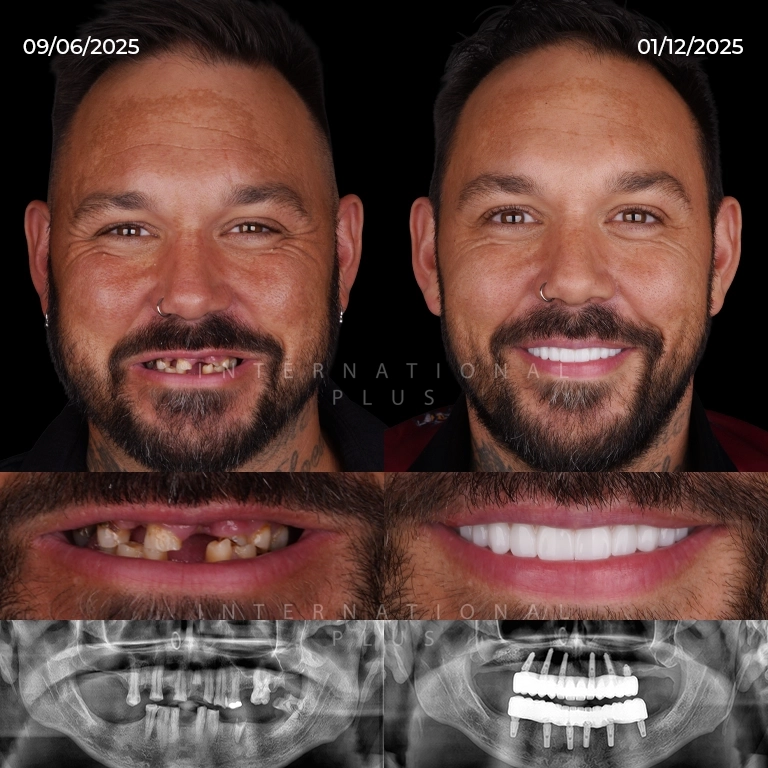
Managing Swelling and Pain After Implant Surgery
Swelling is the body’s way of protecting the surgical site but excessive swelling can actually delay healing by restricting blood flow. Beyond cold packs and elevation we recommend a diet rich in natural anti-inflammatories. Avoid refined sugars and processed flours in the first week as these can spike your blood glucose and increase the inflammatory response.
We also focus on the role of hydration. When you are dehydrated your saliva becomes thicker and less effective at washing away the bacteria that can cause biofilm interference. Drinking 2 to 3 liters of water a day helps keep the oral environment clean and supports the lymphatic system in draining the fluid away from your face. This reduces the “pressure pain” that many patients find the most bothersome.
When to Call the Dentist After Implant Surgery
While most recoveries are smooth you must be vigilant for “Biological Red Flags.” If you notice that your pain was improving but suddenly spikes on Day 5 or Day 6 this is often a sign that bacteria have breached the surgical site.
Dr. Hakan’s Clinical Note (Biofilm Interference): If you feel a “throbbing” sensation on Day 5 it is often a sign of early biofilm interference. This occurs when a microscopic layer of bacteria forms on the healing abutment before the gum has completely sealed. At International Plus we provide an Antimicrobial Aftercare Kit to prevent this but if you notice a sudden “heat” or “redness” around the site call us immediately. Early intervention with a targeted rinse can save the implant from peri-implantitis (Hakan, 2026).
Other reasons to call include a persistent fever over $38^\circ\text{C}$ or if you feel the implant itself moving. In 2026 the stability of the implant is measured at the time of placement ($Primary Stability \propto Torque / Density$) and it should never feel loose. If it does it means the initial mechanical lock has failed and we need to adjust the protocol immediately.
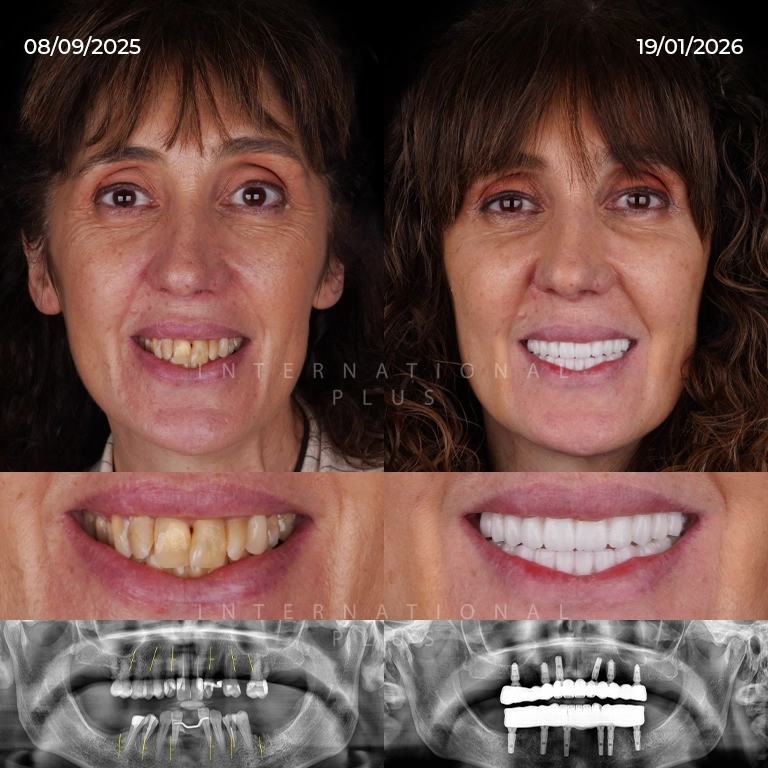
Tips for Fast Recovery After Dental Implants
- Zero Nicotine: Smoking is the number one cause of implant failure. It constricts the blood vessels and prevents oxygen from reaching the site of osseointegration. In 2026 we recommend a total nicotine-free window of at least 4 weeks.
- Nutrient Loading: Take Vitamin D3 and Calcium supplements. These are the building blocks of bone. Our JCI accredited facility protocols often include a “Nutrient Loading” phase before surgery to ensure your bone is in prime condition.
- Oral Rinses: Use the specific antimicrobial rinse provided in your International Plus Aftercare Kit. Avoid over-the-counter mouthwashes that contain alcohol as these can dry out the tissue and kill the beneficial bacteria your mouth needs to heal.
- Sleep: Your body does the majority of its tissue repair while you are in deep sleep. Aim for 8 to 9 hours of rest in the first 3 days.
Dental Implants Turkey
Choosing dental implants turkey means you are accessing some of the most advanced clinical technology in the world. Istanbul has become a global hub for dentistry not just because of the value but because of the specialization. Our clinics are designed specifically for the international patient with high-speed 3D printing labs on-site to create custom temporary crowns that protect the implant during the healing phase.
When you choose Turkey you are choosing a system that prioritizes “Total Wellness.” This includes the use of exosome therapies and advanced neural mapping that are often reserved for specialized research hospitals in other countries. Our goal is to make the “pain timeline” as short as possible so you can spend your time enjoying the beauty of Istanbul rather than recovering from surgery.
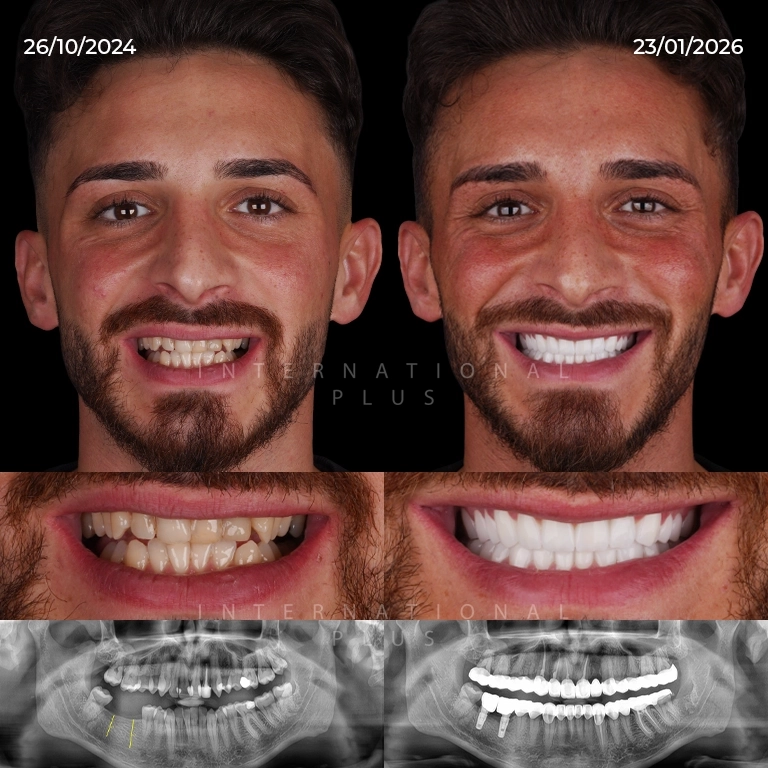
Dental Surgery Istanbul
Performing dental surgery istanbul at International Plus involves a commitment to “Anatomical Respect.” We use minimally invasive techniques that reduce the overall trauma to the tissue. The less we disturb the bone and gums the less pain you will feel. This is why our “Flapless” protocols are so successful. We don’t just “drill and fill” because we engineer a new tooth within your existing biological architecture.
Our surgeons are part of a global elite trained to use intraoral scanning to plan your surgery with micron-level accuracy. This means we know exactly where every nerve and blood vessel is before we even start. This “pre-mapped” approach is the secret to why our patients report such low pain scores. In Istanbul surgery is an art form backed by the latest 2026 science.
Smile Restoration Details
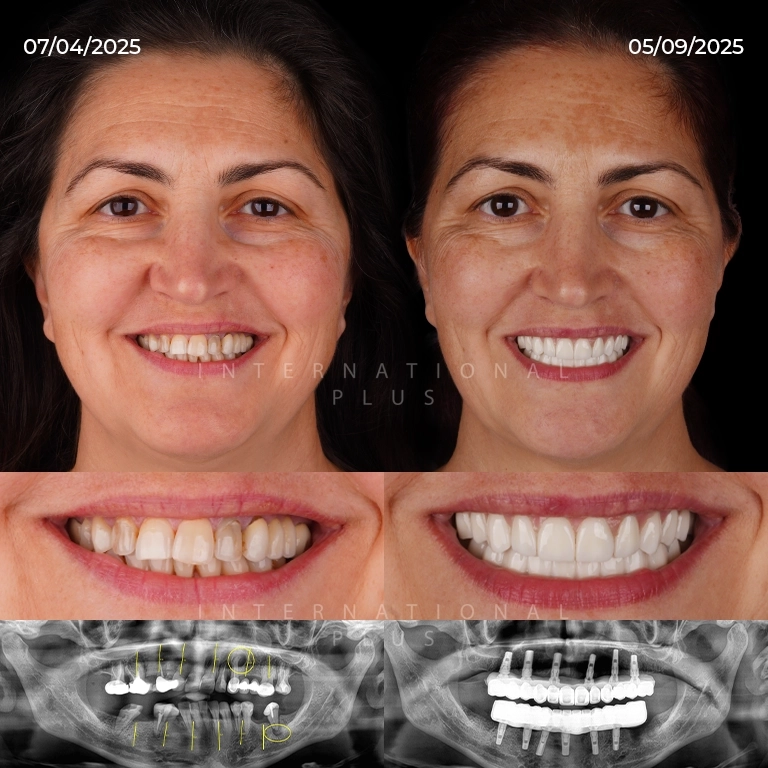
The final goal of any implant procedure is a perfect smile restoration. In 2026 we use the Golden Ratio ($1.618$) to design the size and shape of your new teeth. This ensures that the final crown is not just functional but perfectly in proportion with your facial features. We analyze the “Smile Line” and the “Gingival Zenit” to ensure the transition from tooth to gum looks entirely natural.
By maximizing the bone density (through D3 loading) and minimizing the trauma (through flapless surgery) we ensure that your result is as beautiful as it is durable. At International Plus we don’t just give you a tooth since we restore your confidence with a precision-engineered masterpiece.
Invest in your smile’s future and reclaim your comfort with elite dental precision. Check out our Dental Implants Turkey packages and start your expert-guided transformation journey now. Our international team manages every aspect of your trip including your luxury 5-star hotel stay and VIP private transfers and 24/7 digital check-up access through our patient portal. Our International Plus Aftercare Kit containing antimicrobial rinses and exosome healing gel will ensure your recovery is the fastest and most comfortable in the industry.
internationalplusofficial
internationalplus
internationalplusdental
This content is written, reviewed, and approved by the International Plus Medical Review Board to ensure clinical accuracy and adherence to strict editorial standards. All medical information is regularly monitored, audited and updated in light of the latest scientific advancements.
However the information provided here is for general informational purposes only and cannot be used for self diagnosis or making individual health interpretations. Results of medical treatments depend on individual anatomy and the unique healing process of each patient. This information should not replace a personal consultation with a qualified healthcare professional. To understand the best options for your specific needs and to receive a personalized treatment plan, we invite you to book a free consultation with the expert medical team at International Plus.

International Plus was established from scratch in 2014 with the sole purpose of providing a world class center for plastic and cosmetic surgery by SAMİLSAN SAĞLIK HİZMETLERİ TURİZM DANIŞMANLIK TİCARET LİMİTED ŞİRKETİ International Plus has developed a worldwide reputation for its unique treatments and techniques. With over 10 years of experience, our talented medical experts are among the best in their respective fields. You are our priority. We are convinced that good communication between you and your surgeon is essential when planning your treatments. We offer realistic advice and the most suitable treatments for you.