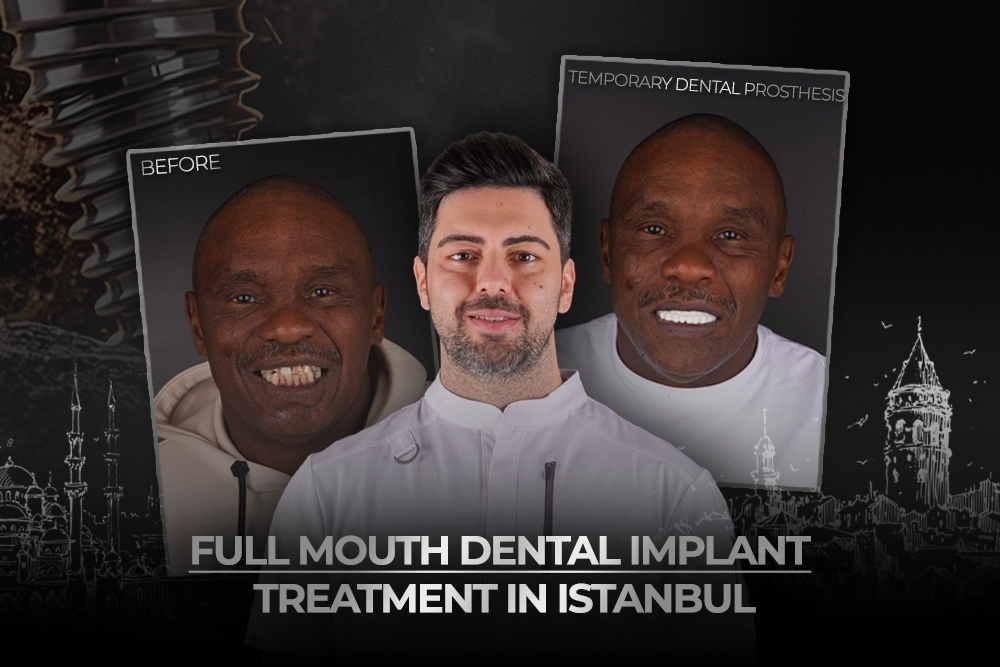
When Owen, a 42 year old patient, arrived at International Plus in Istanbul, he faced challenges familiar to many patients with advanced dental problems: missing teeth, mobile remaining teeth, and persistent pain. His transformation under the care of Dr. Alper demonstrates how modern implant dentistry can restore both function and confidence in a single treatment session.
Initial Examination and Diagnosis Process
Owen’s first appointment with Dr. Alper began with a comprehensive evaluation. The examination combined clinical assessment with advanced imaging technology, including both 2D panoramic radiographs and 3D CBCT scans. These imaging techniques allow dentists to visualize bone structure, identify infection, and plan implant placement with precision.
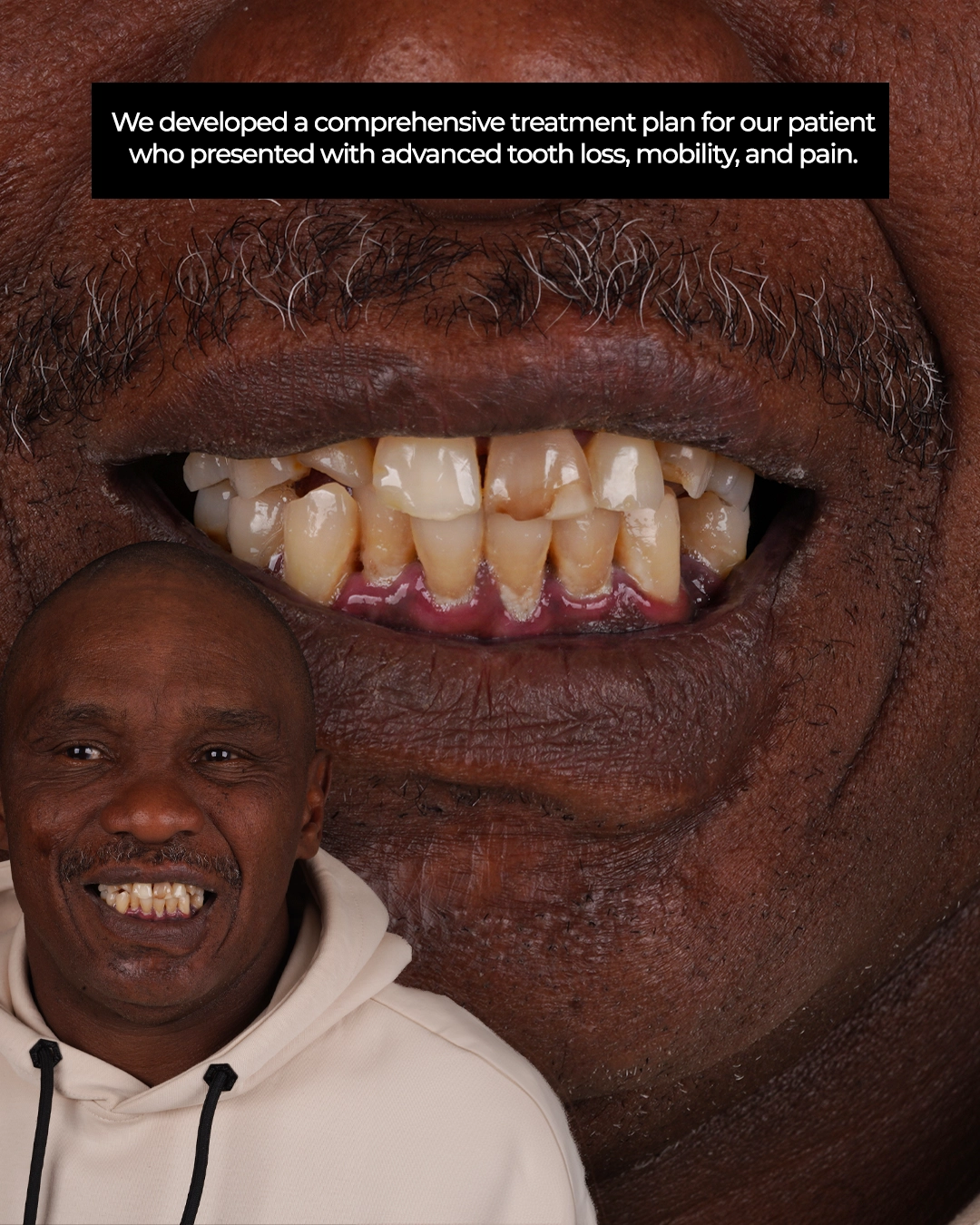
The diagnostic images revealed significant periodontal support loss (deterioration of the gums and bone supporting the teeth), advanced tooth mobility, and insufficient bone volume in the upper jaw. These findings indicated that Owen’s remaining teeth could not be saved and that immediate intervention was necessary to prevent further bone loss.
Dr. Alper explained that delaying treatment would result in continued bone resorption, making future implant placement more difficult and potentially requiring more extensive bone grafting procedures. The recommendation was clear: proceed with full extraction and immediate implant rehabilitation.
Multidisciplinary Treatment Planning with Dr. Alper
At International Plus, complex cases like Owen’s are evaluated by a multidisciplinary team. Dr. Alper coordinated with both surgical and prosthetic specialists to create a comprehensive treatment plan that addressed every aspect of Owen’s rehabilitation.
The team determined that Owen’s remaining teeth had poor prognosis and could not be maintained long term. The treatment plan included complete extraction of all teeth, bone augmentation where needed, placement of twelve dental implants, and immediate loading with temporary fixed teeth.
One of Owen’s primary concerns was the prospect of being without teeth during the healing period. Understanding this anxiety, Dr. Alper designed the treatment to provide Owen with fixed temporary teeth on the same day as implant surgery. This approach, known as immediate loading, requires achieving sufficient implant stability during placement.
Understanding Advanced Tooth Loss and Treatment Options
Owen’s condition involved multiple dental problems occurring simultaneously. Tooth mobility indicates that the periodontal ligament and surrounding bone have been severely damaged, typically due to advanced gum disease or infection. When teeth become mobile, they can no longer function properly for chewing and often cause pain.
For patients with extensive tooth loss and mobility, traditional removable dentures represent one option, but they offer limited stability and comfort. Dental implants provide a superior alternative by acting as artificial tooth roots anchored directly into the jawbone. Unlike dentures, implants prevent bone loss and restore nearly complete chewing function.
Dr. Alper explained that twelve implants distributed strategically across both jaws would provide the foundation for permanent fixed teeth. This number offers optimal force distribution while minimizing the number of surgical sites.
Same Day Implant and Fixed Teeth Application
On the day of surgery, Dr. Alper performed all extractions in a single session. Removing all severely damaged teeth simultaneously prevents the need for multiple surgical appointments and allows comprehensive treatment planning.
Following extractions, twelve aggressive design dental implants were placed (six in the upper jaw and six in the lower jaw). Aggressive design implants feature enhanced thread patterns that improve initial stability in deteriorated bone. This design proved crucial for Owen’s case, as eleven of the twelve implants achieved primary stability of at least 45 Newton-metre (N·m) of torque.
Torque measures how tightly an implant engages the surrounding bone during placement. Higher torque values indicate better initial stability. Research has demonstrated that forces ≥30 to 50 N·m are routinely used for immediate loading of implants, with the 45 N·m threshold representing optimal stability for immediate prosthetic loading (Implant Dent. 2017; PubMed ID: 28156122). A systematic review confirmed that immediately loaded dental implants achieve a 96.8% survival rate with proper primary stability (J Clin Periodontol. 2023; PMC6530943). Implant number 26 did not achieve this threshold and was excluded from the immediate temporary restoration.
After implant placement, Dr. Alper attached multi-unit abutments to the eleven stable implants. These abutments are specialized connectors that angle the attachment point for easier prosthetic fabrication. They allow the dental laboratory to create well aligned temporary teeth even when implants are placed at different angles.
What is Sinus Lifting and How Does It Work
Owen’s upper jaw presented insufficient bone height in the posterior regions where the maxillary sinuses are located. The maxillary sinus is an air filled cavity above the upper back teeth. When teeth are lost, the sinus can expand downward while the bone resorbs, leaving inadequate space for implant placement.
Sinus lifting (also called sinus augmentation) is a surgical procedure that raises the sinus membrane and adds bone graft material beneath it, creating sufficient height for implant placement. Dr. Alper performed bilateral sinus lifts (both left and right sides) using the lateral window technique.
The lateral window technique involves creating a small opening in the side wall of the sinus, gently elevating the sinus membrane, and placing bone graft material in the created space. Clinical studies have demonstrated that this approach achieves high success rates with simultaneous implant placement, providing predictable long term outcomes (Implant Dent. 2018; PubMed ID: 29847458). A comprehensive review confirmed that implant success rates following lateral window sinus augmentation are comparable to implants placed in pristine bone (Periodontol 2000. 2023; PMC7503740).
These sinus augmentation procedures were performed during the same appointment as the extractions and implant placements, demonstrating the efficiency of modern surgical protocols.
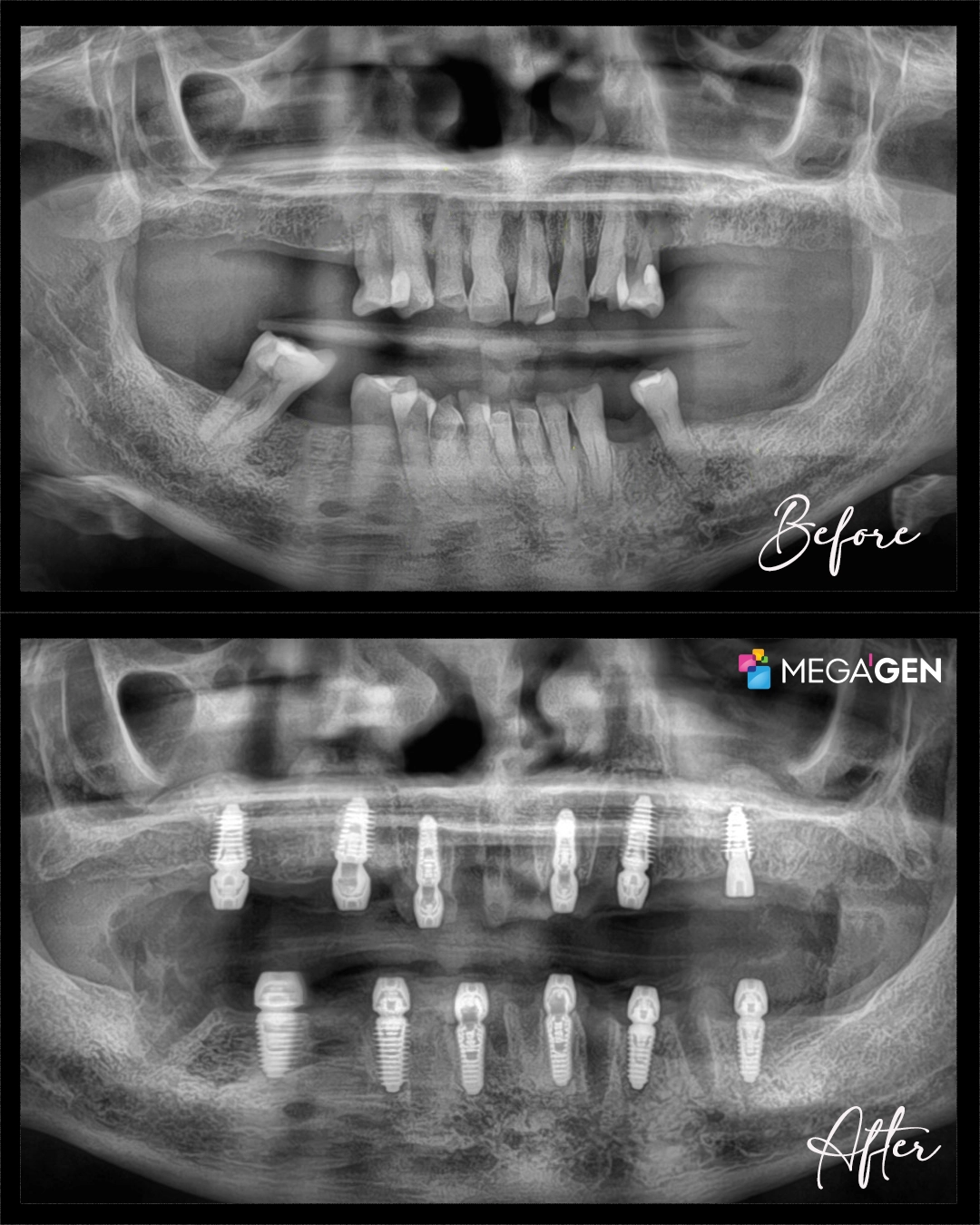
Complete Mouth Restoration with 12 Implants
Placing twelve implants in a single surgery requires significant surgical expertise and careful planning. Dr. Alper strategically positioned six implants in the upper jaw and six in the lower jaw to create stable foundations for the final fixed teeth.
The implant positions were selected based on bone quality, anatomical structures (nerves and sinuses), and prosthetic requirements. Proper spacing between implants ensures adequate blood supply for healing and allows proper cleaning once the final teeth are attached.
Owen’s case demonstrates that even patients with significant bone loss can successfully receive multiple implants and immediate temporary teeth in a single treatment session when performed by an experienced surgeon like Dr. Alper.
Bone Graft Material and Membrane Application
For Owen’s sinus augmentation procedures, Dr. Alper used Novobone graft material. This is a synthetic bone substitute that provides a scaffold for new bone formation. Unlike using bone harvested from the patient’s own body, synthetic grafts eliminate the need for a second surgical site and associated discomfort.
Novobone consists of biocompatible ceramic particles that gradually integrate with the patient’s natural bone. The bone healing process occurs in three sequential phases: osteoinduction (transformation of mesenchymal stem cells into osteoblasts and initiation of new bone formation), osteoconduction (bone growth along the graft scaffold), and remodeling (adaptation of bone structure to functional loads). These three phases occur sequentially, with each phase beginning before the previous one completes, ensuring the graft material is replaced by living bone tissue and the implants achieve complete biological stability.
To protect the graft material and guide bone formation, Dr. Alper placed a resorbable membrane over the grafted areas. This membrane is a thin barrier made from biocompatible material that prevents soft tissue from growing into the bone graft space. The membrane maintains space for bone regeneration and then gradually dissolves, eliminating the need for removal surgery.
The combination of synthetic bone graft and resorbable membrane represents a modern approach to bone augmentation that maximizes patient comfort while achieving predictable results.
PRF Treatment for Accelerated Healing
As part of Owen’s treatment, Dr. Alper applied PRF (Platelet-Rich Fibrin) to the surgical sites. PRF is a biological healing accelerator prepared from the patient’s own blood.
The preparation involves drawing a small amount of blood and processing it in a centrifuge to concentrate platelets and growth factors. These concentrated healing components are then applied to surgical sites or mixed with bone graft material.
PRF releases growth factors that stimulate tissue healing, reduce inflammation, and promote bone formation. Clinical studies have demonstrated that PRF is a healing biomaterial with great potential for bone and soft tissue regeneration, promoting hemostasis, bone growth, and maturation (Clin Oral Implants Res. 2016; PubMed ID: 27689517). Systematic reviews confirm that PRF application can increase implant stability after implant surgery and may accelerate bone healing while promoting new bone formation (Front Bioeng Biotechnol. 2023; PMC9918761).
Dr. Alper also performed alveoloplasty (surgical contouring of the bone ridges) to create smooth, properly shaped foundations for the prosthetic teeth. This ensures optimal fit and aesthetics of the final restoration.
Immediate Temporary Prosthesis: Same Day Smile
Owen specifically expressed that he did not want to be without teeth during the healing period. Understanding the psychological and social impact of edentulism (having no teeth), Dr. Alper planned for immediate prosthetic rehabilitation.
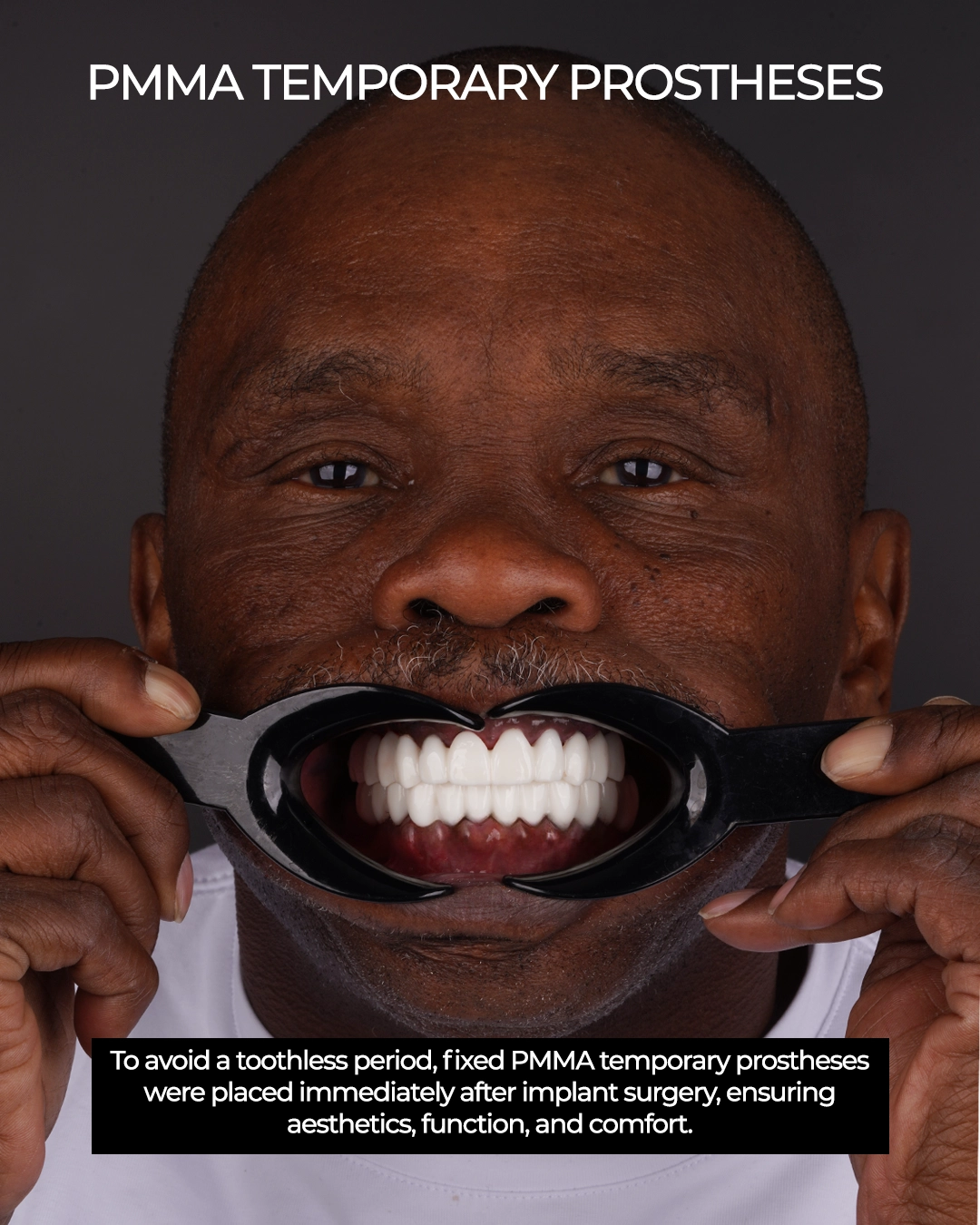
On the same day as surgery, fixed temporary prostheses made from PMMA (polymethyl methacrylate) were attached to the eleven stable implants. PMMA is a biocompatible plastic material that provides adequate strength for temporary use while being lighter than final ceramic or zirconia restorations.
These temporary teeth served multiple purposes. They met Owen’s aesthetic expectations, allowing him to smile and speak confidently immediately after surgery. They provided functional support for eating soft foods and protected the surgical sites during initial healing. Most importantly, they preserved Owen’s psychosocial comfort by eliminating the edentulous period.
The ability to provide immediate fixed teeth represents a significant advancement in implant dentistry. Not all patients qualify for this approach, as it requires achieving sufficient implant stability and having adequate bone quality. Owen’s case demonstrates that with careful planning and experienced surgical execution, patients can leave the clinic with functional teeth the same day as implant placement.
Healing Process and Follow Up Program
Following surgery, Owen received detailed post operative instructions from Dr. Alper and the clinical team. These instructions covered medication schedules, dietary guidelines, and oral hygiene protocols specific to patients with immediate loading implants.
The first few weeks focus on soft tissue healing and managing any post surgical swelling or discomfort. Patients with immediate temporary teeth must avoid hard or sticky foods that could disturb implant stability during early healing.
Dr. Alper scheduled regular follow up appointments to monitor healing progress, assess implant stability, and make any necessary adjustments to the temporary prostheses. These check-ups ensure that any complications are identified and addressed promptly.
Six Month Osseointegration Period
Osseointegration is the process by which dental implants fuse with the surrounding bone. This biological bonding occurs as bone cells grow onto and into the implant surface, creating a stable connection that allows implants to function like natural tooth roots.
For Owen’s case, Dr. Alper anticipated approximately six months for complete osseointegration. This extended timeline, compared to typical 3 to 4 month healing periods, accounts for the bone augmentation procedures performed in the upper jaw. Research demonstrates that when bone grafting is performed simultaneously with implant placement, augmented bone requires extended healing time to consolidate and mature before fully supporting the implants (Medicine. 2020; PMC7668509).
During this healing period, Owen wears his temporary PMMA prostheses, which protect the implants while maintaining aesthetics and function. The temporary teeth also help shape the gum tissues around the implants, creating natural looking contours for the final restoration.
At the end of the six month healing period, Dr. Alper will verify complete osseointegration through clinical examination and radiographs. Once confirmed, the temporary prostheses will be replaced with permanent restorations fabricated from Ivoclar zirconia, providing superior aesthetics and long term durability.
Treatment Outcomes and Patient Benefits
Owen’s treatment with Dr. Alper demonstrates the comprehensive capabilities of modern implant dentistry. In a single surgical session, he progressed from painful, failing teeth to stable implants with fixed temporary teeth.
The key benefits of this treatment approach include immediate restoration of facial aesthetics and the ability to eat and speak comfortably from day one. The psychological impact cannot be understated; Owen avoided the emotional distress of being without teeth during healing.
From a biological perspective, placing implants immediately after extraction helps preserve bone volume. Implants stimulate the bone through functional loading, preventing the significant resorption that occurs when teeth are removed without replacement.
International Plus’s use of advanced materials (Novobone grafts, resorbable membranes, PRF therapy) and experienced surgical technique (bilateral sinus lifts, immediate loading, multi-unit abutments) resulted in a treatment outcome that maximized patient comfort while maintaining high success rates documented in scientific literature.
Owen’s case illustrates that even patients with advanced dental problems can achieve excellent outcomes when treated by specialists like Dr. Alper who combine surgical expertise with patient centered care. The six month healing period represents an investment in long term success, after which Owen will receive his final Ivoclar zirconia teeth designed to last for decades.
Treatment Summary
Patient Age: 42 years old
Total Implants: 12 (6 upper jaw, 6 lower jaw)
Immediate Loading: 11 implants (45 N·m torque achieved)
Bone Augmentation: Bilateral sinus lifts with Novobone graft
Healing Enhancement: PRF (Platelet-Rich Fibrin) application
Temporary Teeth: PMMA fixed prostheses (same day)
Final Restorations: Ivoclar zirconia
Healing Period: 6 months osseointegration
Scientific References
- Insertion torque and immediate loading: Khayat PG, et al. Implant Dent. 2017. PubMed ID: 28156122
- Immediate loading survival rates: Darriba IL, et al. J Clin Periodontol. 2023. PMC6530943
- Lateral window sinus technique: Zaniol T, et al. Implant Dent. 2018. PubMed ID: 29847458
- Sinus augmentation outcomes: Valentini P, et al. Periodontol 2000. 2023. PMC7503740
- PRF in bone regeneration: Miron RJ, et al. Clin Oral Implants Res. 2016. PubMed ID: 27689517
- PRF and implant stability: Chen J, et al. Front Bioeng Biotechnol. 2023. PMC9918761
- Osseointegration with bone grafts: Liu Y, et al. Medicine. 2020. PMC7668509
internationalplusofficial
internationalplus
internationalplusdental
This content is written, reviewed, and approved by the International Plus Medical Review Board to ensure clinical accuracy and adherence to strict editorial standards. All medical information is regularly monitored, audited and updated in light of the latest scientific advancements.
However the information provided here is for general informational purposes only and cannot be used for self diagnosis or making individual health interpretations. Results of medical treatments depend on individual anatomy and the unique healing process of each patient. This information should not replace a personal consultation with a qualified healthcare professional. To understand the best options for your specific needs and to receive a personalized treatment plan, we invite you to book a free consultation with the expert medical team at International Plus.
Dt. Murat İsmail Kurt is an experienced Cosmetic and Restorative Dentist who earned his degree from Kırıkkale University Faculty of Dentistry in 2020. Since the beginning of his career, he has accumulated significant clinical experience working in high-volume dental centers Clinics , where he successfully managed thousands of patient cases before joining the medical team at International Plus.