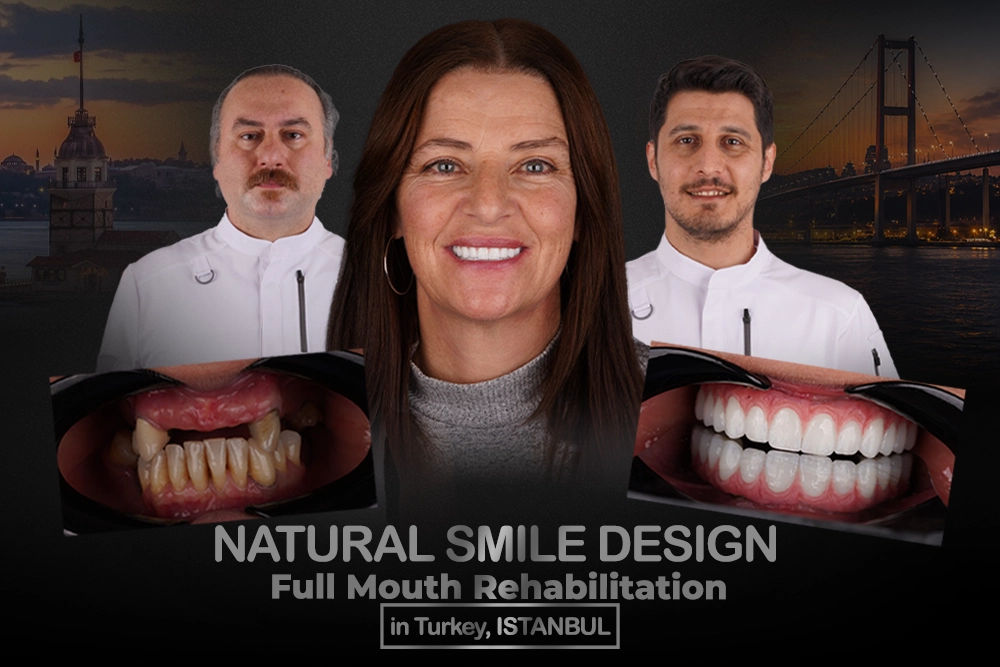
When Justina arrived at International Plus Istanbul, she carried more than just the physical burden of advanced dental disease, she bore the psychological weight of a smile that no longer felt like her own. Her upper jaw retained only a few struggling teeth: two canines and two molars clinging to insufficient bone, while her lower jaw told an equally distressing story of severe periodontal disease and bone loss so advanced that her remaining teeth could no longer maintain stable position in her mouth. Yet what struck our team most profoundly was not the clinical complexity of her case, but the clarity with which she articulated her deepest fear: “I don’t want artificial looking white teeth. I want to look like myself again.” This simple yet powerful statement would guide every clinical decision throughout her comprehensive rehabilitation journey, proving that technical excellence without aesthetic sensitivity cannot deliver the transformation patients truly seek.
Understanding the Natural Aesthetics Philosophy: Beyond Technical Reconstruction
The evolution of full mouth rehabilitation has progressed far beyond simple tooth replacement. Modern implant dentistry recognizes that successful treatment outcomes must satisfy three distinct yet interconnected domains: biological integration, functional restoration, and aesthetic harmony. Research on patient satisfaction in full arch rehabilitation published in the International Journal of Oral & Maxillofacial Implants demonstrates that long term treatment success correlates more strongly with aesthetic satisfaction than purely functional metrics. Patients who receive technically sound but aesthetically inappropriate restorations frequently report persistent dissatisfaction despite optimal function.
Justina’s explicit request for natural appearing teeth rather than the artificially bright, uniform restorations commonly associated with dental tourism reflected sophisticated aesthetic awareness. The “Hollywood smile” phenomenon, characterized by excessively white, overly uniform dentition, has dominated cosmetic dentistry marketing for decades, yet increasingly, discerning patients seek restorations that restore rather than reinvent their appearance. Studies on aesthetic preferences in dental rehabilitation confirm that naturalistic restorations incorporating appropriate color variation, anatomic morphology, and age appropriate characterization achieve higher patient acceptance and satisfaction scores than uniformly bright alternatives.
At International Plus Istanbul, our approach to full mouth rehabilitation prioritizes patient specific aesthetic design over standardized cosmetic templates. Using advanced digital planning tools including intraoral scanning, facial photogrammetry, and smile design software, we create restorations that harmonize with each patient’s unique facial structure, skin tone, age, and personal aesthetic preferences. For Justina, this meant careful analysis of her facial proportions, remaining tooth structure for color reference, and collaborative design conversations to ensure the final result would feel authentically hers.
Comprehensive Clinical Assessment: Navigating Complex Anatomy
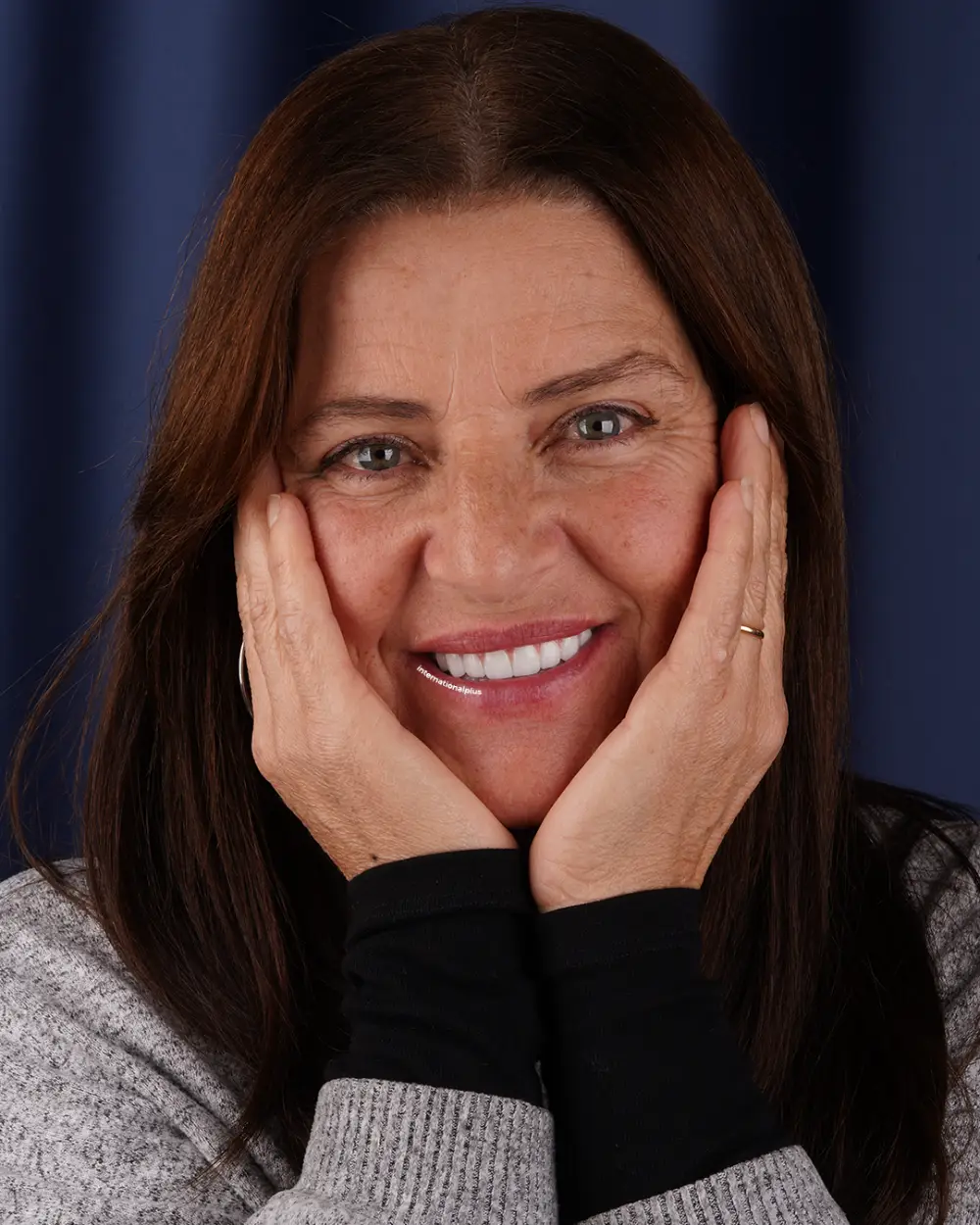
When Justina’s case arrived at our multidisciplinary team, comprehensive evaluation using volumetric CBCT imaging revealed the full extent of both the challenges and opportunities her case presented. Her upper jaw maintained only four teeth: two canines positioned in the anterior region and two molar teeth in the posterior quadrants. While these teeth appeared superficially salvageable, detailed periodontal and endodontic assessment confirmed that retention would compromise the long term stability and hygiene of implant supported rehabilitation. Research on strategic tooth extraction in implant planning demonstrates that retaining compromised natural teeth adjacent to implant restorations creates increased risk for peri-implantitis and biological complications.
More significantly, bone volume assessment revealed insufficient alveolar height and width for standard implant placement in the upper jaw. Years of periodontal disease and tooth loss had resulted in progressive bone resorption, with the maxillary sinus descending into the posterior alveolar ridge. The lower jaw presented similarly challenging anatomy: advanced horizontal and vertical bone loss had compromised the structural integrity of the alveolar ridge, while severe periodontal disease affecting her remaining teeth created active infection requiring complete resolution before implant placement could be considered.
The treatment plan required a comprehensive approach addressing both the biological foundation and aesthetic superstructure. All remaining teeth in both jaws would be extracted using atraumatic techniques to preserve maximum residual bone. Bilateral sinus augmentation would restore adequate bone volume in the upper jaw for implant placement. Following complete debridement of infected tissues and osseous recontouring, six dental implants would be placed in each arch using the All-on-6 protocol, providing stable foundation for fixed full arch prosthetics.
Advanced Surgical Protocol: Combining Bone Augmentation with Immediate Rehabilitation
The surgical phase of Justina’s treatment represented the critical foundation upon which her aesthetic and functional restoration would be built. The procedure began with complete extraction of all remaining teeth using atraumatic techniques that minimized surgical trauma while preserving the maximum possible alveolar bone architecture. Each extraction site was thoroughly debrided to remove granulation tissue, infected material, and any residual periodontal ligament that could compromise healing.
Following extractions, bilateral sinus lift procedures addressed the insufficient bone height in the posterior upper jaw. Using the lateral window approach, the sinus membrane was carefully elevated and the subantral space grafted with bone substitute material to create adequate vertical dimension for implant placement. Clinical evidence for simultaneous sinus augmentation and implant placement demonstrates that this single stage approach achieves success rates comparable to traditional two stage protocols while significantly reducing treatment duration.
Six dental implants were then strategically positioned in the upper jaw. The implant system selection, Megagen implants featuring aggressive thread design, was specifically chosen for its ability to achieve high primary stability in augmented bone. The aggressive thread configuration enhances mechanical interlocking during the critical osseointegration phase, particularly valuable in cases involving simultaneous augmentation. Research on implant design and primary stability confirms that thread geometry significantly influences initial stability and subsequent osseointegration success in compromised bone scenarios.
The lower jaw received six Implance brand implants positioned to maximize use of available bone while avoiding vital anatomical structures. Despite the severe pre-existing bone loss, careful three dimensional planning allowed strategic implant angulation that avoided the need for extensive grafting procedures. All twelve implants achieved primary stability exceeding 35 Ncm, the threshold required for immediate loading protocols. Multi-unit abutments were immediately connected to each implant, establishing the prosthetic platform for provisional and final restorations.
Natural Smile Design: The Plus 5 Philosophy and OM3 Color Selection
With the biological foundation established through successful implant placement and integration, Justina’s case advanced to the critical aesthetic design phase where her personal preferences would directly shape the final outcome. Traditional full arch rehabilitation often employs standardized tooth arrangements and color selections that prioritize durability and ease of fabrication over individualized aesthetics. International Plus Istanbul’s approach inverts this hierarchy, treating aesthetic design as the primary driver of technical decisions rather than an afterthought.
Justina’s vertical dimension, the distance between upper and lower jaws in functional position, had decreased significantly over years of progressive tooth loss and denture wear. Collapsed vertical dimension creates characteristic aged facial appearance including deepened nasolabial folds, reduced lower facial height, and compromised lip support. Studies on vertical dimension restoration in full mouth rehabilitation demonstrate that appropriate increases improve not only dental function but also facial aesthetics and patient reported quality of life.
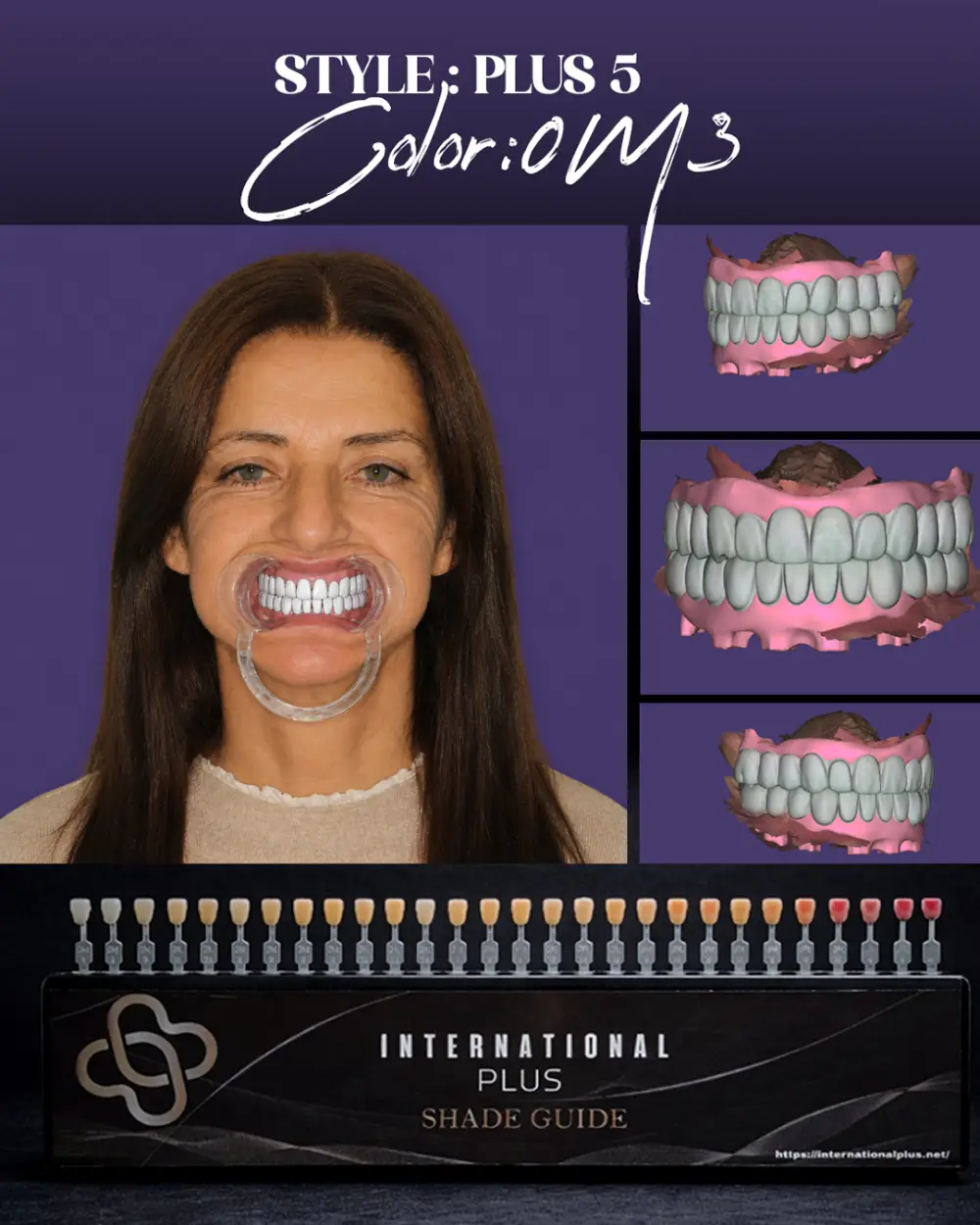
Our prosthodontic team carefully analyzed Justina’s facial proportions, phonetic patterns, and rest position to establish optimal vertical dimension. This increased vertical height would restore youthful facial contours while ensuring comfortable function. The tooth arrangement followed International Plus Istanbul’s Plus 5 design philosophy: an anatomically based approach that prioritizes natural morphology over idealized geometric perfection. Unlike standardized arrangements that position teeth in uniform arcs with identical proportions, Plus 5 design incorporates subtle asymmetries, varied tooth sizes, and anatomic form variations that characterize natural dentition.
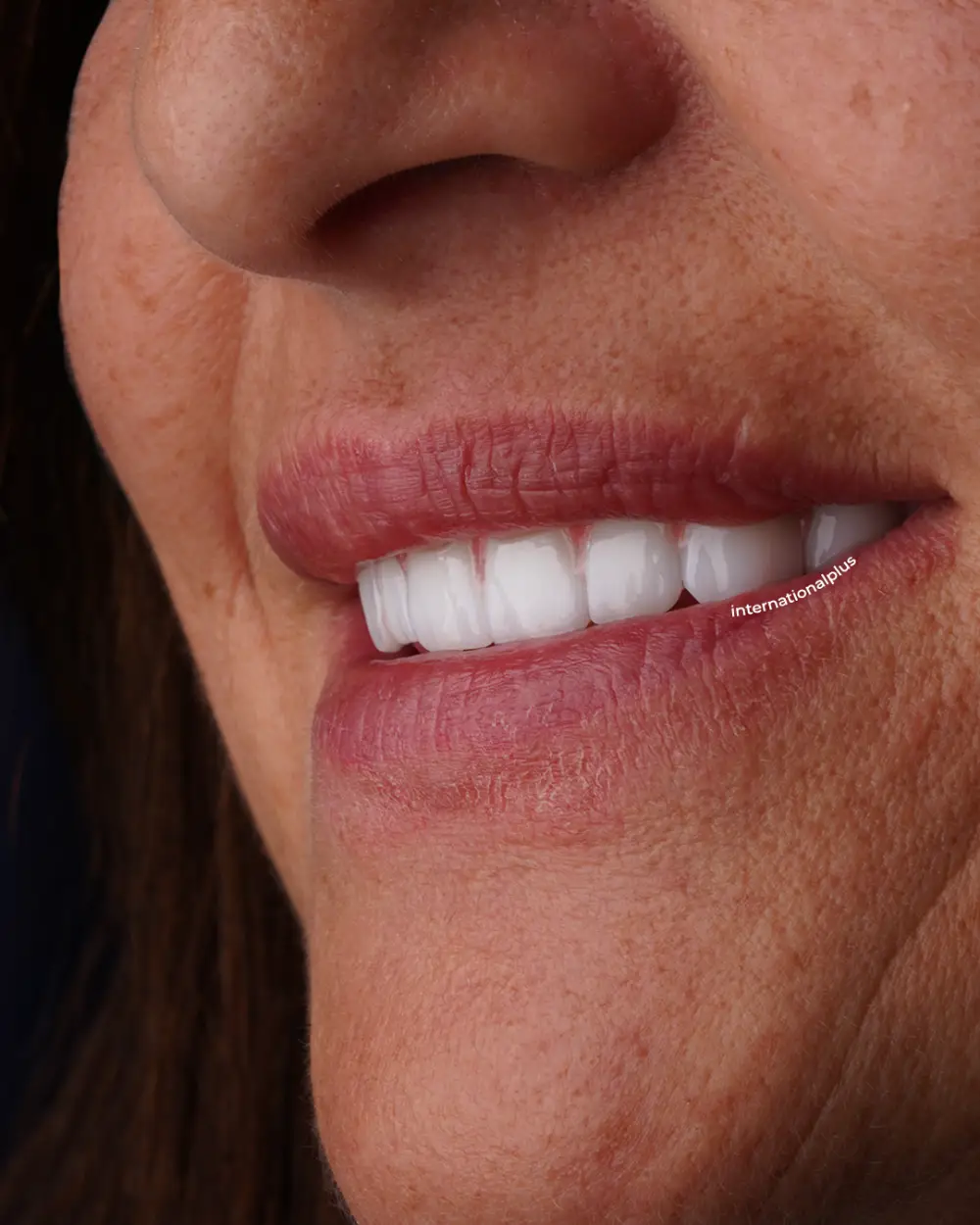
Color selection represented perhaps the most personally significant design decision. Justina explicitly rejected the brilliant white restorations she associated with artificial appearance, instead requesting natural coloration that would harmonize with her complexion and age. The OM3 shade, a warm, slightly creamy tone from the Vita color system, was selected specifically to create authentic appearance rather than cosmetic brightness. Research on color selection in aesthetic dentistry confirms that naturalistic shades in the A2-A3 range achieve higher patient satisfaction than bleach shades, particularly among patients prioritizing authenticity over maximum brightness.
Innovative Framework Design: Combining Toronto Bridge and Bar Retained Protocols
The structural foundation of Justina’s final restoration employed an innovative hybrid approach that optimized each jaw’s unique anatomical and biomechanical requirements. Rather than applying identical framework designs to both arches, a common simplification in full arch rehabilitation, our prosthodontic team selected distinct protocols specifically engineered for each jaw’s characteristics.
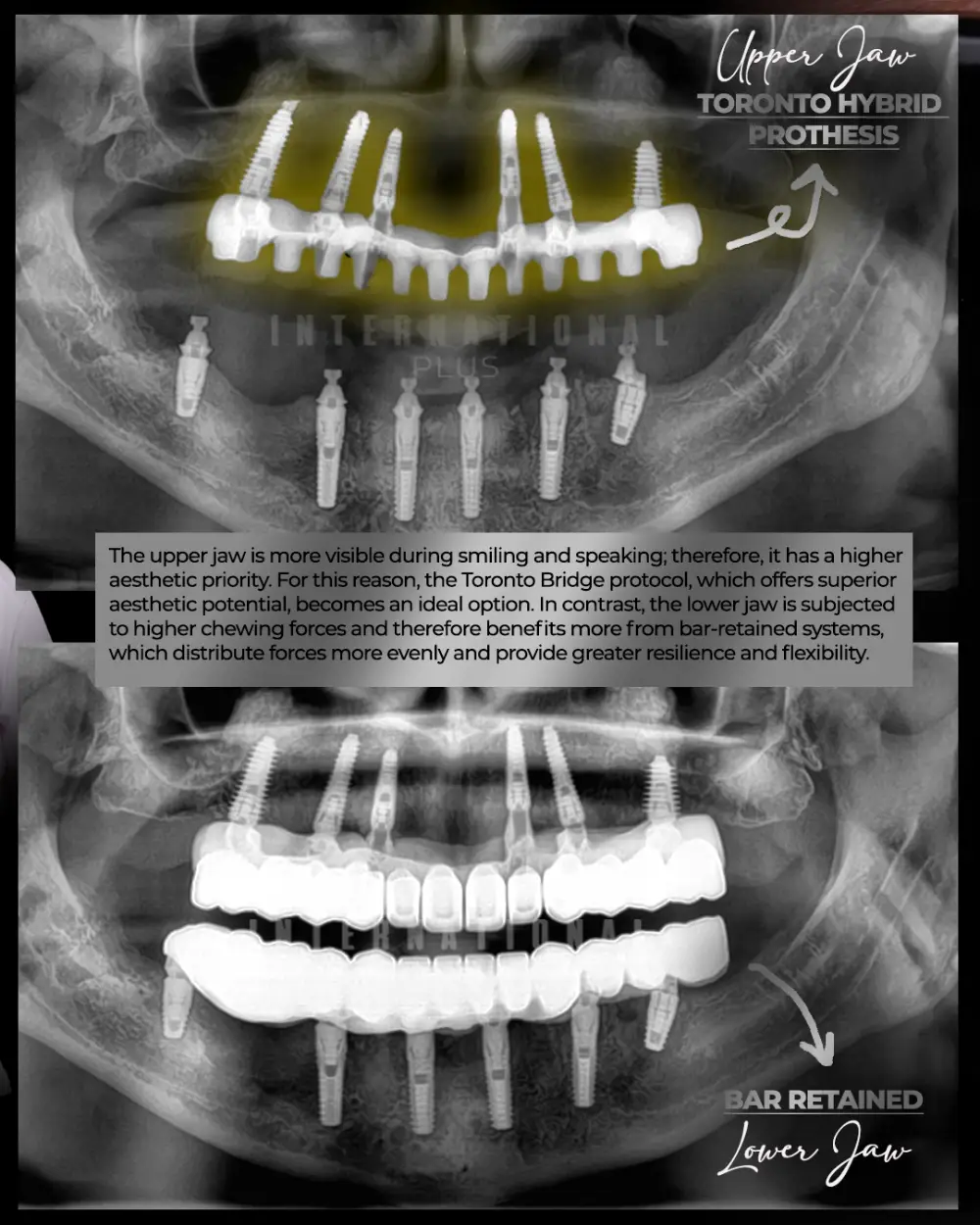
The upper jaw restoration utilized the Toronto Bridge protocol: a titanium framework that screws directly to the implant abutments, supporting an overlying zirconia prosthetic structure. This design offers several advantages in the aesthetic zone. The titanium substructure provides exceptional strength and precise fit, while the overlying zirconia permits natural color gradation and translucency impossible with monolithic metal frameworks. Clinical evidence for Toronto Bridge frameworks demonstrates superior long term stability and ease of maintenance compared to traditional denture based designs, with the added benefit of optimal hygiene access.
The lower jaw received a bar retained protocol: a different framework configuration that provides exceptional resistance to the higher occlusal forces characteristic of mandibular function. The bar design distributes stresses uniformly across all supporting implants while allowing slight resilience that accommodates the mandible’s natural flexion during function. This biomechanical sophistication prevents stress concentration that could compromise individual implants while ensuring comfortable, natural feeling function.
Combining these two distinct framework philosophies in a single case required sophisticated occlusal planning to ensure harmonious interaction between fundamentally different prosthetic systems. The restoration team carefully designed occlusal contacts that would distribute forces appropriately while preventing interference or binding during functional movements. This represents International Plus Istanbul’s commitment to individualized treatment planning that prioritizes optimal outcomes over standardized convenience.
Premium Materials and Precision Fabrication: Ivoclar Zirconia Excellence
The final restorations were fabricated from premium Ivoclar zirconia blocks, representing the current pinnacle of dental ceramic technology. Zirconia has revolutionized full arch implant rehabilitation through its combination of exceptional mechanical strength, exceeding 1,200 MPa flexural strength, with optical properties approaching natural tooth structure. Research on zirconia in full arch rehabilitation confirms that modern high translucency zirconia formulations achieve aesthetics rivaling traditional porcelain fused to metal while eliminating metal’s opacity and potential for gingival discoloration.
Ivoclar’s proprietary zirconia formulations were specifically selected for their enhanced translucency compared to conventional zirconia materials. This optical quality proves critical for achieving the natural appearance Justina specifically requested. Opaque, chalky appearing zirconia, a limitation of earlier generation materials, creates the artificial appearance she wished to avoid. Modern high translucency zirconia permits light transmission and internal color depth that mimics natural enamel and dentin.
The restorations were milled using International Plus Istanbul’s in-house Redon precision CAD/CAM systems, which operate with tolerances measured in microns. This precision ensures passive fit critical for long term implant health and eliminates the dimensional variability associated with manual fabrication. Following milling, our Dental Art laboratory technicians characterized the restorations with subtle color variations, anatomic surface texture, and carefully controlled translucency gradients that prevent the monotonous uniformity of mass produced prosthetics.
The anterior teeth received multilayer design incorporating internal color variations that replicate natural tooth structure. Posterior teeth utilized monolithic zirconia for maximum strength in high stress regions. All surfaces were finished to International Plus Istanbul’s exacting standards: smooth enough to resist plaque accumulation yet retaining subtle anatomy that prevents artificial gloss. The final restorations in OM3 shade with Plus 5 anatomic design represented not technical compromise but deliberate pursuit of Justina’s aesthetic vision.
Treatment Timeline and Patient Experience: Efficiency Meets Excellence
Justina’s comprehensive rehabilitation was completed across two carefully orchestrated treatment visits, each designed to maximize efficiency while maintaining the meticulous attention to detail that complex cases demand. The first visit encompassed the surgical phase: all extractions, sinus augmentation procedures, twelve implant placements, and delivery of immediate provisional restorations. This intensive session was completed over two days, allowing adequate surgical time while minimizing Justina’s time away from home.
The three month healing period that followed served dual purposes. Biologically, this interval permitted complete osseointegration, the direct structural and functional connection between implant surface and surrounding bone that provides long term stability. Research on osseointegration timelines demonstrates that three months provides sufficient time for mature bone formation around implants in most clinical scenarios, though individual patient factors influence precise timing.
Functionally, the healing period allowed Justina to adapt gradually to her restored vertical dimension and new occlusal scheme using the provisional restorations. These temporary prosthetics, while not intended for permanent use, provided immediate aesthetics and function while serving as diagnostic tools. Any needed adjustments to tooth position, occlusal contacts, or phonetics could be refined in the provisionals before finalizing the definitive design.
The second visit, completed in approximately one week, involved final impressions, bite registration, shade verification, and delivery of the permanent Ivoclar zirconia restorations. The multi day timeline permitted careful verification of fit, occlusion, and aesthetics with opportunities for refinement before final cementation. Upon completion, Justina possessed a fully functional, biologically compatible, aesthetically authentic smile designed to serve her for decades.
Frequently Asked Questions
Why is natural appearance sometimes more challenging than ultra white cosmetic results?
Creating authentically natural appearing restorations requires significantly more sophisticated design and fabrication than producing uniformly bright cosmetic dentistry. Natural teeth exhibit subtle color variations, translucency gradients, surface texture irregularities, and slight asymmetries that mass produced “perfect” restorations lack. Achieving this authenticity demands premium materials like high translucency Ivoclar zirconia, advanced characterization techniques, and artistic skill that standardized protocols cannot replicate. The OM3 shade selection and Plus 5 anatomic design employed in this case represent International Plus Istanbul’s commitment to patient specific aesthetics rather than one size fits all cosmetic templates.
What is the Toronto Bridge protocol and why was it selected for the upper jaw?
The Toronto Bridge represents a specific full arch implant framework design featuring a precision milled titanium substructure that screws directly to implant abutments, supporting an overlying aesthetic prosthetic. This protocol was selected for the upper jaw because it provides exceptional strength and precise fit while allowing optimal aesthetics in the visible anterior region. The titanium framework ensures long term structural integrity, while the overlying zirconia permits natural color and translucency. The screw retained design facilitates future maintenance and eliminates cement retention risks that could compromise peri-implant health.
Why use different framework designs for upper and lower jaws?
The upper and lower jaws present fundamentally different anatomical, biomechanical, and aesthetic requirements that often benefit from framework designs optimized for each jaw’s specific needs. The upper jaw prioritizes aesthetics given its visibility during smiling and speaking, making the Toronto Bridge protocol with its superior aesthetic potential ideal. The lower jaw experiences higher occlusal forces and benefits from the bar retained design’s superior stress distribution and resilience. Combining these approaches, rather than applying identical designs to both jaws, represents individualized treatment planning that prioritizes optimal outcomes over standardized convenience.
How does restored vertical dimension affect facial appearance?
Vertical dimension, the distance between upper and lower jaws in functional position, significantly influences facial aesthetics. Years of tooth loss and denture wear cause progressive vertical dimension collapse, creating characteristic aged appearance including deepened facial lines, reduced lower face height, and thinned lips. Carefully restoring appropriate vertical dimension during full mouth rehabilitation improves facial proportions, provides better lip support, and creates more youthful contours. However, excessive increase can create uncomfortable function and unnatural appearance, making precise analysis and gradual adaptation critical.
What makes Ivoclar zirconia superior to conventional materials?
Ivoclar zirconia represents the current pinnacle of dental ceramic technology, combining exceptional mechanical strength exceeding 1,200 MPa with optical properties approaching natural tooth structure. Earlier generation zirconia materials, while strong, exhibited opacity and chalky appearance that limited aesthetic applications. Ivoclar’s high translucency formulations permit light transmission and internal color depth impossible with conventional zirconia or traditional porcelain fused to metal. This combination of strength and aesthetics makes modern zirconia ideal for full arch rehabilitation where both durability and natural appearance are essential.
International Plus Istanbul: Where Patient Vision Guides Clinical Excellence
Justina’s case exemplifies International Plus Istanbul’s fundamental treatment philosophy: technical excellence serves patient centered goals rather than dictating them. When she explicitly requested natural appearance over cosmetic brightness, our entire multidisciplinary team, from surgical specialists through prosthodontic designers to laboratory technicians, aligned their expertise toward realizing her specific vision. The result represents not compromise between clinical ideals and patient preferences, but synthesis where both reinforce each other.
This approach requires infrastructure and capabilities few dental facilities globally can match. Our in-house Dental Art laboratory enabled real time collaboration between clinicians and technicians throughout Justina’s aesthetic design process. Advanced digital planning tools including 3D FaceScan technology, Turkey’s only installation, permitted precise facial analysis that informed both surgical planning and prosthetic design. Premium materials including Ivoclar zirconia and multiple implant brands (Straumann, Nobel Biocare, Megagen, BEGO, Implant Swiss, Implance, Nucleoss) ensured optimal material selection for each case’s specific requirements rather than limiting options to single vendor systems.
Our comprehensive patient services extend beyond clinical excellence to encompass the entire treatment experience. International patients receive VIP airport transfers, luxury accommodation arrangements, 24/7 multilingual medical coordination, and personalized treatment scheduling that respects their time constraints. Having successfully treated over 200,000 patients from more than 140 countries, International Plus Istanbul possesses both the clinical expertise and hospitality infrastructure necessary to deliver world class care regardless of geographic origin.
If you seek full mouth rehabilitation that honors your individual aesthetic vision rather than imposing standardized cosmetic ideals, contact International Plus Istanbul today. We specialize in creating restorations that feel authentically yours, because technical excellence without personal relevance cannot deliver satisfaction that endures.
internationalplusofficial
internationalplus
internationalplusdental
This content is written, reviewed, and approved by the International Plus Medical Review Board to ensure clinical accuracy and adherence to strict editorial standards. All medical information is regularly monitored, audited and updated in light of the latest scientific advancements.
However the information provided here is for general informational purposes only and cannot be used for self diagnosis or making individual health interpretations. Results of medical treatments depend on individual anatomy and the unique healing process of each patient. This information should not replace a personal consultation with a qualified healthcare professional. To understand the best options for your specific needs and to receive a personalized treatment plan, we invite you to book a free consultation with the expert medical team at International Plus.
Dt. Murat İsmail Kurt is an experienced Cosmetic and Restorative Dentist who earned his degree from Kırıkkale University Faculty of Dentistry in 2020. Since the beginning of his career, he has accumulated significant clinical experience working in high-volume dental centers Clinics , where he successfully managed thousands of patient cases before joining the medical team at International Plus.