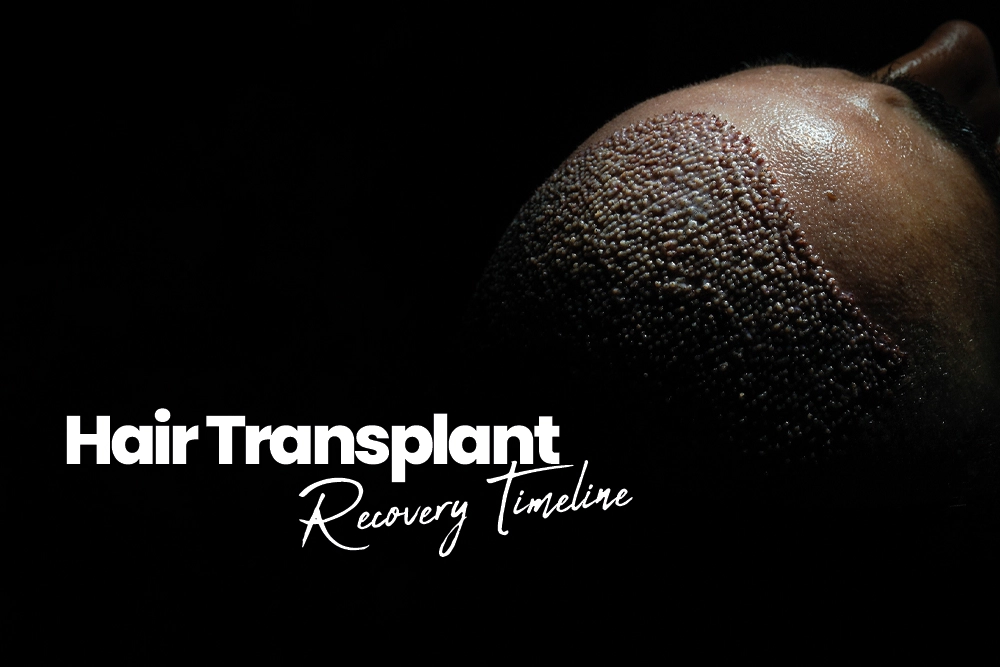
Hair Transplant Recovery Timeline. Undergoing a hair transplant is a life changing decision, marking the beginning of a journey towards restored confidence and a youthful appearance. However, it is crucial to understand that the surgery itself is just the first step. The true transformation happens over the following 12 to 18 months. This period is a test of patience, filled with distinct phases of healing, shedding and regrowth. Many patients find this timeline daunting, fearing the “ugly duckling” phase or worrying about the safety of their new grafts. At International Plus, we believe that an informed patient is a happy patient. This comprehensive guide will walk you through the hair transplant recovery timeline day by day and month by month, demystifying the process and showing you exactly what to expect on your road to a full head of hair.
Hair Transplant Day By Day
The journey begins immediately after you leave the clinic. The first 24 to 48 hours are critical for the stability of your newly implanted grafts. You will leave with a bandage covering the donor area at the back of your head, while the recipient area remains open to heal. It is normal to experience some mild swelling or tightness in the scalp. You will be provided with a comprehensive aftercare kit and medications to manage any discomfort and prevent infection. Rest is your priority during these first few days.

First 10 Days After Transplant
This period is all about healing and protection. Tiny scabs will form around each transplanted graft; this is a sign that the skin is healing and securing the follicles. You will begin a specialized washing routine provided by our clinic to keep the area clean without dislodging the grafts. By day 10, the goal is to gently remove all scabs, revealing a clean, pink scalp.
As Dr. Aziz from International Plus advises: ‘The first 10 days are critical for graft survival. Patients must follow the washing instructions precisely to remove scabs without dislodging the new follicles.’
Sleeping After Hair Transplant
One of the most common questions we receive is about sleeping after hair transplant. For the first 7 to 10 days, you must sleep on your back with your head elevated at a 45-degree angle. Using a neck pillow (travel pillow) is essential to prevent you from rolling over and rubbing the recipient area against the pillow, which could dislodge grafts. This position also helps significantly in reducing forehead swelling (edema) that can occur due to gravity.

Shock Loss Timeline
Around weeks 2 to 4, you will likely experience a phenomenon known as shock loss. This is where the newly transplanted hairs fall out. Do not panic; this is a completely normal and expected part of the hair growth cycle. The hair shafts are shedding, but the living follicle roots remain safely anchored beneath the skin, entering a resting phase before new growth begins. It is a sign that the cycle is resetting for permanent growth.
Ugly Duckling Phase
The period following shock loss, typically months 1 to 3, is often referred to as the ugly duckling phase. During this time, your donor area has healed, but the recipient area may look thin or patchy as the transplanted hairs have shed and new growth has not yet become visible. You might look like you did before the surgery, or even slightly thinner. This can be psychologically challenging, but it is temporary. Trust the process; your new hair is preparing to emerge.

1 Month After Hair Transplant
At the one month mark, the surface healing is complete. Your scalp should look normal, with no scabs or redness. The donor area will be well on its way to full recovery, often covered by existing hair. However, beneath the surface, the follicles are in a state of dormancy. You may not see much activity, but this quiet period is essential for the energy gathering required for the upcoming growth spurt.
Hair Growth Timeline
From month 3 onwards, the excitement begins. You will start to see fine, baby-like hairs sprouting in the transplanted area. Initially, these hairs may be thin, curly or light in color. This is the beginning of the hair growth timeline. Over the next few months, these hairs will thicken, darken and straighten as they mature. You will see a progressive increase in density month by month.

6 Months After Hair Transplant
By the 6 month mark, you will typically see about 50% to 60% of your final result. This is a significant milestone. The hairline is defined, and the coverage is becoming substantial. For many patients, this is the moment where the transformation becomes undeniable and compliments start pouring in. The texture of the hair continues to improve, becoming more robust.
One of our patients, James from Ireland, shares: ‘The first three months were tough, I won’t lie. But at the 6 month mark, I looked in the mirror and saw my hairline back. It was the best feeling in the world.’
1 Year After Hair Transplant
Congratulations! At 12 months, most patients have achieved 80% to 100% of their final result. Your hair will be thick, fully mature and styleable. You can treat it just like your natural hair cut it, dye it and style it however you wish. The donor area scars (if any, depending on the technique) are virtually invisible. It is important to note that for crown (vertex) transplants, full density may take up to 18 months due to slower blood circulation in that area.
Want to know exactly what your recovery journey will look like? Get a personalized assessment from our experts at International Plus Hair Transplant Center today.
Frequently Asked Questions
When can I wash my hair normally after a hair transplant?
You can usually return to your normal hair washing routine, using normal water pressure and gentle circular massage with your fingertips, after the scabs have completely cleared, which is typically around day 10 to 14 post-op. We will confirm this during your follow-up check.
How long does the ugly duckling phase last?
The ugly duckling phase typically lasts from week 3 up to month 3 or 4. It ends when the new, permanent hair growth becomes visible and consistent.
Can I wear a hat after hair transplant surgery?
We generally recommend waiting at least 10 to 14 days before wearing a hat to ensure the grafts are fully anchored. When you do start wearing one, choose a loose-fitting hat (like a bucket hat) that does not rub against the recipient area.
When can I return to the gym and heavy lifting?
You should avoid strenuous exercise, heavy lifting and excessive sweating for at least 2 to 3 weeks after surgery. Increased blood pressure can cause bleeding or swelling that might harm the grafts. You can gradually resume light cardio after 10 days.
Conclusion
Recovering from a hair transplant is a marathon, not a sprint. It requires patience, adherence to aftercare instructions and trust in the biological process. However, the reward a lifetime of natural, growing hair is immeasurable. At International Plus, we don’t just perform the surgery; we partner with you through every day of this timeline, providing the medical support and reassurance you need to reach the finish line with a smile.
Your transformation is a journey, and we are with you every step of the way. Explore our comprehensive Hair Transplant packages, including premium aftercare, and book your consultation today.
At International Plus, we are dedicated to making your transformation as smooth as possible. We organize the entire process for you, including your appointments, VIP transfers, medical treatment and luxury accommodation. The only thing you need to arrange is your flight ticket.
Follow us on Social Media
internationalplusofficial
internationalplus
internationalplusdental
This content is written, reviewed, and approved by the International Plus Medical Review Board to ensure clinical accuracy and adherence to strict editorial standards. All medical information is regularly monitored, audited and updated in light of the latest scientific advancements.
However the information provided here is for general informational purposes only and cannot be used for self diagnosis or making individual health interpretations. Results of medical treatments depend on individual anatomy and the unique healing process of each patient. This information should not replace a personal consultation with a qualified healthcare professional. To understand the best options for your specific needs and to receive a personalized treatment plan, we invite you to book a free consultation with the expert medical team at International Plus.

International Plus was established from scratch in 2014 with the sole purpose of providing a world class center for plastic and cosmetic surgery by SAMİLSAN SAĞLIK HİZMETLERİ TURİZM DANIŞMANLIK TİCARET LİMİTED ŞİRKETİ International Plus has developed a worldwide reputation for its unique treatments and techniques. With over 10 years of experience, our talented medical experts are among the best in their respective fields. You are our priority. We are convinced that good communication between you and your surgeon is essential when planning your treatments. We offer realistic advice and the most suitable treatments for you.