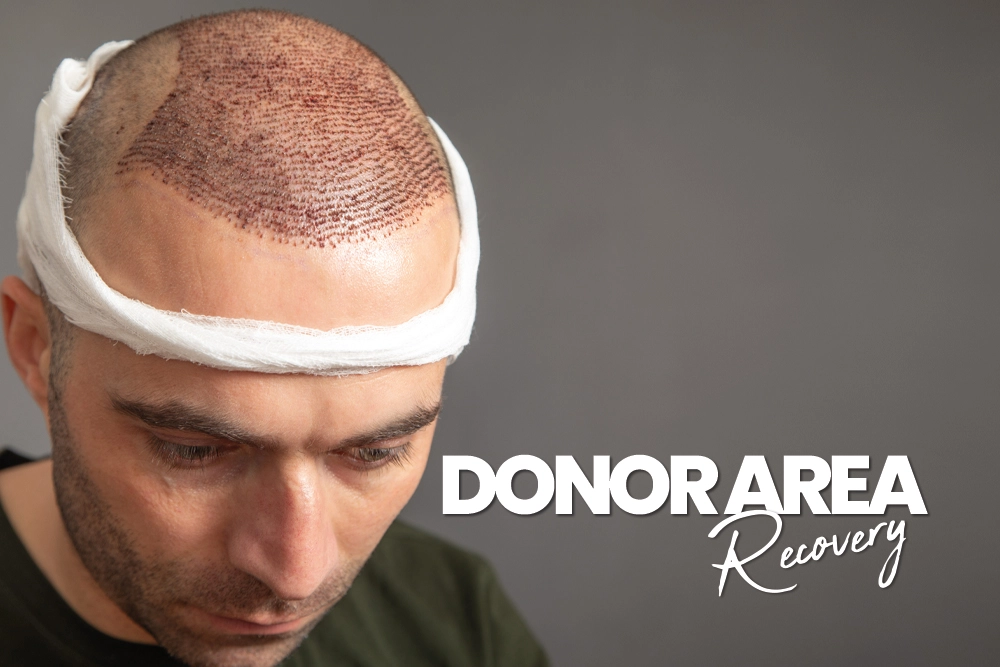
Donor Area Recovery. When we think about hair transplantation, the focus is almost always on the recipient area the hairline, the crown, the new growth. We imagine the final result. However, there is an unsung hero in every successful hair restoration story: the donor area. Located at the back and sides of the head, this region is your “hair bank account.” It is the finite resource from which your new look is created. Understanding donor area recovery is just as critical as caring for your new grafts. A well-managed donor area heals quickly, leaves virtually invisible scars and maintains its natural density, ensuring that your surgery remains your secret. Neglecting it, or choosing a clinic that over harvests, can lead to visible patchiness and regret. This guide will walk you through the healing timeline, explain common sensations like itching and shock loss and highlight how International Plus prioritizes donor preservation for a truly natural result.
Healing Process Explained
The healing capability of the donor area is remarkable. In a modern follicular unit extraction (FUE) procedure, individual grafts are removed using micro-punches, typically less than 1mm in diameter. These tiny circular wounds are designed to heal by “secondary intention,” meaning they close up on their own without the need for stitches. The body’s natural clotting mechanism begins almost immediately. Within 24 to 48 hours, these micro holes seal up, forming tiny scabs. This rapid closure significantly reduces the risk of infection and accelerates the overall recovery timeline.
Pain In Donor Area
It is natural to worry about pain. Most patients report that the donor area feels tender, tight or sore for the first few days after the anesthesia wears off. This sensation is often described as similar to a sunburn or a graze. However, intense pain is rare. This discomfort is easily managed with the standard painkillers provided in your International Plus aftercare kit. By the third or fourth day, most patients find they no longer need medication for pain, although some tenderness to the touch may persist for a week or so.
Donor Area After 10 Days
The 10-day mark is a significant milestone. By this time, the tiny scabs that formed over the extraction sites will have largely loosened and washed away during your daily cleaning routine. The redness will have subsided significantly, turning into a faint pinkish hue that fades over the coming weeks. For many patients, especially those who keep their hair slightly longer, the donor area looks almost completely normal to the naked eye.
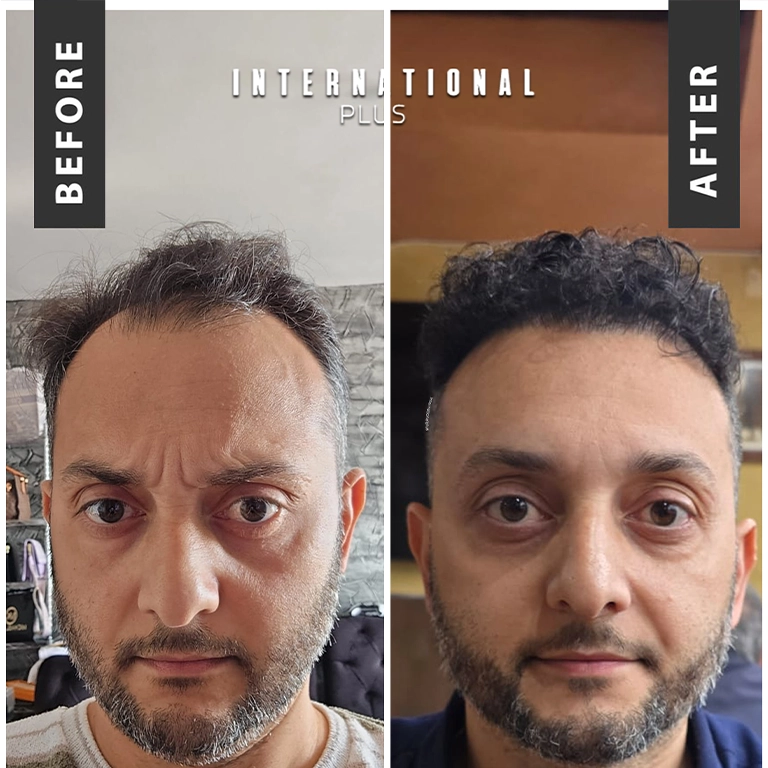
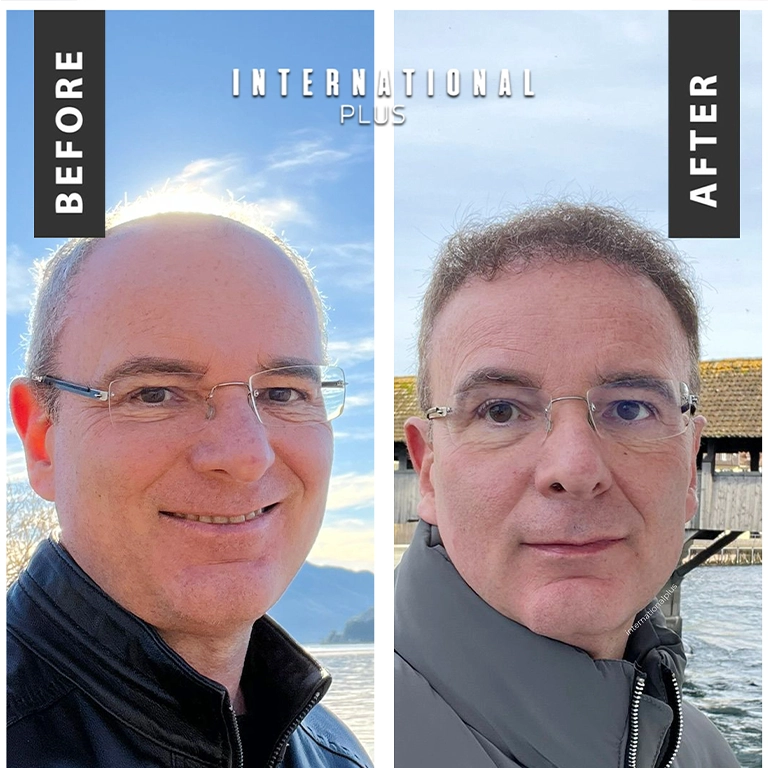
One of our patients, Mark from Germany, shares: ‘I was worried about scars on the back of my head. But honestly, by day 10, my donor area looked almost completely normal. Nobody could tell I had surgery.’
Itching In Donor Area
Around the first week, you may experience significant itching in the donor area. Do not be alarmed; this is actually a positive sign. It indicates that the skin is healing and releasing histamines as part of the tissue repair process. However, it is crucial not to scratch. Scratching can introduce bacteria and damage the healing skin. To manage this, we provide specialized soothing lotions and sprays containing Aloe Vera or other calming ingredients. Keeping the area moisturized and cool is the key to relief without risking your recovery.
Shock Loss In Donor Area
Some patients are alarmed to notice thinning in the donor area a few weeks after surgery. This phenomenon, known as shock loss, can occur in the donor zone just as it does in the recipient area. The trauma of extraction can cause surrounding hair follicles to temporarily enter the resting (telogen) phase and shed. It is vital to understand that this is temporary. The roots are still healthy and alive. These hairs will begin to grow back within 3 to 4 months, restoring the density of the back of your head. It is not permanent damage.
Donor Area Regrowth
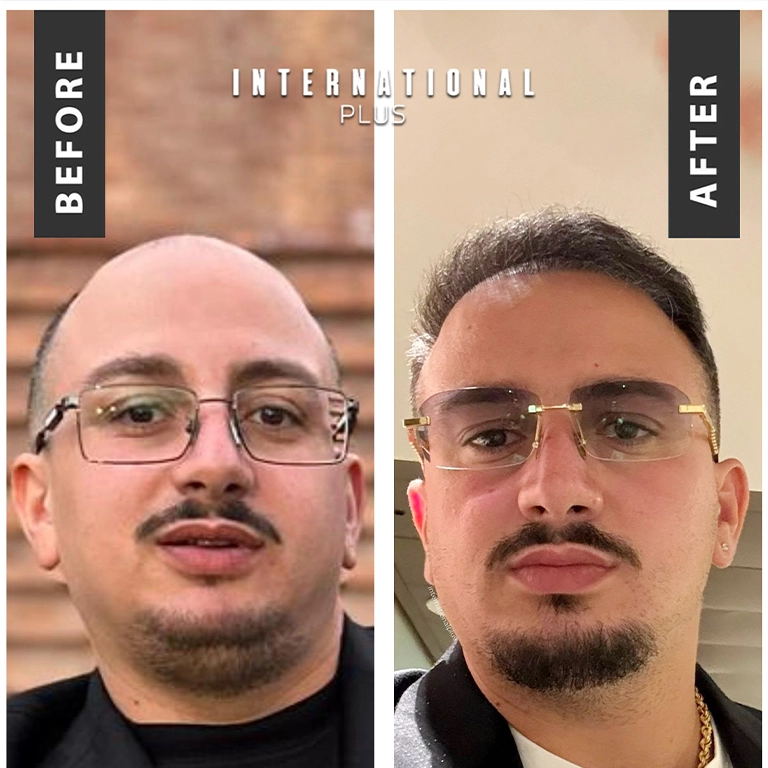
It is a common misconception that the extracted hairs will grow back. They will not; the follicle has been moved to the top of your head. However, donor area regrowth refers to the return of the surrounding hairs that may have been shaved or experienced shock loss. Because a skilled surgeon harvests grafts in a diffuse pattern—taking perhaps one out of every four or five hairs—the remaining hair provides coverage. Once the shock loss resolves and the existing hair grows out, it covers the tiny extraction points, creating a seamless look where no density loss is visible to the casual observer.
Overharvested Donor Area
This is the complication every patient must avoid. An overharvested donor area occurs when an inexperienced or aggressive surgeon extracts too many grafts from a specific area, exceeding the safe limit (typically above 25-30% of the donor density). This results in a “moth-eaten” or patchy appearance, where the scalp is clearly visible through the hair. It can also lead to permanent scarring and circulatory problems in the scalp.
As Dr. Aziz from International Plus emphasizes: ‘The donor area is finite. Our golden rule is strategic harvesting. We extract follicles homogeneously to ensure the back of the head retains its density and natural appearance.’
Donor Area Scars
While FUE is often marketed as “scarless,” this is not technically true. It leaves micro-scars. These are tiny, white, dot-like scars less than a millimeter in size. However, because they are so small and spread out, they are virtually undetectable, even with short haircuts (like a number 1 or 2 buzz cut). This is a massive improvement over the linear scar left by older strip (FUT) methods. At International Plus, our use of precision Sapphire blades and micro-punches ensures these marks are kept to the absolute minimum visibility.
Micropigmentation For Donor Area
For patients who have suffered from overharvesting at other clinics or who have naturally lower donor density, Scalp Micropigmentation (SMP) offers a fantastic solution. SMP is a medical tattooing technique that deposits pigment into the scalp to mimic the appearance of hair follicles. By creating thousands of tiny dots among the existing hair, we can camouflage scarring and create the illusion of greater density, effectively “filling in the gaps” and restoring a uniform look to the donor area.
Concerned about your donor area density or looking to fix a previous procedure? Get a professional assessment from our experts at International Plus Hair Transplant Center today.
Frequently Asked Questions
Will hair grow back in the donor area?
The specific follicles that were extracted are gone permanently (moved to the top). However, the hair surrounding the extraction sites will grow back. If the extraction was performed correctly, the remaining hair will provide full coverage, and the reduction in density will not be noticeable.
How to stop itching in the donor area after hair transplant?
Use the prescribed moisturizing lotion or saline spray provided by your clinic to keep the area hydrated. You can also take an oral antihistamine (if approved by your doctor) to reduce the itch sensation. Never scratch with your fingernails.
What does an overharvested donor area look like?
An overharvested area looks patchy, with visible empty spots where the scalp shows through. It may look thinner than the rest of the head and can sometimes have a “moth-eaten” appearance.
Can micropigmentation fix donor area scars?
Yes, SMP is highly effective for camouflaging FUE scars. By blending the white dots with the surrounding hair color, it makes the scars much less visible to the naked eye.
Conclusion
A successful hair transplant is a balancing act. It is about creating a new hairline without compromising the donor area that supplied it. The health and appearance of the back of your head are just as important as the front. By choosing a clinic that prioritizes donor preservation and employs expert extraction techniques, you ensure that your result looks natural from every angle—360 degrees of confidence.
Protect your donor area and achieve the best results with our expert care. Explore our Hair Transplant packages and book your consultation now.
At International Plus, we are dedicated to making your transformation as smooth as possible. We organize the entire process for you, including your appointments, VIP transfers, medical treatment and luxury accommodation. The only thing you need to arrange is your flight ticket.
Follow us on Social Media
internationalplusofficial
internationalplus
internationalplusdental
This content is written, reviewed, and approved by the International Plus Medical Review Board to ensure clinical accuracy and adherence to strict editorial standards. All medical information is regularly monitored, audited and updated in light of the latest scientific advancements.
However the information provided here is for general informational purposes only and cannot be used for self diagnosis or making individual health interpretations. Results of medical treatments depend on individual anatomy and the unique healing process of each patient. This information should not replace a personal consultation with a qualified healthcare professional. To understand the best options for your specific needs and to receive a personalized treatment plan, we invite you to book a free consultation with the expert medical team at International Plus.

International Plus was established from scratch in 2014 with the sole purpose of providing a world class center for plastic and cosmetic surgery by SAMİLSAN SAĞLIK HİZMETLERİ TURİZM DANIŞMANLIK TİCARET LİMİTED ŞİRKETİ International Plus has developed a worldwide reputation for its unique treatments and techniques. With over 10 years of experience, our talented medical experts are among the best in their respective fields. You are our priority. We are convinced that good communication between you and your surgeon is essential when planning your treatments. We offer realistic advice and the most suitable treatments for you.